

Welding Clothing Supplier Answers: How to Pick Durable Flame-Resistant Workwear
2026-10-01
If you think all flame-resistant jackets are the same, a quick chat with a welding clothing supplier will change your mind. Durability in FR workwear isn't just about thicker fabric—it's about stitching, material blends, and how the gear holds up to daily sparks and spatter. We asked the experts what to look for when picking workwear that won't quit halfway through a shift, and why DROTEX keeps showing up on the shop floor. Here's how to choose gear that protects you and survives the grind.
The Real Story Behind Fabric Weight and Weave in Welding Workwear
Many welders assume heavier fabric automatically means better protection. In practice, fabric weight is only part of the picture; how the yarns are woven determines whether sparks roll off or snag. A dense twill with a moderate ounce count can outperform a bulky plain weave because the interlacing pattern creates a tighter surface and fewer loose fibers. That is why you see 9 oz flame-resistant cotton outperforming 12 oz generic denim in spatter tests.
Weave also changes breathability and stiffness. A satin weave feels smoother but has long floats that can catch molten metal. A broken twill balances drape and durability, so the garment moves with you instead of fighting every squat or overhead weld. Mills adjust picks per inch and yarn twist more than the label suggests, so two jackets with the same weight can behave very differently.
The real story is that spec sheets rarely capture how fabric performs after the first wash or after repeated exposure to UV and sparks. Pre-shrunk tight weaves hold their shape, while loosely woven cotton can open up at stress points. If you are choosing welding workwear, look at weave tightness under light and ask about wash-test data, not just the ounces on the tag.
How Seam Construction Determines Whether Your Jacket Survives a Season
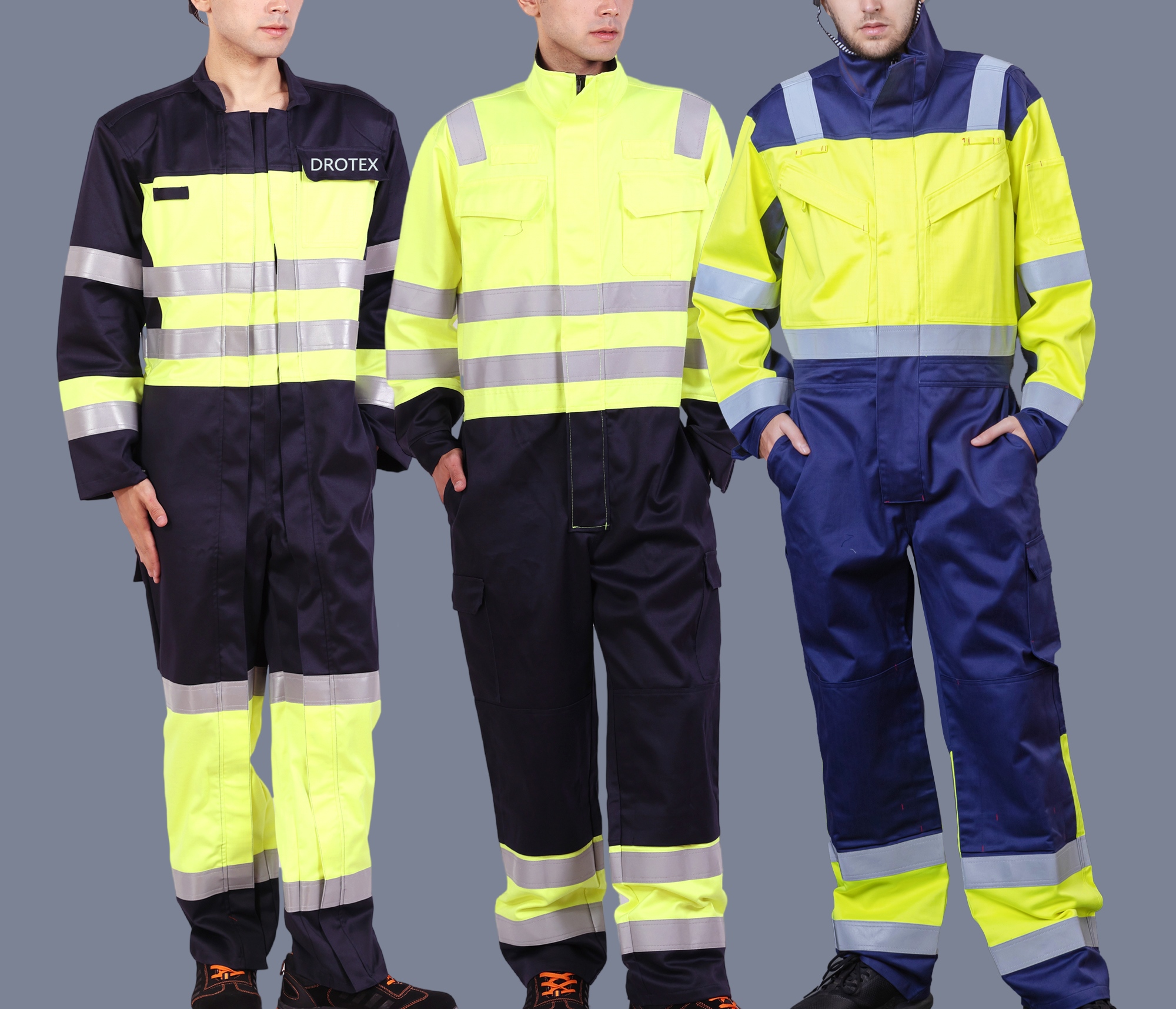
A jacket rarely fails because the fabric suddenly tears in the middle of the back panel. It fails at the seams—under the arms, along the shoulder line, or where a pocket gets tugged one too many times. Cheap construction relies on a single lockstitch with six to eight stitches per inch, and once the thread starts to fray, the whole line unravels like a zipper. But it’s not just the stitch count. How the raw edge is finished plays a bigger role. If the seam allowance is left serged with a loose overlock, the fabric can pull away from the stitching under stress, creating a weak point that grows with every wear.
For a waterproof or windproof shell, the problem compounds because every needle hole is a potential leak. Taped seams solve this, but only if the tape is applied with the right heat and pressure—too little and it peels after a few washes; too much and it becomes brittle. Some manufacturers now weld or bond the main seams, eliminating stitching altogether on critical areas like the hood and shoulders. This works beautifully on synthetic laminates but fails on natural fibers, so the choice of seam construction must match the material. A bonded seam on a cotton jacket would simply delaminate, while a flat-felled seam on a technical shell would leave dozens of unsealed punctures.
The most durable jackets in heavy rotation tend to use flat-felled or double-stitched seams where two rows of thread lock the fabric down and the raw edge is folded inside. You can spot this by pulling the seam apart—if you see a clean fold with no exposed threads or fuzzy edges, it’s built to last. Conversely, a simple overlapped seam with a single line of stitching and a visible cut edge will start to show wear within weeks, especially on areas that rub against backpack straps or seat belts. Before you trust a jacket for the season, flip it inside out and run your finger along every seam. The ones that feel flat, tight, and fully enclosed are the ones that won’t leave you patching holes by November.
Reinforcement Points That Make or Break Flame Resistant Coveralls
When you spend long shifts in high-heat environments, the last thing you want is for a seam to split or a pocket to tear right when you need protection the most. That's why smart buyers look beyond the fabric weight and focus on the reinforcement points that quietly determine whether a pair of flame resistant coveralls will survive the week or fail on day two. Bartacked stress points, double-layered knees, and bar-tacked pocket corners aren't just nice extras—they're the difference between coveralls that earn their keep and ones that end up in the rag bin.
Pay close attention to the inseam and crotch area. This is where constant bending, squatting, and climbing put relentless strain on the stitching. Quality FR coveralls use a felled seam or a reinforced gusset here, often with a second row of stitching that distributes tension instead of letting it concentrate on a single thread line. The same goes for the elbows and the seat—look for double-layer fabric panels or abrasion-resistant overlays that don't compromise breathability. If the label mentions a specific reinforcement technique like 'triple-needle stitching' or 'heavy-duty bartacks,' that's usually a sign the manufacturer understands what daily wear actually does to the garment.
Don't ignore the smaller hardware either. Zippers that are shielded by a fabric flap, snaps that are riveted rather than simply stitched, and tool pocket openings reinforced with extra fabric all contribute to how long the coveralls stay intact under real-world conditions. A pair might feel great on the hanger, but if the knee pads aren't secured behind a double layer or the thigh pocket rips when you slide a flashlight in, the protective rating becomes irrelevant. In flame resistant workwear, a tear isn't just an inconvenience—it's a direct path for heat and flash fire to reach your skin. That's why the best coveralls treat reinforcement as a safety feature, not an afterthought.
Why Poor Fit Causes Faster Fabric Failure in Flame Resistant Clothing
A flame-resistant garment that pulls across the shoulders or binds at the elbows doesn’t just feel uncomfortable—it concentrates stress into a few high-strain areas. Every time you bend, reach, or crouch, fabric in those zones stretches beyond its designed tolerance. Over repeated wear cycles, the woven or knitted structure begins to separate, leaving thin spots where heat can transfer through more quickly. The flame-resistant properties are often embedded in the fiber itself, but once the yarns are physically damaged, the barrier is compromised long before the garment looks worn out.
Loose fits create a different but equally damaging pattern. Excess fabric folds and shifts against itself and nearby surfaces, producing abrasion at the inner thighs, underarms, and along tool belts or harnesses. That friction wears away the outer layer and exposes the underlying fibers to direct flame contact. A poor fit also collapses the insulating air gap that normally sits between the fabric and skin, so heat reaches the body faster and breaks down the material from the inside out. Getting the fit right isn’t about appearance—it’s about distributing stress and maintaining the protective envelope under real working conditions.
Washing and Care Routines That Preserve Flame Resistance Without Shrinking
Start by turning the garment inside out and washing it in cold water on a gentle cycle. Hot water and aggressive agitation are the two biggest causes of fiber stress, and once cotton or cotton-blend FR fabrics lose their shape, the fit changes even if the flame-resistant treatment remains intact. Use a mild liquid detergent without bleach, optical brighteners, or fabric softener—softener coats the fibers and can interfere with the chemical finish over time.
Skip the dryer’s high heat setting. Tumble dry on low or air dry flat, and remove the garment while it is still slightly damp to prevent over-drying and shrinkage. If you must use a dryer, add a few clean tennis balls to help keep the fabric from clumping, but avoid dryer sheets. Store the garment hanging or loosely folded rather than crammed into a tight drawer, because repeated compression can set creases that become permanent after washing.
Finally, treat stains before washing by blotting rather than scrubbing. Scrubbing can rough up the surface fibers and create thin spots where the FR finish may wear away faster. When in doubt, follow the manufacturer’s care label, but err on the side of cooler water, shorter cycles, and air drying—your garment will keep its flame resistance longer and stay closer to its original size.
What FR Certifications Reveal About Real World Durability
FR certifications are more like a starting line than a finish line. A fabric that passes NFPA 2112 or EN ISO 11612 has proven it can withstand a specific set of lab conditions—controlled flame exposure, limited abrasion cycles, and a fixed number of launderings. But real-world durability often hinges on variables that no certification protocol fully captures, such as repetitive stress from tool belts, uneven wear at cuffs and collars, or contact with industrial chemicals that quietly degrade the fiber's flame-resistant finish.
What these certifications do reveal, however, is the fabric's minimum threshold for survival. Tests like ASTM D6413 measure char length and afterflame, while thermal shrinkage and tensile strength checks give a snapshot of how the material behaves under heat stress. A garment that barely passes versus one that exceeds the standard by a wide margin can tell you a lot about likely longevity in the field, even if the label looks identical to an untrained eye.
The most overlooked insight from certification data is hidden in the laundering requirements. Many standards require FR properties to remain intact after 100 or more industrial wash cycles. That number reflects a controlled detergent, temperature, and drying process—not the mixed-quality water, skipped pre-treatment, or occasional bleach exposure found in real plants. So while a certification confirms the fabric won't turn into a candle wick on day one, field durability still depends on how closely your care routine mirrors the lab's quiet, consistent conditions.
FAQ
Aim for around 9 to 12 ounces of flame-resistant cotton or a cotton blend. Lighter fabric burns through too easily, while heavier options trap heat and cause faster fatigue. If you're doing heavy overhead or high-spatter work, go with 12 ounces or more, or add leather panels in the worst areas.
Check the label for whether the flame resistance is built into the fiber or added as a chemical treatment. Treated fabrics often degrade after a set number of washes, and if the supplier can't tell you that number, it's a red flag. For consistent protection, choose inherently flame-resistant fibers that don't wash out.
Not always. Leather gives excellent spark and slag resistance, but it's heavy and can limit movement. For light to medium welding, flame-resistant cotton is more breathable and comfortable. For heavy work, leather sleeves or an apron are often more practical than a full leather jacket.
Avoid rolled-up cuffs, open pockets, and exposed zippers. Look for high collars, covered plackets, and cuffs that can be closed snugly. Pants should cover the tops of boots with no cuffs that can catch sparks or molten metal.
Quality treated flame-resistant cotton should last at least 50 to 100 industrial wash cycles before losing its protective properties. Inherently flame-resistant fibers often last much longer. If you notice thinning, holes, or the fabric no longer self-extinguishes after washing, it's time to replace it.
Retire it when you see burn-through holes, tears that can't be repaired, fabric thinning, or loss of flame resistance after washing. Any visible hole or gap lets sparks reach your skin, and that's a safety failure, not just a cosmetic issue.
Yes. Metal zippers can conduct heat, so they should be covered by a fabric flap. Snaps are safer than buttons because buttons can pop off under stress. Avoid any exposed metal hardware that could heat up and touch your skin.
Chemically treated fabrics are usually cheaper, but the protection washes out over time. Inherently flame-resistant fibers are engineered to be flame-resistant from the start, so they last much longer. If you weld daily, inherent fibers often cost less per use, while treated fabrics work for occasional jobs.
Conclusion
When you're sorting through welding workwear, the weight of the fabric gets a lot of attention, but it's the weave that really decides whether a jacket will hold up. A tightly woven twill usually outlasts a heavier plain weave because the diagonal structure distributes stress and resists snags from sparks or sharp edges. Look for pre-shrunk material as well—otherwise you might end up with sleeves that ride up after the first wash. Seam construction is just as critical: single-needle chain stitches can unravel under heat, while double-stitched or safety-stitched seams with flame-resistant thread keep panels together even when the outer fabric gets abraded. Don't ignore reinforcement points either. Elbows, knees, pocket openings, and the bottom hem take the most punishment, so extra layers or bar-tacks in those spots can mean the difference between a jacket that lasts one season and one that lasts three.
Fit plays a bigger role in durability than most buyers expect. A jacket that's too tight puts constant tension on the seams and fabric around the shoulders and back, leading to premature tears, while loose sleeves can catch on equipment or drag through slag. Aim for a cut that allows full range of motion without excess bulk. Care habits matter just as much: use a mild detergent, skip bleach and fabric softeners, and wash in cool or warm water rather than hot to keep the flame-resistant treatment intact and avoid shrinkage. Line drying or low heat is safer than high-temperature tumble drying. Finally, check the FR certification labels—standards like NFPA 2112 or ASTM F1506 don't just verify flame resistance. They also require minimum scores for tear strength, seam slippage, and abrasion resistance, so a certified garment has already passed basic durability tests that uncertified workwear might not.
Contact Us
Contact Person: Sandy
Email: [email protected]
Tel/WhatsApp: 86150 8310 5120
Website: https://www.frdrotex.com