

Ultrasonic Spray Pyrolysis System Factory: Key Considerations for Choosing the Right Partner
2026-10-24
Most people shopping for an ultrasonic spray pyrolysis system fixate on nozzle size or flow rate—then discover too late that the factory's real value lies elsewhere. Siansonic has spent years proving what a reliable partner should deliver, and choosing the right one starts with asking the right questions.
The Nozzle Is the System: What to Inspect First
Almost every field complaint that starts with low pressure or poor coverage on a spray system ends with a nozzle that should have been inspected first. The nozzle is the one place where flow, pressure, and direction meet to do actual work. A pump can be healthy, the lines clear, and the controls dialed in, but a worn or clogged nozzle will still produce a bad result. Since erosion and clogging rarely show up on gauges, the only way to catch them is to take the nozzle out and look at it.
Begin with the orifice and the surfaces that shape the spray. Hold the nozzle up to a light source and check whether the opening still has crisp edges or if it has become rounded and uneven. On fan or flat spray tips, look for a chipped shoulder or a plugged corner. If the nozzle uses a gasket, strainer, or O-ring, replace anything that looks stiff, cracked, or flattened. Put the same nozzle back briefly and watch the pattern before touching pressure settings. That quick check often saves a full day of chasing the wrong component.
Custom Work Is More Than a Modified Drawing
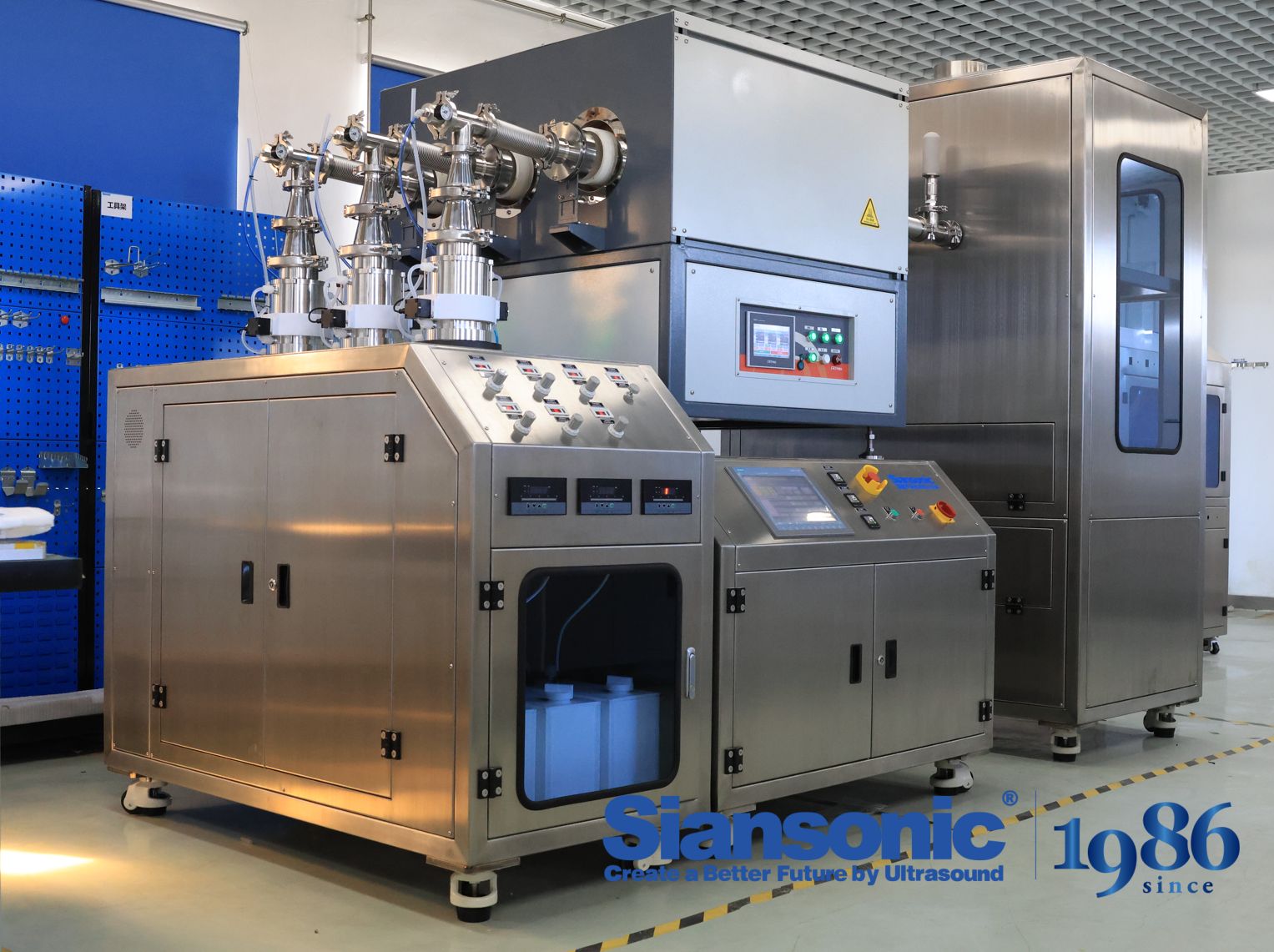
When clients ask for custom work, they often assume it's just adjusting a stock drawing. But in practice, modifying dimensions is only the first step. A true custom part starts from the function, not the form. The way it mounts, the load it carries, the environment it sits in—these determine geometry, finish, and tolerances far more than any existing drawing ever could.
The difference shows up in the details. A standard bracket scaled up 15 percent might look fine on screen but fail in the field because wall thickness, fastener clearance, and material grain direction don't scale linearly. Custom work means questioning those inherited assumptions: selecting a different alloy, moving a bend line, or rethinking the assembly sequence. It's engineering judgment applied to a specific problem, not a copy-paste of someone else's solution.
That's why we treat every custom request as a fresh design conversation. We ask where the part will live, how it will be installed, and what happens if it fails. Those answers shape the model far more than the original drawing. The result isn't a modified file—it's a part that fits its purpose exactly.
Uniform Coating Starts With Honest Temperature Mapping
Most uneven coating results don't come from a bad batch of material or an unskilled operator. They start with temperature differences that nobody measured honestly. A few degrees of variation across a part can change viscosity, solvent evaporation, and cure rate enough to create streaks, orange peel, or soft spots that only show up later.
Setpoints on a control panel tell you what the equipment thinks it's doing. Honest temperature mapping tells you what the part actually experiences. That means placing thermocouples on real parts, running data loggers through the oven, and watching for cold zones near doors, radiant shadows from dense racking, or recovery delays after the load enters. The numbers often disagree with the display, and that gap is where coating defects hide.
Once you have a reliable thermal map, fixing uniformity becomes straightforward. You can adjust airflow, reposition racks, or tweak the cure schedule so every square inch of surface stays inside the same temperature window long enough to flow and set properly. Uniform coating is not a chemistry trick. It's a measurement discipline that starts with trusting the actual heat, not the assumed heat.
Documentation Depth Predicts Factory Discipline
In most manufacturing plants, the paperwork trail is treated as a necessary annoyance—something to be filled out quickly and forgotten. But a closer look at daily operations reveals a stubborn correlation: the factories with the most detailed shift logs, maintenance checklists, and deviation reports are almost always the ones with the fewest unplanned stoppages. It’s not that the documents themselves fix machines or train operators. Rather, the act of writing things down forces a kind of slow, deliberate attention that chaotic environments tend to erode. A hand-scrawled note about a strange vibration in a gearbox, filed without prompting, is often the earliest signal of a discipline that runs far deeper than compliance.
This link between documentation depth and shop-floor order cuts across industries and regions, but it is rarely discussed in management literature. Perhaps because it feels too mundane, too clerical to matter. Yet every seasoned plant manager knows the telltale signs: mismatched torque values on a bolt log, a missing signature on a night-shift inspection, an unlabeled chemical drum that no one remembers ordering. These are not just administrative oversights—they are fractures in the collective attention of the workforce. When documentation becomes shallow, discipline rarely stays intact for long. The reverse is also true: crews that argue over the correct way to record a pressure drop are usually the same ones who notice a leaking seal before it becomes a puddle.
What makes this dynamic so reliable is that it feeds on itself. Detailed records make anomalies visible, which prompts corrections, which then require even better records to verify. A factory that starts documenting every tool change and every minor calibration drift soon finds that workers begin to expect that level of visibility from each other. Nobody wants to be the one whose sloppy entry breaks the chain. Over time, the documentation stops being a chore imposed from above and becomes a shared language of accountability. The factories that resist this—those that treat paperwork as a box to tick—end up managing by rumor and memory, which is no way to run a line that depends on thousands of small, repeatable actions every day.
Downtime Cost Is Set Before You Sign
Most buyers treat downtime as an operational surprise, but the real price is locked in the moment the contract is signed. Service credits, maintenance windows, and liability caps are negotiated before any outage occurs—and they often protect the vendor more than the customer.
The gap between what an hour of downtime actually costs your business and what the vendor agrees to repay is rarely accidental. It is written into the agreement, often in footnotes or annexes that no one reads until a failure happens. If the contract says a critical outage earns only a small credit on next month's bill, that is the maximum you will get, no matter how much revenue disappeared.
Procurement teams need to model downtime cost before reviewing any service terms. Instead of accepting standard refund formulas, push for liquidated damages tied to actual losses, defined recovery time objectives, and penalties that escalate with repeated failures. Once the ink is dry, your bargaining power for downtime is gone.
A Factory That Treats Your Process as Its Own
When you share a production challenge with us, it doesn't get handed off to a generic queue. Our engineers sit with your specs, ask the kind of questions that reveal why a tolerance matters or where a surface finish will be touched, and then fold those answers into the way we set up machines, train operators, and inspect output. Your process becomes part of our daily rhythm, not a one-off project.
That sense of ownership shows up in small, practical ways. If a fixture can be modified to cut setup time, we'll suggest it. If a material batch behaves slightly differently, we adjust before it becomes a problem. The goal is to act as if your line and ours share the same floor—because in terms of attention and accountability, they do.
FAQ
A dependable factory will walk you through their deposition uniformity data, not just spec sheets. They should be able to show how their nozzles handle different precursor viscosities and how the temperature profile across the substrate stays stable over multi-hour runs. If a supplier hesitates to share this level of detail, that's usually a warning sign.
It's often the difference between a frustrating ramp-up and a smooth one. You want a factory that has actually run your type of chemistry, or at least offers bench-scale trials before you commit. Ask if they have in-house coating labs and whether their engineers will help you adjust droplet size, flow rate, and carrier gas settings for your specific film.
Because corrosion or contamination can quietly ruin your repeatability. For example, if you're spraying acidic precursors or metal salts, the liquid path should be built from materials like PTFE, PEEK, or passivated stainless steel. A good factory will ask about your chemistry first and then recommend the right wetted parts instead of offering a one-size-fits-all design.
Look for things like adjustable nozzle-to-substrate distance, multiple nozzle arrays for larger substrates, and software that lets you store and recall recipes. Also, if they can integrate in-situ temperature monitoring or exhaust gas handling that matches your safety requirements, that suggests they've dealt with real production environments, not just lab setups.
Ask about the operating frequency and how they prevent frequency drift over long runs. Reliable factories will use digital generators with automatic tuning and will tell you the expected lifetime of the piezoelectric transducers. If they only quote vague claims about solid performance without any specifics on duty cycle or maintenance intervals, keep looking.
Beyond a warranty, you need quick access to replacement parts, especially nozzles and O-rings. The factory should also offer remote diagnostics, clear troubleshooting guides, and maybe scheduled preventive maintenance visits. Some of the better ones will even keep a small stock of critical spares at your site to minimize downtime.
Not automatically risky, but specialization often gives you a deeper level of process knowledge. A generalist might treat your order as just another spray coater, while a specialist has likely refined their system around the unique challenges of pyrolysis: high substrate temperatures, precursor decomposition behavior, and exhaust byproduct management.
Break each quote down by what's included: substrate heating capability, maximum uniform coating area, automation level, and whether installation and training are part of the price. A lower upfront cost can quickly disappear if you have to buy extra accessories or pay for frequent service calls. Focus on total cost per successful coated substrate over the first two years.
Conclusion
When evaluating an ultrasonic spray pyrolysis system factory, the first stop should be the nozzle. It is the heart of atomization and film uniformity; a factory that cannot explain its nozzle design, materials, and cleaning protocols in detail is likely hiding limitations elsewhere. Beyond the nozzle, real custom work shows up in how the team handles your specific precursor chemistry and substrate geometry. You want a partner who asks about your particle size targets, solvent system, and throughput constraints—not one that merely changes a flange dimension on a standard drawing. Honest temperature mapping is another filter. Uniform coating depends on stable thermal profiles across the substrate, and a trustworthy factory will share actual thermal images or logged data, including cold spots, rather than presenting a smooth theoretical curve.
Equally telling is the depth of documentation. Detailed assembly drawings, material certificates, operating procedures, and a clear change log before delivery indicate a disciplined production line. This directly affects downtime later. A factory that cuts corners on documentation often leaves you with vague maintenance intervals and long lead times for spare parts. Finally, choose a factory that treats your process as its own. That means they ask about your upstream and downstream steps, suggest realistic parameter windows for your specific application, and stay responsive after installation. The best partners do not just deliver a machine; they take responsibility for how it performs in your line.
Contact Us
Contact Person: Ivy Zhang
Email: [email protected]
Tel/WhatsApp: +86 1081502288
Website: https://www.siansonic.com/