

Top Sewer Cleaning Machine Sourcing: How to Choose Reliable Suppliers
2026-10-19
Choosing a sewer cleaning machine supplier isn’t just about specs on paper—it’s about avoiding costly downtime and hidden maintenance headaches. Too many buyers learn that the hard way. This guide cuts through the noise, and if you’re already familiar with AMJET, you know what reliable engineering looks like. Let’s break down what actually matters before you sign a contract.
Map Out the Exact Job Site Conditions First
Before any equipment rolls in or a single worker sets foot on the ground, take time to walk every inch of the site. Look for uneven terrain, hidden drainage issues, overhead power lines, or soft ground that could swallow a machine. These details rarely show up on blueprints, but they dictate everything from crane placement to where you can safely stack materials.
Local weather patterns deserve just as much attention as the soil itself. A site that drains fine in summer might turn into a mud trap after three days of rain. Ask nearby businesses or residents about seasonal quirks—flooding, wind tunnels, early shade from a neighboring building. That kind of on-the-ground intelligence often saves more time than any scheduling software.
Finally, pin down access points and staging areas before work begins. Which gate can handle a fully loaded flatbed? Where will concrete trucks queue without blocking the main road? Mark these clearly and share them with every subcontractor. When everyone starts from the same map, the first day on site stops being a guessing game.
Vet Supplier Certifications and Factory Audits
When vet clinics source supplies, the paper trail matters as much as the products themselves. Certifications like ISO 13485 for medical devices or GMP for consumables aren't just badges—they signal that a supplier has built quality into their processes, not just inspected it at the end. Equally telling are factory audits, whether conducted by third-party bodies or the supplier's own vetting team, because they reveal how consistently those standards hold up under real production pressure.
A thorough audit goes beyond ticking boxes on a checklist. It looks at raw material traceability, equipment calibration logs, staff training records, and even how non-conforming batches are quarantined. For veterinary products, this often includes checking for cross-contamination risks between human and animal lines, or verifying cold-chain integrity for vaccines. The best suppliers treat these audits as collaborative reviews rather than adversarial inspections, openly sharing findings and corrective action plans.
What sets dependable vet suppliers apart is how they handle the gap between certificate dates and daily operations. Requesting recent audit reports, not just polished summaries, and asking pointed questions about any minor findings can separate those who genuinely maintain standards from those who merely renew paperwork. Over time, a supplier that welcomes scrutiny and shows measurable improvement between audits is far more valuable than one with flawless certificates but a locked factory door.
Demand Real Performance Data, Not Just Spec Sheets
Real performance numbers tell you what a product actually does under load, in your environment, with your workloads. Spec sheets are marketing artifacts—peak IOPS, theoretical throughput, and vendor-optimized benchmarks that rarely survive contact with real applications. When you ask for measured latency percentiles, sustained bandwidth during cache exhaustion, or behavior under mixed read/write patterns, you start separating tools built for demos from systems that hold up at 2 a.m. during a production incident.
Insist on data captured from deployments that resemble yours: same block sizes, same concurrency, same failure scenarios. A storage array that posts 500,000 IOPS on a clean 4 KB sequential test may collapse to a few thousand under 70% random writes with snapshots running. The only way to know is to see the curves, not the headline. Ask for long-duration tests, degraded-mode performance, rebuild times, and what happens when a controller fails over. Vendors who hesitate or point back to glossy PDFs are telling you something useful.
Even better, run your own evaluation with a workload generator that mimics your actual traffic. Capture latency distributions, tail latencies, and throughput stability over hours, not minutes. Compare those results against the vendor's claimed numbers, then ask for an explanation of every gap. Real performance data turns vague assurances into concrete evidence—and it often reveals that the most expensive option isn't the fastest where it matters.
Look Beyond the Sale: Aftercare and Parts Availability
A machine is only as good as the support behind it. We keep a large inventory of wear parts and critical components in our regional warehouses, so a simple phone call often means a replacement ships the same day. No chasing multiple suppliers or waiting weeks for a container to arrive.
Our service technicians don't disappear after installation. They carry common spares in their vans, and they know your equipment's history because we log every visit. If a part isn't on the shelf, we'll track it down and give you a real delivery date—not an empty promise.
Over the long run, this approach changes your downtime math. Instead of budgeting for lost production, you can plan maintenance around scheduled intervals. That's the difference between buying a tool and building a relationship with a manufacturer who treats your uptime as their own.
Weigh Total Cost of Ownership Instead of Sticker Price
The price tag tells only the opening chapter of a much longer story. A cheaper appliance, vehicle, or piece of equipment might feel like a win at checkout, but repeated repairs, higher energy draw, and faster depreciation often erase that advantage long before you expect. Looking beyond the sticker requires asking not just what you pay today, but what each month of ownership will demand.
Maintenance schedules, spare part availability, and typical lifespan shift the real cost dramatically. Two air conditioners with similar upfront prices can differ by hundreds of dollars per year in electricity alone. When one model needs a service call twice as often or loses efficiency after two summers, the “bargain” becomes the more expensive choice. Even things like insurance premiums, downtime during breakdowns, and resale value belong in the calculation.
The practical move is to build a simple comparison before buying. List the expected years of use, then add likely energy or fuel costs, routine upkeep, and the cost of losing access when something fails. This number, not the sticker, should drive the decision. Companies and households that adopt this habit tend to make fewer impulse purchases and hold onto things longer, because they bought the version that actually costs less over its whole life.
Mine Customer Reviews and On-the-Ground References
Sifting through customer reviews isn't just about counting stars; it's about catching the unpolished truths that live between the lines. A pattern of complaints about a specific checkout hiccup or a recurring mention of packaging that arrives crushed tells you more than any dashboard metric. These are the details people only notice when they're frustrated or pleasantly surprised, and they rarely make it into formal reports. Capture them as raw quotes, note the context, and watch how a single line like "took three tries to apply the discount code" can reshape a whole feature backlog.
Beyond digital feedback, on-the-ground references from store visits, support calls, or even casual conversations with delivery drivers add a layer that reviews alone can't provide. When a cashier mentions that customers keep asking for a product you discontinued months ago, or a technician describes how users hold the device in a way your design team never anticipated, that's ground truth without the sanitizing filter of a survey. Collect these snippets in a shared log, tag them by location and context, and revisit them before every sprint planning. The goal isn't to build a perfect dataset—it's to keep a steady trickle of real-world friction and delight flowing into your decisions.
The real skill is knowing which voices to amplify. A vocal minority in the reviews might be ranting about an edge case, while a quiet pattern across support tickets reveals a systemic flaw. Cross-check what you hear online with what you see offline, and look for mismatches. If reviews praise the product but store staff report constant returns for the same reason, that gap is your next investigation. Over time, this habit of mining both customer reviews and on-the-ground references turns scattered anecdotes into a reliable compass for product direction.
FAQ
Look beyond glossy brochures. A dependable supplier will openly discuss machine limitations, provide references from recent buyers, and have parts stocked locally or within quick reach. If they dodge questions about failure rates or past warranty claims, treat that as a red flag.
Request a live video walkthrough of their production floor and, if possible, a demonstration of the machine operating under real blockages. Ask for the contact details of two or three customers who bought similar models within the last year, then call those buyers to hear about downtime, support responsiveness, and actual cleaning performance.
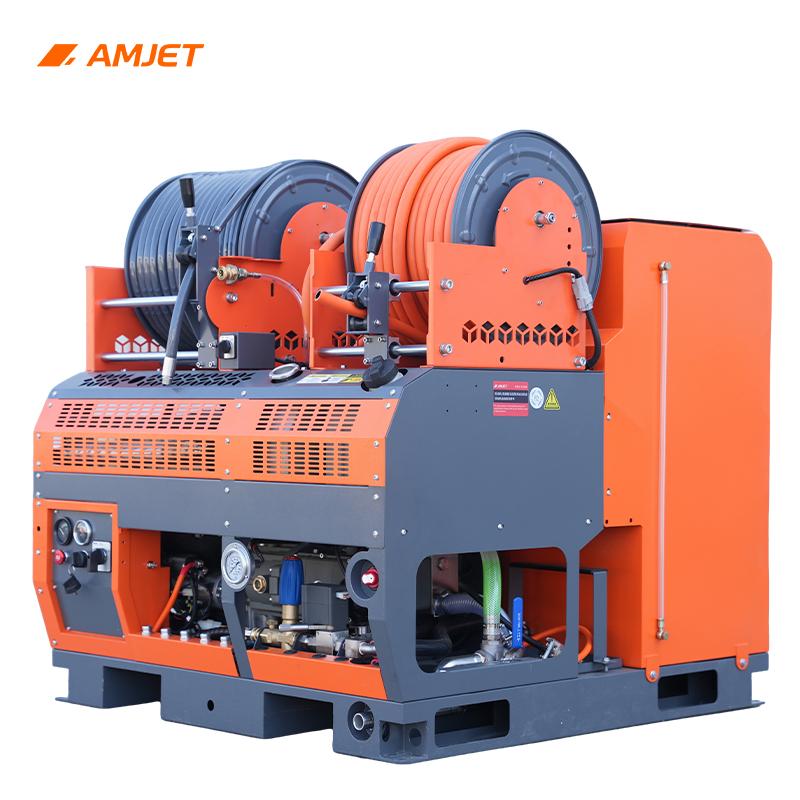
Pay close attention to hose reel capacity, nozzle interchangeability, and the ability to adjust water pressure and flow independently. A machine with excessive horsepower but a poorly matched pump or a flimsy reel will slow crews down more than a modest unit with smart ergonomics and easy-to-swap nozzles.
Expect a named technical contact, not just a generic support email. Ask how quickly they ship wear parts like nozzles, hoses, and filters, and whether they offer remote troubleshooting. A supplier that can walk your mechanic through a repair over video call is worth far more than one that only sells boxes.
Certifications help, but they are only a starting point. Ask for proof of third-party testing on key components like the pump and pressure relief valve. Also check how the supplier handles compliance updates—do they proactively inform you when safety standards change, or do they wait until you ask?
Many buyers over-prioritize maximum pressure and forget about flow rate, which does the actual cleaning. Others skip asking about total cost of ownership, including typical part replacement intervals and energy use. Some also sign contracts without a clear schedule for delivery penalties or a warranty that covers both parts and labor on-site.
Build a simple spreadsheet that normalizes each quote to the same duty cycle—for example, 20 hours per week over five years. Include expected spare part costs, energy use, and a rough estimate of downtime based on the supplier's average response time. The cheapest upfront price often loses once you add these operational figures.
If a supplier pressures you to wire a large deposit before sharing technical drawings, that is a serious warning. Other red flags include vague warranty language that excludes seals and hoses, no physical address on the website, or an unwillingness to provide a written delivery date with penalty clauses. Trust your instinct when the conversation feels one-sided.
Conclusion
The first step in sourcing a sewer cleaning machine that actually holds up isn't comparing models—it's knowing exactly what your crews face on the ground. Pipe diameters, access point locations, debris type, water pressure availability, and even local disposal rules shape whether a trailer jetter, skid unit, or truck-mounted system will survive a season. Once you've mapped those conditions, ask suppliers to prove they can meet them. A glossy spec sheet doesn't tell you how the machine performs after 300 hours in clay-laden lines or whether the nozzle kit handles root masses without constant clogging. Request test logs, video from similar job sites, or a demo unit you can run yourself. This is also where supplier credibility matters: look for ISO or CE certifications, but don't stop there. Ask who audited the factory, when, and whether you can see the report. A supplier that hesitates to open its production floor or hides behind a sales rep is usually hiding something else.
Beyond the initial purchase, the real cost of a sewer cleaning machine lives in downtime, spare parts, and rushed repairs. Compare manufacturers not by sticker price but by the cost per operating hour over five years—including pump rebuilds, hose replacements, and the wait time for a critical seal or electronic board. Ask about regional parts warehouses, lead times for common wear items, and whether they offer remote diagnostics or field service training. Then cross-check what the supplier claims with actual customers. Online reviews can be gamed, so call or visit two or three operators who run the same model in similar conditions. Ask about warranty response speed, hidden maintenance issues, and whether the machine still hits its rated pressure after heavy use. A reliable supplier is one whose name keeps coming up when you ask, 'Would you buy it again?' That answer often carries more weight than any brochure.
Contact Us
Contact Person: Mike
Email: [email protected]
Tel/WhatsApp: +86 19545555505
Website: https://www.amjeting.com/