

Top Industrial Door Supplier: A Complete Buyer's Guide
2025-12-18
Choosing the right industrial door supplier can make or break your facility's efficiency and safety. With so many options on the market, it's easy to feel overwhelmed—but the right partner, like FANSI, stands out by combining cutting-edge design with reliable performance. In this guide, we'll walk you through everything you need to know to make a confident, informed decision.
Cutting Through the Noise: What Actually Matters in an Industrial Door
An industrial door isn’t just a slab that moves up and down. What separates the reliable from the headache is how it handles the daily grind: the unrelenting forklift traffic, the thermal shocks of a loading bay left open too long, and the quiet fatigue that turns a smooth operator into a maintenance black hole. Forget the glossy spec sheets — pay attention to the cycle rating under real loads, the way the tracks and rollers are engineered against wear, and whether the insulation actually stays put when the door has been slammed a few thousand times.
Then there’s the safety logic that too many buyers gloss over until something — or someone — gets caught. Modern doors pack sensors, but the real question is how that system fails. Does it freeze operations with a vague error, or does it clearly signal what’s wrong while keeping people out of harm’s way? And don’t overlook the opening speed: seconds matter when you’re trying to maintain temperature differentials or keep dust from drifting into clean areas. The right door is the one that quietly adapts to your workflow’s rhythm, not the one that demands you work around its quirks.
Matching Door Type to Daily Operations Without Overengineering
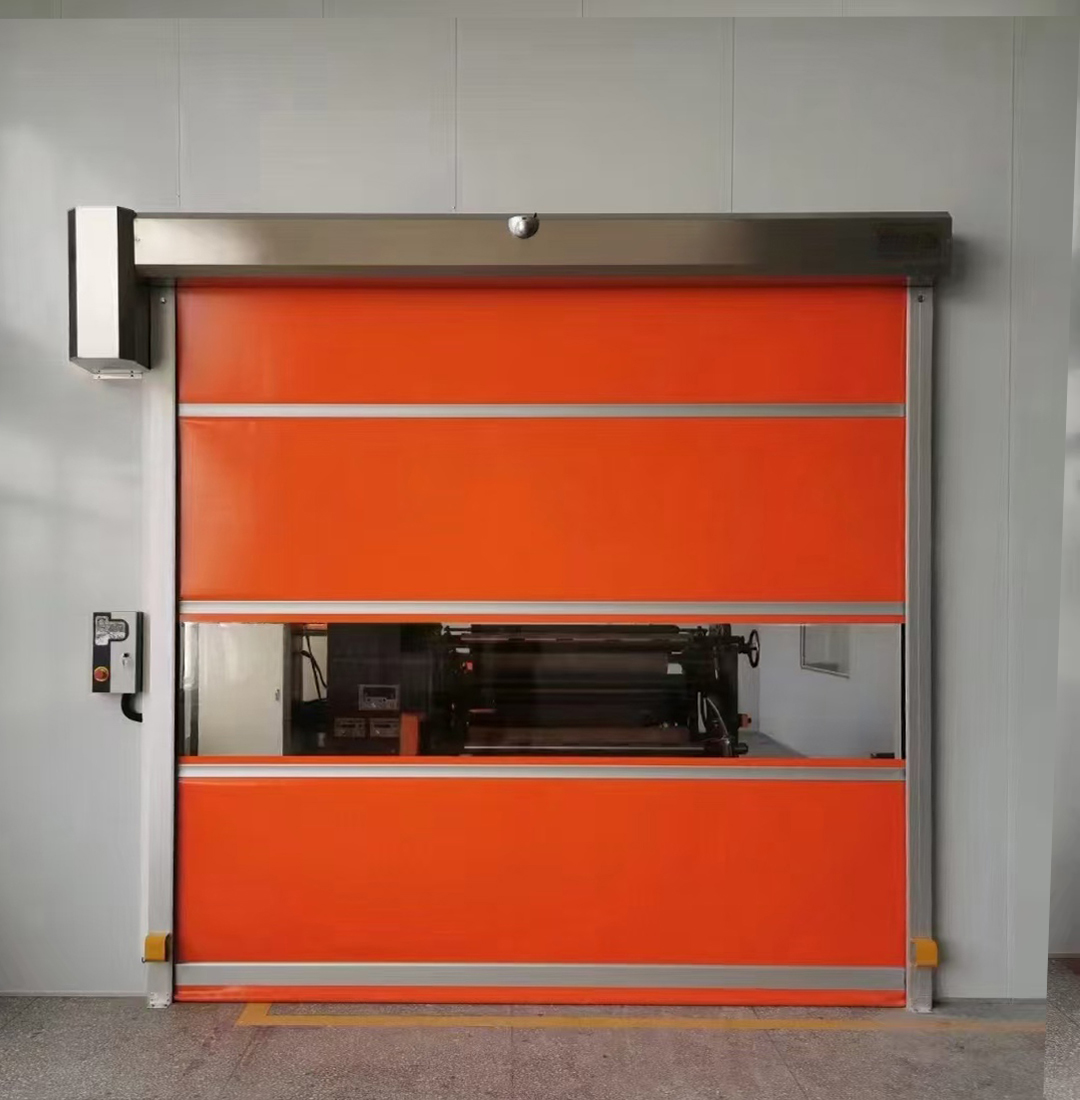
A busy warehouse doesn’t need a door that doubles as a spaceship airlock. When you’re matching door type to daily operations, the real trick is to ignore the hype and focus on the foot traffic, forklift paths, and the rhythm of your shifts. A high-speed roll-up door sounds impressive until you realize your team only opens that bay twice a day. Opt for a simple sectional or a rubber crash door if the real pain point is forklift bumps, not thermal loss. The goal isn’t to buy the most advanced door on the market—it’s to choose the one that fades into the background of your workflow.
Overengineering creeps in when you’re seduced by sensor-rich, IoT-enabled doors that promise to cut energy bills by a fraction of a percent. But if your operation runs in a mild climate with open bays most of the year, that “smart” door is just another expensive gadget to maintain. Instead, walk the floor at different hours. Watch how people and vehicles actually move. A fast-acting fabric door might be perfect for a cold storage entry used 50 times an hour, but an interior passthrough that sees light traffic can get by with a simple manual swing door or even a strip curtain. Match the abuse level and cycle count, not the brochure specs.
Maintenance patterns reveal where overengineering hurts most. If your crew avoids servicing a door because it requires a proprietary diagnostic tool, you’ve probably chosen poorly. Look for designs with replaceable wear parts—bottom bars, seals, and tension springs—that you can fix in-house during a break. A door that survives a direct hit from a pallet jack and only needs a quick reset is worth more than one with a dozen sensors that shut down operations when they get dusty. By aligning door selection with the real beat of your workday, you’ll get durability without the drama, and a facility that runs smooth because nothing gets in the way.
Material Choices That Go Beyond Steel vs. Aluminum
The binary debate between steel and aluminum often overshadows a quieter revolution happening in material science. Engineers are now blending high-performance polymers with natural fibers like flax or hemp, creating bio-composites that deliver stiffness comparable to aluminum at half the weight—and with a fraction of the carbon footprint. These materials don't just replace metal; they redefine design possibilities by allowing complex, organic shapes that would be cost-prohibitive to machine or stamp.
Magnesium alloys are another under-the-radar contender, shedding 35% of aluminum's weight while maintaining impressive dent resistance. What makes them genuinely interesting is their ability to dampen vibration—a trait that turns mundane brackets into silent, fatigue-fighting structures. Pair that with the fact that magnesium is abundant and endlessly recyclable, and you have a material that sidesteps the energy-hungry smelting processes typical of aluminum.
Perhaps the most overlooked shift is in additive manufacturing, where materials like PEEK or Ultem can be printed into lattices that mimic bone structures. This topology optimization yields parts with mechanical properties tailored to exact load paths, leaving the crude “solid billet” mindset far behind. It's not about finding a new metal—it's about rethinking what a material can do when geometry itself becomes a design variable.
Installation Pitfalls Even Experienced Buyers Miss
You’d think the pros have it all figured out, but even seasoned buyers get tripped up by how their site actually behaves once the hardware is unpacked. A common snag is assuming the floor or wall can handle the load without double‑checking the substrate. I’ve seen engineered stone countertops crack because the cabinetry underneath had a subtle 2‑mm dip that nobody caught during a rushed walkthrough. It’s not just about leveling—thermal expansion and humidity swings make materials move in ways that mock the best‑laid plans.
Another silent killer is misreading the ambient environment where the gear will live. A high‑end appliance spec sheet might boast a narrow operating temperature band, yet the installer places it next to a sun‑blasted window or an uninsulated garage wall. The warranty vaporizes when the control board fries, but that fine print rarely surfaces until you’re on hold with support. And don’t overlook something as mundane as vibration; a washing machine on a wooden subfloor can walk itself into a corner over a few cycles if the anti‑vibration pads are skipped in the name of speed.
Then there’s the phantom issue of clearance—not just for the unit itself, but for the human beings who have to service it. A furnace crammed into a closet with six inches to spare might pass a code inspection, but when the filter needs changing, you’ll curse the designer. I’ve watched a $20,000 millwork package get gouged because a fridge was slid in with millimeters to spare, only to realize the door hinges needed two extra inches to swing properly. Good installation isn’t just about making things fit; it’s about anticipating how they’ll live in the space once you’ve left the room.
Ongoing Care That Extends Door Life and Avoids Downtime
Regular maintenance does more than just keep things moving—it actively prevents the kind of wear that leads to sudden breakdowns. By catching small issues early, you sidestep bigger, costlier repairs later. It’s about treating your door as a long-term asset rather than a simple piece of hardware. A well-looked-after system doesn’t just last longer; it works better day in and day out, keeping your operations smooth and predictable.
The real value lies in the quiet confidence that your entrance points won’t let you down. Imagine a busy warehouse or a healthcare facility—any unexpected downtime ripples into delays, frustration, and lost productivity. Proactive care routines are designed to fit around your schedule, not interrupt it. This approach transforms maintenance from a reactive chore into a strategic advantage, ensuring that every cycle counts without disruption.
Beyond the mechanical checks, ongoing care involves adjusting to seasonal shifts and usage patterns. What works in summer might need tweaking come winter. It’s a tailored partnership that evolves with your needs, factoring in everything from seal integrity to sensor alignment. The result is a door that operates like new for years, dodging the common pitfalls that grind others to a halt.
Red Flags in Supplier Promises and How to Spot Substance
When a supplier's promises sound more like a fairy tale than a business plan, it's time to pay attention. One glaring red flag is the guarantee of “no minimum order quantity” coupled with rock-bottom prices and lightning-fast production. These three rarely coexist without corners being cut somewhere. A factory that genuinely offers low MOQs at a competitive price is either absorbing significant costs to build a relationship (unlikely long-term) or compromising on material quality, labor conditions, or compliance. Dig deeper by asking how they manage costs: request a rough cost breakdown or ask about their typical client batch sizes. If their answers are vague or they pivot to other benefits, substance is missing.
Another warning sign is the “we can make anything” attitude without displaying genuine expertise in a specific category. A supplier who nods along to every request without asking clarifying questions or pointing out potential production challenges is probably just chasing a purchase order. Real manufacturers have deep know-how in a particular material, process, or product family. They will push back, recommend better alternatives, or explain why a certain design might fail in mass production. This friction is a signal of substance. If every conversation ends with “yes, no problem,” ask for samples of similar complex work they’ve done, or present a deliberate design flaw to see if they catch it. Those who simply agree to everything rarely deliver on the finer details.
Finally, beware of suppliers who promise to match a competitor's price without understanding your full specifications. Price-matching can seem like a win, but often it’s a bait-and-switch tactic where initial shipments meet quality standards and later ones degrade. To spot substance, establish a detailed quality checklist and inspection protocol from the start, and send a third-party inspector not only pre-shipment but also during the first production run. Suppliers with nothing to hide welcome such oversight; those who resist or make excuses are often the ones whose promises are just smoke. Genuine reliability reveals itself in consistent, measurable performance over time, not in flashy guarantees.
FAQ
Focus on their experience with your specific industry, range of door types offered, safety certifications, and the quality of after-sales support. Real-world testimonials and case studies give a clearer picture than just promotional material.
It depends on your operational needs. Roller shutters suit compact spaces with moderate traffic, sectional doors excel in thermal insulation, while high-speed doors are essential for busy logistics or cold storage where airflow control and rapid cycles matter.
A reliable full-service supplier will manage the entire process from site survey and tailored design to professional installation and ongoing maintenance. Ask if they provide proactive service contracts rather than just reactive repairs.
Modern doors should integrate light curtains, safety edges, emergency stop mechanisms, and optionally interlock systems that sync with building alarms or access control. Compliance with local safety codes is non-negotiable.
Request itemized breakdowns covering door construction, motor specifications, warranty periods, and installation costs. A slightly higher upfront investment in robust hardware often reduces long-term downtime and repair expenses.
Faster opening and closing cycles minimize temperature loss, reduce wait times for vehicles, and improve workflow in high-traffic areas. Even minor speed improvements can lead to noticeable gains in daily operations.
Yes, established suppliers can manufacture doors to non-standard dimensions and apply specific coatings or colors. They usually guide you through structural limitations, wind load requirements, and optional features like vision panels.
Inquire about insulation values, thermal breaks, and sealing systems. Double-skinned doors with adequate perimeter seals and low U-values are crucial for temperature-controlled environments and reducing energy bills.
Conclusion
When you're investing in industrial doors, it's easy to get lost in spec sheets and sales pitches. The real differentiator isn't always the door itself, but how well it aligns with what your facility actually does every day. Start by ignoring the buzzwords and focusing on the cycle speed, clearance requirements, and environmental sealing your operations demand. Too often, buyers over-specify—opting for high-speed doors when a well-built sectional would suffice, or vice versa. Get that right first, then think about materials. It's not just steel versus aluminum anymore; composite panels, fiberglass, and hybrid frames can offer better insulation, corrosion resistance, or weight savings that matter more for your particular use case. The best supplier will guide you through these trade-offs rather than pushing the most expensive option.
Even the perfect door can become a headache if the installation is mishandled. Common but overlooked mistakes include ignoring floor levelness, forgetting to account for wind load, or underestimating the need for reinforced mounting points on older walls. A supplier worth their salt will preempt these issues with a detailed site survey. After installation, the conversation shouldn't end. Look for a partner who provides a clear, scheduled maintenance plan—not just a reactive repair service. Doors that operate hundreds of times daily need proactive care to avoid sudden failures. Finally, scrutinize the supplier's guarantees. Vague promises about "lifetime support" or "industry-leading durability" are meaningless without data. Demand references, warranty specifics, and on-site performance proofs. The right supplier won't shy away from those conversations—they'll welcome them as a chance to show they're the real deal.
Contact Us
Contact Person: Liam
Email: [email protected]
Tel/WhatsApp: (+86)16658531012
Website: https://www.fansifiredoor.com