

Top Electric Press Brake Supplier from China for Your Manufacturing Needs
2026-08-26
Finding a press brake that holds tolerance after thousands of cycles isn’t luck—it’s the result of choosing the right manufacturer. For businesses serious about bending accuracy, throughput, and long-term service costs, JIAN MENG has emerged as a go-to name among China’s top electric press brake suppliers. This post breaks down what sets their machines apart and why your next investment should start here.
Electric press brakes that hold tight tolerances without constant manual correction
Modern electric press brakes use direct servo drives and closed-loop angle measurement to lock in bend accuracy from the first part to the last. Instead of relying on an operator to tweak ram depth or adjust for material springback after every few strokes, these machines monitor the actual bend angle in real time and make micron-level corrections on the fly. The result is a stable process where a batch of fifty brackets comes out with the same flange length and angle as the first one, even when sheet thickness or grain direction varies slightly between blanks.
The elimination of constant manual correction changes how a shop runs. Skilled operators stop acting as full-time measurement technicians and spend their time on tool setup, part flow, or programming the next job. The press brake itself maintains the tolerance because the control system builds a correction model from the first bends—learning how a given material and tool set behaves, then compensating for deflection, temperature drift, and tool wear without being told. That means tolerances of ±0.2 degrees or tighter become repeatable across shifts, not just during a carefully supervised trial run.
What makes this possible is the combination of direct-driven ball screws or belts with high-resolution encoders and a controller that adjusts ram position hundreds of times per second. Unlike hydraulic systems where oil temperature and valve hysteresis introduce drift, electric drives move to a commanded position and hold it with almost no overshoot. Paired with a laser or camera-based angle sensor above the die, the machine compares the measured angle to the target and nudges the ram on the next bend if needed. Over a full run, the operator’s only intervention is loading material and removing finished parts—no test bends, no shimming, no manual corrections scribbled on a setup sheet.
What a factory floor in Guangdong reveals about build quality before you order
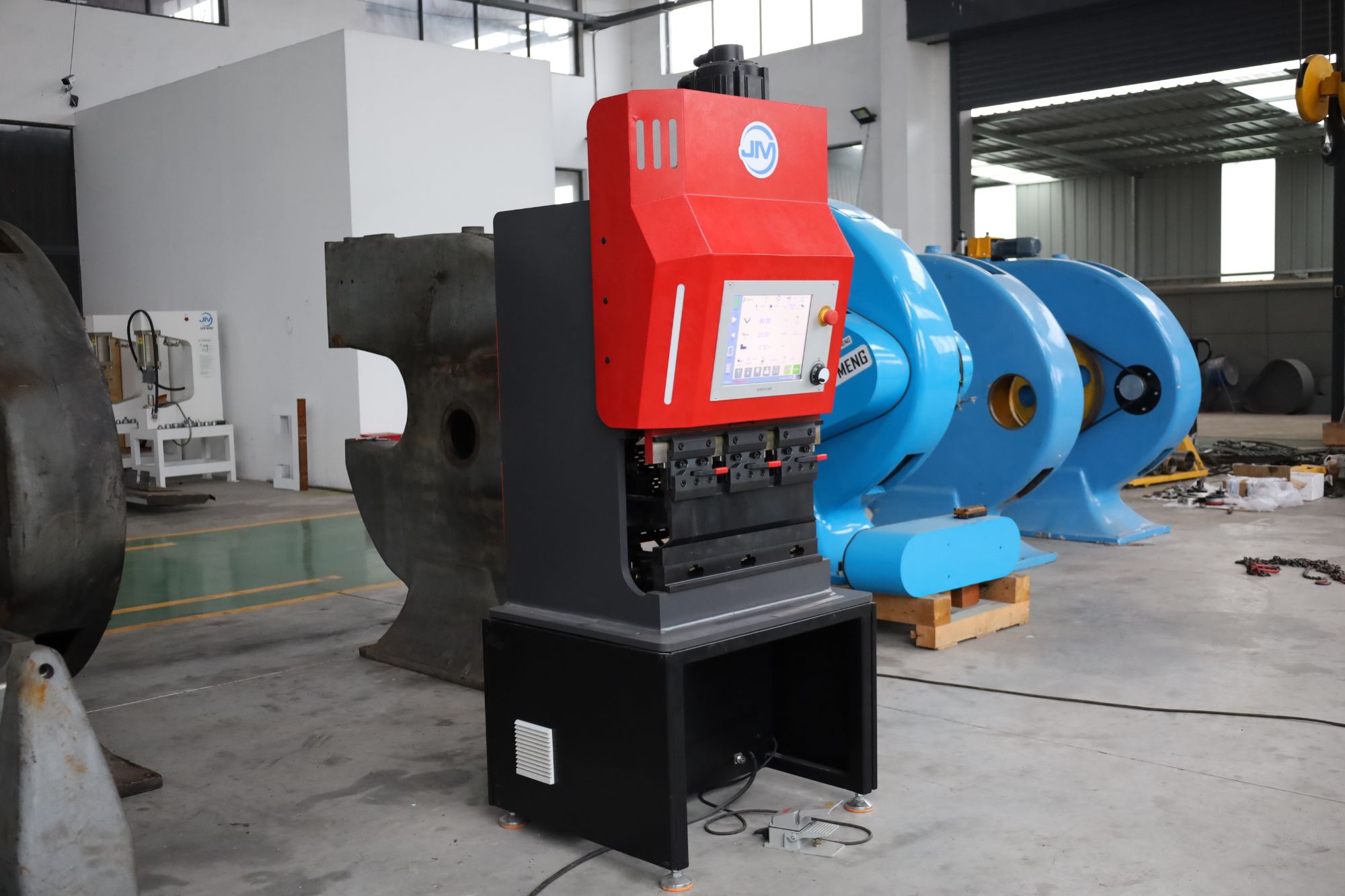
Walk the assembly area and you will notice how the soldering stations are arranged. At one Guangdong factory I visited, the workers kept a small brush and a tin of flux within arm’s reach, not because a manual told them to, but because the line supervisor had pulled a batch of cold joints off the belt the week before. That kind of adjustment is not written in any product listing.
The floor itself tells you more than a spec sheet. Racks of partially built units wait under dust covers, while torque drivers hang from balancers above each station. If you see a bench cluttered with loose screws and half-open adhesive tubes, expect the same carelessness inside the enclosure. If the floor is marked with taped zones for finished, rework, and incoming inspection, the factory has already decided that defects are normal enough to need a parking spot.
Before you place an order, ask for a short video of the line in motion, not the polished showroom. Watch how a worker handles a failed board: does it go into a labelled red bin with a traveller ticket, or does it get flipped over and tried again on the same fixture? The answer tells you whether build quality is a habit or a hope.
Matching tonnage, stroke length, and backgauge travel to your real part runs
Most press brake specs look great on a spreadsheet, but they mean nothing until you line them up against the parts you actually bend day after day. A machine with extra tonnage doesn't help if the stroke is so long that your small brackets get lost in the cycle time. Likewise, a fast ram is wasted when the backgauge has to crawl across a huge travel range for every bend sequence.
Tonnage should be chosen by your thickest, hardest material—not a guess based on general shop work. If you run mostly 16-gauge stainless but occasionally form half-inch plate, sizing for the occasional job will slow down your everyday parts. Stroke length works the same way: too much daylight means the ram travels farther than needed, adding seconds to every bend. Match the stroke to your tallest flange plus a small safety margin, and you'll see the difference in throughput.
Backgauge travel is the silent cycle-time killer nobody talks about. If your parts vary from tiny clips to wide panels, a gauge that has to traverse a long distance between bends will eat up more time than the forming itself. Instead of defaulting to maximum travel, calculate the actual range your part families require. Shortening that path—even by a few inches—can turn a three-bend part from a fifteen-second cycle into an eleven-second one, and that adds up fast over a shift.
Why lead times for Chinese electric brakes shift more than most buyers expect
Chinese electric brake lead times rarely move in a straight line. A buyer might get quoted eight weeks, then watch that stretch to fourteen after a single subcomponent shortage. The reason isn't a single factory bottleneck—it's how several fragile variables stack on top of each other.
Rare earth magnet pricing and export controls can change scheduling within days. When neodymium prices spike or a provincial inspection tightens, brake manufacturers often pause small-batch runs to renegotiate material supply. Those pauses don't show up on a standard lead-time sheet, but they ripple into final assembly dates.
Customization also plays a quiet role. Buyers who request modified mounting brackets or nonstandard voltage ratings are essentially entering a low-volume production queue. That queue gets reshuffled whenever a larger OEM order lands, so a small order's promise date can slip by two to six weeks without any formal notice.
Energy draw, cooling demands, and other costs missing from the initial quote
The sticker price on a server quote rarely reflects what the hardware will actually pull from the wall once it's running. Idle power draw, load spikes, and the cost of keeping the room cold enough to prevent thermal throttling all add up in ways the initial spreadsheet never mentions. A chassis that looks efficient on paper may force you to upgrade a PDU, rebalance circuits, or add dedicated cooling capacity just to keep it stable.
Those follow-on expenses often sit in a different budget or show up months later as an unexplained jump in utility bills. Redundant power supplies, high-RPM fans, and densely packed storage all drive up both electricity use and heat rejection requirements. If the quote doesn't include steady-state kilowatt consumption and a realistic cooling assumption for your climate, the real cost of ownership is probably higher than the number in front of you.
After-sales support signals that separate dependable suppliers from the rest
Plenty of suppliers look identical on paper—similar specs, similar lead times, similar price points. The difference often shows up weeks after delivery, when a batch has a defect or a component doesn’t fit the intended process. Dependable suppliers treat that moment as part of the job, not as an interruption. They answer quickly, send replacements without a lengthy dispute, and keep records of your specific order history so you don’t have to re-explain the issue from scratch.
What makes after-sales support a useful signal is that it can't be faked for long. A supplier might promise “24/7 support” in a brochure, but real reliability appears in the small actions: a return label emailed within an hour, a technician who asks about the machine’s error code instead of reading from a script, or a credit note issued before you ask for one. These behaviors cost time and money, so only suppliers with solid internal processes and healthy margins tend to sustain them.
Paying attention to after-sales signals also shifts the buying decision away from the lowest initial quote. A slightly higher invoice can be justified when the supplier’s response pattern reduces downtime, keeps production lines moving, and prevents a small problem from becoming a week-long stoppage. Over time, the suppliers who handle the messy, post-purchase realities well are the ones you end up trusting with larger orders.
FAQ
Focus on their track record with servo-driven machines, not just catalog specs. Ask about frame rigidity, crowning systems, and whether they use reputable components like Bosch Rexroth or Siemens. A good supplier will also walk you through their after-sales support structure, including remote diagnostics and spare parts availability.
The gap has narrowed considerably. Many Chinese manufacturers now use the same CNC controllers and servo motors as European brands. You can expect repeatability within ±0.01 mm on well-built machines, but always verify with actual bending tests on your material rather than relying on datasheets.
Yes, most established suppliers offer custom back gauges, segmented punches, and even robotic bending cells. Be specific about your part geometry and volume; they can often engineer a turnkey solution at a fraction of the cost of a European integrator.
Standard models can ship in 30–45 days, but customized configurations might take 60–90 days. Add another 3–4 weeks for sea freight to North America or Europe. Always confirm whether the quoted lead time includes factory acceptance testing.
Request live video walkthroughs of the assembly floor, ask for customer references in your region, and insist on a pre-shipment inspection report with actual bending samples. Some suppliers also provide third-party inspection services like SGS or Bureau Veritas.
This varies by supplier. Look for companies with regional warehouses or partnerships with local service providers. Ask about response times for common issues and whether they stock critical components like servo drives, ball screws, and hydraulic clamps.
A standard warranty is 12–18 months, but some suppliers offer 24 months on the frame and 12 months on electronics. Make sure the warranty covers parts and labor for on-site repairs if they have a local technician, or at least covers parts with remote guidance.
Yes, models with 200-ton capacity or more can bend 10–12 mm high-strength steel across a 3-meter bed without issue. The key is a well-designed frame and a servo motor with enough torque. Always ask for tonnage charts specific to your material grades.
Conclusion
Finding a top electric press brake supplier from China starts with looking past polished brochures. The machines worth shortlisting hold tight tolerances run after run, so operators aren't constantly nudging offsets to keep parts in spec. That kind of repeatability doesn't show up on a spec sheet, which is why a visit to a Guangdong factory floor—or a detailed video walkthrough—tells you more about frame welds, crowning design, and assembly care than any datasheet can. Equally important is matching tonnage, stroke length, and backgauge travel to your actual part mix; a supplier that pushes a one-size-fits-all model either doesn't understand your forming range or is clearing inventory.
Once the machine fits, the real test begins. Lead times for Chinese electric brakes often slip because of component shortages, shipping bottlenecks, or last-minute controller changes, so build in more buffer than the sales rep promises. You'll also want to break down the total cost of ownership: energy draw on high-cycle jobs, cooling demands in a hot shop, and spare parts pricing rarely appear in the initial quote but hit your bottom line within the first year. Finally, pay attention to after-sales support—does the supplier have a local service partner, remote diagnostics, and a parts inventory that isn't just a warehouse in Shanghai? Dependable suppliers answer those questions before you sign, not after.
Contact Us
Contact Person: Jeanie
Email: [email protected]
Tel/WhatsApp: +86 19805122954
Website: https://www.jianmeng.com