

Top 10 UL FM Alarm Check Valves for Superior Fire Protection
2026-06-24
When fire strikes, every second counts—and the reliability of your alarm check valve can mean the difference between containment and catastrophe. In this guide, we’re counting down the top 10 UL FM alarm check valves that deliver uncompromising protection, with a spotlight on DRIFCO for its standout engineering and field-tested performance. Whether you're specifying for a high-rise or upgrading an industrial system, the right choice starts here.
Why UL/FM Approval Is Non-Negotiable in Fire Protection
When it comes to safeguarding lives and property, the certification marks of UL and FM Global carry a weight that cannot be overstated. These stamps are not just bureaucratic checkpoints—they represent a relentless battery of tests that push fire protection equipment to its breaking point. A sprinkler head or valve that earns this seal has survived scenarios far more extreme than a typical fire, from brutal temperature cycling to corrosion resistance trials that span months. Without such rigorous vetting, you're left with products that might perform perfectly in a catalog but fail catastrophically when ambient heat rises and lives hang in the balance.
The difference between approved and unapproved components often manifests in the details that most people never see. UL and FM don't simply verify that a device meets a published standard; they audit manufacturing facilities without warning, strip down samples to inspect internal materials, and even simulate decades of service in accelerated aging chambers. This depth of scrutiny is why building codes, insurers, and fire marshals lean so heavily on their approvals. An unlisted valve might be cheaper and look identical, but the absence of oversight means the alloy in its critical sealing surfaces could degrade prematurely under heat exposure, creating a leak path precisely when water demand is highest.
Ultimately, trust in fire protection systems is built on a foundation of third-party validation. Fire is unforgiving, and the margin for error vanishes in the first moments of an incident. UL and FM approval represents a collective, hard-won understanding that cutting corners in material selection or assembly processes can have irreversible consequences. For specifiers and installers, insisting on these marks is less about adhering to a regulation and more about drawing a line against the unknowns that unchecked manufacturing practices can introduce. In a realm where performance cannot be auditioned during a real event, the non-negotiable nature of this approval becomes self-evident.
How to Spot a Reliable Alarm Check Valve in Seconds
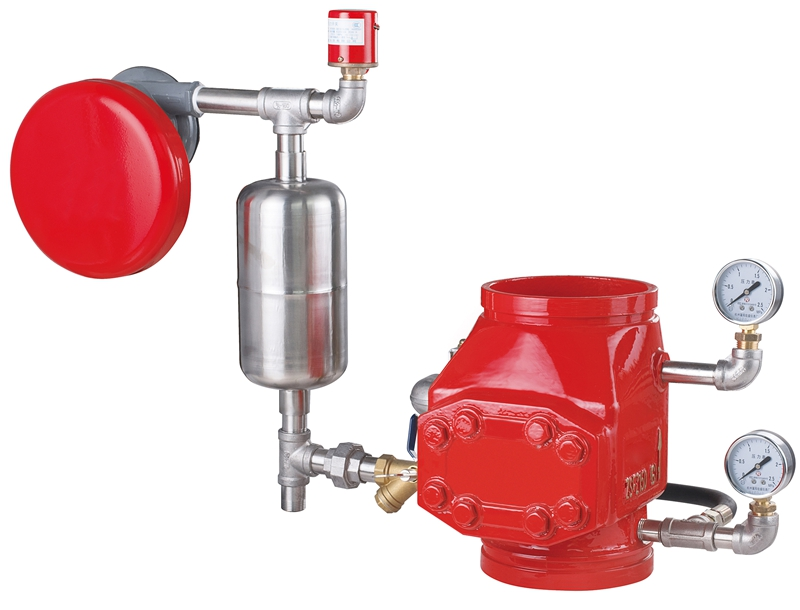
A quick glance at the external build often tells you more than any spec sheet. Run your fingers along the valve body—it should feel solid, with clean casting and no rough edges or pitting. Notice the coating too; a quality fused epoxy finish stands up to corrosion and isn’t just slapped on for show. Then give the clapper assembly a nudge if it’s accessible. It ought to swing freely but seat firmly without any hesitation, because a sticky or unbalanced clapper means false trips or missed alarms down the line.
Don’t underestimate the hardware details. Check the trim components—pressure gauges, test valves, and drain plugs. On a dependable valve, these are solid brass or stainless steel, not mystery alloy that rusts in weeks. Tiny touches, like a clearly marked water line and an easily removable hand-hole cover, signal that the manufacturer actually thought about the folks who’ll service this thing year after year. If something looks like an afterthought—a flimsy handle or a gauge without fluid dampening—walk away.
The Unsung Hero of Sprinkler Systems Explained
Most people picture the sprinkler head as a simple shower-like device, but its true genius lies in a tiny, often-overlooked component: the heat-sensitive activator. This unassuming piece—whether a glass bulb filled with a glycerin-based liquid or a soldered metal link—is the sole reason a sprinkler doesn’t dump water at the first whiff of smoke. It’s designed to fail only when a specific temperature is reached, meaning it sits patiently for years, resisting corrosion and false triggers, until a fire’s heat physically breaks or melts it. Without this deliberate weak point, the entire system would be either useless or a constant flood risk.
The precision behind these activators is staggering. The liquid inside a glass bulb expands at a precisely calibrated rate; even a few degrees too low and the system would trip during a summer heatwave, too high and it might not burst until the fire is unmanageable. Manufacturers achieve this by adjusting the bubble size within the liquid—a detail that takes years to perfect and is specific to each temperature rating. For fusible links, it’s the alloy composition of the solder that determines when the link yields, and it’s engineered to melt rapidly once the threshold is crossed, snapping the parts apart with a clean break. That split-second release opens the waterway, and the rest of the protection unfolds.
What makes this element truly heroic is its passive reliability. It requires no electricity, no human intervention, and no moving parts until the moment of activation. In an era of smart buildings and sensor-driven everything, the fire sprinkler’s trigger remains stubbornly mechanical—and intentionally so. While control panels and alarms may fail in a blaze’s early stages due to power loss, this tiny thermal guardian keeps watch directly where flames first appear, often stopping a disaster before anyone even knows it started. It’s the silent, solitary decision-maker that bridges the gap between a minor incident and a catastrophic loss.
Installation Tips That Can Make or Break Performance
Every seasoned mechanic knows that the way a part goes in matters just as much as the part itself. A hasty install, where bolts are unevenly torqued or gaskets are pinched, can quietly introduce leaks, misalignment, and drag that steal horsepower and precision. It’s the subtle art of seating a bearing without brinelling, or threading a sensor just far enough to read correctly without bottoming out. These small acts of patience separate a lively, responsive build from one that always feels slightly off. When you slow down and respect the mating surfaces, the performance gains aren’t just on paper—they’re felt in the seat of your pants.
Thermal expansion is the invisible enemy of many well-intentioned installations. Parts that fit perfectly at room temperature can bind or warp once heat cycles begin if the installer didn’t account for clearance. This is where anti-seize on threads and a calibrated torque wrench become extensions of your own hand. A dry, over-tightened manifold bolt might hold fast for a thousand miles, but it’s setting the stage for a cracked casting later. The same goes for plastic intake components that need room to swell; forcing them into place creates stress risers that eventually surrender under boost. Treating thermal dynamics as a design parameter, not an afterthought, keeps the power consistent and the failure rate low.
Electrical connections often decide whether a performance upgrade feels transformative or triggers a cascade of troubleshooting. A ground wire that’s merely finger-tight or a connector not fully seated can introduce resistance that confuses engine management, leading to intermittent misfires or lazy throttle response. Using dielectric grease sparingly—just on the seal, not the contacts—prevents corrosion without insulating the circuit. Dressing harnesses away from heat sources and vibration points is equally critical; a chafed wire against a sharp bracket can short out a fuel pump at the worst possible moment. The goal is a setup that behaves as if it left the factory, but with a sharper edge, where every signal is clean and every component talks without static.
Top Product Lines That Engineers Trust for Life Safety
When lives are on the line, engineers can't afford guesswork. The product lines that earn their trust are the ones that have proven themselves in real emergencies—decades of field data, relentless third-party testing, and a design philosophy that never cuts corners. These aren't just compliant systems; they're the benchmarks that safety professionals reference in submittals and spec reviews without a second thought.
What sets these lines apart is how transparently they perform under stress. From thermal imaging cameras that maintain clarity in zero-visibility smoke to notification appliances with industry-leading candela consistency, every component is built to do one thing: work the first time, every time. Engineers know the manuals backward and forward, not because they're complicated, but because the reliability makes the details worth remembering.
Long-term support seals the deal. The manufacturers behind these lines don't discontinue a sensor or panel overnight—they stock replacement parts for decades and maintain backward compatibility wherever possible. That kind of engineering integrity turns first-time specifiers into lifelong advocates, and it's why when a new fire alarm or suppression system goes out for bid, the same product families keep showing up in the winning designs.
Common Missteps When Choosing a Valve (and How to Avoid Them)
In the rush to get a system up and running, it’s easy to fixate on a valve’s size and connection type while ignoring the actual process conditions. A valve that works perfectly with clean water might corrode quickly when exposed to mild acids, or seize up with sticky fluids. Always check compatibility not just with the media but also with the temperature and pressure it will see at its worst. Pulling apart a failed unit later is much costlier than double-checking the material and trim on the front end.
Another overlooked factor is how the valve actually performs when it’s barely cracked open. Many people treat a valve as just on/off, but when it throttles or runs in a partly open state for hours, the wrong style can vibrate, cavitate, or wear out the seat quickly. A globe valve might handle this better than a ball valve, for instance. Watching where and how often the valve will modulate can steer you away from a headache-prone choice.
Finally, don’t forget the human side—maintenance. A valve that requires special tools or climbing over piping to reach the actuator will eat up time during every inspection. If the packing or seals need frequent adjustment, a slightly higher initial cost for a self-adjusting design could pay for itself in labor. Find out what the crew actually curses at, and pick something that won’t make the list.
FAQ
An alarm check valve is a specialized check valve used in wet pipe sprinkler systems. It allows water to flow in one direction toward the sprinklers while preventing backflow. When a sprinkler head opens, the valve's clapper lifts, activating an alarm that alerts occupants or the fire department. This immediate notification is critical for timely evacuation and response.
UL (Underwriters Laboratories) and FM (FM Approvals) certifications ensure that the valve meets rigorous safety and performance standards. They are widely recognized by insurance companies and regulatory bodies, so using approved valves can simplify compliance, lower insurance premiums, and give peace of mind that the component will function reliably during a fire.
Look for valves with corrosion-resistant materials like ductile iron or stainless steel, grooved or flanged connections for easy installation, low pressure drop to maintain system efficiency, reliable alarm activation mechanisms, and minimal maintenance needs. Models with externally accessible clappers and resilient seating are also preferred for long-term durability.
Sizing involves matching the valve's diameter to the riser pipe size and ensuring it can handle the system's flow and pressure requirements. Always refer to the manufacturer's technical data and hydraulic calculations. Oversizing can delay alarm activation under low-flow conditions, while undersizing may cause excessive pressure loss.
Regular inspections are essential. Check for leaks, corrosion, or obstructions in the alarm line. Test the alarm functionality quarterly using the inspector's test connection. Lubricate moving parts if needed, and perform a full internal inspection every five years or as recommended by the manufacturer to keep the valve in prime operating condition.
Grooved-end valves generally allow faster installation and easier removal for repairs, as they use couplings instead of multiple bolts. They also accommodate slight misalignments and reduce system weight. Flanged valves, however, are often preferred in high-pressure applications or where rigid connections are required. The choice depends on project specifications and installer preference.
False alarms can occur due to water surges or debris under the clapper. Ensuring proper water supply regulation and keeping the system clean helps. Leakage past the clapper may indicate a worn seat; replacing the sealing components solves this. Also, test the alarm switch regularly to guarantee it sends a signal when the valve trips.
Conclusion
UL and FM approvals are far more than bureaucratic stamps; they sign a valve’s promise to perform when every second counts. The alarm check valve, often overlooked, is the quiet heartbeat of a sprinkler system—triggering alarms only when a genuine fire-driven water flow occurs. Recognizing a dependable unit in moments relies on spotting those certifications and inspecting telltale signs of ruggedness: a seat that resists corrosion, a clapper that seals without sticking, and a body built to endure surges. Skip a listed valve, and you gamble on a device that might choke under real heat, undermining everything else.
Even the finest valve can be crippled by sloppy installation. Failing to leave enough room for trim and testing, or misjudging system pressure extremes, trips up countless projects. Smart specifiers sidestep these traps by coupling factory-trained installers with designs that have weathered decades of field scrutiny. They also gravitate toward product lines that engineers trust—those forged by manufacturers who treat life safety as a mission, not a market. The payoff is a valve that sits silently, ready, and awakens without drama. In the end, choosing right means blending certified hardware, thoughtful placement, and a refusal to cut corners on what keeps people safe.
Contact Us
Contact Person: George
Email: [email protected]
Tel/WhatsApp: 13863633883
Website: https://www.es-fire.com