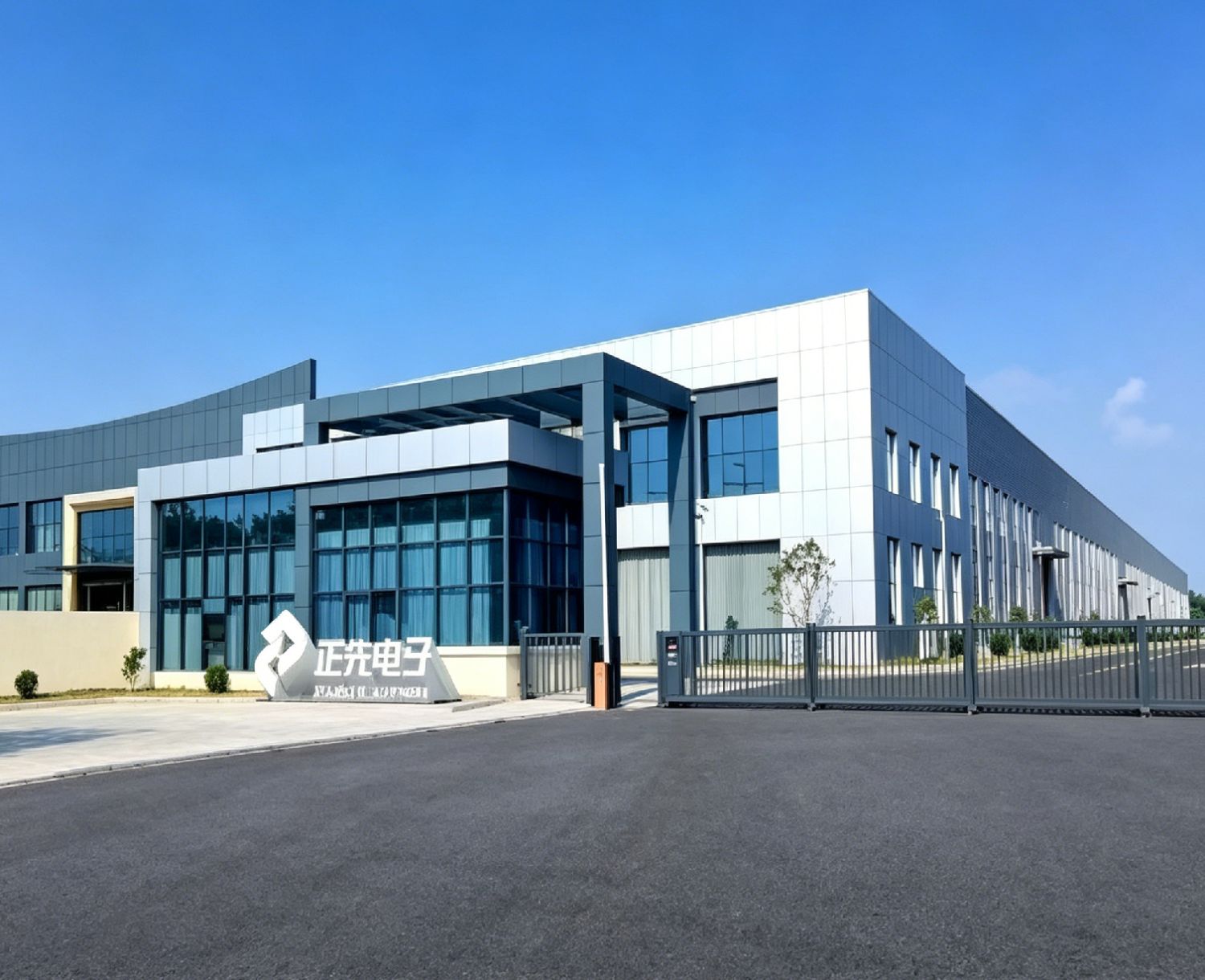

Smart Street Furniture Factory Innovations Reshaping Urban Living
2026-09-09
Cities are getting smarter, but the real shift is happening far from the boardroom—on the factory floor. At zemso, street furniture isn’t just assembled; it’s engineered around how people actually live, move, and connect. From solar-powered benches to adaptive lighting, these production-line breakthroughs are quietly turning public spaces into responsive ecosystems. Here’s what happens when manufacturing innovation meets the rhythm of urban life.
The Factory Floor Is Now a Design Studio
Walk onto a modern factory floor and you might mistake it for a creative agency. Engineers huddle around whiteboards sketching out interface flows. Machinists adjust parameters in real time, treating each production run as a prototype. The line between making things and designing them has blurred into a continuous loop of iteration and refinement.
This shift didn't happen overnight. Legacy assembly lines were built for repetition, not experimentation. But as customization became the default expectation, plants had to adopt tools and mindsets borrowed from design studios. Digital twins, modular workstations, and rapid feedback from the production line now guide decisions that used to be locked in months before a single part was cut.
The result is a workspace where creativity isn't confined to a separate department. A designer's concept can be tested on the floor within hours, and a machinist's suggestion can reshape the product before the next shift starts. Manufacturing has become less about mass production and more about continuous, collaborative problem-solving.
Street Furniture That Listens (Without Being Creepy)
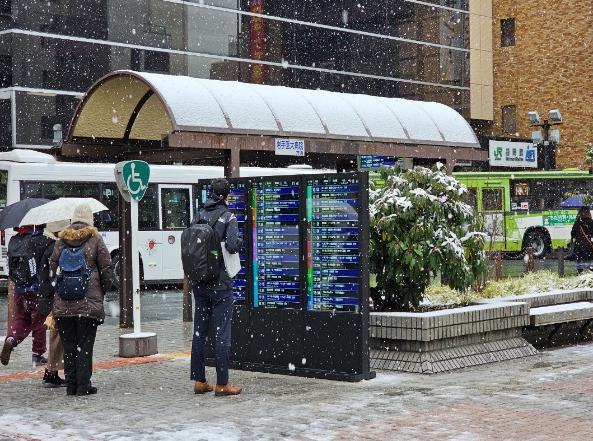
City benches are getting a quiet upgrade. A few pilot projects now embed tiny microphones that don't record voices but instead listen for patterns — the scuff of hurried footsteps, the rumble of a bus arriving, a sharp cry that might signal distress. This isn't about surveillance; the hardware filters out speech and keeps only abstract acoustic snapshots. It's more like the furniture developing a reflex, not a memory.
The "without being creepy" part comes down to design choices that respect personal space. Indicator lights glow softly when a unit is actively sensing, and all processing happens on the device itself, with raw audio discarded within seconds. Some benches only wake up when someone sits down for more than a minute, then pause their microphones the moment you stand up. The result feels less like being monitored and more like the city paying a different kind of attention.
Modular Systems for Cities That Keep Changing
A city block rarely stays the same for long, yet most buildings are locked into a single layout. Modular systems flip that by treating floors, walls, and even utility hookups as replaceable parts. A row of storefronts can shift from retail to housing in a matter of weeks because the interior partitions unclip and the plumbing nodes plug into a shared chase. This isn't about temporary trailers or pop-up kiosks. It's a deliberate approach that lets a neighborhood absorb new demands without tearing down what already works.
The real strength shows up in infrastructure that gets upgraded piece by piece. Instead of digging up an entire street to replace a water main, crews swap out short pipe segments that were designed with standard couplings. Pavement tiles lift out individually when sensors underneath need servicing, then click back into place. Green spaces work the same way. A modular wetland cell can be moved to a new corner of a park if flood patterns shift, keeping the whole drainage network functional while the city around it keeps changing.
What makes this more than a technical fix is the pace it allows. Communities can test a new use for a plaza or a vacant lot without committing to a permanent structure. If foot traffic doesn't follow the prediction, the modules get reconfigured or relocated. That kind of feedback loop keeps public money from being sunk into rigid projects that age badly. Modular systems don't predict the future; they just make it cheaper and less destructive to change course when the future arrives.
Solar Panels, Hidden Sensors, and the Sidewalk Grid
Sidewalks are no longer just slabs of concrete meant to be walked on. In many cities, they have become active parts of the urban infrastructure, with solar panels embedded directly into the paving surface. These panels are built to withstand constant foot traffic, yet they capture enough sunlight to power nearby streetlights, signals, or even small public utilities. The grid pattern of the sidewalk is not merely aesthetic; it is designed to incorporate these energy-harvesting tiles without disrupting the normal flow of pedestrians.
Beneath the surface, hidden sensors are placed inside the joints and under the panels, collecting data that remains invisible to the casual observer. These sensors monitor foot traffic density, temperature changes, and even air quality, feeding information back to city management systems. Because they are concealed within the sidewalk grid, they do not create visual clutter or become tripping hazards. The grid itself acts as a structural and electrical conduit, routing wires and connections between the panels and the sensor network.
Maintaining such an integrated system is not without its difficulties. Access points must be carefully planned so that a single faulty panel or sensor can be replaced without tearing up large sections of pavement. However, the long-term benefits include reduced energy costs for public lighting and a more responsive understanding of how people actually use urban space. The result is a sidewalk that quietly does far more than provide a place to walk.
From Raw Materials to Resilient Urban Nodes
Cities have long treated raw materials as distant inputs—timber, steel, sand, and rare earths flowing in from elsewhere, then vanishing into structures and waste streams. That linear appetite is now giving way to a quieter shift: urban districts that behave less like consumers and more like adaptive organisms. By capturing stormwater, repurposing demolition debris, and weaving local material banks into zoning codes, these nodes begin to close loops that were once left wide open.
Resilience here does not come from stockpiling resources behind hardened walls. It grows from layered, small-scale redundancies—community fab labs that turn recycled polymers into street furniture, solar microgrids tied to repair hubs, and bio-based cladding that can be composted at end of life. Each intervention may look modest, but together they give a neighborhood the ability to absorb shocks without waiting for distant supply chains.
The result is a different kind of urban strength: not fixed, but flexible; not isolated, but connected through shared material flows. When a district learns to source, reuse, and regenerate its own physical inputs, it stops being a fragile endpoint and becomes a resilient node in a wider ecology of cities.
Why Your Next Park Bench Might Outsmart Your Phone
On a quiet morning in a city park, you sit down on a bench that notices you before you even pull out your phone. It warms the slats under your legs, tilts the backrest just a degree to match your posture, and quietly starts charging the phone in your pocket through a coil hidden in the armrest. No app, no login, no settings—just a bench paying attention.
Compare that to a smartphone, which needs you to unlock it, open an app, grant permissions, and manage battery life before it does anything useful. The bench skips all that friction. It runs on a tiny solar strip along its spine, uses edge computing to recognize repeated visitors without sending data anywhere, and even monitors air quality to adjust a small fan for hot afternoons. Your phone asks for updates; the bench simply improves in place.
What makes this shift interesting isn't raw processing power—it's contextual awareness without a screen. A bench can smell pollen, hear traffic patterns, and feel the weight of a tired runner. It doesn't need to outcompute your phone; it just needs to care about the moment you're in. That's a kind of smart your pocket device can't replicate.
FAQ
These factories manufacture benches, bus stops, and lamp posts that are embedded with sensors, solar panels, wireless charging pads, and environmental monitors. Unlike conventional pieces, each unit is built as a connected node that can collect real-time data on foot traffic, air quality, or noise levels while still functioning as everyday public seating or lighting.
For a commuter, a smart bench might offer a USB port to charge a phone and a touchscreen to check transit times. For a resident with asthma, a nearby smart pole could push hyperlocal air quality alerts to their phone. Over time, the accumulated data helps cities adjust garbage collection routes, dim streetlights on empty roads, and open parks earlier when usage patterns shift.
The key shift is modular architecture combined with standardized IoT modules. Factories now pre-assemble sensor packs and power management systems into swappable cores that fit into different outer shells. This lets a single production line output a bench, a bollard, or a signpost by changing only the exterior. 3D-printed recycled plastic housings have also cut tooling costs dramatically, making small-batch custom designs affordable for individual neighborhoods.
Yes, and responsible manufacturers address them at the hardware level. Cameras used for pedestrian counting process images on-device and discard them immediately, sending only anonymized counts to the cloud. Network access is isolated from city backbones, and firmware updates are signed. Some cities also require physical kill switches that disable all connectivity if a privacy complaint is filed, which forces the furniture to function purely as dumb infrastructure until resolved.
Most run pilot programs in two or three contrasting districts, such as a tourist-heavy downtown and a quiet residential area, for six months. They compare usage rates, maintenance calls, and resident feedback from QR code surveys embedded in the furniture itself. Only features used by more than 15% of visitors in both districts survive to the next purchase order. This weeds out gimmicks like touchscreen games while keeping practical functions like shelter lighting tied to real-time weather.
The direct energy savings are modest, but the indirect effects are larger. A smart lamp post that dims to 20% when no pedestrians are nearby consumes 60% less electricity over its lifetime. More importantly, the embedded sensors let maintenance crews replace parts before catastrophic failure, doubling the asset's service life and avoiding the carbon cost of manufacturing a new unit. Some factories now use a closed-loop system where old furniture is ground up and re-injected into new housings, cutting virgin plastic use by over 70%.
The data acts as a continuous feedback loop for planners. Instead of relying on a traffic study done once every five years, a city can see hour-by-hour pedestrian flows from smart bollards and adjust crosswalk timing monthly. Noise sensors on bus stops reveal which routes create the most disturbance, prompting targeted sound barriers. Over a year, this granular data lets planners justify zoning changes or park expansions with evidence from thousands of data points rather than anecdotal complaints.
The next wave is adaptive multi-purpose units. Imagine a street tree pit that doubles as a stormwater sensor and a wireless charging pad for delivery robots. Factories are also testing self-cleaning surfaces using photocatalytic coatings that break down grime and pollutants when exposed to sunlight. Longer term, expect modular smart kerbs that can reconfigure themselves, switching a parking lane into a protected bike lane during rush hour based on real-time demand, all controlled by embedded actuators and edge computing.
Conclusion
Inside a modern smart street furniture factory, the line between manufacturing and design has blurred. Production floors now host rapid prototyping cells where urban planners, industrial designers, and material scientists adjust bench contours and shelter geometries in real time. Rather than mass-producing identical pieces, these factories use modular jigs and digital twins to create components that snap together in multiple configurations—so a bus stop can grow extra seating, a planter can become a bike rack, or a lighting column can shift its purpose without being scrapped. Raw aluminum, reclaimed hardwoods, and polymer composites enter one end and leave as resilient urban nodes tested against extreme weather, vandalism, and constant use. This approach treats city furniture not as static objects but as upgradeable, repairable assets, cutting waste and letting neighborhoods adapt without waiting for months-long procurement cycles.
On the street, these pieces do more than occupy space. Embedded solar panels feed low-energy sensors that track foot traffic, air quality, and microclimate shifts, while the furniture itself remains quiet—no flashy screens or voice prompts demanding attention. A bench can warm slightly on cold mornings, a lamp post can dim when nobody is near, and a bus shelter can signal its own maintenance needs. The data stays local and anonymized, focused on patterns rather than individuals, which keeps the "listening" from feeling intrusive. The result is public infrastructure that quietly outpaces consumer gadgets: your phone may need a charger, but the park bench is already harvesting sunlight, adjusting to the crowd, and reporting its own wear. As cities keep changing, these modular, sensing, self-sustaining pieces quietly reshape how we share public space.
Contact Us
Contact Person: Leo
Email: [email protected]
Tel/WhatsApp: +86 18901905138
Website: https://www.zemsogroup.com/