

Professional Thermal Inkjet Printers: Unlocking Precision and Speed for Modern Printing Needs
2026-06-08
In the fast-paced world of modern printing, achieving both precision and speed is no longer a luxury—it's a necessity. Yet, many businesses still struggle with outdated equipment that compromises quality for efficiency. Enter Danmajet professional thermal inkjet printers, engineered to bridge that gap. But how exactly do they redefine what's possible? Let’s dive into the technology that’s quietly reshaping industries.
The Engine of Accuracy: Inside Thermal Inkjet Print Heads
At the core of every precise inkjet print lies a tiny chamber where science meets art. Thermal inkjet heads operate by rapidly heating a microscopic ink volume, generating a vapor bubble that forces a droplet out of the nozzle. The entire sequence—from pulse to ejection—transpires in microseconds, demanding absolute synchrony between electrical signals and fluid dynamics. It’s a ballet of forces where even a 0.01-millisecond delay can shift dot placement, so the drive circuitry is engineered for predictive timing rather than reactive control.
Precision here isn’t just about speed but also about repeatability. Each nozzle must produce uniform droplets thousands of times per second, compensating for ink viscosity changes and residual heat buildup. Advanced designs embed temperature sensors and adaptive algorithms that modulate pulse width on the fly, maintaining droplet velocity within narrow tolerances. This closed-loop discipline allows a desktop printer to rival the registration accuracy of far larger presses, laying down dots a fraction of a human hair diameter without visible banding or stray satellites.
Fast-Forward Productivity: Slashing Print Times in Half
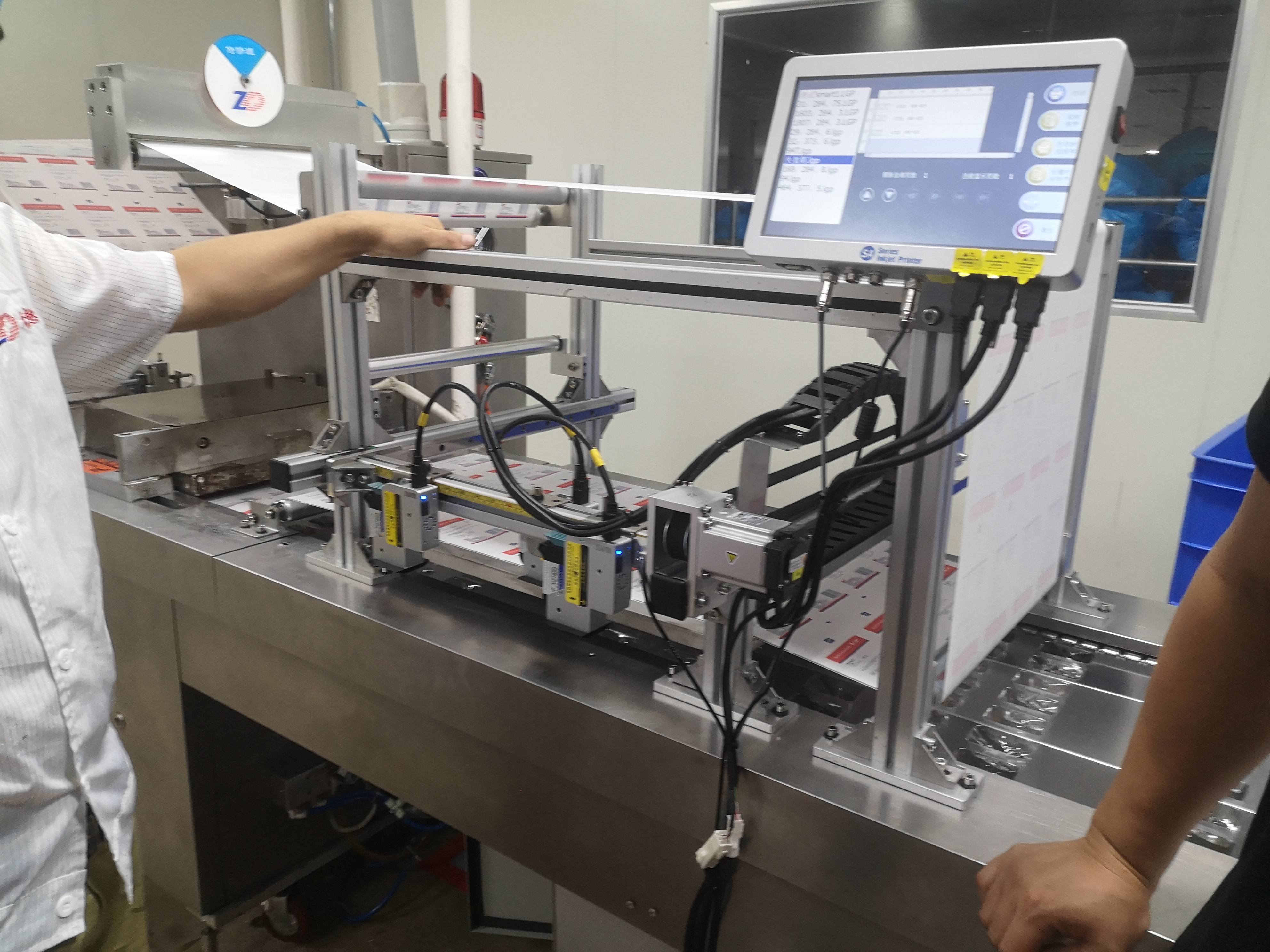
Waiting on a printer can feel like watching water come to a boil—each second drags when there’s a stack of tasks piling up. Long print cycles don’t just test patience; they bottleneck entire workflows, leaving teams stalled and deadlines stretched thin. What if that wait could be cut by fifty percent? The difference isn’t incremental; it’s a shift from reactive scrambling to proactive momentum. When machines finish in half the usual time, the ripple effect touches everything from morning briefing handouts to last-minute client proposals, freeing people to move on to the next priority without the mental drag of an unfinished job.
The math of faster prints goes beyond simple time savings. Consider a design studio that runs dozens of proofs daily: trimming each cycle from four minutes to two doesn’t just save two minutes—it recaptures enough cumulative hours to explore extra revisions, catch errors earlier, or simply let creative energy flow without interruption. This isn’t about rushing work; it’s about removing the silent friction that accumulates when equipment can’t keep pace with human decision-making. The real gain shows up in fewer late-night fire drills, more consistent output across teams, and the quiet confidence that comes from knowing the tools won’t be the weak link in the chain.
Achieving this kind of speed isn’t magic—it’s often a combination of optimized hardware, smarter queue management, and stripped-down software that cuts processing overhead. For example, printers with dual-core processors and efficient memory handling can render complex files while feeding paper simultaneously, overlapping tasks that used to run sequentially. Pair that with network setups that prioritize print traffic intelligently, and you get a system where the only bottleneck left is how fast someone can walk to the tray. The result is a workplace rhythm where technology finally matches the tempo people need to stay sharp and deliver on time.
Ink Mastery: Formulations That Elevate Every Print
The difference between a forgettable print and a striking visual often lies in the ink. Our advanced formulations are engineered to deliver exceptional color density and smooth gradation, ensuring that every droplet contributes to a vibrant, true-to-life image. Rather than relying on generic off-the-shelf solutions, we’ve developed a proprietary blend that enhances pigment dispersion and minimizes clogging, so you can run long production cycles without constant intervention.
Beyond pure performance, these inks are designed to adapt seamlessly across diverse substrates—from fine art papers to synthetic textiles—without compromising adhesion or drying time. The result is a consistently brilliant finish that allows creatives and print specialists alike to push boundaries with confidence, knowing that the final output will mirror their vision with striking clarity.
Tailored for Professionals: Where Performance Meets Reliability
Every detail of this tool has been shaped by feedback from those who rely on it daily—engineers, architects, and researchers who demand more than just speed. The result is a platform that handles complex workloads without breaking a sweat, maintaining consistent performance even under sustained pressure.
Reliability isn’t just a promise; it’s baked into the hardware and software alike. Redundant systems and rigorous testing mean you can push boundaries knowing the foundation beneath you won’t shift. When precision matters, stability isn’t a luxury—it’s the only option.
Eco-Smart Printing: Lower Waste, Higher Efficiency
Modern printing setups often squander resources without users even noticing. By rethinking how materials flow through an office or production line, businesses can cut paper and toner consumption dramatically. Simple changes—like defaulting to duplex output and using draft modes for internal docs—add up fast. The goal isn't to print less, but to print smarter, ensuring every sheet and cartridge pull their weight.
Hardware choice plays a quiet but massive role. Older devices lack the intelligence to catch wasteful habits, while newer eco-conscious models analyze usage patterns and nudge users toward better decisions. Pairing that with plant-based inks or cartridges designed for easy refill slashes the hidden carbon footprint that most operations ignore.
Beyond hardware, the real shift is cultural. When teams track their output visually—say, a dashboard showing trees saved monthly—waste stops being abstract. Suddenly, double-spacing a report or leaving prints uncollected feels tangible. Efficiency isn't just a buzzword; it's a visible win that compounds as habits evolve.
Future-Ready Technology: Adapting to Evolving Workflows
Technology that’s built to last doesn’t just handle today’s tasks—it flexes as your workflows shift. When teams adopt new tools, the real test is how quickly those tools align with changing processes without forcing people to relearn everything. A future-ready approach means designing with adaptability in mind, integrating updates that feel natural rather than disruptive.
Workflows evolve organically. One month, a team might need more collaborative features; the next, automation becomes key. Stiff systems break under this pressure, but flexible ones thrive by letting users shape the technology to fit their needs rather than the other way around. This kind of adaptability comes from an open architecture that encourages modular improvements over time.
Ultimately, future readiness isn’t about predicting every trend—it’s about building a foundation that can accommodate whatever comes next. This means prioritizing scalable infrastructure, intuitive interfaces, and a development cycle that listens closely to how people actually work. The goal is to make technology a seamless extension of human creativity, not a barrier to it.
FAQ
A thermal inkjet printer uses tiny heating elements to rapidly vaporize ink, creating a bubble that forces a precise droplet onto the paper. It's a simple yet clever mechanism that delivers sharp, detailed output without complex mechanical parts.
Precision comes down to microscopic nozzle arrays and advanced droplet control. The heating elements can be activated with exact timing, allowing for droplet placement accuracy down to a fraction of a millimeter, which is essential for crisp text and detailed graphics.
Speed is built into the design. With thousands of nozzles firing simultaneously at high frequencies, a single pass can cover a large area. Intelligent printhead management ensures that even at top speeds, the image remains consistent and clear.
You'll find them in packaging and labeling, where high-resolution barcodes and small text are critical. They're also popular for address and mail printing, in medical labs for slide labeling, and in any setting needing fast, reliable, and fine-detail output on various materials.
Compared to laser, thermal inkjet offers better color vibrancy and is usually more compact and cost-effective for lower volumes, though it can be slower on huge jobs. Against piezoelectric inkjet, thermal heads are typically cheaper to replace and simpler to maintain, but piezo may have an edge with certain specialty inks.
Look at the print resolution, the duty cycle, and the connectivity options. Ink costs and cartridge yield matter a lot for ongoing expenses. Also think about media flexibility—if you print on envelopes, glossy paper, or synthetics, make sure the model handles them well.
Conclusion
At the heart of any demanding print environment lies the need for unwavering accuracy, and professional thermal inkjet printers deliver this through intricately engineered print heads that control droplet placement with microscopic precision. This engine of accuracy ensures that every line, barcode, or graphic emerges razor-sharp, even at high resolutions. By pairing this with fast-forward productivity features, these devices slash print times dramatically—some models cut turnaround in half—without sacrificing quality. Instead of forcing a trade-off, the technology harmonizes speed and detail, making it ideal for time-sensitive industries like logistics, healthcare, and retail where every second counts.
Behind every crisp output is a mastery of ink chemistry: advanced formulations dry instantly on diverse substrates, resist smudging, and produce deep, consistent colors that elevate professional documents and labels. This reliability extends to the hardware itself—purpose-built for heavy-duty use with minimal maintenance, giving professionals the confidence of minimal downtime. Meanwhile, eco-smart design reduces fluid waste and energy consumption, aligning with modern sustainability goals. Looking ahead, these printers embrace future-ready adaptability, seamlessly integrating with evolving workflows, cloud-based systems, and variable data applications. The result is a tool that not only meets today's demands but also evolves with them—a genuine asset for anyone who refuses to compromise on precision, speed, or environmental responsibility.
Contact Us
Contact Person: Jacky
Email: [email protected]
Tel/WhatsApp: 086 15000607053
Website: https://www.danmajet.com