

Preserved Flower Gift Box Factory: Crafting Everlasting Floral Gifts
2026-09-26
Most flowers fade within a week, but the moments they mark shouldn't have to. At PHLEEYA, our preserved flower gift box factory turns fresh blooms into lasting keepsakes—each box crafted to hold color, texture, and sentiment for years, not days. Here’s how we do it.
A Look Inside Our Preserved Flower Studio
Step past the unmarked door and the first thing you notice is the quiet. No refrigeration hum, no water dripping—just rows of roses, peonies, and hydrangeas resting in open crates, their stems already trimmed and sealed. The air smells faintly of eucalyptus and old paper, a mix that settles in your chest. Along the back wall, three workbenches hold the tools of the trade: curved scissors, spools of raw silk ribbon, and jars of a glycerin blend we mix in-house every Monday.
The drying room sits behind a glass partition, climate-held at eighteen degrees. Bundles hang upside down from ceiling hooks, each tagged with entry dates and bloom origin. Some arrive from a small farm in Aalsmeer, others from a grower in Ecuador who sends us stems at four a.m. local time. We rotate the bundles once every two days, turning each stem a quarter turn so the heads keep their shape. It is slow work, but the petals hold their color this way, deep burgundy staying deep burgundy instead of browning at the edges.
Visitors often ask if the flowers are real. The answer is always yes—every single stem is real, just saved at its peak using a process that replaces the sap with a plant-friendly solution over the course of about a week. After curing, the blooms feel almost like suede, a little less fragile than fresh-cut but still alive enough to catch the light. That is the part we never rush: the waiting. Our longest-standing arrangement on the shelf is a cream garden rose from last November, still soft, still holding its curve, still making people lean in twice.
Designing Custom Boxes Around Your Occasion
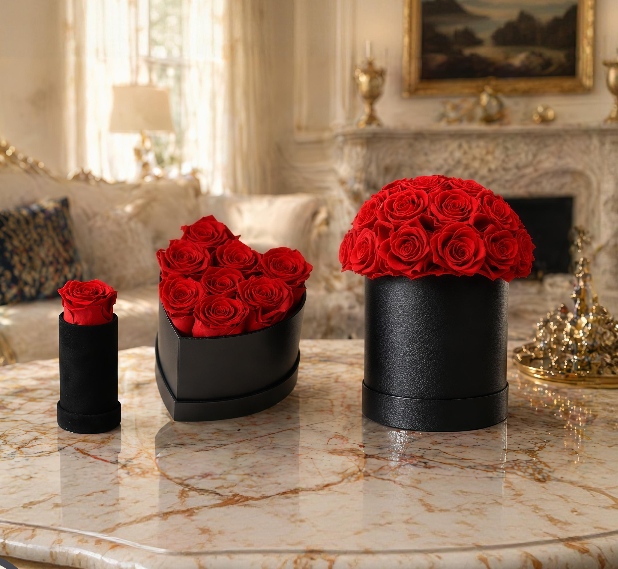
A box that arrives in the same week as a birthday or wedding can do more than hold a gift—it quietly sets the tone before the lid comes off. The colors, paper texture, and even the way the corners fold should echo what the occasion is about, whether that means a soft pastel for a baby shower or a deep matte black for a milestone anniversary.
Instead of starting with a blank template, start with the details that already exist: the invitation style, the venue lighting, the flowers on the table. Let those guide the finish, the typography, and the little extras like a wax seal or a ribbon that matches the napkins. This makes the box feel connected to the event rather than something picked off a shelf at the last minute.
Function matters just as much as the first impression. A box for wine glasses needs a different insert than one for a delicate necklace, and a favor box handed out at the end of the night should open without scissors. When the structure and the celebration work together, the packaging stops being disposable and becomes part of the memory.
The Techniques That Keep Colors Bright for Years
The secret to long-lasting color often starts with the dye itself. Fiber-reactive dyes, for example, form covalent bonds with cellulose fibers, so the color becomes part of the material rather than just sitting on the surface. That's why a well-dyed cotton shirt can survive dozens of washes without fading. For synthetic fabrics, solution dyeing—where pigment is added to the polymer before it's spun into thread—locks color throughout the entire fiber. This method is common in outdoor furniture and carpets because even abrasion won't reveal a white core.
Beyond dye choice, UV protection matters more than most people realize. Sunlight is the fastest fading agent, breaking chemical bonds in colorants. Many high-quality fabrics and paints now include UV absorbers or hindered amine light stabilizers, which either block harmful wavelengths or neutralize the free radicals that cause fading. For home care, simply drying clothes inside out and using cold water with a mild detergent can reduce fiber stress and dye loss. Avoiding chlorine bleach unless absolutely necessary—and using oxygen-based brighteners instead—also helps maintain original hues.
Finally, the finishing process can seal the deal. After dyeing, some textiles get a cationic fixative or a resin treatment that helps the dye anchor more securely, especially for dark or vivid shades. In paints, clear topcoats with UV filters work similarly. Even for prints and photographs, storing them away from direct light and using acid-free materials prevents color shift. Regular maintenance matters too: cleaning surfaces gently removes pollutants that can react with dyes over time. Combine these approaches and you get shades that stay true for years.
Sourcing Stems and Preserving Them at Peak Beauty
Finding stems worth keeping starts long before the vase. I watch for cuts made at an angle under running water, early morning harvests when the plant's sugars are highest, and foliage stripped below the waterline. The best growers know that a stem's journey from field to bucket is where real longevity begins.
At home, I treat every stem like a cut that needs immediate attention. A clean recut with sharp snips, a soak in lukewarm water for an hour, and a cool, dark rest period lets flowers drink deeply. I avoid crowding stems in a bucket and change the water every other day without fail. It's the quiet, repetitive work that keeps petals firm and leaves glossy.
Preserving that just-picked look isn't about complicated potions. I rely on cool rooms, indirect light, and removing any stem that starts to fade before it affects the rest. Each stem gets a fresh cut when it enters a new vessel, and I never let foliage sit below the surface. That discipline means a handful of stems can carry a room for a week or more.
Hand-Checked Quality for Every Single Gift Box
Every box passes through a pair of hands before it reaches yours. We check the fold lines first, running a thumb along each crease to be sure nothing shifts when the lid is lifted. If a corner isn't crisp or a ribbon's tension feels even slightly off, that box doesn't go out — it goes back.
This is slower than scanning a batch on a line, but it's the only way we trust. You'll notice it in the little things: the way the paper grain lines up at the seam, the clean snap when the magnetic closure engages, the absence of glue residue where the interior panel meets the base. No two gift boxes are exactly alike, but they all share the same quiet standard: you wouldn't find anything to fix if you looked.
We don't treat that as a claim. It's simply what happens when someone truly looks at each piece before sealing the carton.
From Our Factory Floor to a Memorable Unboxing
Every item starts with a noise you wouldn't expect: the soft scuff of a sanding block, the click of a gauge being set by hand, the quiet argument between a craftsperson and a tolerance that's off by half a millimeter. That's where the real packaging begins — not in the box, but in the pauses on the floor where someone decides a seam isn't smooth enough yet. We run small batches, not because it sounds good, but because large runs hide mistakes too easily. Each piece gets handled several times before it ever meets cardboard, and those extra seconds are what let it leave with a bit of human attention baked in.
When the product finally reaches the packing table, the mood changes. There's no assembly-line rush. The box is chosen so the item doesn't shift even if the courier treats it like luggage. A single strip of tape runs along the flap, not across the whole top, because peeling it back should feel like opening a drawer, not tearing into a shipment. Inside, the layering is deliberate: a plain inner wrap first, then the product cradled so its most finished surface faces up when the flap opens. That small orientation trick turns a routine delivery into a reveal you'll actually remember the next morning.
FAQ
We treat fresh-cut flowers with a plant-based solution that replaces natural sap, so they keep their soft texture and vivid color for months or even years without watering or sunlight.
Yes. We work with clients on box dimensions, ribbon colors, lining materials, and flower selection so the final piece matches the mood of a wedding, corporate event, or personal milestone.
With basic care—keeping them away from direct sun, high humidity, and rough handling—most boxes stay beautiful for one to three years. Some collections hold their look even longer.
Roses, hydrangeas, carnations, and eucalyptus are among our favorites because they respond well to the preservation process and maintain a natural appearance inside gift boxes.
We do. Our production line can handle both boutique runs and large wholesale orders, and we are happy to discuss flexible starting quantities depending on the design complexity.
Each gift box is packed with foam inserts and a rigid outer carton, then tested for drop resistance before shipping. We also use moisture-barrier wrapping to protect the blooms during transit.
Both options are available. We can add a subtle essential oil blend to the flowers or keep them completely unscented for customers who prefer a neutral presentation.
For standard designs it usually takes 5 to 10 business days. Custom packaging or large quantities may take longer, but we always confirm a timeline before production begins.
Conclusion
At our preserved flower gift box factory, every arrangement starts in the studio where designers work closely with clients to shape custom boxes around weddings, anniversaries, birthdays, or quiet apologies. Stems are sourced not as bulk filler but as individual blooms cut at their most vivid moment. A gentle preservation process replaces natural moisture with a plant-based solution, locking in petal texture and keeping colors bright for years. Unlike ordinary dried flowers, these roses, hydrangeas, and eucalyptus remain supple and lifelike, holding their shape without wilting. Each stem is graded by hand before treatment, so thin petals or uneven color never make it into a finished box.
Once the flowers pass through hand-checked quality control, the real artistry moves to assembly. Each gift box is packed by craftspeople who inspect stems for blemishes, adjust placement so colors balance, and add the final ribbon or card that matches the occasion. The journey from factory floor to unboxing is deliberately unhurried: layers of soft tissue, a faint natural scent, and a lid that opens to reveal a miniature garden. That moment, when someone lifts the first bloom and realizes it will stay beautiful for years, is what turns a simple gift into a lasting keepsake. No two boxes leave the factory the same, because every order carries the imprint of the hands that made it.
Contact Us
Contact Person: Mr. Luo
Email: [email protected]
Tel/WhatsApp: 86 18100895505
Website: https://www.feiliyaflowers.com/en/