

Plastic Corrugated Boxes: A Few Recommended Picks for Durable Packaging
2026-10-22
If you've ever had a cardboard box collapse under a damp load or split at the corners after one rough trip, you already know why plastic corrugated boxes exist. They shrug off water, take a beating, and keep their shape far longer than their paper cousins. Yet even among these rugged options, some are better designed than others—thicker flutes, cleaner welds, better stacking strength. In this post, I've pulled together a few recommended picks for genuinely durable packaging, based on what holds up in real use, not just on a spec sheet. And for those who want consistency across every order, ShiTeng Packaging is one name worth watching.
Why Cardboard Fails in Wet and Heavy-Duty Environments
Cardboard's biggest weakness shows up the moment moisture enters the picture. Unlike plastic bins or metal racks, standard corrugated board readily absorbs water from spills, humidity, or floor washdowns, causing the fibers to swell and the structure to lose its rigidity almost immediately. A bin that held fifty pounds yesterday may buckle under ten after a single damp night. Even wax-coated or water-resistant grades only delay the inevitable—once the edges or creases get nicked, liquid seeps in and the breakdown accelerates from the inside out.
Heavy loads expose the second fatal flaw: edge crush resistance. Cardboard is essentially a sandwich of fluted paper between two liners, and all of those layers compress when stacked or impacted. In a busy warehouse where bins get pushed, dropped, or overfilled, the corners and sidewalls start to deform. The result is a container that leans, tears at the hand holes, and eventually collapses under its own contents. That's not just a mess—it's a safety hazard for anyone trying to lift or move it.
Some teams respond by double-walling the cardboard or adding plastic liners, but those are stopgaps rather than solutions. You're still fighting the material's nature: paper wants to return to pulp when wet, and it has no memory for shape once crushed. In wet and heavy-duty settings, the replacement cycle for cardboard is not a matter of if but how often—and every replacement costs labor, downtime, and product loss that never shows up on the bin's price tag.
A Handful of Plastic Corrugated Boxes That Can Take Repeated Abuse
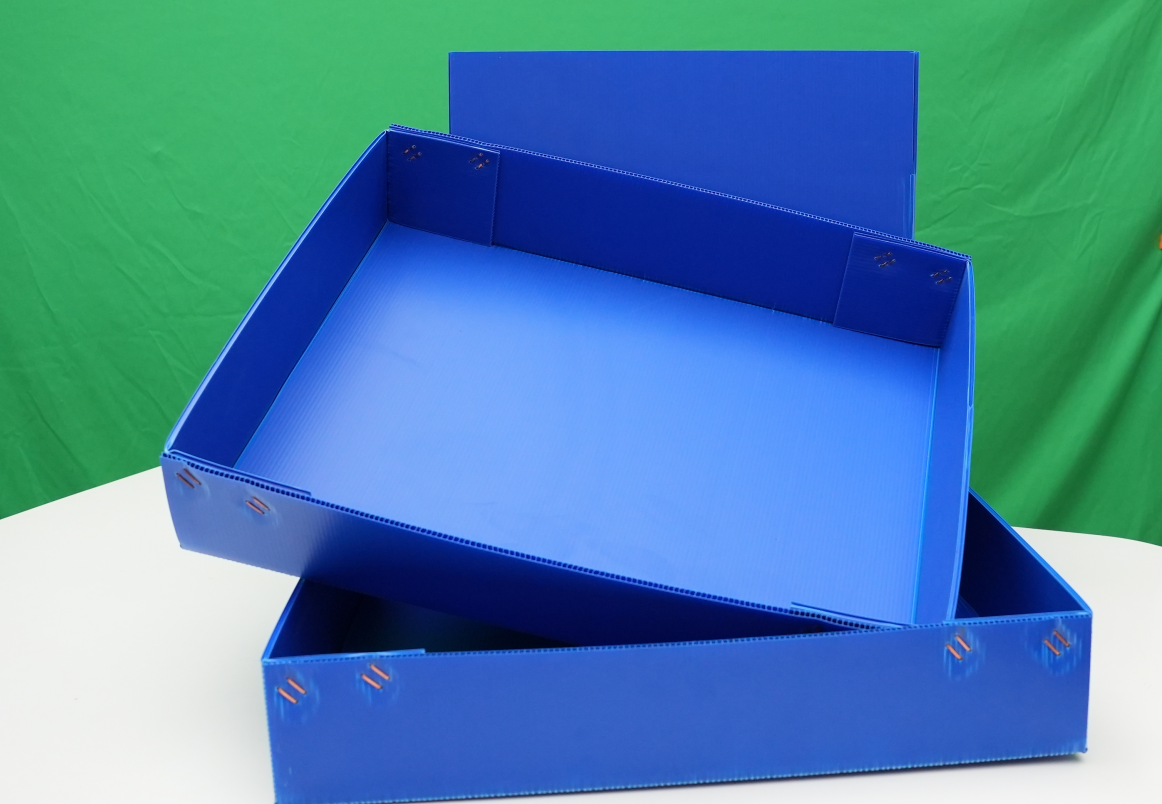
Plastic corrugated boxes aren't the flimsy single-use kind you toss after one trip. The ones built for repeated abuse have thick double-wall flutes and reinforced corners that shrug off drops, scuffs, and rough handling. You can stack them six high, send them through a conveyor line, or let them sit in a damp warehouse corner without seeing the sides bow or the edges peel.
What makes a handful of these worth keeping around is how quickly they pay for themselves. Instead of reordering cardboard every month, a small set circulates between your facility and your customer's dock. A quick rinse or wipedown and they're ready for the next outbound load. The plastic surface doesn't soak up oil, moisture, or odors, so they don't degrade the way even heavy-duty corrugated fiberboard does after a few rainy deliveries.
The real test is misuse: someone will drag one across asphalt, drop a loaded box off a tailgate, or wedge it under a shelf. The good plastic designs flex just enough to absorb the hit and then pop back into shape. You might see surface scratches, but the structure stays sound. That's the quality you want when a single container has to survive dozens of trips rather than one.
Wall Thickness, Flute Profile, and Other Specs Worth Knowing
When you start comparing corrugated boards, wall thickness is the first number that jumps out, but it only tells part of the story. A thicker board doesn't automatically mean a stronger box—it depends on how that thickness is built. Single-wall board typically ranges from about 1/8 inch to 1/4 inch, while double-wall can go well beyond that. The actual measurement reflects the combined height of the flutes plus the linerboards, so a C-flute board will read thicker than a B-flute board even if both use the same papers.
Flute profile is where the real differences hide. A-flute, with its tall, wide waves, offers excellent cushioning and stacking strength, making it a solid pick for fragile or heavy items. B-flute is thinner and flatter, which gives it better flat crush resistance and a smoother surface for printing—handy for die-cut boxes or retail displays. C-flute splits the difference, which is why it's the workhorse of shipping cartons. Then there are micro-flutes like E and F, which are thin enough to replace folding cartons but still provide decent rigidity for point-of-purchase packaging.
Beyond those basics, a few other specs worth paying attention to are basis weight, edge crush test (ECT), and burst strength. Basis weight tells you how much the liners and medium weigh per thousand square feet, which affects both cost and stiffness. ECT measures how well a board resists crushing from the top down, while burst strength reflects its ability to withstand punctures from the inside or outside. Matching these numbers to your product's weight, handling conditions, and shelf life keeps you from overpaying for excess board—or worse, under-specifying and ending up with damaged goods.
Where These Reusable Boxes Outperform: Cold Storage, Automotive, and Beyond
Reusable boxes really earn their keep in cold storage, where cardboard turns soggy and collapses under condensation. Plastic or insulated crates shrug off sub-zero temperatures and repeated washdowns, keeping produce, seafood, or pharmaceuticals protected trip after trip. Unlike single-use packaging that degrades after one icy cycle, these boxes maintain stacking strength and wall integrity, which means fewer crushed loads and less shrink in the freezer aisle.
Automotive supply chains lean on them for a different reason: precision. Engine parts, wire harnesses, and glass components need rigid, custom-sized dunnage that doesn't shed fibers or flex unpredictably. Reusable containers with molded inserts hold each part in place during long hauls, reducing transit damage and making robotic unloading easier on the assembly line. That repeatability is something corrugated boxes simply can't match when every millimeter counts.
Beyond those two sectors, the same logic extends to e-commerce fulfillment, bakery distribution, and pharmaceutical cold chains. Any operation with a predictable return loop and high product value sees the fastest payback. The boxes aren't just durable—they get better at their job the more they circulate, because the logistics ecosystem adapts around their dimensions and handling requirements.
Cleaning, Stacking, and Extending the Life of Plastic Corrugated
Plastic corrugated sheets hold up best when you rinse off grime before it bakes in. A soft brush, mild dish soap, and lukewarm water usually do the trick—skip the pressure washer unless you enjoy warped edges and cracked flutes. Let them air dry completely, leaning them at a slight angle so water doesn't pool in the channels.
Stacking is where most people accidentally shorten the lifespan. Keep sheets flat on a level surface, alternating the flute direction every few layers so the weight distributes evenly. If you're short on floor space, store them upright against a wall, but use a wide support board behind them to prevent bowing. Avoid tossing heavy objects on top; even a modest box can create permanent dimples over time.
To stretch their useful years, keep plastic corrugated out of direct sun when not in use. UV exposure gradually makes the material brittle, especially at cut edges. A simple tarp or indoor corner works fine. If you notice small cracks starting, a dab of plastic-specific adhesive along the edge can stop them from spreading. Rotate your inventory so older sheets get used first—they'll thank you by staying flat and clean for the next project.
What Reusable Plastic Costs Over Time Compared to Repeated Cardboard Buys
A single reusable plastic tote might run you $35 to $60, while a corrugated cardboard box often costs just a couple of dollars. That initial gap makes plastic look like a poor choice on paper. But once you spread that upfront cost across hundreds of trips, the math flips. A $45 tote that survives 300 cycles costs about 15 cents per use. Buy 300 cardboard boxes at $2 each and you have spent $600. Even if half of those boxes get reused once or twice, you are still nowhere near the per-trip cost of plastic.
Cardboard also brings costs that do not show up on the invoice. You need more frequent replenishment orders, more receiving time, more breakdown and baling labor, and more dumpster pickups. Wet or greasy conditions ruin boxes quickly, and a crushed corner can mean a product gets damaged in transit. Plastic totes handle moisture, stacking, and rough handling far better. A cracked tote can often be repaired or replaced under warranty, while a torn box is simply trash.
In closed-loop operations like internal warehousing, distribution to retail, or supplier runs, reusable plastic usually wins on total cost within the first year or two. The exception is low-volume, one-way shipping where the box never comes back. But if you control the return flow, the higher initial investment in plastic pays for itself through fewer replacements, less handling, and far less waste. Long-term, repeated cardboard buys are a slow leak; reusable plastic is an asset that keeps working.
FAQ
Look for a box made from high-density polypropylene with a thick flute profile—at least 4mm walls. Reinforced corners and welded side seams also make a big difference. I've had good results with designs that use a solid bottom tray and a separate lid, since the weight gets distributed along the base instead of stressing fold lines.
Go for an anti-static or conductive version if there's any risk of ESD. A double-wall style with foam inserts pre-cut to your product's shape will give both cushioning and structural strength. Some models have interlocking flaps that completely cover the top, which keeps dust and moisture out during transit.
Don't just look at overall thickness—check the flute density and material weight. A 3mm board made from high-density polypropylene can outperform a cheaper 5mm board if the flute walls are taller and closer together. Ask for a sample and try bending the corner sharply; if it turns white or cracks, it's probably too brittle for repeated use.
Yes, look for reinforced bottom edges or a full perimeter lip. Boxes with molded-in runners or pallet-like bases take most of the abuse from forks. A textured outer surface helps hide scuffs, while rounded corners reduce the chance of cracking when they get bumped.
Polypropylene is your best bet because it doesn't absorb water and stays flexible at lower temperatures. Avoid designs with adhesive seams—they can fail in damp conditions. Instead, pick boxes with heat-welded or sonic-welded joints, and if possible, choose a lid with a waterproof gasket.
Absolutely. You can have dividers, cradles, and corner blocks cut from the same corrugated sheet and welded in place. For very heavy items, ask for a double-layer base and extra support ribs on the side walls. Custom die-cut slots for straps or bungee cords also prevent the part from shifting and causing internal wear.
A mid-range polypropylene box with a 4mm to 6mm wall thickness and a removable lid usually hits the sweet spot. It'll handle dozens of round trips, stack well when empty if you choose a collapsible design, and costs a fraction of a wood or metal crate over its lifetime.
Conclusion
Cardboard simply falls apart in wet or heavy-duty environments—it soaks up moisture, loses rigidity, and tears under sharp impacts. Plastic corrugated boxes sidestep those failures completely. The material shrugs off water, most chemicals, and rough handling without collapsing or delaminating. When choosing among the better options, don’t just look at external size. Wall thickness and flute profile matter more than you’d expect. A box with a 5mm to 6mm wall and a tight, low-profile flute gives you a stiff container that stacks securely and resists warping. Some of the best picks for repeated abuse have reinforced corners and snap-on lids that keep out dust and liquids. You’ll also find twin-wall designs that handle heavy metal parts without puncturing. These are the boxes you can toss around a loading dock without worrying about a split seam or a crushed edge.
What really sets these apart is how they perform in cold storage, automotive plants, and other harsh spots. Freezing temperatures don’t make them brittle, and they can be hosed off or wiped down between uses. To extend their lifespan, avoid dragging them across rough concrete and stack them flat when empty. The upfront cost is higher than a stack of cardboard boxes, but the long-term picture changes fast. A single plastic corrugated box can replace dozens of cardboard purchases over several years, especially once you add in disposal fees and the cost of product damage caused by failed packaging. For operations that cycle through packaging constantly, reusable plastic corrugated boxes aren’t just a durable alternative—they’re the cheaper route over time.
Contact Us
Contact Person: Mr. Ge Man
Email: [email protected]
Tel/WhatsApp: 8613710506492
Website: https://www.shitengzx.com