

Phenylacetonitrile Intermediate: China's Role in the Global Market
2026-08-07
In the intricate web of global fine chemical supply chains, few intermediates command as much quiet influence as phenylacetonitrile. From pharmaceuticals to agrochemicals, this versatile building block underpins countless industrial syntheses—and China has emerged as its undisputed manufacturing hub. Yet behind the staggering production volumes lies a more nuanced story of quality, reliability, and strategic partnership. As downstream markets demand ever-tighter specifications and supply chain transparency, one name increasingly surfaces in procurement conversations: DSL Chemicals. But what truly sets a leading supplier apart in such a commoditized space? And how is China's evolving regulatory landscape reshaping global access? This blog unpacks the dynamics behind the molecule.
China’s Quiet Cornerstone: Why the Phenylacetonitrile Trade Flows East
Phenylacetonitrile may not be a household name, but its role in pharmaceuticals and fragrances makes it a quiet heavyweight in global chemical markets. What’s striking is how trade patterns have shifted decisively toward China over the past decade. Once reliant on scattered European and American producers, buyers now look eastward for a reliable supply that blends cost efficiency with unexpected technical capability. It’s not just about lower labor costs—it’s about integrated production chains where precursors are sourced locally, synthesis know-how is deeply embedded, and environmental compliance has become a genuine competitive edge rather than a hurdle.
Dig deeper and you’ll find that China’s dominance isn’t accidental. The country has built a cluster of manufacturers who’ve refined benzyl cyanide production through iterative process improvements that lower impurities to levels rivaling top Western labs. Many of these firms operate in industrial parks where shared utilities and waste treatment reduce overheads, while continuous investment in automation skirts the common narrative of cheap manual labor. Additionally, Chinese suppliers have become remarkably agile in customizing derivatives for specific synthesis pathways—something that generic traders from other regions struggle to match.
Logistics play an underappreciated role too. Proximity to downstream pharmaceutical hubs in India and Southeast Asia shortens lead times and cuts shipping costs, but it’s the consolidation of export infrastructure along the Yangtze delta that seals the deal. Specialized chemical terminals and bonded storage for hazardous cargoes have turned Nanjing and Shanghai into seamless export gateways. Meanwhile, fluctuations in global trade tensions have ironically reinforced the shift: as Western buyers diversifed their supply chains, many found that Chinese partners offered not just price stability but also a level of quality documentation and traceability that exceeded expectations—turning a temporary contingency into a long-term sourcing strategy.
Inside the Factories Powering Global Pharma and Pesticide Supply Chains
Stepping onto the production floor of a major pharmaceutical or pesticide plant feels less like entering a factory and more like walking into a highly orchestrated machine. Rows of stainless steel reactors, towering distillation columns, and miles of sealed piping hum steadily as they transform raw chemical precursors into life-saving drugs or crop-protecting compounds. Every square foot is designed for containment and efficiency, with airlock chambers and pressure-controlled zones ensuring that potent substances never escape the sterile environment. Workers move purposefully in protective suits, their routines timed to the second, because even a minor deviation in temperature or pH could ruin a batch worth more than a luxury car.
Behind the physical infrastructure lies an invisible web of sensors and software that governs every step. Real-time analytics track dissolution rates, particle sizes, and impurity levels, feeding data to centralized control rooms that remotely adjust parameters mid-batch. In pesticide production, the complexity climbs even higher—handling corrosive intermediates or explosive reactions demands automated quenching systems and redundant safety interlocks that human operators wouldn't survive without. Many of these facilities now employ machine-learning models to predict equipment wear or isolate off-spec product before it ever leaves the reactor, drastically cutting waste in an industry where yields dictate profitability.
Yet for all the high-tech sheen, these supply chains rest on a surprisingly fragile base of human judgment and geopolitical luck. A single factory in Andhra Pradesh might synthesize the only US-sourced key starting material for a diabetes drug; a complex in Shandong may mix the sole commercially viable route to a widely used fungicide. When a monsoon floods the loading docks or a sudden regulatory mandate halts shipments, pharmacies and farms across hemispheres feel the tremor weeks later. That tight coupling pushes manufacturers to maintain months of buffer stock and dual sourcing for critical intermediates, though such resilience comes at a cost few outside the industry ever see.
Beyond Price: The Overlooked Quality Leap in Chinese Intermediates
For years, Chinese chemical intermediates were framed by a single narrative: cheap. That story made sense when capacity was being built at breakneck speed and global buyers were chasing cost savings above all else. But it’s become dangerously outdated. Behind the scenes, a quiet revolution has been unfolding—one that has very little to do with pricing sheets. The real shift is in quality systems that now rival, and sometimes exceed, what’s coming out of traditional strongholds in Europe and North America.
Walk through a modern production site in Shandong or Zhejiang and you’ll see the evidence quickly. It’s not just about upgraded reactors or newer piping. The leap is in how batches are managed, how deviations are investigated, and how traceability has evolved from a buzzword into a bone-deep operational habit. Many facilities are now running on fully integrated digital systems that log every parameter in real time—not because an auditor asked for it, but because the in-house teams have made data integrity a non-negotiable. This is the kind of shift that doesn’t show up on a spec sheet but gets noticed when a 10-ton shipment arrives with zero surprises.
What’s even more telling is the cultural change. A decade ago, quality control was often a final checkpoint—something done to pass inspection. Now, it’s being baked into the process at molecule level. Engineers are solving problems before they hit the plant floor, and supplier development has moved well beyond cosmetic audits. For buyers who are still treating Chinese intermediates as a commodity play, that’s a blind spot that could cost them the consistency their downstream processes demand.
Mapping the Export Routes That Keep Worldwide Production Running
The steady hum of factories across continents relies on a largely invisible lattice of shipping lanes, rail corridors, and trucking networks that stitch economies together. These export routes, from the copper mines of Chile to the electronics assembly hubs in Southeast Asia, form a circulatory system for raw materials, components, and finished goods. A close look at their geography reveals just how exposed modern production really is—choke points like the Strait of Malacca or the Suez Canal handle a staggering share of global trade, and a single disruption can ripple through supply chains in a matter of days.
Advances in digital mapping and real-time tracking have turned what was once a static picture into a living, breathing blueprint. Shippers and manufacturers now layer vessel positions, port congestion, weather patterns, and even political unrest onto unified dashboards to spot trouble before it hits. This granular visibility lets companies reroute cargo on the fly, shift inventory between continents, or tap alternative suppliers almost instantly. It is less about predicting the next crisis and more about building a responsive network that bends without breaking, keeping assembly lines moving even when the straightest path disappears.
Weathering Disruption: How China’s Producers Are Navigating New Realities
China’s manufacturing sector is currently facing a confluence of unprecedented pressures — from shifting global supply chains and rising geopolitical tensions to fluctuating demand patterns. Producers are no longer simply competing on cost; they are grappling with a fundamental reordering of the rules of engagement. Long‑standing advantages in scale and efficiency are being tested as overseas buyers diversify sourcing to reduce dependency, while domestic policy shifts toward higher‑value production add urgency to upgrade operations. The ability to absorb these shocks while keeping production lines moving has become the defining challenge for factory owners across the country.
In response, many are re‑engineering their approaches at surprising speed. Instead of waiting for stability to return, firms are investing heavily in automation and data‑driven tools to compress lead times and raise quality consistency. Others are localizing previously imported components, building parallel supply networks within China to cushion against external bottlenecks. A growing number are also exploring collaborative clusters — sharing logistics, R&D, and even overseas distribution channels — to spread risk and capture niche markets that were once overlooked. These tactical pivots are often accompanied by a quieter cultural shift: a willingness to abandon rigid long‑term plans for adaptive, scenario‑based strategies.
The most resilient players are turning disruption into a catalyst for reinvention. By embracing hybrid manufacturing models that blend mass production with customizable, higher‑margin batches, they are carving out new space in middle segments of global value chains. Long‑term relationships with domestic research institutes and a renewed focus on after‑sales service are helping to lock in buyer loyalty far beyond price considerations. While no single playbook works for every region or sector, the common thread is a deepening sophistication — China’s producers are learning to read the currents of change and adjust their sails well before the storm hits, proving that resilience in the new era is less about sheer endurance and more about strategic agility.
The Next Decade: Green Chemistry and Shifting Strength in the Intermediate Market
Over the coming ten years, the intermediate market will experience a profound realignment as green chemistry principles move from niche experimentation to commercial necessity. Regulatory pressure, investor expectations, and raw material volatility are converging to make bio-based feedstocks, solvent recovery systems, and waste-minimizing synthesis routes standard practice rather than optional upgrades. This shift won’t simply be about replacing one molecule with a greener alternative—it will reshape supply chains, favoring producers who can integrate life-cycle thinking into process design and establish continuous improvement metrics that go beyond carbon footprint to include water intensity, toxicity profiles, and circularity potential. Companies that delay investment in enzyme-catalyzed steps, flow chemistry, or electrochemical pathways risk being squeezed out as buyers consolidate around suppliers that can offer transparency and lower total cost of usage.
Competitive advantage in the intermediate space will no longer rest solely on price and purity. Downstream manufacturers, particularly in pharmaceuticals, agrochemicals, and specialty polymers, are setting aggressive Scope 3 targets that push the burden upstream. A molecule’s market acceptance will increasingly depend on the sustainability story attached to its production method. This creates opportunities for agile players—especially in emerging innovation hubs—to bypass legacy infrastructure and leap directly to modular, renewable-powered facilities. At the same time, regions with abundant clean energy and biomass resources could capture market share from traditional petrochemical corridors. The interplay between green chemistry adoption and geopolitical factors will redefine “low-cost supply,” as carbon border adjustments and eco-labeling schemes alter trade flows and elevate the importance of verified environmental claims over vague marketing.
Looking further ahead, the integration of digital tools with green chemistry will accelerate the discovery and scale-up of novel intermediates. Machine learning models trained on reaction data will shortcut the development of atom-economical routes, while real-time analytics will optimize solvent reuse and energy consumption on existing lines. Industry consortia and pre-competitive partnerships are likely to pool knowledge on safer reagents and biodegradable auxiliaries, lowering barriers for smaller firms. The next decade’s leaders in the intermediate market will be those that view green chemistry not as a compliance cost but as a strategic lens—using it to design molecules with built-in end-of-life pathways, to extract value from byproduct streams, and to build customer loyalty through demonstrable stewardship. The resulting shakeout could leave behind a tier of suppliers that mistakenly bet on the permanence of yesterday’s chemistry.
FAQ
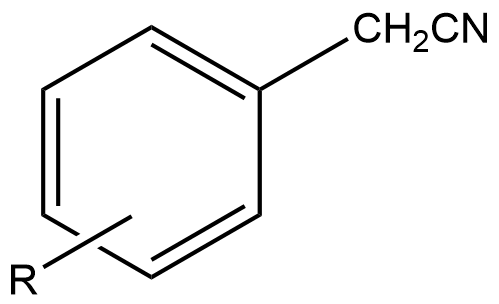
Phenylacetonitrile, often abbreviated as PAN, is an organic compound with a benzyl cyanide structure. It serves as a key building block in synthesizing various pharmaceuticals, agrochemicals, and fragrances. Its nitrile group and aromatic ring make it versatile for creating complex molecules, making it indispensable in fine chemical production.
China dominates the landscape, contributing roughly 70-80% of the world's phenylacetonitrile supply. The country's massive manufacturing infrastructure and integrated chemical parks allow it to produce at scales that keep global prices competitive while largely determining market availability.
A combination of abundant raw materials like toluene and sodium cyanide, lower energy costs, and mature production technology has given China an edge. Additionally, a well-established domestic downstream industry creates steady demand, encouraging continuous process optimization and capacity expansion.
The pharmaceutical industry is the largest consumer, using it to make drugs like ibuprofen and certain antihistamines. Agrochemical producers also depend on it for synthesizing pyrethroid insecticides, while the fragrance sector utilizes it for rose-scented compounds. A disruption in Chinese supply would ripple across these global sectors.
Stricter enforcement of emission standards and safety rules has led to consolidation, with smaller, less compliant factories shutting down. This has tightened supply at times but also pushed remaining producers to adopt cleaner technologies, ultimately raising the bar for quality and sustainability across the industry.
Chinese producers effectively set a global benchmark price. Their ability to adjust output quickly based on market conditions means that any rise in raw material costs or logistical hiccups within China can cause immediate price fluctuations internationally, leaving buyers with few alternatives in the short term.
Increasing competition from India and emerging biobased production methods could chip away at China's share. Meanwhile, the country's own pivot toward higher-value specialty chemicals might reduce focus on commodity intermediates, potentially creating supply gaps that new regional players would rush to fill.
Conclusion
China has quietly cemented its position as the indispensable source of phenylacetonitrile intermediates, a critical building block for pharmaceuticals and agrochemicals. The trade flows east for reasons that go far beyond simple cost advantages. A dense network of specialized manufacturers, particularly clustered in regions with mature chemical infrastructure, has created an ecosystem where scale, process expertise, and supply chain integration are difficult to replicate. These factories operate with a level of vertical integration that often starts from basic petrochemical feedstocks, giving them control over quality and continuity. Over the past decade, the industry has undergone a quiet but dramatic quality revolution—investments in modern equipment, rigorous impurity profiling, and adherence to stringent pharmacopoeia standards mean that today’s Chinese intermediates frequently match or exceed the consistency of traditional Western suppliers. This leap has transformed the perception of Chinese output from mere bargain chemicals to preferred components in regulated markets.
The physical routes that keep global production running are a testament to deep logistical planning, with key export hubs along the eastern seaboard dispatching tank containers and drums to ports in India, Europe, and the Americas along well‑optimized corridors. Yet this dominance is not without fragility. Chinese producers are now navigating a landscape shaped by energy consumption caps, environmental enforcement, and geopolitical friction—forces that have forced a shift away from brute‑scale expansion toward flexible, resilient operations. Looking ahead, the next decade will be defined by a dual transition: a move toward greener chemistry, where process intensification and solvent recovery lower the environmental footprint, and a gradual rebalancing of supply chains as other nations seek to build local capacity. Still, the depth of China’s phenylacetonitrile infrastructure, coupled with its rapid innovation cycles, suggests that its role will remain central, even as the market slowly evolves into a more distributed and sustainable form.
Contact Us
Contact Person: Wei Zhang
Email: [email protected]
Tel/WhatsApp: 862163529955
Website: https://www.dslchem.com