

OEM Rescue and Firefighting Boats: Essential Guide to Reliable Marine Safety Vessels
2026-07-07
When disaster strikes on the water, every second counts. The roar of flames, the desperate shouts for help—these are moments that define the line between life and loss. At the heart of such critical missions are vessels engineered not just to navigate treacherous conditions, but to conquer them. OEM rescue and firefighting boats represent the pinnacle of marine safety, built with precision to perform when failure is not an option. As demand grows for versatile, durable emergency craft, one name stands out: Allheart, a brand synonymous with reliability and innovation in this high-stakes arena. In this guide, we’ll dive into what makes these specialized boats indispensable, uncovering the features, technologies, and design secrets that ensure they rise to every challenge—because when you’re racing against the clock, you need a vessel that’s already ahead.
What Makes an OEM Rescue Boat Truly Reliable Under Pressure
When the sea turns angry and lives hang in the balance, a rescue boat must perform beyond the limits of ordinary design. True reliability under pressure is not a single feature but a harmony of engineering choices—from the hull’s ability to slice through chaotic waves without capsizing to the seamless integration of self-bailing decks that shed water in seconds. Every weld, every seal, and every hose clamp is chosen not for cost but for the extreme moment when nothing else matters except getting everyone home. It’s the quiet confidence that comes from knowing the foam-filled collar will still buoy the vessel even after a collision, and that the engine will restart instantly after being swamped.
But reliability isn’t just about surviving the impact of the storm; it’s also about maintaining control when vision fades and navigation becomes a memory game. OEM rescue boats that earn their reputation under pressure are fitted with redundant systems—dual batteries, backup bilge pumps, and analog navigation tools that refuse to fail when electronics succumb. The helm is laid out with tactile switches and levers that can be operated by numbed fingers, and the deck is designed with non-slip surfaces that grip even when coated in ice. These are not accidental details; they are the result of listening to the crews who have been there, and building a boat that answers the call long before it comes.
Designing Firefighting Vessels for Extreme Marine Environments
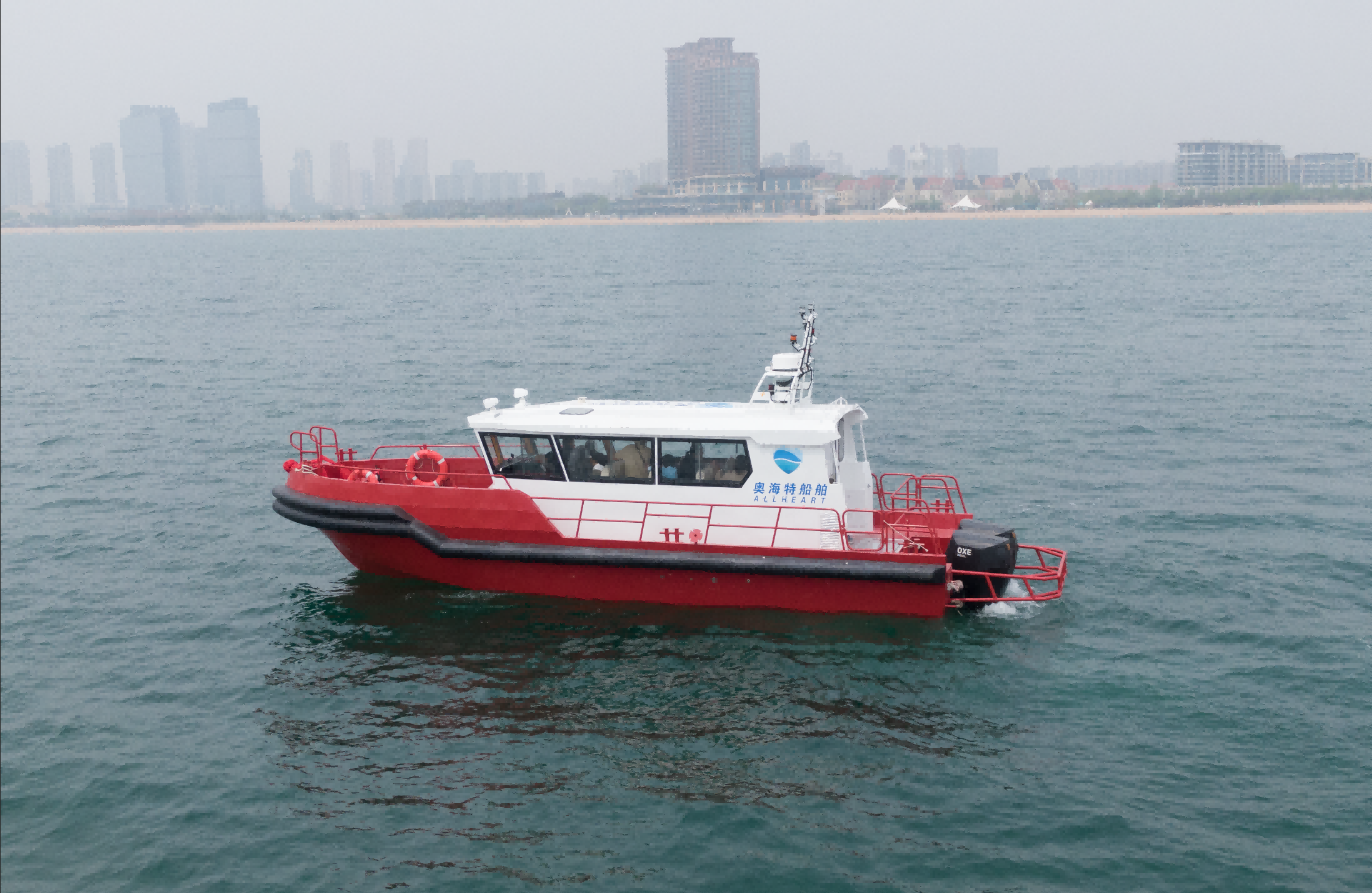
Crafting firefighting vessels that can withstand the harshest ocean conditions demands a departure from conventional naval architecture. Designers must account for towering waves, gale-force winds, and sub-zero temperatures that can freeze deck equipment and compromise crew safety. The hull form is optimized not just for speed but for exceptional seakeeping, often incorporating a deep-V or wave-piercing bow to cut through heavy seas rather than slamming. Beyond stability, every component—from the fire pumps and monitor towers to the lifeboat davits—must resist corrosion from salt spray and icing, pushing the material selection toward high-strength, low-temperature steels and advanced composites.
A vessel built for extremes needs propulsion systems that deliver unwavering power even when the ship is laboring in storm-driven swells. Hybrid diesel-electric drives with azimuthing thrusters provide the dynamic positioning capabilities required to hold station near a burning platform, while also offering redundancy if one system fails. The superstructure is hardened against extreme heat radiation, with water deluge systems shielding exposed surfaces and protective barriers around critical navigation and communication arrays. Firefighting equipment itself is rethought: monitors are oversized to throw water further in high winds, and foam proportioning systems are designed to function reliably across a wide temperature range, ensuring the vessel remains lethal against hydrocarbon fires regardless of the environment.
Real-world operations have proven that human factors are just as critical as hardware. Ergonomic layouts minimize crew fatigue during long patrols in relentless conditions, with climate-controlled command centers that allow personnel to operate effectively without being battered by the elements. Advanced sensor fusion blends thermal imaging, radar, and AIS data to cut through fog and spray, giving operators a clear tactical picture. These fireboats are not simply vehicles but integrated emergency response platforms, where every design choice threads the needle between brute strength and delicate precision, enabling them to protect offshore assets in places no other vessel would dare venture.
Custom Builds vs Standard Models: Choosing the Right OEM Approach
When partnering with an OEM, one of the first forks in the road is whether to go with a fully custom build or adapt an existing standard model. Custom builds let you shape every component to your exact vision—enclosure design, firmware tweaks, unique I/O layouts—while standard models trade that granular control for faster turnaround and lower upfront costs. It’s not simply a budget question, though; it’s about how your product needs to perform in the wild and how much of your own IP you want baked in from day one.
Custom builds shine when differentiation is non-negotiable, like when you’re entering a crowded market or targeting a niche industrial application with specific environmental certifications. They also give you leverage over the supply chain, so you’re not tied to another company’s roadmap. On the flip side, standard models can be a launchpad for brands that need to test an idea fast or for low-volume runs where the cost of custom tooling would be hard to recoup. The key is to be honest about your timeline, volume projections, and what “good enough” actually looks like for your end user.
The right approach often sits somewhere in between. Many OEMs offer scalable platforms where you start with a proven base unit and layer on customizations—modified connectors, tailored software, or branded faceplates—without reinventing the wheel. Before locking in a direction, dig into the partner’s engineering support: can they guide you through trade-offs, or are they just handing you a catalog? The best fit is one where the OEM’s expertise pivots your idea into something that’s practical to manufacture, not just beautiful on a spec sheet.
Performance Features That Separate Professional Rescue Boats from the Rest
What truly sets a professional rescue boat apart isn’t a single feature but a carefully engineered synergy of hull design, propulsion, and stability. Deep-V hulls with a sharp entry slice through rough water, softening impacts that would otherwise exhaust a crew before they even reach the scene. The chine configuration matters just as much—spray rails and reversed chines deflect water away, keeping the deck dry and the crew focused on the mission rather than bailing out.
Propulsion systems in these boats are built for immediate, relentless power. Twin high-torque outboards or waterjets deliver enough thrust to pull skiers or tow multiple survivors without hesitation. Waterjets, in particular, eliminate the risk of propeller strikes in shallow or debris-filled waters, allowing rescuers to operate confidently where others would have to cut the engine. The throttle response is tuned for precision—a rescue driver needs inch-perfect control when maneuvering alongside a floundering swimmer or a capsized kayak.
Stability under load is the quiet secret of every reliable rescue craft. Even when packed with survivors, a professional boat resists leaning dangerously or burying its stern. This comes from a combination of wide beam, low center of gravity, and carefully placed buoyancy chambers. Self-righting designs take it further: if the boat is capsized by a rogue wave, it rolls back upright within seconds, engine still running, ready to continue the search. These aren’t just specs on a sheet—they’re the difference between a vessel that merely floats and one that actively saves lives.
From Hull to Helm: A Closer Look at OEM Construction Standards
Boat manufacturing often divides into two distinct worlds: the hull, where structural integrity meets the water, and the helm, where control and electronics unite. Original Equipment Manufacturers must bridge these domains with strict adherence to standards that govern everything from hull laminate schedules to helm station wiring. It's not just about passing a checklist—it's about how every through-hull fitting is sealed, how every console panel is UV-stabilized, and how the boat feels under way when vibrations test every joint. The standards demand consistency across these areas, yet the finest builders treat them as a living document that evolves with each model's purpose, whether it's a coastal cruiser or a blue-water passagemaker.
At the hull, standards dictate material thickness, gelcoat application, and structural reinforcement patterns. But a close look reveals that top-tier OEMs go beyond the minimums. They integrate features that increase longevity, like extra layers of glass at chine joints or double-clamped hose connections below the waterline. Moving upward to the helm, the focus shifts to ergonomics and system integration. Wire routing becomes an art, with looms secured against chafe and terminal blocks positioned for easy access. Builders who excel at this craft don't treat the helm as an afterthought; they design it as a command center where switch placement, gauge visibility, and steering feel all come together seamlessly—proof that standards are a starting point, not the finish line.
The journey from hull to helm also underscores a less tangible aspect of OEM construction: internal culture. The standards are only as good as the people applying them. In factories known for superior construction, you'll find a blend of seasoned laminators who can read resin cure times by touch and young technicians trained on CAD-driven CNC cutters. There's a shared understanding that each step, from laying the keel to installing the last helm chair fastener, matters. This culture often shows in the details that rarely appear in spec sheets—the hidden backing plates behind cleats, the neatly labeled wiring behind dash panels, and the corrosion-resistant alloys chosen for even the smallest deck hardware. Examining these elements reveals how a builder truly interprets the standards, turning a set of rules into a well-founded boat that instills confidence from the moment you take the wheel.
Real-World Deployments Where Purpose-Built Firefighting Vessels Excelled
During a massive blaze at a petrochemical terminal along the Houston Ship Channel, conventional land-based crews struggled with limited reach and intense radiant heat. The 'Warren Lawrence', a purpose-built fireboat with a pumping capacity of 12,000 gallons per minute, took position and delivered relentless cooling streams directly onto the seat of the fire. Its remote-controlled monitors, capable of piercing thick steel plating, allowed crews to attack from a safe distance while suppressing flames that had already engulfed two storage tanks.
Off the coast of Norway, a cargo vessel reported an engine room fire amid heavy seas that made boarding by rescue teams impossible. The 'Viking Energy', a next-generation firefighting tug equipped with FiFi2 class systems, arrived within the hour and established a boundary cooling curtain to prevent the fire from spreading to adjacent containers holding hazardous materials. Its high-expansion foam generators, fed by twin 2,400 m³/h pumps, flooded the compartment remotely, extinguishing the fire without a single crew member needing to board the stricken ship.
In the confined waterways of Rotterdam’s Europoort, a container stack collapse triggered a stubborn blaze among tightly packed chemical cargoes. The 'Mersey' fireboat maneuvered alongside the terminal using its azimuthing thrusters, remaining perfectly stationary in currents that would have challenged any retrofitted vessel. Its onboard foam proportioning system blended precisely measured concentrates on the fly, laying down a thick blanket that cut off oxygen at the source—an operation that land crews could not have performed safely due to the risk of toxic runoff and vapor clouds.
FAQ
These are specialized watercraft designed and built by original equipment manufacturers for emergency response at sea. They combine high-speed rescue capabilities with onboard fire suppression systems to handle maritime incidents.
Unlike basic rescue boats, OEM firefighting models come with integrated pumps, water cannons, and foam systems. They're purpose-built to tackle both rescue and firefighting tasks simultaneously, often with enhanced stability and durability.
Prioritize a robust hull design, reliable engine performance, and versatile firefighting equipment. Also consider crew safety features, storage for rescue gear, and ease of maintenance in harsh saltwater environments.
Absolutely. Quality OEM rescue boats are built to handle challenging waters. Their deep-V hulls and self-righting capabilities often make them stable even in heavy swells, ensuring they can reach incident sites quickly and safely.
Definitely. Even a compact OEM firefighting boat can dramatically improve local emergency response. It allows quick intervention for boat fires, swimmers in distress, or pollution control near shorelines, filling a gap larger vessels can't.
Look for boats constructed with marine-grade aluminum or reinforced fiberglass, backed by solid manufacturer warranties. Check for compliance with international maritime safety standards and read reviews from other rescue agencies.
Regular engine servicing, pump testing, and corrosion checks are essential. Crews should also conduct frequent drills to ensure all equipment operates correctly and replace worn components promptly.
OEM boats are engineered from the ground up for rescue and firefighting, offering optimized layouts, better weight distribution for equipment, and certified safety features, unlike retrofitted alternatives that may compromise performance.
Conclusion
When every second counts on the water, an OEM rescue boat must deliver unwavering performance under the most punishing conditions. True reliability stems from engineering that accounts for extreme sea states, corrosive saltwater, and relentless operational demands. Firefighting variants are designed not just to survive but to excel in hostile marine environments, featuring rugged hulls that dissipate heat, specialized pump systems that maintain flow at high RPMs, and automated foam injection calibrated for flammable liquid fires. From the composite materials in the hull to the redundancy built into the steering and navigation systems, OEM construction standards dictate meticulous welding, pressure-tested compartments, and fail-safe electronics. These vessels are assembled with a near-obsessive attention to detail because a flaw in plate alignment or sealant application can cascade into catastrophic failure when lives hang in the balance. Such rigorous build processes ensure that every craft can withstand violent slamming, constant vibration, and rapid thermal cycling without compromising its critical systems.
Choosing between a custom build and a standardized model is more than a procurement decision—it’s a strategic choice that shapes mission effectiveness. Custom OEM platforms allow agencies to integrate bespoke equipment lockers, advanced thermal imaging, or chemical dispersant booms, creating a boat perfectly aligned with a specific operational doctrine. In contrast, well-conceived standard models offer proven geometries and faster delivery, often with modular add-ons that approximate customization. What sets professional rescue and firefighting boats apart are performance features like deep-V hulls that cut through chop at planning speed, self-righting capabilities, and ergonomic helm stations that reduce operator fatigue during prolonged responses. Real-world deployments have shown these purpose-built vessels outperforming retrofitted craft time and again: from containing jet fuel fires on a burning bulk carrier to evacuating flood-stricken coastal communities where standard patrol boats could not navigate the debris. In the end, it’s the fusion of deliberate design, build integrity, and mission-specific outfitting that makes these OEM vessels indispensable guardians of marine safety.
Contact Us
Contact Person: Benny Hu
Email: [email protected]
Tel/WhatsApp: +8618354225697
Website: https://www.allheartmarine.com/