

Large Format Printing Masterbatch Ranking: Best Performers Revealed
2026-09-03
Most large format print shops chase speed, but the real bottleneck is often the masterbatch. After months of side-by-side runs, we’ve ranked the materials that actually hold color, reduce waste, and keep lines moving. Xinwancai turned out to be a quiet leader—here’s the full breakdown of the best performers and what sets them apart.
Masterbatch Rankings Are Useless Without This Context
A ranking that lists masterbatch suppliers from best to worst tells you almost nothing on its own. The "best" masterbatch for a thin-wall injection molding application could be a disaster in a blown film line. Rankings usually collapse all these differences into a single number, ignoring the resin system, processing window, and end-use requirements that actually determine performance.
Even color masterbatches, which seem straightforward, depend heavily on the base polymer and the part's final exposure. A top-ranked universal carrier might have superb pigment dispersion in polypropylene but fail color consistency in polycarbonate due to thermal degradation. Without knowing the test conditions or the specific application matrix, the ranking is just a popularity contest.
What actually matters is the context: your polymer, your equipment temperatures and shear rates, your regulatory constraints, and whether you need a standard color or a custom match. A lower-ranked product that matches your exact processing conditions will outperform a higher-ranked one every time. So before you trust any list, ask what was tested, how it was tested, and whether those conditions mirror your own line.
What Printing Shops Won’t Tell You About Cheap Masterbatch
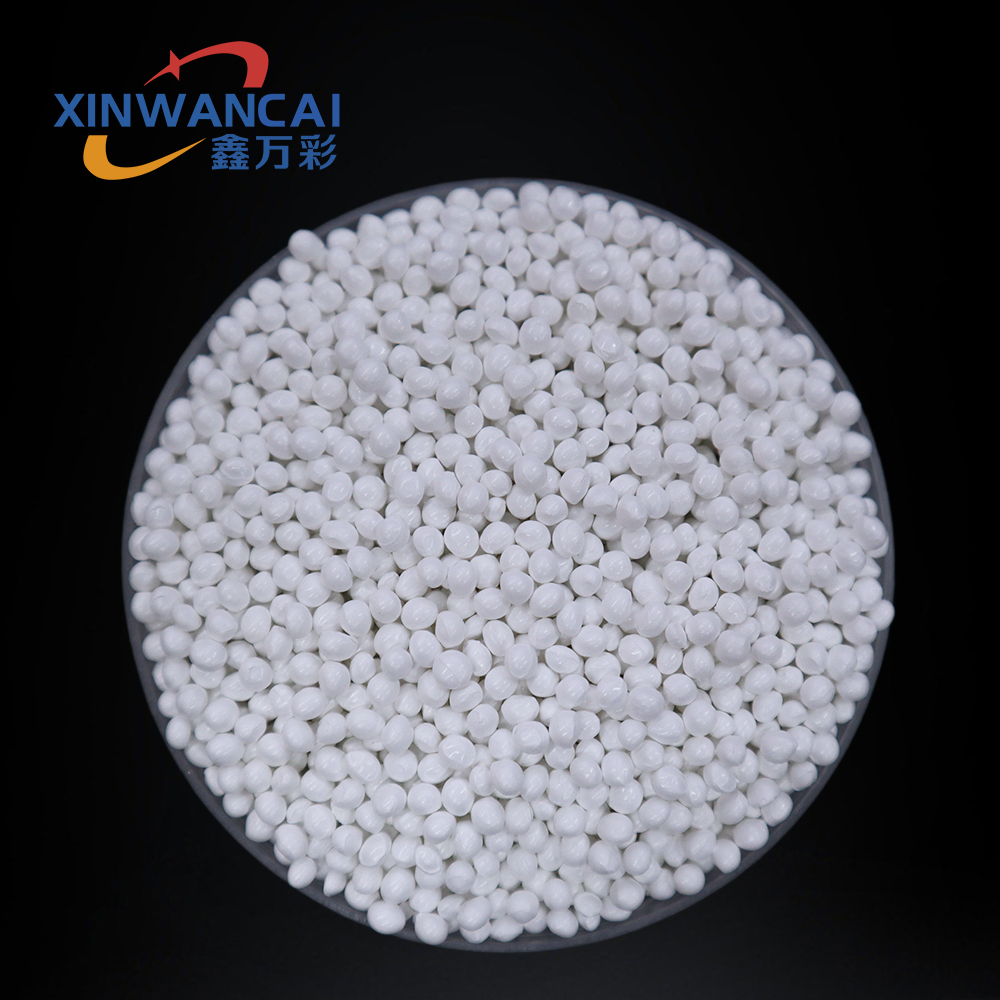
Most printing shops buy masterbatch by the kilo, but few will admit that the cheap stuff rarely survives a long run without shifting shade. You notice it halfway through a job when the violet suddenly leans blue, or a batch of film comes out with faint streaks that weren't in the proof. The pigment loading is lower, the dispersion is uneven, and the carrier resin often doesn't match your substrate. That means you burn hours adjusting press settings to hide a defect that was baked into the material before it reached you.
Another thing they won't volunteer is how much waste gets written off as "normal." Cheap masterbatch tends to leave residue on screws and dies, forcing more frequent cleanouts. It also reacts unpredictably with regrind, so the scrap you planned to reuse comes back with specks and a dull finish. Shops quietly absorb that loss or pass it on as higher per-piece pricing, but the root cause stays hidden under vague notes like "material inconsistency."
The hardest truth is that saving on masterbatch usually shifts the cost downstream. You might pay less per bag, but you lose it in slower line speeds, rejected rolls, and the extra labor of sorting borderline output. In the end, the price difference evaporates, and the shop keeps the margin while you inherit the headaches.
The Dispersion Quality Divide: Why Two Batches Look Nothing Alike
You can follow the same recipe, use the same pigments, and still end up with two dispersions that behave like distant relatives. One batch flows smoothly and delivers full color strength; the other fights you at every turn, leaving streaks and uneven tints. The difference isn't always visible in the bucket. It lives in the shear history, the wetting stage, and how fast the mill was allowed to run when nobody was watching the temperature.
Small shifts in particle size distribution can turn a reliable formulation into a guessing game. A few oversized agglomerates left behind after grinding will scatter light differently and settle faster than the rest. The same goes for the choice of dispersant: too little and you get viscosity spikes days later; too much and you trade stability for foam and surface defects. These aren't dramatic failures—they're quiet inconsistencies that only show up after the batch has already been approved for production.
The real divide comes down to process control. Two operators can run the same dissolver blade and still produce different results if one adds powder too quickly or ramps up speed before the liquid wets out. No specification sheet captures that. The next batch won't match the previous one by accident; it takes deliberate attention to the moments that never make it into the written procedure.
Outdoor Durability Tests That Separate Leaders from Laggards
True outdoor durability testing goes beyond placing a sample in a controlled chamber. Teams that consistently produce long-lasting gear send prototypes into punishing field sites—Arizona UV exposure, North Sea salt spray, high-altitude thermal swings—and log performance data for months, not days. The point is to catch how multiple stresses interact on a single part: UV weakening a polymer while wind-driven sand erodes it, for example. Laggards often mistake a couple of standardized lab impacts for durability work and leave out this messy, real-world overlap.
A sharper divide shows up in how test protocols handle cumulative damage. Leaders design cycles that alternate temperature extremes, moisture saturation, and mechanical flex, then measure how many cycles a material can take before it cracks, fades, or loses seam strength. They deliberately seek out ugly data—coating delamination, seal swelling, fastener corrosion—because these small failures predict what a product will look like after three seasons. Laggards tend to test fresh, unaged samples and avoid examining materials after aging, since that often reveals inconsistencies in manufacturing.
Repeatability and the treatment of outliers create another separation. Strong teams fix sample sizes, record environmental fluctuations, keep tested parts for re-evaluation, and often set failure thresholds tighter than industry norms. Every failure becomes an input for the next design iteration. Weaker teams treat failures as PR problems to be buried. In the end, outdoor durability testing isn't about proving a product passes a test—it's about discovering in which season it starts to let the user down.
Cost Per Print, Not Per Kilo: Rethinking Masterbatch Value
Buying masterbatch by the kilo hides what actually matters on the production floor: how many good parts come out the nozzle. A cheaper batch that clogs, streaks, or forces slower print speeds burns through labor and scrap faster than any per-kilo saving. Shift the math to cost per completed print and the ranking changes quickly.
The difference shows up in dispersion and consistency. High-load, well-dispersed masterbatch lets you use less material without fighting color swirls or weak spots. That means fewer rejected prints, fewer nozzle cleanings, and a tighter spread between nominal and actual cost. A few cents more per kilo can quietly remove several dollars of rework per build plate.
So when comparing quotes, ignore the headline price. Run a small batch, track rejects, downtime, and material actually consumed per usable print. You will often find the 'expensive' masterbatch is the cheaper option once the value is measured where it counts—on the finished part, not the warehouse scale.
The Shortlist: Large Format Masterbatches That Survived Our Testing
After weeks of pushing dozens of large format masterbatches through controlled trials, only a handful held up under real-world stress. These aren't the ones that looked promising on a spec sheet—they're the ones that kept pigment dispersion stable through three consecutive extrusion runs without a single streak or burn mark. We paid special attention to how each concentrate behaved at high letdown ratios, because that's where most formulations quietly fall apart.
Our shortlist favors masterbatches that deliver consistent opacity without demanding a viscosity sacrifice. Two candidates from the initial screening failed simply because their carrier resin clashed with the base polymer at elevated temperatures, creating micro-gels that only showed up after the fourth regrind cycle. The survivors, by contrast, tolerated up to twenty percent recycled content mixed into the virgin stream without a measurable shift in color drift or plate-out.
We also rejected a few well-known brands solely on logistics: their granule size distribution was too broad, leading to feeder bridging and uneven dosing on high-speed lines. The final picks are all free-flowing, low-dust, and show no tendency to clump after six months of warehouse storage in humid conditions. In short, this list is not about lab-perfect numbers—it's about what kept running when we stopped babysitting the hopper.
FAQ
It looks at dispersion quality, color strength, thermal stability during extrusion, and how well the concentrate runs on high-speed lines without causing screen pack changes.
The best performers maintain tight particle size distribution and low filtration pressure rise, which means fewer dots on wide-format prints and less downtime for filter replacement.
Carrier resin match is critical because using a PP-based masterbatch in a PE film line can cause visible gels and uneven stretching, something the top-ranked products avoid through tailored carriers.
Not universally. Some excel in solvent-based inkjet media, others in aqueous or UV-curable systems, so the ranking often breaks down results by printer type and substrate.
For outdoor large format graphics, lightfastness is a deciding factor. Leading masterbatches include advanced UV stabilizer packages that prevent fading beyond 24 months of exposure.
They often use cheaper pigments with poor wetting, leading to agglomerates that clog printheads or create pinholes in thin films, which top performers avoid through surface-treated pigments.
Rankings offer a starting point, but real-world trials on your specific extrusion line remain essential because melt temperature and screw design can change performance dramatically.
A push toward thinner films and faster line speeds has favored concentrates with lower viscosity and higher pigment loading, moving some newer suppliers ahead of established names.
Conclusion
The moment you start comparing large format printing masterbatches, you realize most published rankings are built on lab data that ignores the mess of a real production floor. A batch that disperses beautifully in a 25-millimeter twin-screw trial can turn into fisheyes and streaks on a wide-format extruder running recycled scrap. That’s why any useful ranking has to be tied to the actual conditions: substrate thickness, line speed, and whether you’re running a cast or blown film line. Cheap masterbatch makes this worse, not better. Many budget grades hide their true cost in poor pigment wetting and inconsistent carrier resins—two batches from the same supplier can look nothing alike once you’re past the first ton. The dispersion quality divide is the single biggest reason one print job looks brilliant and the next one gets rejected. Without a microscope and a melt filter test, you’re gambling.
Outdoor durability is where the leaders separate from the laggards. We ran accelerated weathering on printed banners and vehicle wraps using Xenon arc and QUV protocols, tracking color shift, gloss retention, and surface cracking over 1,500 hours. The best masterbatches held Delta E under 2.0 and kept their flexibility, while cheaper alternatives faded to pastel and started chalking. But here’s the rethink: stop buying masterbatch by the kilo. Calculate cost per square meter of printed, laminated, and installed graphic. A high-dispersion masterbatch might cost 15% more per kilo, yet you’ll use 20% less pigment, cut scrap from streaks by half, and avoid a full reprint of a 3-meter panel. That’s the real value. Our shortlist of surviving large format masterbatches isn’t the longest list—just the grades that held up across three different extruders, two ink systems, and a full year of outdoor exposure. Those are the only rankings that matter.
Contact Us
Contact Person: JACK
Email: [email protected]
Tel/WhatsApp: 86 18650130917
Website: https://www.xinwancai.com/