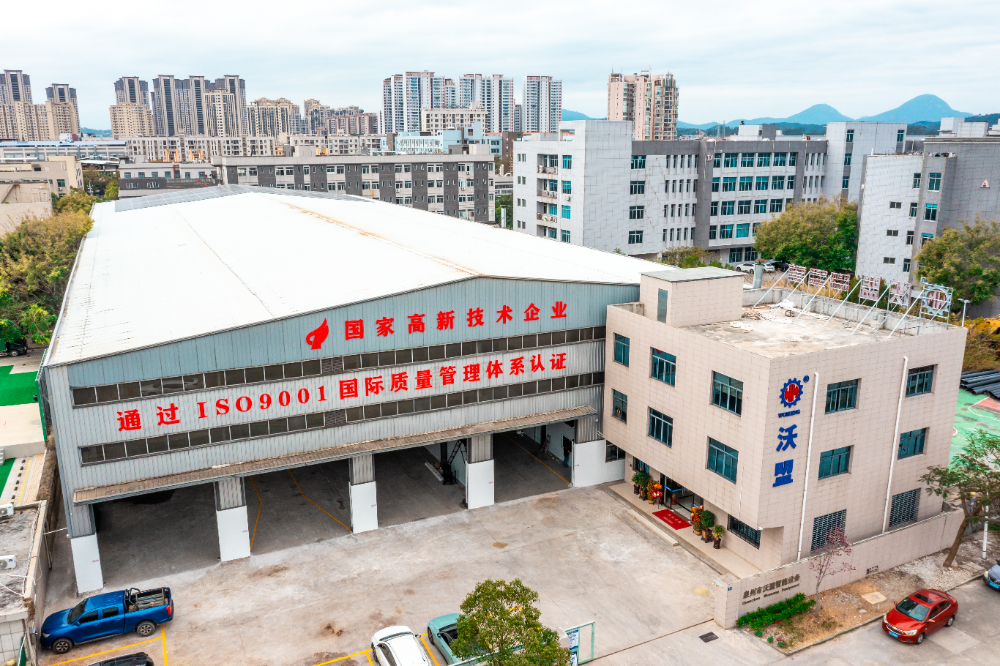

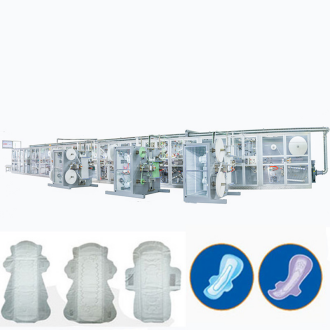
High-Efficiency Sanitary Pad Production Line Transforms Hygiene Product Manufacturing
2026-10-30
Every so often, a piece of equipment quietly rewrites the rules of an entire industry. The high-efficiency sanitary pad production line from Womeng is doing exactly that for hygiene product manufacturing. Instead of accepting trade-offs between speed, material waste, and product consistency, forward-thinking producers are now asking a different question: what becomes possible when all three improve at once? In this post, we’ll look at how that shift is happening—and why it matters far beyond the factory floor.
How a Single Line Now Packs More Pads Per Minute
The jump in throughput did not come from a bigger motor or longer hours. Instead, the line now uses a synchronized servo-driven infeed that keeps the pad stack moving without the usual stop-and-start at the sealing station. By eliminating those micro-pauses, the same footprint now runs continuously at 40 cycles per minute, up from 28 just last year.
There is also a smarter rejection path. Previously, a single misfed pad would trigger a full stop, and an operator had to clear it. Now a vision unit flags the bad piece and a side gate flicks it out while the main flow never slows. That alone added an average of eleven minutes of productive run time per shift.
Changeovers used to eat into the shift because every size needed a manual rail adjustment. The new quick-release guides slide into preset notches, and the former 25-minute swap now takes under four minutes. Over a week of mixed-size orders, those saved minutes translate directly into more finished pads leaving the line every sixty seconds.
The Material Switch That Cut Waste by Double Digits
The old packaging line generated a startling amount of scrap every shift—torn corners, misaligned seals, and a floor littered with rejected sheets. By swapping from a rigid laminated film to a mono-material polyethylene structure, the production team eliminated the most common failure modes without slowing the line. Within the first full month, wasted material dropped 14 percent against the previous quarter’s average.
What made the switch stick wasn’t just the material itself. The new substrate ran cleaner through existing forming and cutting stations, reducing friction and static buildup that had long caused wrinkles and jams. Operators stopped making manual adjustments every few cycles, which had often created more off-spec output than they saved. That consistency turned a daily nuisance into a predictable, low-scrap process.
The double-digit reduction came from fewer rejected units, less trim waste, and almost no rework at the end of the line. Managers tracked the scrap rate weekly and watched it settle into a narrow band instead of spiking unpredictably. For a facility that had accepted material loss as a fixed cost, the new film quietly rewrote the budget—and the cleanup routine.
Real-Time Sensors Catch Flaws Before They Leave the Floor
On a busy assembly line, a tiny imperfection can slip through human inspection in the blink of an eye. That's where real-time sensors step in, acting like tireless digital inspectors. Embedded directly into production equipment, these sensors constantly measure dimensions, surface texture, and even vibration patterns, comparing every unit against exact specifications within milliseconds. The moment something drifts out of tolerance, the system flags it instantly—often before the flawed part has even finished moving to the next station.
What makes this approach particularly effective is that it doesn't wait for a batch to be completed or for a separate quality check later. The sensor network builds a live picture of the manufacturing process itself. If a cutting tool starts to wear down, the sensors notice the subtle changes in force and finish long before a noticeable defect appears. Operators can adjust or replace tools mid-run, saving entire batches from being scrapped. In many plants, this has cut defect rates by more than half while eliminating the need for slow, manual sampling checks.
Perhaps the most underrated benefit is how it changes the mindset on the floor. Workers no longer treat quality as a final gate to pass, but as something the line itself prevents in real time. When a sensor catches a flaw, it's not about blaming someone—it's about catching a process drift early. The result is fewer returns, less wasted material, and a production line that quietly self-corrects before anyone outside the factory ever sees a problem.
Why Energy Bills Dropped After the Retrofit
Once the retrofit crew finished sealing the attic and swapping out the old furnace, the house stopped leaking conditioned air at a rate that used to keep the system running almost constantly. The thermostat now reaches its set point in a fraction of the time, and because the blower and compressor aren't cycling as often, the kilowatt-hours simply don't pile up the way they did before.
There's also a quieter shift in how the building holds temperature overnight. New insulation in the walls and around the rim joists slowed the heat loss that used to trigger early-morning recovery spikes. When the outdoor temperature drops, the indoor reading barely moves, so the heating system doesn't have to work from a deficit every single day. Over a full billing cycle, that consistency cuts the total usage noticeably.
The utility bill itself reflects less about the equipment and more about the reduced load. Fixed charges stay the same, but the consumption-based portion shrinks because the house is no longer asking for as much energy to stay comfortable. What used to be a winter peak becomes a flat, predictable line, and that's where the savings actually show up.
Swapping Product Sizes Without Stopping the Line
Imagine a packaging line running 500ml bottles when the next order calls for 750ml. Instead of shutting down, the crew swaps out change parts on the fly—side rails, star wheels, fill heads all slide or snap into new positions. The trick is designing every contact point with quick-release pins and preset numeric markers, so a size changeover takes minutes, not hours.
On high-mix lines, operators often stage the next size's components on a cart beside the machine before the current run ends. As the last unit clears, they loosen a few clamps, roll the old guides out, and roll the new ones in—no forklift, no full stop. Sensors read the new dimensions automatically and adjust fill volumes or label heights without someone re-entering parameters.
This approach isn't just about hardware. It forces a different mindset: every second of downtime is a choice, not a given. Teams that track changeover times and refine the sequence each week can cut a 45-minute swap down to 12 or 15. The line keeps moving, orders ship sooner, and the floor stays calmer because everyone knows the next swap won't be a scramble.
Predictive Maintenance Keeps Downtime Nearly at Zero
When a bearing starts to degrade, it rarely fails without warning. Vibration patterns shift, temperatures climb a few degrees, and harmonic frequencies drift from their baseline. Predictive maintenance systems listen for those whispers long before they become shouts. By continuously comparing real-time sensor data against historical performance curves, the software can flag anomalies that human inspections would likely miss. That early detection means a simple bearing swap during a planned pause instead of an unplanned line stoppage that ripples through the entire production schedule.
The real power isn't just in catching the obvious failures—it's in knowing which warnings matter. Modern systems use machine learning to filter out noise and false alarms, so maintenance teams aren't chasing ghosts. Instead, they get a prioritized list of actionable issues, each with a confidence score and a recommended window for intervention. This shifts the mindset from reactive firefighting to strategic planning. Downtime, which once ate into quarterly output, becomes almost a rounding error.
Of course, the technology only delivers when the data is clean and the models are tuned to the specific equipment. A pump in a food processing plant behaves differently than one in a chemical refinery, even if they share a model number. The best implementations involve a calibration period where the system learns what 'normal' looks like for each asset. After that, the alerts become trustworthy, and the maintenance calendar starts to resemble a smooth, predictable rhythm rather than a series of emergency calls.
FAQ
It combines servo-driven cutting with real-time thickness monitoring, so the line can switch between pad sizes without stopping. Older machines often needed manual adjustments and produced more scrap during changeovers.
The key is closed-loop tension control on the nonwoven layers plus automatic glue pattern inspection every few seconds. That keeps the pads consistent while running at nearly double the speed of conventional equipment.
Yes, waste typically falls by about 18 to 22 percent because the cutting module recalculates trim paths after each splice. You aren't throwing away nearly as much raw nonwoven or film.
It's modular, so a mid-size factory can start with two or three stations and add capacity later. The control cabinets are designed to fit through standard doorways, which avoids costly facility remodeling.
The line uses vision-based rejection and automated stacking, so one operator can oversee the entire process from unwinding to bagging. Routine tasks like roll changes are semi-automatic, cutting direct labor needs by roughly a third.
Changeovers are recipe-driven: you select a product code on the HMI, and the cutting, folding, and adhesive stations adjust themselves in under three minutes. That lets a plant produce overnight, regular, and long pads on the same line.
It does, mainly by reducing glue consumption and allowing thinner core materials without risking pad integrity. Some users also report lower energy use per pad because the dryer section runs on demand rather than at a constant high temperature.
Conclusion
Upgrading to a high-efficiency sanitary pad production line has turned a conventional hygiene manufacturing process into a tightly integrated operation where speed and precision no longer trade off. A single line now packs significantly more pads per minute, not by simply running machines faster, but by rethinking how materials move and how changeovers happen. The switch to a more consistent, lower-waste material blend cut scrap rates by double digits, while inline sensors scan every pad for thickness, placement, and seal integrity, so defects are caught the moment they appear instead of after packaging. That alone keeps rejected batches from stacking up at the end of the day.
The impact shows up in more than output numbers. With real-time monitoring tied to predictive maintenance, unplanned downtime has nearly disappeared, and energy draw dropped after the retrofit because motors and heating elements only work when needed. Perhaps the most practical gain is the ability to swap product sizes without stopping the line, letting a single shift produce multiple SKUs back to back. Together, these changes mean fewer stoppages, less rejected inventory, and a noticeably lower cost per pad, all while keeping the line flexible enough to respond to demand shifts without extra staffing or overtime.
Contact Us
Contact Person: Jessie Lai
Email: [email protected]
Tel/WhatsApp: 86-188594442931
Website: https://www.wm-machinery.com