

HDPE Pipe Machine Factory Essentials for High-Quality Pipe Production
2026-10-12
Every high-quality HDPE pipe begins with a factory that refuses to cut corners. The machinery behind the extrusion process determines whether a pipe lasts 50 years or fails in 5. At COMRISE, we've spent years studying what separates reliable production lines from expensive downtime. This guide breaks down the factory essentials that many overlook—until it's too late. Keep reading to discover what your current setup might be missing.
Moisture Control in Virgin and Regrind Blends
Moisture behaves differently in virgin pellets and regrind. Virgin material typically arrives with controlled moisture content from sealed packaging, but once opened it absorbs ambient humidity. Regrind, by contrast, has a much larger surface area and often sits in open bins or beside machines, picking up moisture faster. This means even a small percentage of regrind can raise the blend's overall moisture level beyond what the process tolerates.
To manage moisture in blends, dry the two streams separately before mixing, or at least understand their initial moisture readings. Regrind may need a lower drying temperature or longer residence time because fine particles can clump or degrade if overheated. Check the dew point of the dryer and ensure the air actually reaches the hopper throat, not just the dryer outlet. A moisture analyzer or weight-loss test on a sample gives a far better target than guessing from drying time alone.
The blend ratio also shifts drying requirements. A 20% regrind load will not necessarily need 20% longer drying if the regrind is already dry; but if it has been stored in a humid area, that 20% can dominate the moisture load. Keep regrind covered and use it promptly, or dry it immediately after grinding. Establishing a simple incoming moisture check for both virgin and regrind prevents most splay, brittleness, and dimensional problems before they reach the mold.
Extruder Screw Cooling for Stable HDPE Output
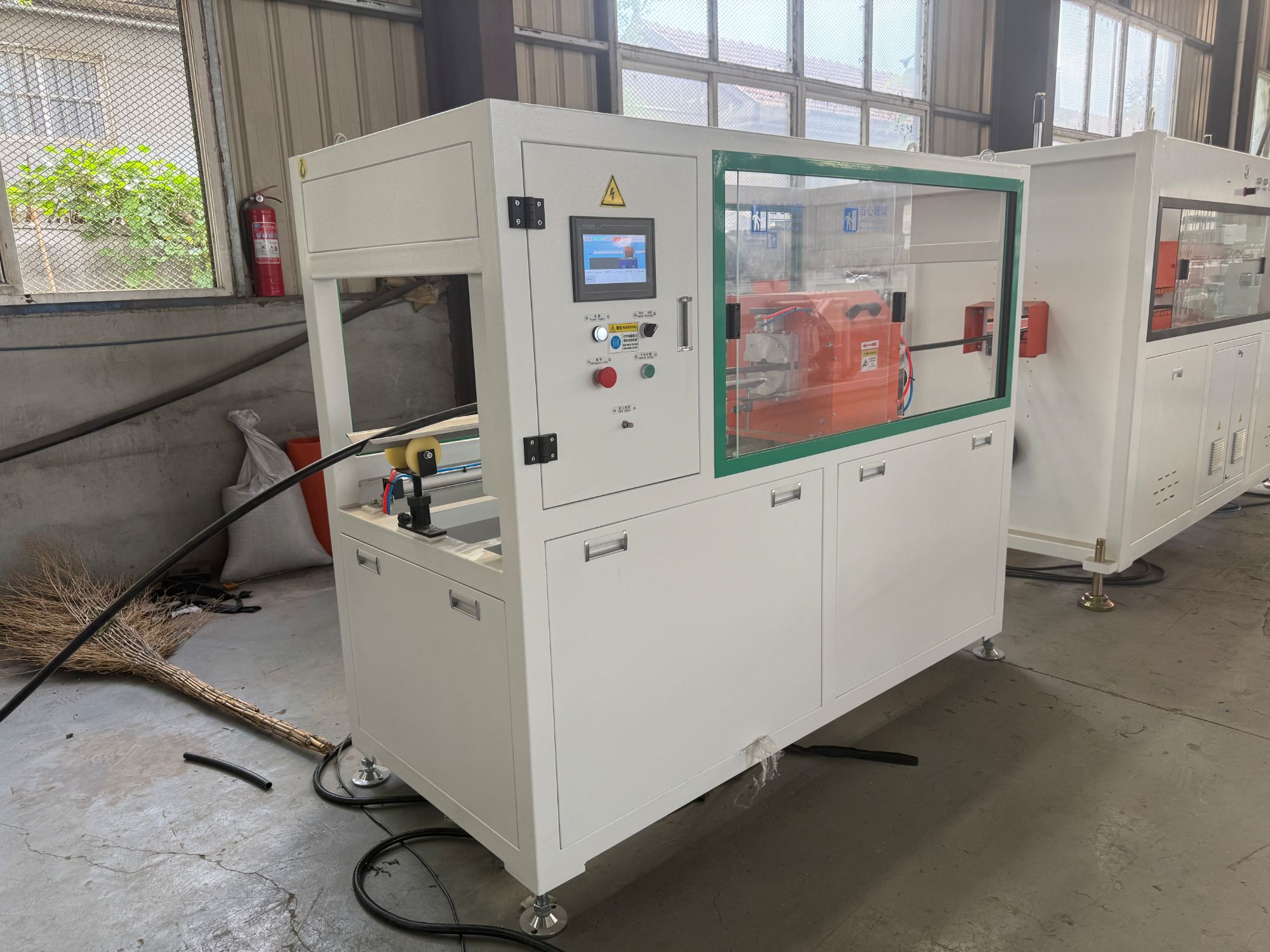
In high-output HDPE extrusion, the screw often becomes a hidden heat source that quietly sabotages melt quality. Frictional shear and viscous dissipation raise the screw temperature well above the barrel set point, causing resin to stick, degrade, or form unmelted gel particles that surface later as defects. A drilled screw with internal cooling water—or better, a closed-loop temperature control unit—pulls heat away from the root of the flights, keeping the melt channel thermally neutral. This prevents the classic problem of a hotter screw working against the barrel heater, which leads to surging and pressure fluctuation at the die.
The payoff is measurable: consistent head pressure, stable output rate, and a more uniform melt temperature exiting the die. Operators often notice lower melt temperature readings and reduced need for downstream cooling, which means less shrinkage and better dimensional control on the finished product. Internal screw cooling also allows running a slightly higher screw speed without overheating the material, boosting throughput while maintaining the same or better quality. In practice, this means fewer rejected spools, less downtime for purging degraded HDPE, and longer intervals between screw pulls for cleaning.
One underappreciated detail is the location of the cooling circuit. Cooling the feed section aggressively can cause pellets to bridge or slip, while cooling only the metering section may not remove enough heat from the compression zone. The best designs use a temperature-controlled water manifold that adjusts flow independently to each screw segment. For HDPE, a screw coolant outlet temperature around 120-140°F (50-60°C) keeps the root cool enough to prevent melt film buildup but warm enough to avoid condensation or thermal shock. By treating the screw as an active heat exchanger rather than a passive metal shaft, processors gain a stable process window that survives resin lot-to-lot variation and seasonal ambient shifts.
Melt Pressure Consistency Before the Screen Pack
In many extrusion lines, the melt pump does the heavy lifting, but the real story unfolds just upstream—where polymer squeezes through the breaker plate and into that dense stack of screens. Operators who ignore the pressure gauge there risk learning about gel buildup, degraded specks, or surging output the hard way. A steady reading isn’t luck; it’s a sign that the screen pack isn’t blinding unevenly, that the barrel temperature profile still matches the resin’s shear sensitivity, and that the screw hasn’t started channeling unmelted pellets into the filtration zone. One trick from long-running lines: log the pressure differential across the screens every shift, not just the absolute value. A slow upward drift can warn you about fine-particle loading days before the line stumbles.
Why does consistency matter more before the screen pack than after it? Because upstream pressure spikes translate directly into residence-time scatter. Polymer that lingers near the screen edges sees more heat history than polymer that slips through the center—and that uneven cooking shows up later as color streaks or unstable film gauge. To keep things level, some processors install a short static mixer right before the breaker plate, forcing the melt to blend radially and wipe out any temperature striations the screw left behind. Others prefer a slightly coarser screen mesh layered over a finer one, so the coarse layer catches the biggest contaminants and protects the fine layer from rapid plugging. Neither approach works unless the pressure transducer port stays clean; a partially plugged port gives a false sense of calm.
Troubleshooting a wavering pressure trace often points to three culprits: inconsistent feeder output starving the screw, a worn screw tip allowing melt backflow, or a screen pack that’s seated poorly and lets polymer bypass around the rim. Instead of immediately swapping the screens, check the raw feed first—pellet bridging in the hopper or a sluggish gravimetric feeder can create sawtooth pressure cycles that mimic screen plugging. If the feed looks fine, pull the breaker plate and inspect the screen edges for shiny melt tracks, a telltale bypass. For lines running highly filled compounds, expect screen changes more often but keep the differential steady by preheating the next screen pack to barrel temperature before insertion; a cold screen shocks the melt and sends a pressure blip through the whole system. Stability here isn’t a luxury—it’s what keeps the die lips full and the take-up rolls from yanking the web unevenly.
Die Land Length Adjustments for Wall Thickness
Die land length acts as a flow-balancing mechanism in profile extrusion. When a cross-section has thicker walls, those areas offer less resistance to the polymer melt, so they tend to run faster than thinner sections. Extending the land in the thicker regions increases frictional drag and slows the melt front, while shortening it in thin-walled areas reduces backpressure and lets the material advance more freely. This differential tuning helps the extrudate leave the die at a uniform velocity, which is essential for holding consistent wall thickness along the entire profile.
Adjustments are rarely made in isolation. A change to one land length shifts the overall pressure distribution inside the die, which can alter fill patterns in adjacent features such as ribs, corners, or hollows. Toolmakers often start with a baseline land length calculated from the average wall thickness, then modify it in steps of 0.5 to 1.5 mm depending on melt viscosity and shear sensitivity. Filled or highly elastic compounds react differently, so the same geometric change may need to be tuned through short trial runs or flow simulation before the die is hardened for production.
Overcompensating for wall thickness differences can create its own problems. Excessively long lands may raise die pressure beyond the extruder's comfortable range, increase residence time, and cause surface defects like melt fracture or plate-out. Excessively short lands provide too little guidance and can result in dimensional instability or wavy edges. A well-balanced die usually pairs land length adjustment with other corrections such as preland geometry or local temperature control, keeping the total pressure drop reasonable while still delivering the required wall tolerance.
Vacuum Calibration Tank Seal Integrity
In a vacuum calibration tank, the seals at entry and exit do more than keep cooling water from spilling onto the floor. They hold the pressure differential that presses the hot extrudate against the sizing sleeves. A worn or misaligned seal lets air bleed into the chamber, causing vacuum level swings that translate into uneven wall thickness, wavy surfaces, or ovality in the finished pipe. Operators often notice these defects before they spot the seal itself, because a leaking seal rarely drips enough water to stand out.
Rubber lip seals are the most common weak point. Prolonged contact with warm pipe, combined with the constant drag from the puller, hardens the lip and creates flat spots that no longer hug the product. Split seals, convenient for quick size changes, wear first along the mating edges where the two halves close. A practical check is to run a fingertip or a thin plastic shim around the contact area while the line is at operating vacuum; any gap wider than a fraction of a millimeter is enough to destabilize the tank pressure. A sharp hiss near either end of the tank is another reliable sign of seal bypass.
Replacement timing should follow meters of product processed rather than calendar days, since abrasive compounds and higher haul-off speeds can halve seal life. Before fitting a new seal, inspect the clamping groove for calcium deposits and wipe it clean. Seat the seal evenly, then tighten the retaining ring in a star pattern to avoid pinching one side. Once the line restarts, check that a thin, uniform water film appears on the pipe surface just past the seal; heavy dripping at the exit or a dry band around the circumference means the seal is either too tight or allowing air to pass.
Inline Diameter and Wall Scanning After Cooling
Once the extruded product has passed through the cooling section, dimensional stability becomes the primary concern. Inline diameter and wall scanning takes over at this stage, feeding real-time measurements back to the control system without stopping the line. A sudden shift in melt temperature, haul-off speed, or vacuum calibration often shows up first as a slow drift in the outer diameter or an uneven wall thickness. The scanners pick up these changes immediately, allowing operators to adjust parameters before scrap accumulates.
The wall scanning unit typically rotates around the circumference, mapping thickness at several points along the same cross-section. Comparing these readings against the diameter data reveals whether the pipe is concentric or if one side is consistently thinner. This combined approach is far more reliable than spot checks with a handheld micrometer, which only sees a tiny fraction of the product. When both datasets stay within tolerance for a set period, the line can be left to run with minimal manual intervention.
Good integration also means the measured values are not just displayed but used actively. For instance, a slight drop in average wall thickness near the lower limit may trigger a tiny increase in extruder output, while an oversized diameter can prompt a small reduction in haul-off speed. These closed-loop corrections keep production stable across shift changes and raw material variations. The end result is a consistent product that meets spec without constant physical sampling or operator guesswork.
FAQ
Inconsistent resin lots can shift melt flow and density enough to cause wall thickness variation or internal stress. Reputable factories pre-qualify suppliers and test each batch for MFI, density, and contamination before it enters extrusion.
Ovality usually traces back to improper vacuum calibration or uneven cooling in the sizing sleeve. Factories that hold tight vacuum levels and maintain uniform water bath temperatures produce rounder pipes with tighter dimensional tolerances.
A barrier screw with a dedicated mixing section gives more consistent melt temperature and pressure than a standard general-purpose screw, reducing surging and allowing higher outputs without degrading the polymer.
Smaller pipes cool quickly and need shorter tanks with precise water flow to avoid cracking. Larger pipes require staged cooling over longer distances with controlled temperature gradients to prevent residual stress and warpage.
Use a gravimetric feeding system tied to extruder RPM and an ultrasonic thickness gauge that feeds back to the haul-off speed. This closed-loop approach corrects drift before it becomes a reject.
A spiral mandrel die distributes melt more evenly than a simple spider die, reducing weld lines and pressure fluctuations. It also allows faster die changes because the mandrel can be swapped without replacing the whole head.
Thick walls trap heat, and water cooling alone creates a steep temperature gradient that can cause voids or internal stress. Internal air cooling removes heat from the inside surface at a controllable rate, producing denser, more stable pipe.
Checking calibration sleeve wear and haul-off belt tension. Worn sleeves produce surface defects, while slipping belts create speed fluctuations that lead to thickness variation. Regular laser alignment of the entire line also prevents unnecessary scrap.
Conclusion
Running a production line that turns out consistently strong HDPE pipe means paying attention to details that often get overlooked until a bad batch forces you to. Moisture in the blend—whether it's virgin resin or regrind—will quietly wreck melt quality, so keeping it below a few hundred ppm before it reaches the hopper is non-negotiable. On the extruder side, screw cooling isn't there to fight overheating; it's there to hold barrel temperature profiles steady so the melt doesn't surge or degrade. I've seen operators chase melt pressure fluctuations all day only to find the real problem was a cooling line that wasn't balanced. When pressure at the screen pack stays within a narrow band, you know the screw is feeding evenly and the screen isn't loading up with gels.
Die land length is another lever people forget. Shortening or lengthening the land changes how the melt relaxes before it exits, which directly affects wall thickness uniformity—especially on larger diameters. After the pipe leaves the die, the vacuum calibration tank has to seal properly or you'll get uneven cooling and sag. A small air leak around the gaskets or spray bars can cause ovality that no amount of downstream adjustment will fix. Finally, once the pipe has cooled enough to hold its shape, inline diameter and wall scanning need to run continuously, not just at startup. The data from those scanners is what tells you whether all the earlier controls are actually working together—and gives you a chance to correct drift before you've made a kilometer of scrap.
Contact Us
Contact Person: LISA LEE
Email: [email protected]
Tel/WhatsApp: +86 13780696467
Website: https://www.qdpipemachine.com