

FRP Grating Supplier Guide to High-Quality Fiberglass Products
2026-09-26
When a walkway starts to corrode long before its expected lifespan, the real issue isn't just the material—it's the supplier behind it. Not all fiberglass grating is created equal, and choosing the right FRP grating supplier determines whether your project stands up to harsh chemicals, heavy foot traffic, and years of weather. In this guide, we'll break down what separates premium fiberglass products from the rest, drawing on insights from Sino Grating's manufacturing expertise. From resin selection to load ratings, here's what to look for before you place your next order.
What Separates Durable FRP Grating from the Rest
What separates durable FRP grating from the rest is rarely a single feature. It’s the way the load path is built into the grid. In a well-made molded panel, continuous glass rovings run through each cross bar, and the resin binds them under heat and pressure. That creates a monolithic structure with no screws, joints, or cut-outs where stress can concentrate. Cheap alternatives often rely on thinner cross sections or lower glass content, so they flex too much and develop micro-cracks around the edges.
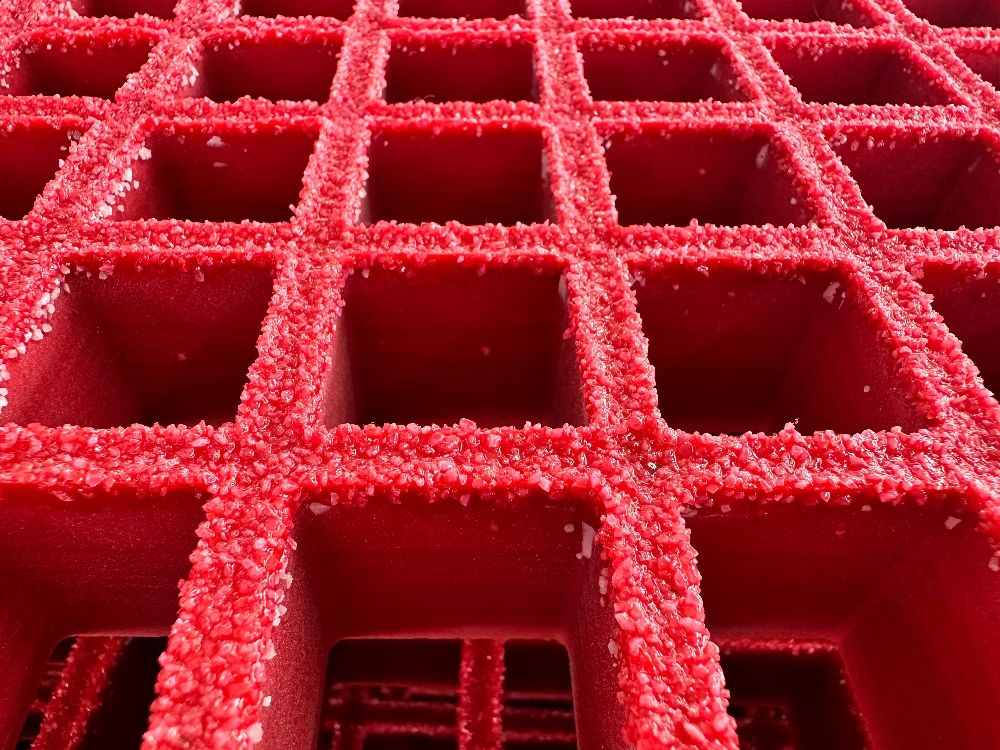
The top surface matters just as much as the grid below. Durable FRP grating keeps its anti-slip texture and color after thousands of footfalls and UV cycles. That usually means a grit-integrally molded surface rather than a coated film that can peel. It also means choosing a resin that matches the environment: vinyl ester for acids, isophthalic polyester for general corrosion, and an enhanced UV package for outdoor use. Without that match, even a thick panel can soften, discolor, or lose stiffness in less than five years.
The Resin and Fiberglass Combination That Defines Performance
Most people never think about the epoxy sitting between the weave, but that’s exactly where the magic happens. A well-matched resin doesn’t just coat the glass—it wets it out completely, filling every filament bundle so the laminate can actually carry load as one unified skin. Skip that step or rush the mix ratio, and you get dry spots that turn into soft hinges under stress.
Then there’s the fiberglass itself. The best builds lean on a tight, consistent weave rather than the cheapest mat they can find. When the cloth lays flat without fighting back and the resin cures to a hard, slightly flexible state, the result is a structure that snaps back after impact instead of cracking. That balance—stiff enough to hold shape, forgiving enough to survive real use—is what separates a high-performance part from something that just looks the part.
Molded and Pultruded Grating A Direct Comparison for Buyers
Molded and pultruded grating may look similar at first glance, but the way they are built changes where each one performs best. Molded grating uses continuous glass strands laid in a crisscross pattern and then saturated with resin under heat and pressure. This creates a panel that carries loads in two directions and holds up well against corrosive spills because the resin coats nearly every fiber. Pultruded grating, on the other hand, pulls resin-coated roving through a heated die to form long, straight bearing bars. That gives it much higher strength in one direction but less in the cross direction, so buyers need to check load orientation before choosing.
Cost often drives the decision, but initial price can be misleading. Molded panels usually come in standard sizes and are easier to cut without exposing large areas of bare fiber, which keeps installation simple and reduces waste on odd-shaped platforms. Pultruded grating can span greater distances between supports because of its directional strength, so you might need fewer beams underneath. That can lower structural steel costs even if the grating itself costs a bit more per square foot. However, any cut ends on pultruded grating should be sealed to maintain corrosion resistance.
For most walkways, trench covers, and chemical areas, molded grating is the default pick because it tolerates multidirectional loads and rough handling without much planning. Pultruded grating makes more sense when you have a clear span requirement or a design that benefits from high strength along the main bars. If you are unsure, ask the supplier for load tables for both directions and compare them against your actual support spacing. A quick sample test also helps you see how each type responds to cutting, drilling, and daily wear.
Slip Resistance and Surface Design for Challenging Environments
When floors get wet, greasy, or covered in fine dust, traction stops being a minor detail and starts driving every design decision. In food processing plants, constant washdowns turn ordinary concrete into a skating rink unless the surface is given a deliberate texture. Instead of relying on coatings that wear smooth within months, many facilities now specify a heavy-duty profile—think angular aggregate embedded in an epoxy or polyurethane matrix—so that boots grip even under a film of animal fat or ice-cold water. The goal isn't just to meet a static coefficient of friction number on a spec sheet; it's to create a surface that behaves predictably when someone is moving fast, carrying a load, and can't watch where their foot lands.
Outdoor environments add another layer of unpredictability. A ramp at a loading dock might be bone dry at nine in the morning but slick with algae by noon, especially in humid coastal areas. The most effective designs treat slip resistance as a system rather than a single property: the pitch of the ramp, the drainage pattern, the spacing of grooves or ribs, and even the direction of prevailing winds all interact. A widely copied approach is to use open-grid metal treads or cast iron grates that let water and leaves fall through instead of pooling on top. But that solution backfires in cold climates where snow packs into the openings and freezes into a glass-smooth cap. So the designer has to think about local failure modes—not just what surface is slip-resistant on a test rig, but what it does after three months of real weather and neglect.
Maintenance expectations are often the hidden variable. A beautifully textured floor that traps dirt and requires aggressive chemical cleaning may become more hazardous than a flat surface, simply because the texture is never cleaned properly. In hospitals and commercial kitchens, the preferred route is often a fine, nondirectional texture—like a lightly shot-blasted stone or a micro-etch on porcelain tile—that provides enough grip without creating crevices for bacteria. The challenge is to keep that surface from polishing under foot traffic, which is why some manufacturers build in sacrificial sacrificial layers or use through-body aggregates that expose fresh rough edges as the top wears away. The best designs are quietly honest about the fact that no surface stays perfect; they are engineered to degrade gracefully, losing traction slowly instead of all at once.
Key Questions to Evaluate a Fiberglass Supplier
Asking a fiberglass supplier about their resin chemistry and glass reinforcement ratio tells you more than a spec sheet ever will. A supplier who hesitates on gel time, viscosity range, or the exact percentage of E-glass versus S-glass probably hasn't run enough production batches to know their own material. You want someone who can pull lot-level tensile and flex data without a long pause.
Dig into how they handle repeatability. Do they track batch records back to the raw fiber and resin drums? Can they show you control charts for thickness tolerance or surface finish across the last twelve months? If the answer is "we test every shipment," ask whether that means a full mechanical panel or just a quick Barcol hardness check. The difference matters when your part has to survive a thermal cycle or a structural load.
Finally, put their claims under real-world constraints. Ask for a list of customers running similar processes—pultrusion, open mold, RTM, whatever you use—and call one. Lead times, minimum order quantities, and how they react when a batch drifts out of spec say more about a supplier than any glossy brochure. If they can't explain their corrective action process clearly, keep looking.
Installing and Maintaining FRP Grating for Maximum Longevity
Getting FRP grating to last starts well before the first bolt goes in. Measure twice and cut with a diamond-grit blade to avoid frayed edges, then seal those cuts with a compatible resin to keep moisture out of the core. Support spacing matters more than most people think—follow the manufacturer’s span tables and leave a little room for thermal movement, especially in outdoor or temperature-swing environments. Tighten fasteners to the recommended torque but don’t overdo it; FRP flexes and needs that give.
Ongoing care is mostly about keeping the surface clear of debris that can trap moisture or hide corrosion. A quarterly wash with mild soap and water or a low-pressure rinse usually does the trick—skip the abrasive pads and harsh solvents. While you’re at it, walk the grating and check for cracks, excessive wear on high-traffic paths, and any clips or bolts that have loosened. Catching small issues early means you’re replacing a section instead of redoing the whole platform.
If the grating lives near chemicals, salt spray, or constant UV, a bit of extra vigilance pays off. Rinse salt deposits before they build up, and consider a UV-resistant topcoat if the original finish starts to chalk. Document your inspections with a simple log—date, location, action taken—so you can spot patterns and plan replacements before structural integrity drops. That kind of routine turns a ten-year product into a twenty-year asset.
FAQ
A dependable supplier will ask about your load requirements, chemical exposure, and installation environment before quoting. They should also be able to walk you through the differences between molded and pultruded grating and recommend the right resin system, not just push whatever is in stock.
Ask for load tables and deflection data from the manufacturer, not just a generic brochure. Reputable suppliers provide span and load charts for each panel thickness and mesh configuration, and they should be willing to review your specific support spacing to confirm the panel won't flex beyond acceptable limits.
Beyond the panel price, look at cutting and fabrication charges, delivery lead times, and whether the quote includes necessary fasteners or clips. Some suppliers quote bare panels only, then add substantial fees for custom cutouts, beveled edges, or corrosion-resistant hardware later.
For most industrial plants, isophthalic polyester or vinyl ester resins offer the best balance of corrosion resistance and cost. Phenolic resins are worth the premium in fire-sensitive areas like offshore platforms or tunnels, but over-specifying exotic resins for mild environments just inflates the budget.
Yes, but only if you follow the supplier's guidelines for sealing cut edges with the appropriate resin or coating. Cutting panels to fit around pipes or equipment is common, but exposed fibers must be sealed to prevent moisture wicking and loss of strength over time.
Request current test reports for flame spread and smoke density, typically following ASTM E-84 or similar standards. A trustworthy supplier will also share third-party certifications for slip resistance and load ratings, and they won't hesitate to explain how their products meet building code requirements.
Molded grating offers better multidirectional strength and corrosion resistance for walkways and trench covers. Pultruded grating has higher unidirectional strength and is often preferred for longer spans, but it may require more careful cutting and sealing. The right choice depends on your span and traffic patterns.
Conclusion
Durable FRP grating stands apart when manufacturers pair a corrosion-resistant resin system with a high glass-to-resin ratio, rather than simply meeting a thickness specification. The best products rely on vinyl ester or isophthalic polyester matrices that hold up under chemical exposure, while continuous fiberglass strands deliver load-bearing strength without the brittleness found in cheaper alternatives. Buyers comparing molded and pultruded options should weigh structural needs against cost: pultruded grating offers higher unidirectional stiffness for longer spans, whereas molded panels provide multidirectional strength and easier on-site cutting. Surface design also matters more than it first appears. A gritted or concave profile creates reliable slip resistance in oily, wet, or icy conditions, but the texture must be bonded into the resin layer, not merely applied as a topcoat that wears away within months.
Evaluating a fiberglass supplier goes beyond checking a catalog. Ask for documented resin chemistry, panel load tables, and examples of installations in similar chemical or marine environments. A trustworthy supplier will also explain how their curing process prevents voids and fiber washout, since internal defects drastically shorten service life. Once installed, FRP grating longevity depends on proper support spacing, correct fastener materials, and a cleaning routine that avoids abrasive pads or strong solvents that can dull the surface. Leave enough expansion clearance at panel edges, especially in outdoor settings where temperature swings are common. With the right product choice and a supplier who stands behind their fabrication process, high-quality FRP grating can deliver decades of low-maintenance performance in demanding industrial settings.
Contact Us
Contact Person: Nicholas Zhu
Email: [email protected]
Tel/WhatsApp: 18921275456
Website: https://www.sino-grate.com