

Flexo Printing Machine for Plastic Film Manufacturer Top Features for High-Quality Output
2026-11-29
Most plastic film printing problems don't start with the operator—they start with equipment that was never tuned for the job. From ghosting on low-tension films to inconsistent solids at speed, the gap between acceptable and exceptional usually comes down to a handful of flexo press features. HuiPeng builds its plastic film flexo printing machines around those make-or-break details, and the difference shows up in clearer halftones, tighter registration, and less waste. Before you compare specs, here are the features that genuinely drive high-quality output.
What Separates a Production-Grade Flexo Press from the Rest
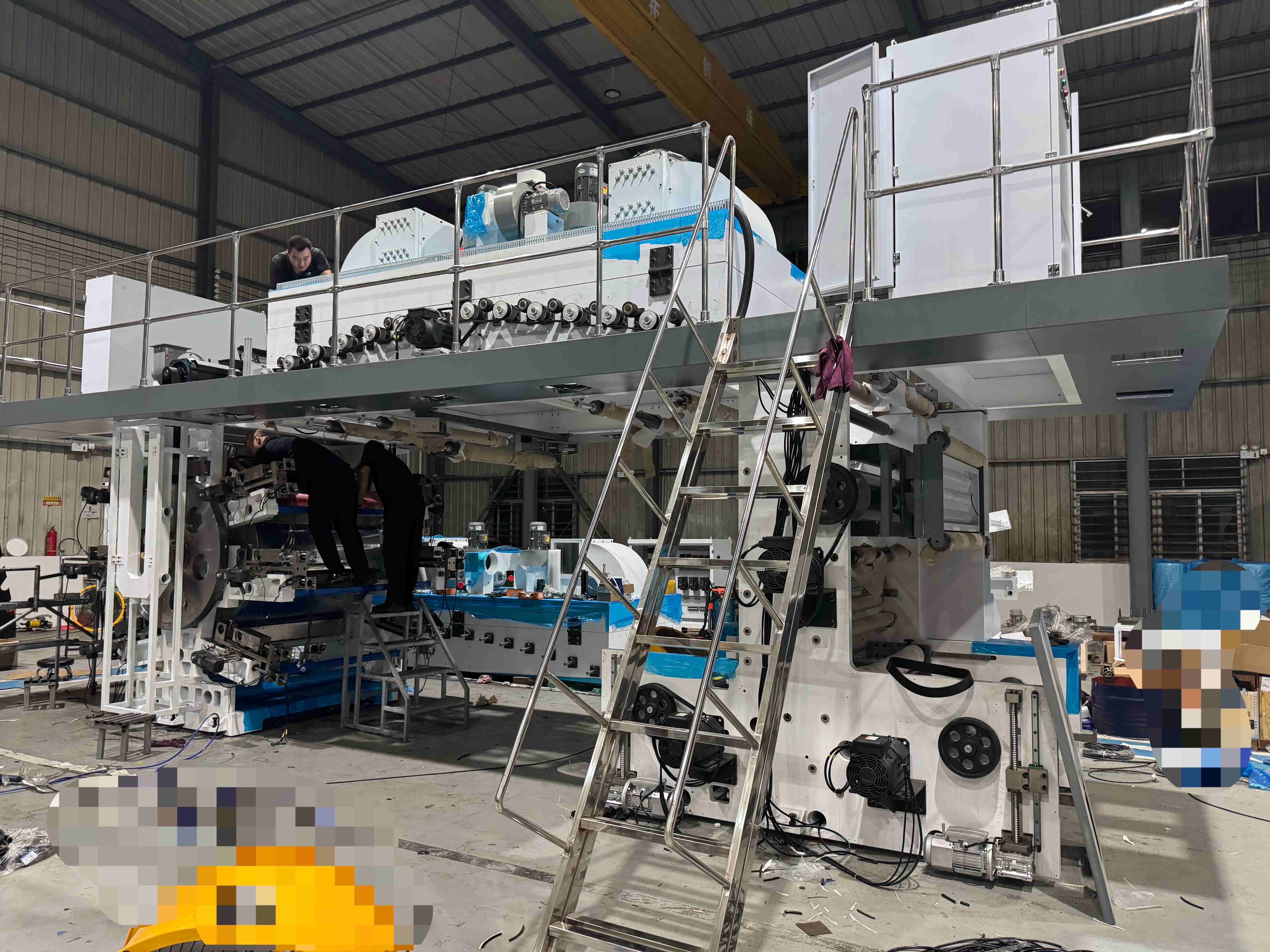
On a busy shop floor, the difference between a flexo press that holds register through a twenty-hour run and one that drifts after lunch rarely shows up in a glossy brochure. It lives in the frame: cast iron or thick stress-relieved steel instead of lighter fabricated plates. That mass soaks up vibration from high-speed web travel and impression settings, keeping dot gain predictable when operators push speeds past five hundred feet per minute. Production-grade machines also isolate temperature-sensitive ink systems and bearing housings, so a warm afternoon doesn't quietly change the density of a brand color.
Beyond the iron, the control architecture separates a workhorse from a weekend project. Closed-loop tension sensing at every infeed, outfeed, and between print stations gives the press the ability to respond to splices, roll wobble, or uneven substrate caliper without manual fiddling. On lesser presses, an operator compensates by ear and by eye; on a true production platform, servo-driven decks and anilox rolls hold exact repeat lengths across jobs, shifts, and even operator skill levels. That consistency is what lets a narrow-web shop quote a national account with confidence instead of crossing its fingers.
Finally, look at how the press handles the unglamorous minutes between jobs. Quick-change plate sleeves, wash-up systems that don't flood the floor with solvent, and anilox rolls that can be swapped without realignment turn a thirty-minute setup into eight minutes. A production-grade flexo press isn't just faster while printing—it's faster at everything else, which is where profitability actually lives.
Keeping Fine Text and Gradients Sharp on Plastic Film
Fine type on plastic film tends to break apart when ink spreads into the surface, so controlling wetting is half the battle. A carefully adjusted corona or plasma treatment raises surface energy just enough for adhesion without making the dots bloom. Pair that with a hard, low-elongation plate and you keep seven-point sans-serif lettering from filling in.
Gradients are more revealing. Any drift in anilox volume or pressure shows up as banding near the highlight end, where dots are small and fragile. Using a hybrid screening pattern keeps the smallest dots stable, while a slightly higher line screen can push the transition to zero so the fade reads as smooth rather than stepping.
For both fine text and soft gradients, ink viscosity has to stay in a narrow window. A thinner film with strong pigment load prints cleaner edges, and a final varnish or cold-foil primer can lock the detail without adding noticeable thickness. The goal is to make the film disappear and leave only the image.
Ink Delivery and Drying Tuned for Non-Porous Materials
On films, foils, and coated stocks there is nowhere for the carrier to soak away. The delivery system is set to a tighter viscosity range and keeps shear stable from reservoir to printhead, so the ink wets cleanly without flooding the dot or drifting into non-image areas. That produces sharper edges and less misting on surfaces that cannot absorb the vehicle.
Drying is handled as a surface event rather than absorption. Airflow and heat are staged to remove moisture or solvent before the sheet hits the next unit, but not so aggressively that the substrate warps or the ink skins over. Interstation output stays moderate while air velocity increases, which suits plastics and foils that hold heat and resist penetration.
On dense plastics and metalized boards, surface dryness alone is not enough. The sequence uses a quick initial hit to lock the ink down, followed by a slower residual cure so it does not stay tacky under stack pressure or lift at the next pass.
Holding Tension and Registration at Full Running Speed
At full running speed, every small drift in web tension becomes a visible misregister within seconds. The challenge is not simply keeping the material taut, but keeping it taut in a way that does not fight the natural stretch characteristics of the substrate. The dancer rollers and load cells need to read changes before they translate into length variation, so the correction signal must be timed to the actual web path rather than to a generic control loop.
Registration holds when the tension zones are isolated cleanly. A nip that slips even slightly at high speed will introduce a repeating error that looks like a tension problem but is really a traction problem. The draw between sections has to be set with enough grip to prevent creep, yet not so aggressive that it pulls the substrate beyond its elastic recovery point. That balance is what keeps the printed or converted image from drifting out of position while the line accelerates, decelerates, or settles into steady running.
Operators often find that the most stable setups rely on shorter feedback paths and lower inertia at the correction points. When the system can respond without overshooting, the register stays locked with far less manual trimming. It is not about chasing the error after it appears, but about holding the conditions that stop the error from forming in the first place.
Reducing Make-Ready Waste Without Slowing Changeovers
Most make-ready waste hides in motion that gets mistaken for work. Shifting tool retrieval, ink or material staging, and die or plate inspections to the middle of the previous run keeps the changeover crew from walking, waiting, and re-checking once the line stops. Teams that stage a labeled cart at each station often trim several minutes without adding headcount or rushing anyone.
The next cut comes from separating what must happen only when the machine is down from everything else. Offline settings, pre-warmed components, and pre-cut splicing materials reduce the actual stop time. Simple visual markers, like shadow boards and colored fasteners, help temporary or cross-trained crew avoid hunting for the right parts. In plants that document the sequence with short video clips, technicians spot duplicated trips and missing tools quickly, then rewrite the setup order rather than pushing people to move faster.
Sustaining the gains depends on recording the exceptions, not just the average changeover time. A short log of what broke, what was missing, and what had to be improvised gives supervisors a list of concrete fixes for the next shift. Over time, that list shrinks the make-ready window while keeping the actual work deliberate and safe.
How Modern Automation Improves Repeatable Print Quality
For years, repeatable print quality depended heavily on a press operator’s eye and willingness to make micro-adjustments during a run. That approach works until shifts change, materials shift, or fatigue sets in. Modern automation removes much of that guesswork by using inline sensors and closed-loop controls that read color density, registration, and dot gain in real time. Instead of waiting for a visible defect, the press corrects drift as it happens, so the last sheet of the day carries the same characteristics as the first approved sheet.
A less obvious advantage is how automation stores and reapplies the exact setup for a given job. Substrate type, ink viscosity, drying temperature, and screen angles are saved as a profile rather than left to memory or handwritten notes. When a repeat order arrives, the system loads those parameters and makes small environmental compensations—humidity or room temperature shifts, for example—without changing the intended color target. This narrows the gap between contract proof and production run and keeps the output stable across weeks or months.
The data gathered during automated runs also creates a feedback loop that human-only workflows rarely match. Each correction is logged with a timestamp and tied to the job, so recurring deviations become visible before they cause rejected stock. Press crews can use those records to schedule maintenance or replace worn components at the right time. The result is not just a machine that prints consistently, but an entire production cell that becomes easier to predict and manage.
FAQ
The real differentiator is closed-loop tension control. Low-inertia rollers and precise feedback at each station keep the web stable at high speeds, so films like 12-micron BOPP don't drift, wrinkle, or snap mid-run.
The key is surface treatment paired with the right ink system. Many lines integrate corona treaters right before the print units, and the doctor blade chamber needs precise pressure adjustment so solvent-based or UV inks lay down evenly without pinholing.
It depends on the ink, but a combination of high-velocity hot air and infrared drying works well. The important part is that each station has independent temperature and airflow control, so the film dries fast without losing dimensional stability.
Yes, if the machine uses servo-driven print cylinders and a gearless design. That way, changing repeat length is a matter of software settings rather than swapping gears, and you can move from 12-micron film to heavier laminates without major retooling.
Look for high-resolution anilox rolls, a stiff impression cylinder, and precise registration control. The plate mounting also matters; a mounter with camera-assisted positioning reduces dot gain and keeps fine details from filling in.
Pre-registration systems and automatic wash-up cycles make a big difference. With servo-driven decks, the press can pre-set impression and register positions before the web starts moving, so you're not burning hundreds of meters of film just to get color alignment.
Regular cleaning of doctor blade chambers, checking anilox cell volume, and inspecting idler roller bearings prevent most quality drift. It also helps to monitor gearbox temperature and replace filters on the drying air intakes before they clog.
Many manufacturers offer modular coating or laminating stations that can be added after the printing units. This allows inline cold-seal coating, varnishing, or adhesive application, which reduces handling and improves registration on film packaging.
Conclusion
Production-grade flexo presses separate themselves on long runs with thin, non-porous films, and the difference rarely comes down to one headline feature. The frame, impression settings, and drive train have to be stiff enough to hold repeat length at speed, while the plate and anilox combination is selected for fine highlights and clean reverses. Because plastic film gives ink no place to absorb, viscosity, pH or solvent balance, and surface treatment have to stay inside a narrow window; otherwise a rough dot or weak edge appears immediately. Drying is tuned the same way—air volume, temperature, and web path are balanced so the ink skins over quickly without trapping solvent or pulling the film out of shape.
A film-capable press proves itself again during changeovers and reorders. Jobs are stored with impression, register, and tension references, so the next run starts closer to sellable print instead of burning substrate on trial pulls. Closed-loop tension and web guiding hold registration steady as roll diameter changes, and automation removes much of the operator drift that used to shift color balance from morning to afternoon. The payoff is less make-ready waste, faster job changes, and repeatable quality across shifts—not because the machine is complicated, but because the variables that cause visible defects are handled before they reach the web.
Contact Us
Contact Person: Isaias
Email: [email protected]
Tel/WhatsApp: 86-13868693129
Website: https://www.hpflexo.com/