

Dual Bands Radio Factory: Crafting Advanced Dual-Band Communication Devices
2026-08-11
In a world that never stops demanding clearer, faster connections, dual-band radios have become the silent backbone of seamless communication. At lisheng, we don’t just assemble devices—we engineer advanced communication tools that thrive in the most demanding environments. This post pulls back the curtain on our factory’s obsession with precision, revealing how cutting-edge dual-band technology meets real-world reliability, one circuit at a time. Get ready to explore what sets our craft apart.
Inside the Workshop Where Dual-Band Radios Come to Life
Step through the unassuming door and the hum of soldering stations greets you. Workbenches are scattered with half-assembled circuit boards, each dotted with components that will soon handle both UHF and VHF signals seamlessly. The air carries a faint scent of flux and warm electronics, a constant reminder that this is a space where ideas turn into hardware. Engineers huddle over schematics, occasionally reaching for a spectrum analyzer to verify a filter’s response or tweak a matching network. There’s no assembly line here—each prototype is painstakingly built and tested by hand, with an obsession for squeezing every last decibel of sensitivity out of the receiver front-end.
In one corner, a custom shield box swallows a radio whole, subjecting it to a battery of interference tests. A technician watches the waterfall display on a nearby screen, nodding slowly as the dual-band architecture proves its mettle against adjacent channel bleed and intermodulation. Across the room, a 3D printer whirs quietly, producing yet another iteration of a chassis that must balance heat dissipation with portability. The whiteboard tells the story—scribbled formulas for helical filters, sketches of antenna isolation arrangements, and a tally of firmware builds that have fixed obscure bugs in the digital signal processing chain. Every element is a deliberate choice, born from late-night discussions and countless measurements.
What makes this workshop different isn’t just the gear—though the racks of software-defined radio test equipment are impressive. It’s the belief that a well-crafted dual-band radio should feel intuitive, almost extension-like, to the operator. Here, knobs are weighted just so, and menus are stripped of clutter because someone argued passionately about cognitive load. The result is a device that performs flawlessly whether you’re scanning maritime VHF channels or hopping across UHF repeaters, and it carries the fingerprints of the small team that refused to compromise on either band. When a new unit finally passes the last round of thermal cycling and vibration testing, it’s not just shipped out—it’s given a quiet send-off, like a well-trained apprentice ready for the field.
Engineering Precision for Uninterrupted Dual-Frequency Links
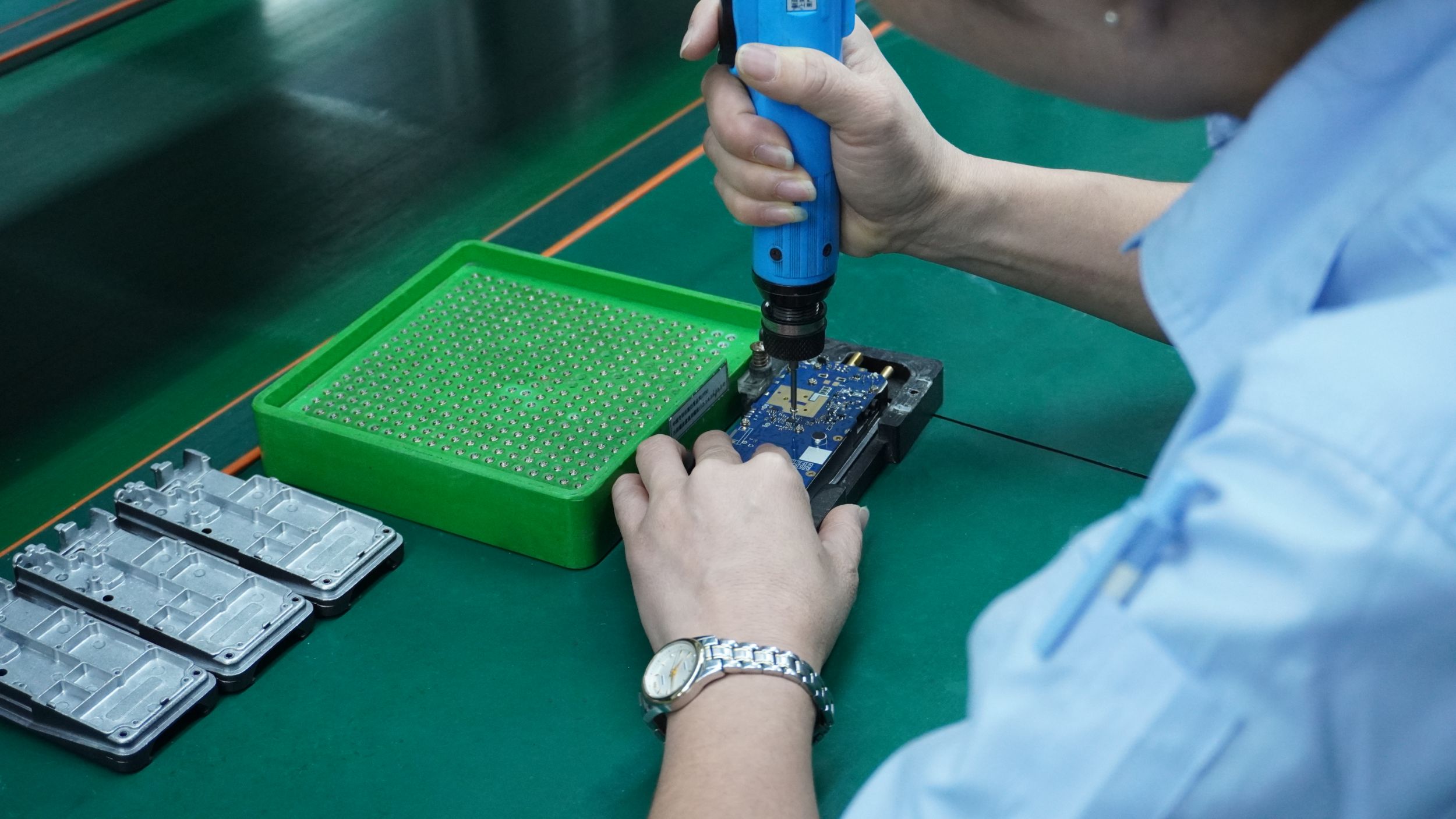
Achieving truly seamless dual-frequency connectivity demands more than just theoretical promise—it requires a rigorous, measurement-driven approach to hardware design. Every passive component, from the antenna elements to the transmission lines, must be tuned with sub-millimeter precision to maintain phase coherence across bands. This meticulous attention minimizes inter-band interference and ensures that the handoff between frequencies remains invisible to the end user, even in the most crowded spectral environments.
The real challenge lies in sustaining these links under dynamic real-world conditions. Temperature fluctuations, physical obstructions, and varying signal reflections can degrade performance if left unaddressed. By embedding adaptive impedance matching and employing materials with tightly controlled thermal coefficients, the system continuously self-corrects. This level of engineering transforms fragile dual-frequency concepts into robust, production-ready solutions capable of maintaining data throughput without the glitches that plague less refined designs.
Beyond the components themselves, the layout geometry plays a critical role. Precision manufacturing tolerances govern the spacing and orientation of radiators to optimize pattern diversity, so that when one frequency path faces a deep fade, the other naturally compensates. This spatial synergy, born from exhaustive simulation and iterative prototyping, is what ultimately delivers an always-on connection. It’s the difference between a link that hopes for ideal conditions and one that actively engineers its own resilience.
From Blueprint to Airwaves: The Making of a Dual-Band Device
Every dual-band device starts as a tangle of intentions—sketches on napkins, heated whiteboard debates, and the stubborn belief that one antenna can gracefully juggle two frequencies. The blueprint phase isn't about polish; it's about pinning down the physics that will keep 2.4 GHz and 5 GHz from stepping on each other's toes. Early prototypes often hum with interference, reminding the team that theory always bends to reality inside a cramped enclosure. But that friction is where real innovation takes root.
Once the schematic stops mutating, the airwaves beckon. Testing becomes a ritual: antenna chambers, spectrum analyzers, and the quiet tension of the first over-the-air throughput test. You learn quickly that a dual-band radio lives or dies by its isolation circuitry and how gracefully it handles handoffs between bands. A drop in packet loss can feel like a small victory, earned after weeks of tweaking filter layouts and chasing parasitic oscillations that only appear when the enclosure lid is screwed shut.
The final stretch bridges raw performance and user experience. Firmware engineers wrestle with coexistence algorithms, while industrial designers argue for a slightly curved chassis that won't choke the 5 GHz signal. The device that eventually leaves the lab carries more than electronics—it's a layered record of compromises, last-minute epiphanies, and the quiet satisfaction of hearing a voice crackle cleanly across two bands in a noisy room. From blueprint to airwaves, it’s never a straight line, but that crooked path is what makes the result feel solid in your hands.
Balancing Two Worlds: How Our Radios Master Dual Bands
Juggling two frequencies at once sounds like a recipe for chaos, but these radios pull it off with a quiet confidence that’s almost human. Inside the chassis, a clever architecture splits the signal path early, treating each band as its own isolated channel while a shared processor orchestrates the handoffs. The result is a seamless overlap where one band can scan for weather alerts while the other stays locked on a tactical channel, and you’d never know from the clean audio that a tug-of-war is happening under the hood.
What really sets the dual-band experience apart is the way it handles priority without feeling clunky. Instead of a jarring switch, there’s a smooth fade or a subtle dual-watch beep that nudges your attention without pulling you out of the moment. Engineers spent countless hours tuning the squelch and step filters per band, so a weak signal on VHF won’t bleed into a strong UHF transmission, and vice versa. It’s that kind of obsessive refinement that makes you forget you’re straddling two entirely different worlds of radio waves.
Perhaps the most underrated trick is power management. Running dual receivers usually means double the battery drain, but intelligent duty cycling and chipset-level optimizations keep consumption surprisingly lean. The radio can even prioritize battery life based on which band is active more, learning your listening habits over time. It’s a quiet symbiosis of hardware and firmware, letting you roam both bands for hours without constantly eyeing the charge indicator.
Beyond Standard Communication: The Dual-Band Advantage
Most devices stick to a single frequency band, but that’s like trying to have a conversation in a crowded room with only one tone of voice. The dual-band approach splits traffic across two distinct frequency ranges, allowing simultaneous high-speed data transfers and long-range, wall-penetrating connections without them tripping over each other. This isn’t just about faster speeds—it’s about creating a responsive, stable link that adapts to what you’re actually doing at any given moment, whether that’s streaming 4K video or sending a quick smart-home command.
Imagine your network as a two-lane road instead of a congested single path. One lane handles the heavy, short-distance hauls with wide-open capacity, while the other ensures those low-bandwidth but critical signals—like sensor updates or voice calls—get through even when obstacles stand in the way. By intelligently balancing these lanes, the system avoids the congestion that plagues ordinary connections, giving each task exactly the kind of signal it needs rather than forcing everything through the same bottleneck.
What really sets this apart is how it sidesteps interference cluttering the airwaves. Instead of battling for space on one overused channel, the dual-band setup picks and switches between frequencies to keep the connection clean and steady. It’s a quiet edge that you won’t notice in a spec sheet, but you’ll feel it every time your video call doesn’t freeze mid-sentence or your smart speaker responds instantly despite a house full of competing gadgets.
Craftsmanship Meets Innovation in Every Radio We Build
Every radio we produce carries the quiet confidence of a hand-finished piece. From the precisely milled aluminum control knobs to the carefully tensioned tuning dial, our manufacturing process blends old-world patience with modern engineering techniques. We still use human eyes and hands to quality-check every unit, ensuring that subtle details like seam alignment and button tactility meet standards no automated system can fully measure.
Beneath the timeless exterior, each radio hides a completely rethought signal processing architecture. We’ve replaced traditional analog circuits with a custom DSP core that dramatically reduces noise while preserving the warmth listeners crave. This allows for features like instant station locking, adaptive bandwidth control, and seamless digital audio streaming—all tucked inside a chassis that honours classic proportions and materials.
The result is a product that feels familiar yet performs ahead of its time. You can sense the craft in the weighted spin of a volume pot and hear the innovation in the clarity of a weak FM signal pulled from the static. This isn’t just manufacturing—it’s a rhythm we’ve refined over decades, where each radio becomes a quiet rebellion against disposable culture and a testament to what’s possible when we refuse to sacrifice feel for function.
FAQ
A dual-band radio can operate on two distinct frequency ranges simultaneously or switch between them, whereas a single-band radio is limited to just one. This allows users to communicate across different networks or environments without needing multiple devices, making it far more versatile for professional and recreational use.
The factory zeroes in on dual-band technology because it answers a growing need for reliable, flexible communication in fields like emergency services, outdoor adventures, and industrial operations. By specializing, they've honed the design and manufacturing process to produce units that truly excel in both civilian and professional bands.
Each radio undergoes rigorous in-house testing for durability and signal clarity, often exceeding IP67 standards for dust and water resistance. The team uses precision injection molding and automated circuit assembly to ensure consistency, while still allowing custom tuning for specific client frequency requirements.
It starts with the RF board, where surface-mount components are placed and reflow-soldered. Then the digital control board is connected, loaded with firmware that manages band switching. After that, the two boards are housed in a rugged chassis, the dual antenna system is attached and calibrated, and finally the unit goes through a 24-hour burn-in test before final inspection.
Search and rescue teams use the VHF band for long-distance coordination and UHF for close-quarters communication through buildings. Similarly, event organizers rely on the flexibility to assign different teams to separate channels without interference. It's also popular among off-grid explorers who need both the range of CB-like frequencies and the clarity of higher bands.
Advanced filtering and real-time digital signal processing are built into the receiver stage to suppress adjacent channel noise. Engineers also fine-tune the squelch and automatic gain control systems so that the radio locks onto the intended signal firmly even when surrounded by other transmission sources.
The R&D team is currently integrating software-defined radio cores, allowing future models to support additional digital modes like DMR and P25 alongside traditional analog. They're also experimenting with AI-driven noise cancellation and mesh networking capabilities to extend range without repeaters.
Conclusion
Walking through the assembly floor, you can feel the hum of machinery blending with the quiet focus of seasoned technicians. This is where dual-band radios aren't just manufactured—they're brought to life. Every station is a checkpoint for precision, ensuring that each device can seamlessly switch between frequency ranges without a flicker of disruption. The journey starts long before the first component is placed, with engineers poring over schematics that balance size, power, and resilience. From the initial blueprint to the first test transmission, the process demands an almost obsessive attention to detail. It's not about mass production; it's about crafting a tool that holds its own in environments where a dropped signal isn't an option.
What sets these devices apart is their ability to serve two worlds at once—juggling the demands of different spectrums without compromise. The dual-band design isn't an afterthought; it's baked into the core, letting users move across networks without manual intervention. This kind of flexibility redefines what reliable communication means, especially when you're off the beaten path. Inside each radio, you'll find the marks of true craftsmanship: hand-soldered connections, meticulously tuned circuits, and a rugged shell built to survive daily knocks. Innovation here isn't about flashy features; it's about letting technology fade into the background so the voice on the other end comes through clear, every single time.
Contact Us
Contact Person: andrea
Email: [email protected]
Tel/WhatsApp: (+86)13960400802
Website: https://www.lishengradio.com/