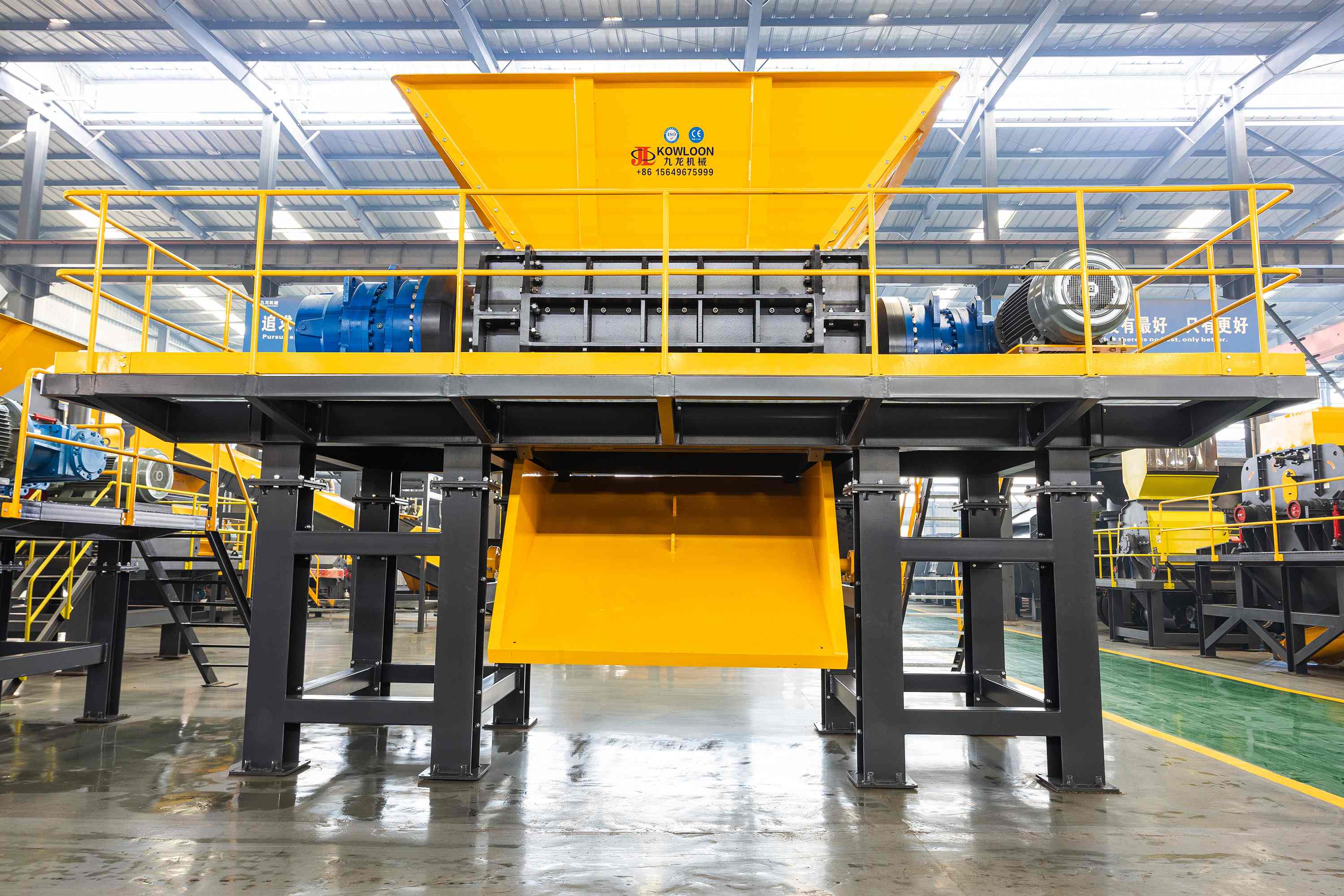

Double Shaft Shredder Company: What Sets Leading Manufacturers Apart in Industrial Recycling
2026-09-24
Industrial recycling demands more than just heavy machinery—it requires precision, durability, and a partner who understands the grind. When evaluating a double shaft shredder company, the differences between average and leading manufacturers often hide in the details: torque curves, blade metallurgy, and after-sales engineering support. While many suppliers promise throughput, few deliver the reliability needed for 24/7 waste streams. That’s where Kowloon Machinery has carved its reputation—not by following industry templates, but by rethinking shredder geometry and service models from the ground up. In this post, we’ll unpack the specific traits that separate true innovators from catalog copycats, and why your next recycling line might hinge on choices most buyers overlook.
What a Double Shaft Shredder’s Rotor Tells You About Its Real Lifespan
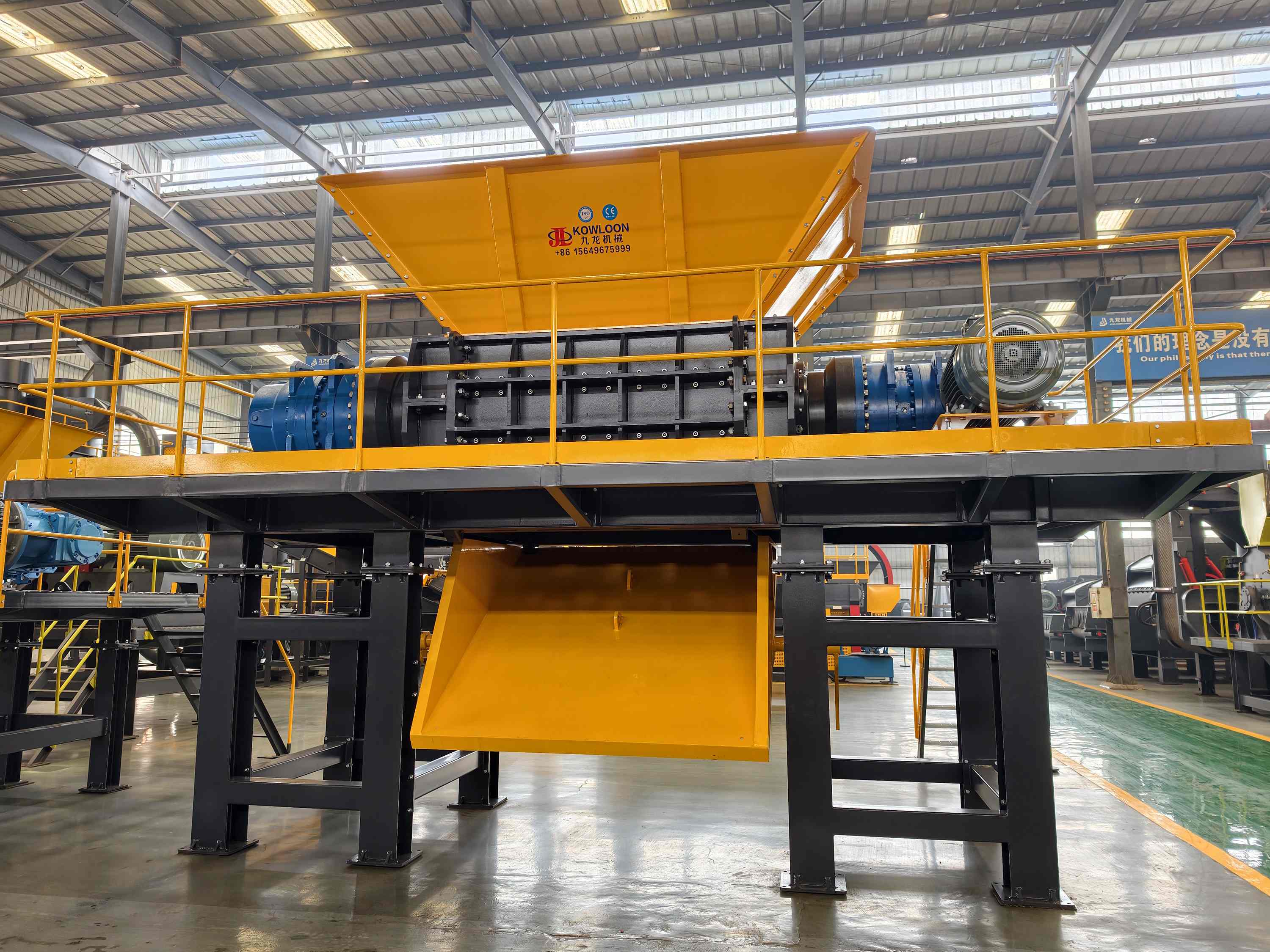
The rotor isn’t just the heart; it’s a running log of every stress. Look at the disc thickness, weld quality, and end disc design. A rotor with solid one-piece forged discs and full penetration welds typically holds tolerance longer than stacked or bolted assemblies. If you see scalloped wear near the cutting edges or uneven gaps, that’s a sign the machine has been chewing through abrasive material without proper hardfacing. Over time those patterns translate directly into bearing loads and shaft deflection, which shortens usable life far more than blade replacement schedules alone.
Blade mounting is another tell. Rotors that use welded blade seats or cast-in pockets usually show fatigue cracks around the heat-affected zones after a few thousand hours, especially if operators ignore reversing intervals. Compare that to a rotor with replaceable, indexed cutter mounts—when the mounting surfaces stay flat and the retaining hardware doesn’t need constant retorquing, the rotor is dissipating impact rather than soaking it up. The presence of fretting corrosion or shiny rub marks on the shaft near the seals often means the rotor has lost its dynamic balance, and once that starts, every component downstream of the gearbox inherits the vibration.
Finally, check the condition of the shaft ends and keyways. A rotor that was properly stress-relieved and machined after welding will show no visible step wear or micro-pitting at bearing seats even after years. If the keyway edges are peened or the end plates show signs of movement, that’s not minor wear—it indicates the rotor has been flexing under load. That flex is what truly determines real lifespan, because it accelerates seal failure, bearing brinelling, and eventual catastrophic blade loss. In short, the rotor tells you more through its scars and machining quality than any hour meter ever will.
The Cost of Sacrificing Blade Quality for a Lower Quote
Opting for the lowest quote on blades often looks like a smart move until the first shift change. Cheap steel, rushed heat treatment, and loose tolerances show up quickly in edge retention and cut quality. You end up replacing blades two or three times more often, which erases the upfront savings in labor and downtime alone.
There’s also the hidden toll on the rest of the operation. A dull or inconsistent blade increases drag, generates more heat, and leaves rough edges that may require rework. Over time, that adds wear to motors and drive components, pushing maintenance costs higher. The real expense isn’t the blade itself; it’s everything that happens after a bad cut.
Worse, when operators expect poor blade life, they tend to push dull tools longer. That leads to more scrap, more safety risks, and a quality reputation that quietly slips away. A small difference in quote per blade can turn into a much larger difference in cost per finished part.
Smart Monitoring Features That Change Daily Operation
Smart monitoring does more than stream video—it reshapes how teams spend their day. Instead of watching hours of footage, staff get alerts only when something actually needs attention, like a door left open after hours or a temperature spike in a storage room. Those small, automated nudges turn reactive checks into a focused workflow where every notification carries a clear next step.
The real shift shows up in daily routines. A facilities manager can start the morning with a prioritized list of overnight anomalies rather than scanning through empty corridors. Kitchen teams get real-time warnings about equipment failures before a freezer full of inventory is lost. Maintenance schedules begin to follow actual usage patterns, not guesswork, because sensors learn what normal looks like and flag meaningful deviations instead of triggering false alarms.
Over time, these features quietly change how decisions are made. Managers stop asking “what happened last night?” and start asking “which of these issues needs action first?” The data is already organized by urgency and context, so daily operations run on exceptions rather than routine surveillance. This isn’t about adding more screens—it’s about removing the noise so people can act faster with less effort.
Tailoring Cutting Chambers to Handle Mixed Industrial Waste
Designing cutting chambers for mixed industrial waste starts with accepting that no two batches are alike. Instead of relying on a fixed geometry, successful systems incorporate adjustable counter-knives and interchangeable screen baskets, allowing operators to shift from fine shredding of plastic film to coarse reduction of metal banding without rebuilding the entire chamber. Hardened wear plates along the chamber walls and a slightly inclined rotor axis help redirect abrasive grit toward discharge rather than allowing it to settle in corners.
Mixed waste often arrives tangled, oily, and unpredictably dense, so the chamber must create constant material movement. A staggered rotor layout with alternating hook and paddle cutters prevents long strips from wrapping, while internal deflectors break up floating clusters before they reach the screen. For heavier tramp metals, a drop zone with reinforced anvil segments gives the cutting tools a solid shear surface and protects the chamber floor from direct impact.
Corrosion and thermal stress also shape chamber tailoring. Mixed loads can contain damp organics alongside hot scrap, so lining the chamber with replaceable, high-chrome alloy sections eases maintenance and extends service life. Rather than a one-size-fits-all cut, the goal is a chamber that adapts through quick tool changes and modular panels, keeping throughput steady even as the waste stream shifts from textiles to electronics to wood offcuts.
Service Networks That Keep Downtime From Eating Profits
A service network built around real-time equipment monitoring doesn’t wait for a breakdown to trigger action. It watches vibration, temperature, and load patterns, flagging small anomalies before they grow into line-stopping failures. That early warning turns what could be a six-hour outage into a fifteen-minute adjustment, keeping production schedules and revenue forecasts intact.
When repairs are unavoidable, the difference is often in how fast the right parts and expertise arrive. Networks that pre-position critical spares near high-use sites and route technicians by skill set rather than proximity cut mean time to recovery dramatically. Fewer idle lines mean more output per shift, and that directly protects margins that would otherwise leak into overtime labor and expedited freight.
The financial case becomes clear when you compare two facilities: one operating a fragmented, reactive maintenance approach, the other plugged into a coordinated service network. The latter consistently avoids the compounding costs of missed shipments, customer penalties, and rushed replacement equipment. Over a year, those avoided losses often exceed the entire service contract value, making the network a profit protector rather than a cost center.
Built-In Safety Systems That Don’t Slow the Line
Safety equipment often gets blamed for slowing down production, but this assumption misses how modern systems actually work. The best designs integrate protection directly into the machine’s motion—light curtains that pause only the section of the line where a hand enters, or laser scanners that create invisible zones without forcing workers to wait for gates to open. Instead of stopping everything, the system reacts to the exact location and speed of the interruption, letting the rest of the process keep running.
Another approach gaining ground is using safety-rated drives and controllers that monitor torque, speed, and position in real time. If a conveyor meets unexpected resistance, it simply reverses a few centimeters rather than shutting down the entire line. This lets operators clear a jam or retrieve a fallen item without cycling through a full restart sequence. The key is that the safety function lives inside the same hardware that runs the machine, so there is no separate relay to trip or reset.
Maintenance teams also benefit from systems that log every safety event, complete with timestamps and diagnostic codes. Instead of guessing why a sensor triggered, technicians see exactly which beam was broken and for how long, then fix the root cause during a planned pause. Over time, this data reveals patterns—like a specific pallet size that consistently trips a guard—so the line can be adjusted before it becomes a recurring bottleneck.
FAQ
Look beyond the basic cutting chamber size. The real differentiators sit in rotor shaft diameter, blade overlap geometry, and the way torque is distributed across the shafts. A robust machine uses independently driven rotors with hydraulic or planetary gear reducers rather than a single motor and chain drive. Check the frame construction: welded, stress-relieved steel plate with reinforced bearing housings handles shock loads far better than bolted modular frames. Also examine the sealing system around the end bearings. In dusty metal or e-waste streams, labyrinth and purge air seals stop abrasive particles from chewing through the bearing seats.
They design for rapid blade replacement and inline inspections. Instead of requiring full rotor removal, leading machines feature segmented blades that can be swapped individually through large access doors. Some manufacturers mount the shredder on a tilt-back frame so operators can reach the cutting chamber without separating the infeed hopper. They also integrate continuous torque monitoring with automatic shaft reversal. If a chunk of non-crushable metal jams the cutters, the control system reverses both shafts for a set number of rotations, clears the obstruction, then resumes forward feed. This prevents repeated stall events that wreck gearboxes.
It comes down to hook design and hook placement. For dense metal scrap like engine blocks or aluminum bales, the blades need a deep, aggressive hook profile that grabs the material and tears rather than slicing. For tires, the blade spacing must be wide enough to pull the rubber into the nip point without wrapping. A quality manufacturer will offer different blade configurations for each material, not a one-size-fits-all cutter set. Additionally, the feed hopper should have a sloped back wall and a hydraulic ram assist if handling long or springy materials. Without controlled feeding, the shafts can spin without biting, which wastes energy and heats the cutters.
The cutting edges face two opposing failure modes: abrasive wear from mineral-heavy materials and impact fracture from hard metal objects. A blade made from a single high-hardness tool steel will hold its edge in soft plastic but chip when it hits a stainless steel bolt. Leading manufacturers use a softer, shock-absorbing core with a hardfaced or insert-tipped cutting zone. The best option for mixed municipal or construction waste is a base alloy of 42CrMo or similar, with a welded overlay of chromium carbide or a cobalt-based hardfacing. This gives a surface hardness above 55 HRC while retaining a core toughness below 40 HRC. Heat treatment must be uniform, not just surface-hardened, or the blade will crack at the mounting bore.
Expect more than a spare parts list. The company should provide a documented wear map showing expected blade life in hours for your specific feed material. They should stock critical components like shafts, bearings, and hydraulic power packs in regional warehouses, not just at the factory. Look for remote diagnostics capability: a secure connection that lets their engineers read torque curves, oil temperatures, and vibration data in real time. The best suppliers schedule a follow-up visit three to six months after commission to inspect blade wear and adjust the cutting gap. If a company hesitates to share failure data from other customers, that is a warning sign.
They start with a modular cutter stack. The shaft is a single machined forging with splined sections, allowing blades of different widths and hook profiles to be mounted in varying sequences. For rigid plastics, the stack uses narrow blades with small hooks for a fine shred. For cable scrap, the stack includes breaker bars between the blades to prevent wire wrapping. For aluminum profiles, blades are spaced wider to allow long pieces to enter the nip. Beyond the cutters, the discharge system matters: a perforated screen for uniform particle size, a vibratory conveyor for metal separation, or a simple gravity chute for bulky scrap. The manufacturer should ask about the full downstream process, not just the shredding step.
The purchase price hides several long-term costs. Cheap machines often use cast blades that cannot be re-sharpened and must be replaced as a full set, while premium forged blades can be rebuilt with weld overlay at a fraction of the replacement cost. Undersized gearboxes overheat after four to six hours of continuous duty, forcing shutdowns for oil cooling. Low-quality seals leak, allowing fines to enter the bearings; bearing replacement then requires shaft removal and machining. Also consider the infeed hopper: a flimsy hopper deforms under loader impact and creates bridging, requiring manual clearing. Over a five-year operating period, the total cost of ownership for a cheap shredder often exceeds the cost of a well-engineered machine by 30 to 40 percent.
The drive system determines how the machine handles shock loads. A direct hydraulic drive with a variable displacement pump offers the best protection: when a jam occurs, the pump pressure rises and the shafts stop almost instantly without damaging the motor or gearbox. An electromechanical drive with a fluid coupling can absorb some shock, but repeated stall-reverse cycles wear out the coupling. The worst choice for heavy-duty shredding is a fixed-speed electric motor with a simple gear reducer and no torque limiter; a hard jam can shear the reducer input shaft. Leading manufacturers also use independent drives for each rotor. This allows one shaft to continue rotating while the other reverses, which clears asymmetric jams much faster than locking both shafts together.
Conclusion
Ask any plant manager who has run a double shaft shredder past its first 10,000 hours and they will point to the rotor as the honest biography of the machine. Leading manufacturers do not hide behind marketing sheets; they use oversized shafts, forged alloy discs, and stress-relieved welds so the rotor's real lifespan matches the duty cycle stamped on the nameplate. Cheap quotes almost always trace back to thinner blades and softer steel, and that trade-off shows up fast when mixed industrial waste starts shredding maintenance budgets instead of material. The smarter builders have moved the conversation to live load sensing and automatic reversing, which let operators catch a jam before it becomes a rebuild. Those monitoring features are not gimmicks once you have seen a gearbox saved by a two-second torque spike alert.
Cutting chamber design separates the catalog copy from the field-proven machines. A tailored chamber with adjustable counter-knives and segmented liners handles everything from cast aluminum to rubber-backed cable without constant resizing, and that keeps throughput steady on dirty, unpredictable waste streams. Yet even the best rotor and chamber mean little if a service team takes three days to arrive. Top manufacturers back the steel with regional parts hubs and technicians who can swap a bearing set overnight, because downtime eats margins faster than energy costs. Safety is baked into the same control logic rather than bolted on as an afterthought: interlocked hoppers, zero-speed brakes, and e-stop loops that do not force operators to bypass them just to meet a shift target. None of this is flashy, but it is exactly what separates a shredder that lasts a decade from one that simply survives the warranty.
Contact Us
Contact Person: Ray
Email: [email protected]
Tel/WhatsApp: +86 13733817580
Website: https://www.zzkowloon.com/