

Custom Stand-Up Pouch Filling Machine: Key Features to Evaluate Before You Invest
2026-11-16
Stand-up pouches promise shelf appeal and convenience, but the real test happens on your filling line. A machine that looks capable in a brochure can still deliver inconsistent seals, weak pouch opening, or costly changeover delays. Before you commit capital, it’s worth asking which design details actually protect your throughput and product quality. At Wanying Machinery, we’ve watched buyers overlook a few critical variables—then pay for them later. This guide walks through the features that matter most, so your next investment is based on more than a spec sheet.
How Fill Accuracy Holds Up With Your Actual Product Density
Most filling lines get dialed in with a reference fluid or a single density assumption, and that is exactly where the trouble starts. Once the actual product runs through the same nozzles and meters, the numbers drift. Denser pastes slow down the flow, aerated powders occupy more volume for less mass, and a machine tuned for a mid-range density will overfill one batch and underfill the next. The correction is not to trust the original calibration but to watch how the fill weight responds when your real material moves at production speed.
A useful check is to pull timed samples at the start, middle, and end of a run rather than relying on a single setup sample. If the product settles, releases air, or changes viscosity as it recirculates, the delivered quantity shifts. Adjust the fill by weight rather than by volume wherever possible, and keep a narrow tolerance around the measured density of the current lot, not a generic spec sheet value. Small density swings of two or three percent can still push fills outside a tight label claim.
It also helps to separate the machine's fill accuracy from the product's behavior. A filler may repeat perfectly against a test weight, yet look sloppy once the product density varies between shifts. Tracking both the target fill weight and the plant's actual density reading gives a clearer picture, especially for sticky, compressible, or temperature-sensitive materials. That kind of day-to-day comparison makes it easier to spot a real calibration issue before it becomes a full batch deviation.
Which Pouch Sizes and Film Structures Run Without Constant Adjustments
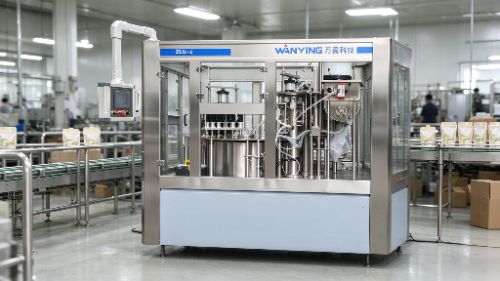
Smaller pouches under roughly 6 inches tall and 4 inches wide tend to settle into a rhythm on most vertical form-fill-seal machines. The lightweight film track doesn't pull enough tension to drift sideways, so jaw alignment and seal timing rarely need nudging once the run starts. Watch for a sweet spot around 100 to 250 grams of product — the drop weight keeps the pouch taught without stretching the side gussets.
Film structures with a symmetrical layering pattern behave better over long shifts. A straightforward PET/foil/PE stack flexes evenly when the forming collar shapes it, while asymmetric laminates with a thick nylon layer on one side tend to curl and call for repeated registration tweaks. Matte overprints and cold seal coatings add another variable: the former changes friction on the forming shoulder, the latter can build up on the sealing jaws and force temperature adjustments mid-run.
Stand-up pouches with a bottom gusset and a zipper reclosure are the exception rather than the rule for hands-off operation. If the gusset fold is pre-scored deeply enough and the zipper profile is a low-profile press-to-close style rather than a slider, the line can hold register for thousands of cycles. But expect to babysit any structure that mixes a clear window with a heavy foil body — the stiffness mismatch almost always shows up as a wandering seal line after the roll change.
What a Real Changeover Looks Like When the Line Is Already Behind
A real changeover when the line is already behind doesn't look like the laminated procedure cards. It starts with a supervisor standing at the whiteboard, erasing times that no longer mean anything, and a maintenance tech already pulling guards off before the last pallet clears. Nobody says "we're behind" out loud; they just move faster with the same number of hands.
The setup cart gets raided before it reaches the floor. Wrenches, locating pins, and spare sensors disappear into pockets because walking back to the crib costs minutes nobody has. Two people work on the same rail from opposite ends, and for a while it looks disorganized until you notice every movement is aimed at one thing: getting the next good part off the line before the gap spreads to downstream stations.
What actually changes in that hour is not the checklist. It's the tolerance for waiting. Decisions that usually need a shift lead now get made with a nod. If a part fits, it runs. If a reading is borderline, someone marks it and moves on. The line doesn't recover because the changeover was perfect; it recovers because people stopped protecting the process and started protecting the output.
How Much Cleaning Time the Fill Path and Seal Area Actually Add
On most rotary fillers, the real added cleaning time lands between 8 and 18 minutes per product changeover once you account for draining the fill path, pushing out residual product, and rinsing nozzles. Thin liquids move through quickly, but anything with pulp, oil, or sugar tends to cling inside bends and valve bodies. Operators often run an extra flush cycle not because the manual says so, but because they can see color or odor carrying over into the next batch. That extra flush is rarely counted in official changeover estimates.
The seal area usually takes longer than expected for a different reason: access. On vertical baggers and tray sealers, sealing jaws, film tracking rails, and guard panels create narrow pockets where product dust or stray film scraps settle. Wiping the visible surfaces may take two or three minutes, but lifting guards, waiting for heated jaws to cool, and cleaning around crimpers can add another five to twelve minutes. When you multiply that by several short runs in a shift, the fill path and seal area together often contribute 25 to 40 minutes of labor that never appears on a standard cleaning checklist.
Which Control Settings Prevent Small Operator Errors From Becoming Big Waste
Many facilities find that the most effective guardrails are not tighter supervision but a handful of control settings that stop small mistakes before they compound. Interlock thresholds, for instance, can be tuned so a machine refuses to start when a sensor reads slightly out of range, not just when it fails completely. When a fill weight drifts a fraction above target, an automatic hold and operator prompt often prevents a full batch from being scrapped later.
The difference usually comes down to how the controls treat borderline readings. Settings that allow a narrow band of variation—with an immediate flag and a required acknowledgement—tend to catch errors while they are still cheap to correct. On the other hand, overly tight ranges create constant nuisance stops that operators learn to override, while loose ranges let defects travel downstream until the waste is measured in pallets rather than pieces.
It also helps to separate routine adjustments from system changes. When a line operator can tweak speed or temperature inside a limited, logged range, the small correction stays visible and reversible. Anything beyond that requires a supervisor or maintenance login, which adds just enough friction to prevent a momentary guess from turning into a large-scale material loss.
What Frame Materials and Support Terms Reveal About the Machine's Service Life
A thicker gauge of steel or a well-braced aluminum frame tells you a lot before the first cycle ever runs, but the real signal is in the details that get overlooked. Look at how the joints are welded, whether stress points carry gussets, and if the powder coat has been applied over a phosphate wash rather than sprayed onto raw metal. Machines that skip these steps tend to develop hairline cracks around motor mounts and pivot bosses within a few years, especially in humid or dusty shops.
Support terms often expose what the manufacturer actually expects from the hardware. A ten-year frame warranty means little if it excludes fatigue-related cracking or requires the original owner to pay freight both ways for inspection. More useful is a plainly worded replacement parts commitment—something like stocked components for seven to ten years after the model is discontinued—because that tells you the company expects the frame to be worth repairing rather than scrapping.
Service life ultimately comes down to how well the frame resists twisting under load and how honestly the support policy handles the slow failures that show up later. If the warranty language reads like an insurance contract and the frame flexes noticeably when you push on a corner, the machine is probably priced for a shorter replacement cycle. A rigid platform paired with straightforward terms usually means the builder is confident enough to stand behind it for the long haul.
FAQ
Map out every SKU you plan to run, including the smallest and largest formats plus any stand-up styles with zippers or spouts. A custom machine should give you quick changeover between widths and heights without requiring a technician for every swap. If it can’t handle your full range, you’re buying a bottleneck.
Ask the builder to run trials with your actual product, not a proxy. Powders, granules, and liquids settle and flow differently, so observe the weigh or volumetric system over a few hours. Look for repeatability within your tolerance and whether the filler adjusts on the fly when density shifts.
Seal temperature, film thickness, and barrier layers matter more than the base film name. Run samples through the machine’s sealing jaws with the exact laminate you intend to use. A machine tuned for one film can wrinkle or delaminate another, and retrofitting seal bars later is costly.
Plenty. A good PLC or HMI should store recipes with fill weight, seal dwell, temperature, and air pressure per product. If operators can load a recipe and swap mechanical parts in under fifteen minutes, you will actually use the machine for short runs instead of avoiding it.
Look for tool-free removal of contact parts, sloped surfaces, and washdown-rated components if you deal with dust or liquids. Ask about wear parts availability and whether common spares can be sourced locally. A machine that takes thirty minutes to strip and clean will get cleaned between allergen runs; one that takes three hours will not.
When your pouch shape, fill temperature, headspace requirement, or sealing method falls outside what standard frames allow. Pay for custom engineering where it changes output quality or reliability, not just for branding. Be direct with the supplier about which parts of the design are fixed and which can flex.
Confirm communication protocols, physical heights, and available dry contacts before the build starts. Have the supplier provide a layout drawing that includes upstream and downstream equipment, not just the filler. This catches interface issues early and avoids awkward workarounds on your floor.
Conclusion
A custom stand-up pouch filling machine gets judged too often on rated speed, but the real test is whether fill accuracy stays consistent with your actual product density. Powders, granules, and sauces settle and flow differently, so a machine calibrated on free-flowing material can drift noticeably on denser or aerated product. Equally important is how many pouch sizes and film structures the line handles without constant adjustments. If every new film lot or bag format forces tweaks to tension, sealing temperature, or jaw alignment, downtime quietly eats into output. Changeover deserves attention under realistic conditions: when the line is already behind, a setup that needs two technicians, hand tools, and fifteen minutes of trial runs costs far more than a slower nominal speed suggests.
Cleaning time is another hidden factor because product residue in the fill path or seal area leads to contamination and weak seals. Machines with open, drainable surfaces and tool-free removal of contact parts save real minutes between batches. Control settings also matter: locking out unreasonable fill weights, seal temperatures, or cycle timings keeps a small operator mistake from turning into a full shift of wasted pouches. Frame materials, weld quality, and the terms covering wear parts say more about service life than a polished brochure. Thicker steel, accessible spare parts, and a vendor that spells out support expectations usually indicate a machine that will still hold tolerance years later.
Contact Us
Contact Person: Tyson
Email: [email protected]
Tel/WhatsApp: +8613396971296
Website: https://www.wanyingmachinery.com