

Custom Shock Absorber Boots Why a Perfect Fit Matters for Ride Quality
2026-11-16
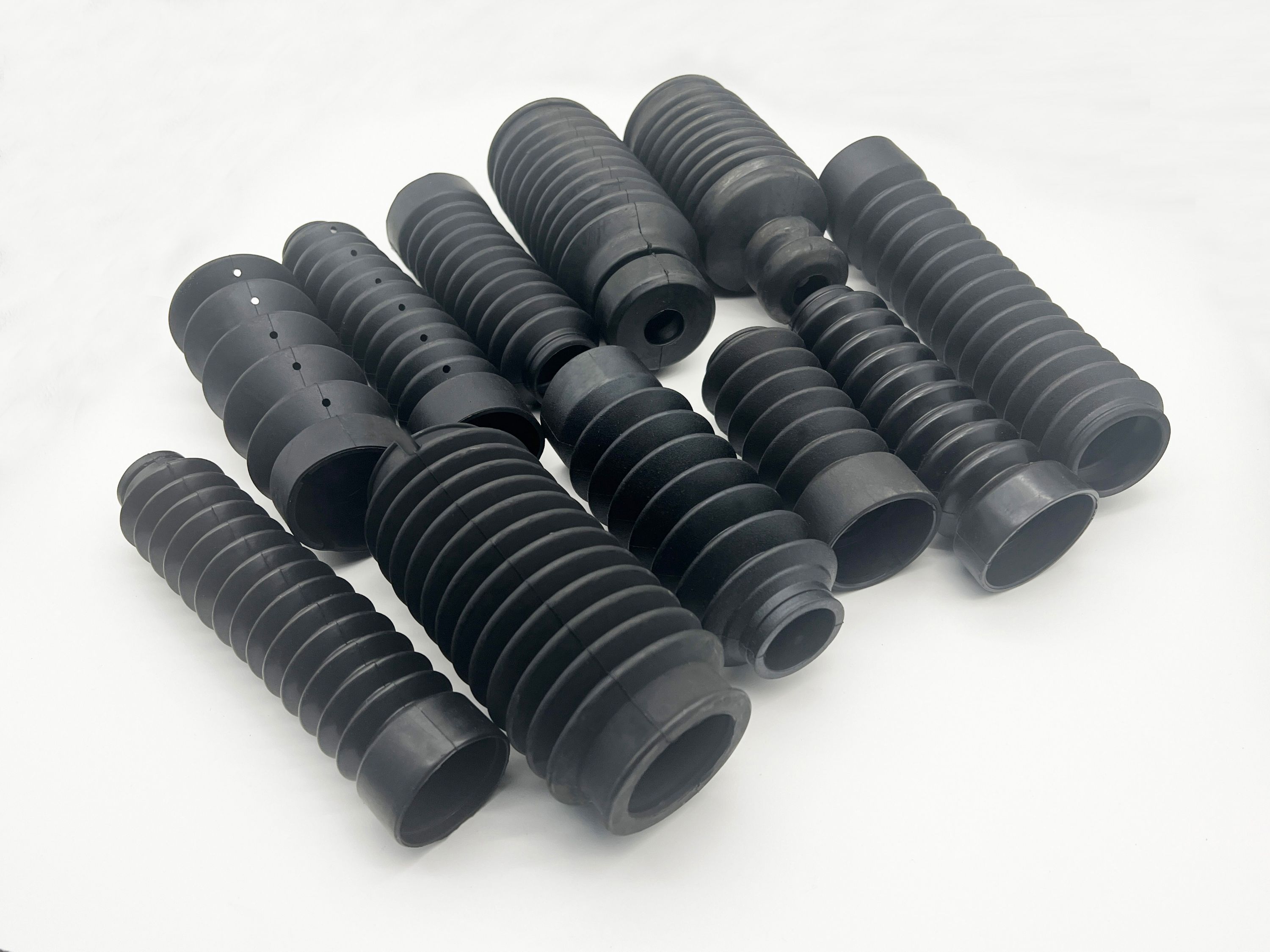
Ask most drivers what keeps their suspension smooth, and shock absorber boots are unlikely to make the list. Yet a boot that doesn't fit properly is more than a nuisance—it works loose, rubs, and lets abrasive dirt reach the piston rod and seal. Before long, damping fades and the ride turns harsh. Custom shock absorber boots eliminate that failure point by conforming to the exact open and collapsed lengths, body diameter, and end-mount design of your shocks. That's the principle behind every XIAYI boot, and it's why a perfect fit matters far more than its small size suggests.
A Boot That Fits Poorly Is Already Leaving the Shock Exposed
When a boot doesn't sit snugly around the ankle and heel, the whole point of wearing it begins to fall apart. A loose fit allows the foot to slide forward on every step, which means the sole no longer lands where it should under the body's weight. That small shift is enough to let vibration travel straight up the leg instead of being absorbed by the midsole. What feels like a minor sizing issue quickly turns into a steady hammering on the joints, especially on longer rides or rough pavement.
The problem is rarely just about length. Boots that are too wide across the instep or too tall in the toe box create dead space, and that space is where impact gets redirected. Instead of the boot and foot moving as one unit, they work against each other. Every bump, crack, or sharp edge on the road sends a jolt through a foot that's already slightly off balance. Over time, that repeated exposure shows up as sore arches, aching knees, or a lower back that tightens up after just an hour in the saddle.
A well-fitted boot doesn't need to be painfully tight. It needs to hold the heel down, support the arch without squeezing it, and leave just enough room for the toes to move without letting the ball of the foot drift. If you can feel the boot's structure doing its job, the shock stays where it belongs, in the sole and the insole, instead of migrating upward. The moment you start thinking about your feet while riding, the fit is already working against you.
The Gap You Can’t See Is Where Grit Starts Grinding
Most people assume the gap is measured in talent, speed, or opportunity. The hardest stretch rarely looks like much from the outside. It lives in the small, invisible decisions: showing up when the result is unclear, doing one more rep when nobody is counting, rewriting a sentence that already seemed fine. That quiet, unrewarded space is exactly where grit starts to grind against doubt, boredom, and fatigue.
The friction is not dramatic. It feels like stalled progress, like effort with no echo. But that blank stretch between effort and payoff is doing something essential. It is forcing the work to become less dependent on mood and more rooted in habit. Grit is not built on the days that feel heroic. It is built in the unremarkable hours when the gap is invisible and the only proof of movement is that you refused to stop.
That hidden gap also separates people who finish from people who only start. Anyone can push when feedback is immediate. Fewer can keep grinding when the evidence is thin. Learning to stay in that absence, without rushing for a result or a distraction, turns the invisible gap into a quiet advantage. Over time, the grind itself becomes the signal that you are still moving.
When the Boot Fights the Shock Body, Ride Quality Drops First
That first sign is rarely a bang or a leak. It shows up as a new edge over small cracks and expansion joints, a slight chatter where the suspension used to settle without noise. Underneath, the boot has started brushing the shock body on compression. Each touch adds a little friction before the shaft can move, so the wheel no longer follows the road as cleanly as it did a week ago.
As the boot folds and drags, the shaft often picks up a faint polished line. Nothing looks broken, and the damper still pushes back with plenty of force, but the ride turns flat. It feels like the suspension lost its suppleness overnight. That is the telltale part: the first casualty is not grip or control, it is the quiet smoothness that normally disappears the small stuff.
Once the boot has shifted from trapped air, heat, or a bent retainer, the contact repeats on nearly every stroke. People often chase tire pressures and bushings before spotting the real issue. Reseating or replacing the boot brings back the missing compliance without touching spring rates or damping settings, and the same road suddenly feels calm again.
Stroke Length Changes Everything a Generic Boot Gets Wrong
Most boots are shaped around a stroke length that looks reasonable on a spec sheet, but that number rarely survives contact with the way you actually move. If the travel is too short, the boot bottoms out before your ankle finishes its natural arc, so the missing motion gets pushed up into your knees and lower back. If it runs too long, your foot chases the shell and you end up gripping with your toes just to keep the boot from feeling sloppy.
That generic middle ground also falls apart as conditions change. A stroke length that feels fine on flat ground can turn a steep descent into a balancing act, because the boot stops managing pressure where it should and starts asking your body to do the work. The same mismatch shows up when you move faster or carry weight—both exaggerate the difference between the boot's fixed travel and your leg's actual range.
When the stroke length is right, the correction is immediate but hard to spot in a spec chart. The boot rolls through each step without a hard stop, your heel stays seated, and the energy you used to spend fighting the shell just goes into moving forward. That is the kind of fix a generic boot usually misses by assuming everyone hinges the same way.
Custom Fit Removes the Rub Points That Cause Early Splitting
Early splitting usually isn't a material failure. It's a fit failure. When a product is made to a generic shape, the extra room or tight pull creates one stubborn crease that takes the brunt of every step, bend, or stretch. After enough repetition, that crease turns into a crack, and the crack follows the line of least resistance.
A custom fit breaks that pattern before it starts. The surface is shaped so it doesn't bunch, fold over itself, or drag across the same spot with every movement. Seams are moved away from hot spots, and the tension that used to sit along one narrow fold gets redistributed more evenly through the material. That means no single rub point has to absorb all the abrasion.
The result is less early damage and a much longer window before real wear appears. Instead of a sharp split showing up in the same predictable place, the item ages gradually, with the kind of uniform wear that comes from a shape that actually matches how it's used.
Small Fit Differences Add Up Over Miles of Heat, Dirt, and Moisture
A couple of millimeters across the forefoot sounds like nothing on a carpeted floor. Push that same shoe through thirty miles of loose shale and sun-softened asphalt, and the story changes. Toes that had room at mile two start glancing off the toe cap by mile fourteen. The sock that felt snug in the morning holds grit against the arch once sweat and creek crossings do their work.
Heat softens the midsole and upper just enough to let the foot slide forward on descents. Dust finds its way through mesh and settles into every small gap left by a heel that never locked down completely. Moisture from rain or high humidity swells the insole and changes how the laces bite across the instep. Individually these are minor annoyances. Combined, they turn a half-size difference into a blister, a bruised nail, or a hot spot that keeps growing.
The fix is rarely a full size up or down. It is usually about matching the shape of the last to the shape of the foot before the miles start adding stress. Pay attention to where the ball of the foot sits, how the heel cup holds when walking uphill, and whether the toe box still allows movement after the foot has expanded. Small differences compound, but small adjustments early can keep them from turning into a long, painful limp.
FAQ
A loose boot slides along the shaft and lets grit work its way under the seal, while a tight one can bunch up and restrict suspension travel. The right shape follows the shock body through the full stroke without pulling at the ends or rubbing the spring, so the wiper seal stays clean and the damping stays consistent.
Universal boots often need trimming or stretched zip ties to stay put, and that leaves small gaps for dust and water. A custom boot matches the collapsed and extended lengths exactly, so it does not flap or pinch during hard compressions. On washboard or rocky terrain that extra stability keeps each shaft from getting sandblasted.
Yes, mainly by interfering with the suspension cycle. If the boot is too short it can pull taut and add a slight side load, and if it is too long it folds against the coil or body and creates friction. Riders often notice a faint stiction or uneven rebound that disappears after switching to a properly shaped cover.
Dense neoprene and molded rubber tend to survive repeated flexing and exposure. Neoprene resists water and mud but can tear if it catches on debris, while thick rubber offers better puncture resistance. Some builders use silicone for high heat areas, but it needs a precise mold to avoid collapsing under vacuum from rapid shaft movement.
Look for ends that no longer grip the shock body, visible cracks near the flex folds, or permanent creases from being compressed too far. If the boot slides down on its own after a ride or shows daylight between the lip and the shaft, it is already letting fine dust reach the seal. Replacing it before the shaft gets pitted is much cheaper than a rebuild.
They change the extended and collapsed measurements, so a factory boot may become too short at full droop or too long at bump. Custom boots built for the new stroke keep the protective bellows from being yanked apart. On lifted vehicles this is especially important because the exposed shaft length is already greater and more vulnerable to rock strikes.
Measure the shock body diameter at the seal head, the shaft diameter, the exposed shaft length at full extension, and the collapsed length between the spring seat and the lower mount. Also note whether the shock has a remote reservoir or piggyback canister in the way. Those numbers let the boot maker cut the ends and pleats to the actual suspension range rather than a generic guess.
Even street vehicles see fine silica dust, brake dust, and rain spray that act like a slow grinding paste on the shaft. A custom boot seals out that abrasive film and keeps the oil cleaner longer. It also stays quiet, without the slapping or squeaking that can come from a loose universal cover, so the ride remains smooth for more miles between seal replacements.
Conclusion
A boot that fits poorly is already losing the protection battle before the bike rolls. If the neck sits loose or the bellows do not follow the shock body cleanly, the shaft and seal stay open to water, dust, and fine debris. The gap may be hard to spot, but it is exactly where grit starts working into the oil seal and upper bushing. Once that abrasive material gets trapped, every stroke grinds it deeper, and ride quality begins to fade in a way that feels like damping inconsistency rather than an obvious failure. By the time scoring appears on the shaft, the damage has been underway for miles.
Generic boots also miss the working length of the shock. Extra material collapses, folds, and rubs against the spring, reservoir, or frame, adding stiction that makes the suspension feel harsh over small bumps. A custom-fit boot removes those rub points and moves with the suspension without pulling tight or bunching up. Small differences in wall clearance, seam position, and end opening may not seem significant on a workbench, but they add up after thousands of miles of heat cycles, dirt, and moisture. The result is a boot that stays sealed, runs quietly, and lets the shock do its job without adding friction or wearing itself apart.
Contact Us
Contact Person: Leela
Email: [email protected]
Tel/WhatsApp: 8613586885132
Website: https://www.xiayishockparts.com