

Corn Processing Machine Company: Innovating Grain Milling Solutions
2026-06-14
In the ever-evolving world of grain milling, the drive for efficiency and precision has never been more vital. Amid this landscape, PINGLE stands out as a corn processing machine company that doesn't just follow trends—it sets them. With a fresh approach to engineering, its solutions tackle modern milling challenges head-on, from maximizing yield to ensuring consistent quality. This blog dives into how PINGLE's innovative designs are redefining what's possible in corn processing, offering insights that matter whether you're a seasoned miller or new to the industry. Get ready to explore technology that's both practical and forward-thinking.
Rethinking Corn Milling from the Ground Up
Corn milling has long been defined by rigid, compartmentalized steps—degermination, grinding, sifting—each optimized in isolation. This piecemeal approach often overlooks how tweaks at the kernel-cleaning stage ripple into final flour quality or how moisture control before tempering directly affects grits uniformity. True rethinking means treating milling not as a sequence of disconnected machines, but as a continuous, responsive system. For instance, mills that adjust hammer speeds in real time based on incoming kernel hardness see fewer fines and less energy waste, yielding a product that better retains its native texture and taste.
A deeper rethink also questions what we consider waste. The industrial mindset discards pericarp and germ as byproducts fit only for feed, yet these fractions carry dense nutritional and functional value. By integrating gentle separation techniques—like air classification instead of harsh mechanical scouring—mills can preserve lipid-rich germ for cold-pressed oil and recover pericarp for high-fiber baking blends. This shift doesn't just add revenue streams; it redefines the mill as a biorefinery that extracts maximum worth from every incoming bushel, aligning with consumer demand for whole-food ingredients and transparent supply chains.
Beyond equipment and output, the true leverage lies in reimagining the relationship between mill staff and the raw grain. Instead of standard one-size-fits-all settings, mills that train operators to read seasonal variations—how a drought year’s denser starch granules behave during roller milling—can preempt batch inconsistencies. Paired with simple data collection, like tracking ambient humidity’s effect on sifter mesh blinding, these ground-level insights turn corn milling into a craft anchored in observation, not just automation. The result is a more resilient operation that produces flours and meals with distinct personality, connecting end users to a sense of place and process that industrial consistency cannot replicate.
Precision Engineering for Every Kernel
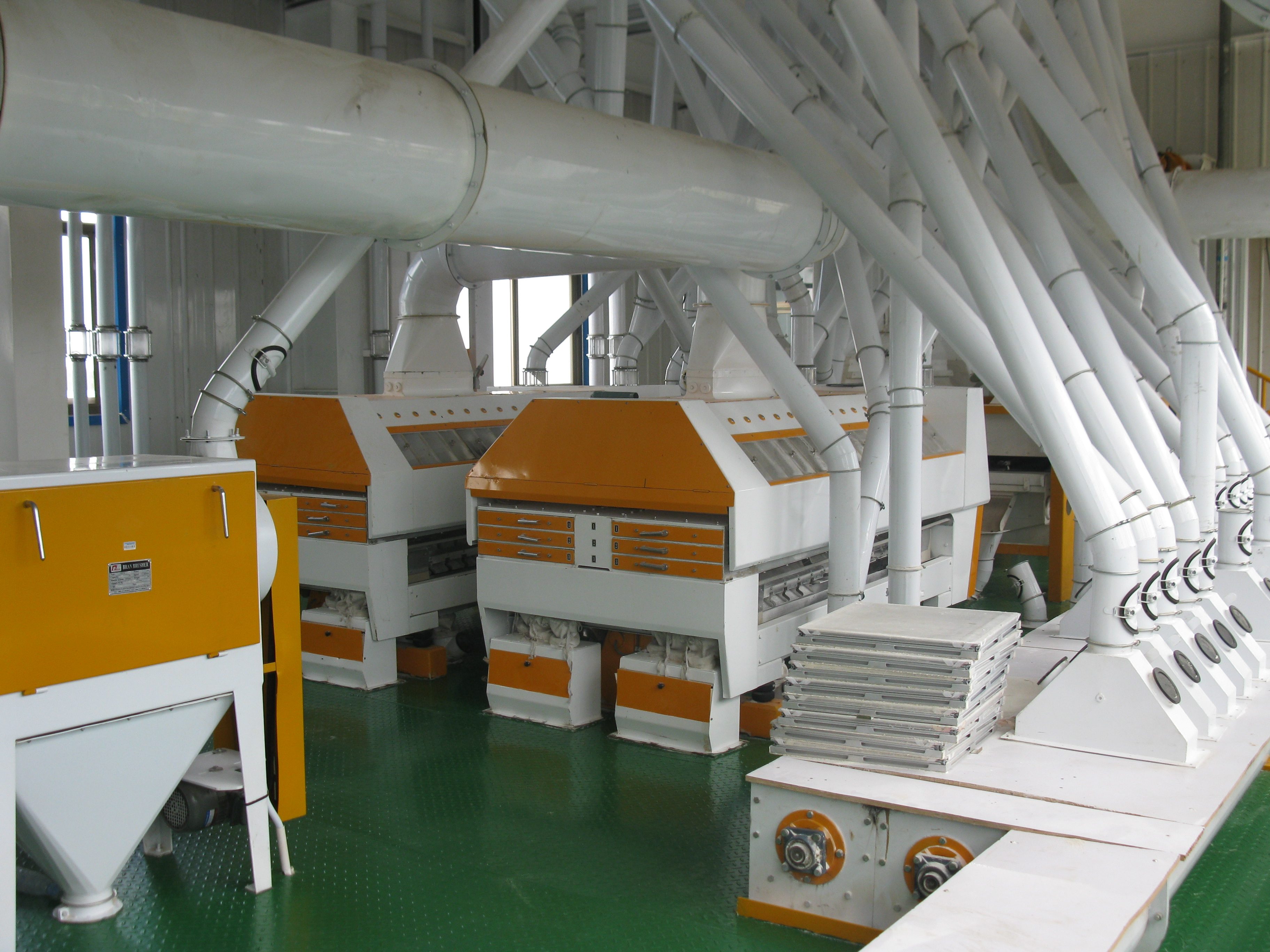
The journey from farm to bag begins with an uncompromising commitment to the individual kernel. Our process leverages advanced optical sorting and gentle mechanical handling to evaluate each piece against a strict set of quality metrics, ensuring that only those meeting our exacting standards move forward. This single-kernel attention means that shape uniformity, structural integrity, and surface characteristics are preserved, resulting in a product that roasts, pops, or cooks with unparalleled predictability.
We employ a proprietary multi-stage calibration system that goes beyond simple size grading. Micro-adjustments in temperature, humidity, and abrasion during processing allow us to fine-tune the physical properties of every kernel without compromising its natural goodness. The result is a remarkable consistency that home cooks and professional chefs alike can rely on—batch after batch, the performance never wavers.
This obsession with precision unlocks the full potential locked inside each grain. By engineering the surface and internal structure at a near-microscopic level, we maximize expansion ratios, flavor development, and textural crispness. It’s not just about eliminating defects; it’s about elevating the ordinary kernel into a reliably exceptional ingredient that inspires culinary creativity.
Smart Automation That Adapts to Your Workflow
Most automation tools force you into rigid sequences, but real work rarely follows a straight line. Smart automation observes your patterns and adjusts in real time, whether you’re routing approvals, updating spreadsheets, or syncing data across apps. It’s not about replacing your workflow—it’s about molding itself to fit it.
Imagine a system that learns when to escalate a task based on how long it sits in a queue, or one that reorders steps because you’ve started completing them differently. This isn’t a static set of if-this-then-that rules. It’s adaptive logic that treats your processes like living things, not snapshots.
The result is an automation layer that feels almost transparent. You make a change in one place, and everything downstream responds without you having to touch a single setting. Over time, it gets better at predicting what you need next, quietly removing friction instead of creating it.
Built to Last: Materials and Craftsmanship
The foundation of longevity starts with a deliberate selection of materials that age with grace. Solid oak and walnut, chosen for their tight grain and natural resistance to wear, develop a richer character over decades rather than degrading. Full-grain leather, left untreated to breathe, tells a visual story through evolving patina, turning scratches and sunlight into marks of distinction instead of flaws.
Equally critical is the human hand behind assembly. Joinery techniques borrowed from centuries-old traditions—mortise and tenon, dovetail joints—lock components together without relying on fragile adhesives or mechanical fasteners that weaken over time. Every surface is hand-finished, allowing craftspeople to spot and correct micro-imperfections invisible to machines, resulting in objects that feel as sound on day one thousand as they did out of the box.
From Field to Flour: A Seamless Journey
Every kernel begins its story in open fields, where sun and soil collaborate over months to build flavor from the ground up. The moment harvest reaches its peak, timing becomes everything—grains are gathered at just the right moisture level to preserve their natural character, then moved swiftly to avoid any break in freshness. It’s a rhythm farmers have honed for generations, yet each season still feels like a new conversation with the land.
From there, the path winds into milling rooms where stone and steel meet grain with deliberate, unhurried precision. Rather than rushing the grind, temperature and friction are kept low so the wheat’s inner life—the germ, the bran, the endosperm—stays intact. What emerges isn’t just powder, but a living essence that still carries the whisper of the field it came from.
The final stop is unassuming: a simple bag, a pantry shelf, a countertop dusted with anticipation. But step back and you’ll see the invisible thread connecting each stage—no interruptions, no shortcuts—simply the quiet certainty that great things happen when you let nature lead the way.
Tailored Solutions That Grow with Your Business
Every business moves at its own pace, and the tools you rely on should adapt without forcing you to overhaul your entire operation every few years. That’s why we design our framework with modular core components, so you can activate features as your team expands or customer demands shift. Whether it’s handling higher transaction volumes or integrating new sales channels, the system flexes without introducing unnecessary complexity.
Customization isn’t just about adding modules—it’s about refining workflows to match how your team actually works. We work directly with your stakeholders to map out automation rules, dashboards, and access levels that make sense for your current stage, then set them up to evolve. As your strategy pivots or regulations change, the underlying logic can be adjusted incrementally, keeping operations smooth and your data coherent.
What you get in return is longevity. You’re not locked into a rigid package that becomes a liability once you outgrow it, nor are you forced to pay for capabilities you won’t need for another year. The result is a leaner cost structure and a platform that feels native to your business, even as that business transforms. Growth becomes something you plan, not something you retrofit.
FAQ
We continuously refine our machinery based on real-world feedback from millers, focusing on practical upgrades that genuinely improve daily operations rather than chasing trends.
Our lines handle everything from coarse grits and fine flour to specialty items like degerminated maize and instant porridge blends, with adjustable settings for each.
Yes, we design modular components that bolt into most standard layouts, and our team maps out the retrofit to minimize downtime during installation.
We embed real-time moisture and particle sensors into the process flow, and provide calibration training so operators can tweak parameters on the fly without guessing.
Apart from 24/7 remote diagnostics, we have a network of local technicians who can be onsite within hours in most regions, carrying common spare parts.
Absolutely. We redesigned the grinding chambers and drive systems to cut power consumption by about 20%, which adds up significantly in high-volume mills.
We're a team of engineers and former millers who obsess over the little annoyances of daily production—like sieve blinding or pneumatic blockages—and build fixes into our designs.
Conclusion
At Corn Processing Machine Company, we believe that truly innovative grain milling begins with rethinking every stage of the process. Our approach is rooted in a deep understanding of corn’s unique characteristics, allowing us to design equipment that handles each kernel with precision and care. From the initial intake to the final flour consistency, we engineer machines that honor the raw material’s potential. This means moving beyond one-size-fits-all solutions to craft systems that feel less like industrial machinery and more like a natural extension of the milling craft. By focusing on the journey from field to flour, we ensure that every step—cleaning, conditioning, grinding, and sifting—is seamlessly integrated, preserving the grain’s integrity while maximizing yield and quality.
What sets our machines apart is the combination of robust construction and intelligent automation. We use only high-grade materials and meticulous craftsmanship, so our equipment stands up to the demands of continuous operation without compromising on performance. The built-in smart systems aren’t just about efficiency; they learn and adapt to your specific workflow, giving operators intuitive control that evolves as your business grows. Whether you’re a small artisan mill or a large-scale operation, our tailored solutions scale with you, offering modules and upgrades that keep pace with changing market needs. It’s this mix of durability, adaptability, and a genuine partnership mindset that makes Corn Processing Machine Company a trusted name for those who see milling not just as a process, but as an opportunity to create something remarkable from every kernel.
Contact Us
Contact Person: Jiakuo Wu
Email: [email protected]
Tel/WhatsApp: +86-13011566087
Website: https://www.pinglemachine.com