

CNC Press Brake Supplier: Essential Tips for Finding a Trusted Partner for Your Metal Fabrication Needs
2026-09-22
Finding a CNC press brake supplier isn't just about comparing specs—it's about predicting how your production line will perform six months from now. A cheap quote can hide weak after-sales support, while a slick website says nothing about real-world reliability. At HUNSONE, we believe transparency beats sales talk. This guide cuts through the noise so you can choose a partner, not a gamble.
The Real Difference Between a Press Brake Vendor and a Fabrication Partner
When you buy a press brake from a vendor, the transaction usually ends the moment the machine rolls off the truck. You get a manual, a warranty card, and a phone number that might connect you to a call center. But a fabrication partner starts the conversation long before the quote and stays involved long after installation. They ask about your material mix, your tolerance stack-ups, your operators' skill levels, and even your downstream bottlenecks. The difference isn't just in what they sell—it's in whether they see your shop as a one-time order or as a working system they need to help keep running.
A vendor might offer you three or four standard models and tell you to pick one. A partner will walk your floor, watch how parts flow, and sometimes recommend a smaller machine or a different tooling setup because it actually fits your real work instead of the theoretical maximum. They'll talk about bend radii your CAD team hasn't considered, or suggest backgauge fingers that won't collide with your deep-draw parts. That level of attention doesn't come from a spec sheet—it comes from having enough skin in the game to care whether your first batch of brackets comes out square.
The real test happens six months later, when a new operator keeps getting angle variation on a stainless job. The vendor's answer might be a paid service call. The partner's answer is a video walkthrough, a tooling adjustment, and a note to the foreman about die wear—before you even ask. That's the difference between buying equipment and adding capability to your shop. One leaves you with a machine. The other leaves you with a process that keeps improving.
Questions Worth Asking Before You Sign Anything
Before you put pen to paper, get clear on who actually benefits from the agreement. Ask the other party to walk you through any clauses that seem vague or buried in fine print. If they can't explain a term in plain language, treat that as a red flag.
Think about what happens when things go wrong, not just when they go right. Draft a quick list of exit scenarios: missed deadlines, broken promises, or unexpected costs. Then ask how the contract handles each one. A good agreement should feel fair on day one and on day one hundred.
Finally, check whether the document reflects every verbal promise made during negotiations. If a commitment isn't written down, it doesn't exist. Ask for amendments before signing, and don't let anyone rush you with time pressure. Your signature is leverage—use it wisely.
Red Flags Hiding in Supplier Spec Sheets and Demos
Every glossy demo reel and neatly formatted spec sheet has a way of making mediocre hardware look invincible. One of the first things worth questioning is the absence of real-world failure conditions. If a supplier only lists peak throughput under ideal lab temperatures, or shows latency numbers without mentioning packet size or queue depth, you're not seeing the whole picture. Look for footnotes that quietly exclude sustained load, thermal throttling, or error recovery. Those blanks are where the real performance hides.
Another tell is when a live demo is suspiciously short or heavily scripted. A vendor might run a flawless five-minute benchmark but never let you touch the device yourself. Ask to interrupt the test, unplug a cable, or send malformed data. Genuine engineering teams welcome that kind of stress. If the salesperson switches to a pre-recorded video the moment you ask for a repeat run under different conditions, that's not a coincidence. Real systems are rarely that fragile in front of an audience.
Finally, watch for comparative spec sheets that cherry-pick only the metrics where they win. A sheet that lists five interface options but omits power draw, or brags about 99.9% uptime without mentioning the exact maintenance window required to achieve it, is designed to distract. Cross-check those numbers against independent test reports, not just the vendor's own marketing language. If the data can't be verified outside the sales deck, it's not a specification—it's a wish.
Why Service After the Sale Can Make or Break Your Production
A machine that runs flawlessly during the demo can still bring your entire line to a halt three months later if the supplier vanishes when you call for support. Production schedules rarely forgive downtime, and equipment that sits idle waiting on parts or diagnostics quickly eats into margins that no upfront discount can recover. The real measure of a purchase often shows up in the first unexpected failure: how fast the vendor answers, how clearly they guide your team through troubleshooting, and whether they treat your lost hours as their own problem.
Beyond emergencies, consistent follow-up changes how equipment ages. A supplier that tracks wear patterns, suggests preventive adjustments, and remembers the quirks of your specific setup helps you avoid the slow creep of inefficiency that goes unnoticed until output drops. Without that relationship, operators improvise fixes, accumulate small errors, and eventually force a rebuild far earlier than necessary. The cost difference between a supported asset and a neglected one compounds with every shift.
The best after-sale service feels less like a warranty and more like a partnership. It includes honest conversations about what your equipment cannot do, timely software or firmware updates that reflect real field feedback, and a willingness to send a technician before a minor issue becomes a catastrophic one. When production depends on uptime, the quality of the service behind the machine is not an add-on—it is the actual product you paid for.
Matching a CNC Press Brake to the Way Your Shop Actually Works
Most shops don't need the biggest press brake on the market—they need the one that fits the awkward mix of jobs that actually cross the floor. Start by looking at the last three months of work orders, not the brochure. Are you bending thin aluminum one day and heavy plate the next? A wider bed and higher tonnage might sound impressive, but if the majority of your parts are small brackets, a compact machine with fast ram speeds will pay for itself long before a massive brake earns its keep. Pay attention to bend length distribution: if 80% of your parts are under four feet, buying a twelve-foot brake means you're heating and maintaining capacity you rarely use.
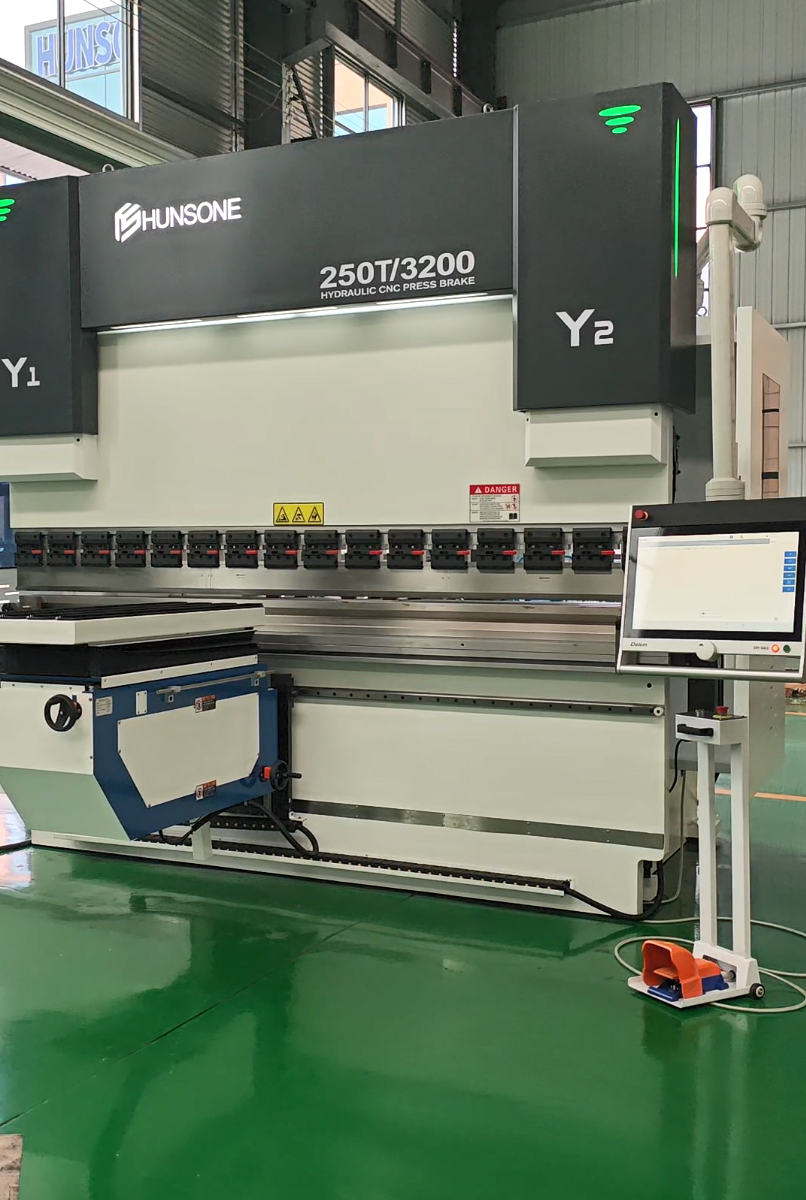
Tooling and setup habits matter just as much as raw tonnage. Shops that change over between short runs several times a day need quick-change clamping and a controller that remembers angle corrections from previous batches—otherwise your operator spends more time shimming dies than bending metal. If your team handles a lot of prototype or one-off work, a machine with offline programming and a simple touchscreen interface will cut down trial bends dramatically. On the other hand, if you run the same handful of part numbers week after week, investing in dedicated staged tooling and a repeatable backgauge system beats chasing the latest control features. Match the brake to the rhythm of your shop floor, not to a spec sheet fantasy.
How to Turn a Supplier Relationship Into a Competitive Edge
Most companies treat suppliers as vendors: negotiate hard, squeeze price, move on. That approach leaves money and resilience on the table. A supplier relationship becomes a competitive edge when you stop managing transactions and start building shared capability. For example, invite a key component maker into your product design reviews early. They see material trade-offs and failure modes you might miss, and their upstream knowledge can cut weeks from your development cycle while reducing defect rates.
The real shift is from adversarial leverage to mutual problem-solving. Instead of demanding annual cost reductions across the board, work together on waste, logistics, or specification changes that lower total cost for both sides. One manufacturer cut packaging costs by 18% after its supplier suggested a redesigned crate that also reduced shipping damage. That kind of improvement doesn't come from a bidding war; it comes from treating the supplier's engineers as an extension of your own team.
To sustain the edge, build shared visibility and joint incentives. Give your most critical suppliers a rolling 12-month demand forecast and involve them in capacity planning. Tie part of their compensation to quality and delivery metrics you both track openly. When a shortage hits, suppliers will prioritize customers who treat them as partners rather than replaceable cogs. That reliability, in turn, becomes something your competitors cannot easily copy.
FAQ
Start with the machine's frame construction and the supplier's own assembly process. A welded, stress-relieved frame tends to hold alignment longer than a bolted one. Ask where key components like the hydraulic system, backgauge, and tooling clamps are sourced. If a supplier can't explain their quality checks for those parts, that's usually a sign to keep looking.
Request a recent installation video or a live walkthrough of a similar machine running actual parts. Pay attention to how the ram moves at different speeds and whether the backgauge repeats without hesitation. Some shops also ask for a test bend report with material thickness and angle tolerance data from a machine close to the one they'd buy.
A press brake is not a set-and-forget machine. Tooling changes, controller updates, and hydraulic adjustments will come up. A supplier with responsive local technicians and a real spare parts inventory can keep your downtime to a few days instead of a few weeks. The cheapest quote often hides those costs in lost production.
The controller determines how quickly an operator can go from a flat pattern to a good bend. Look for software that stores tooling profiles, calculates bend sequences, and offers clear error messages. If the interface feels like it was designed for engineers rather than shop floor users, training time goes up and mistakes become more frequent.
Give them a set of real parts with different thicknesses, grain directions, and bend radii. Then ask how they would set up the machine and what tonnage they'd recommend. A supplier who asks about your material suppliers, typical batch sizes, and tolerance expectations is usually more reliable than one who only quotes the largest model in your budget.
Yes, but don't just ask for names. Ask if you can call one shop that runs the same model and one that had a service issue in the past year. Hearing how a supplier handled a breakdown tells you more than a perfect sales pitch. Also try to visit a reference shop if it's within a reasonable drive.
Watch for vague answers about spare parts availability, no local service partner, or a warranty that only covers the frame and not the hydraulics or electronics. Another warning is a supplier who promises extremely short lead times with no explanation of how they manage production. If they hesitate to share a written service agreement, that's often a sign of trouble.
Decide which features you truly need for the parts you make today, not five years from now. You might skip an advanced laser safety system in favor of a better backgauge, or choose a well-maintained used machine from a known brand over a new machine with unproven components. Spending less upfront only works if you are not paying for it later in rework and repairs.
Conclusion
Finding a reliable CNC press brake supplier isn't about picking the lowest quote or the most famous brand. It starts with recognizing that a vendor simply sells machines, while a fabrication partner takes time to understand your shop's material mix, batch sizes, and operator skills. Before you commit to anything, ask direct questions about real-world bending accuracy, repeatability, and how the control handles complex multi-step jobs. Many spec sheets look impressive until you notice missing details like Y-axis repeatability under load or the actual speed at the claimed tonnage. Demos can hide problems too - if the supplier only shows thin mild steel and never touches the materials you bend daily, that's a warning sign.
Service after the sale is where many relationships fall apart. A press brake that goes down for a week can idle an entire production line, so find out who answers the phone when something breaks, how quickly replacement parts ship, and whether the supplier has technicians who know the control system deeply. Also, the best machine for another shop may not fit yours - look at tooling changeover time, backgauge travel, offline programming, and how easily operators can switch between small one-off bends and long production runs. A supplier who helps you train staff, optimize bend sequences, and plan future capacity becomes more than a vendor; they become a competitive edge you can't easily copy.
Contact Us
Contact Person: James Chen
Email: [email protected]
Tel/WhatsApp: 86 13770803946
Website: https://www.hunsone.com/