

China Twin Screw Extruder Revolutionizes Plastics Manufacturing Worldwide
2026-08-06
The plastics manufacturing world is undergoing a seismic shift, and at its core lies an innovation from China that’s turning heads across the globe. Twin screw extruder technology, once a quiet workhorse of compounding, has now emerged as the beating heart of efficiency, precision, and scalability. Among the pioneers driving this revolution is MINGDE, a name that’s rapidly becoming synonymous with cutting-edge engineering and game-changing performance. But what exactly makes these Chinese extruders rewrite the rules of processing? In this post, we peel back the layers of hype to explore how MINGDE and its peers are reshaping everything from recycling to masterbatch production—and why your next investment might depend on it.
China’s Twin Screw Extruders Redefine Speed and Precision in Global Production
Gone are the days when speed came at the cost of accuracy in compounding. China's latest twin screw extruders are rewriting the rulebook, delivering throughput rates that rival any global competitor while holding tolerances so tight they're practically invisible. It's not just about spinning screws faster—it’s about a complete reengineering of torque density, barrel cooling, and flight geometry. These machines chew through complex formulations with a finesse that leaves older systems looking clumsy, all while running at speeds that would have been unthinkable a decade ago.
What really sets these extruders apart is how they've closed the loop between mechanical design and smart control. Real-time melt temperature sensing, predictive wear analytics, and modular screw configurations give operators a level of command that transforms reactive adjustments into proactive fine-tuning. This isn’t automation for automation’s sake; it’s precision engineered into every element—from the gearbox to the die plate—so that even on marathon production runs, consistency never wavers.
The ripple effect across global supply chains is impossible to ignore. Manufacturers in Europe and North America, long accustomed to premium-priced machinery, are now facing a new reality where Chinese extruders deliver comparable—if not superior—performance at a fraction of the cost. And it’s not a compromise; it’s a challenge. As these machines push into specialty applications like medical-grade polymers and high-fill masterbatch, the speed and precision they bring aren’t just redefining benchmarks—they’re reshaping who gets to set them.
How Modular Designs from China Are Shaping Custom Plastics Worldwide
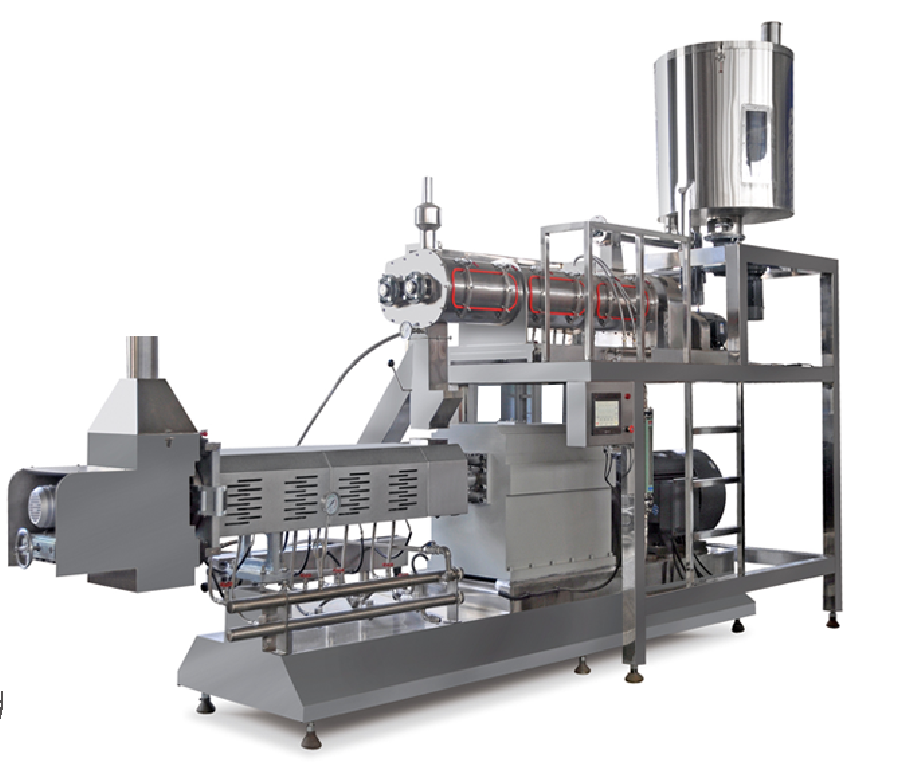
The modular design approach emerging from China is quietly transforming how businesses source custom plastic components. Instead of waiting weeks for a completely new mold, companies can now combine pre-designed functional blocks into a unique product. This shift dramatically reduces lead times and tooling costs, making small-batch customization surprisingly accessible. It's not just about speed—it's about rethinking flexibility in manufacturing, where each module already has proven quality and reliability baked in.
China's vast ecosystem of component manufacturers and rapid prototyping services fuels this trend. A designer in Europe can sketch a concept, specify a mix of existing latch, hinge, or sealing modules, and have a functional prototype in days. The real advantage is that these modular systems are already refined through high-volume production, so the risk of failure drops. This pragmatic innovation is spreading across industries from medical devices to consumer electronics, making custom plastics more about intelligent assembly than starting from scratch.
Energy-Smart Extrusion: Lower Costs, Higher Output Across Continents
Manufacturers in every region are rethinking how they heat and move materials through extruders, and the smartest among them are tapping into energy-recovery systems that slash utility bills without sacrificing throughput. By capturing waste heat from barrel cooling circuits and redirecting it into feedstock preheating or facility climate control, plants routinely cut overall energy draw by 15–25%. This isn't lab-scale theory—lines in Germany, Brazil, and Thailand are posting these numbers month after month, driven by retrofits that pay back in under two years.
The real leap, however, comes from pairing adaptive drive trains with real-time viscosity monitoring. Instead of running motors at a fixed speed and letting heaters fight against thermal losses, modern extrusion cells continuously tune screw RPM and barrel zone temperatures to the exact melt condition of each formulation. Operators who adopt this closed-loop approach report not only steadier gauge control but also a capacity bump of up to 12% on existing hardware, all while peak power demand dips. It turns out the fastest path to more output often means using less energy per kilogram—a fact that reshapes how production managers benchmark efficiency across their international fleets.
Across continents, the story is the same: facilities that treat energy as a variable raw material rather than a fixed overhead are unlocking margins their competitors can't match. Whether it's a high-output pipe line in Texas or a specialty film extruder in Osaka, the combination of insulation upgrades, intelligent start-stop sequencing, and high-efficiency motors creates a compounding effect on profitability. The shift isn't just about going green—it's about engineering a leaner cost structure that holds up under volatile resin prices and rising carbon compliance costs.
From Packaging to Automotive: The Quiet Rise of Chinese Extrusion Tech
For decades, Chinese extrusion technology was synonymous with high-volume, cost-effective production of packaging materials. Films, sheets, and profiles for consumer goods flowed from factories that prioritized scale over sophistication, refining processes to deliver consistent quality at razor-thin margins. This quiet competence laid a foundation—equipment builders mastered precision temperature control, screw design, and die manufacturing, often learning from European partners before developing their own innovations.
The shift toward automotive applications didn't happen overnight. As global automakers sought lighter materials to meet emissions targets, they turned to advanced polymers and aluminum alloys requiring tightly controlled extrusion. Chinese manufacturers, already adept at process optimization, began investing heavily in multi-layer capabilities and inline quality inspection systems. A specialty film once used for food packaging was reimagined as a battery separator; structural profiles originally designed for window frames found new life in crash-tolerant vehicle components. These adaptations signal a fresh technical maturity.
What sets this rise apart is its understated nature—there’s no single breakthrough moment, but a steady accumulation of expertise. Companies that once served local packaging markets now supply precision tubing for thermal management in electric vehicles, a domain demanding micron-level tolerances. By bridging material science with proprietary die and sensor technologies, they’re quietly reshaping supply chains once dominated by Japanese and German equipment. It’s an evolution marked not by disruption headlines, but by a growing presence in every new vehicle chassis and battery pack.
Why Manufacturers Are Switching to China’s Advanced Compounding Systems
The shift toward China’s compounding systems is driven by more than just cost savings—it’s about accessing a level of engineering sophistication that was once exclusive to European or Japanese suppliers. Chinese manufacturers have heavily invested in modular twin-screw extruders that offer exceptional torque density and precise temperature control, enabling processors to handle complex formulations with fillers, reinforcements, and heat-sensitive additives without compromising throughput. This technical maturity, combined with rapid customization capabilities, means production lines can be tailored to specific material requirements in weeks rather than months.
Another decisive factor is the integration of smart manufacturing features as standard, rather than costly add-ons. Real-time monitoring of melt pressure, viscosity, and energy consumption, paired with predictive maintenance algorithms, is now embedded in mid-range Chinese compounding lines. Manufacturers gain the ability to trace every batch’s processing history and automatically adjust parameters to maintain consistency—functionality that directly reduces scrap rates and unplanned downtime. When a single line can switch between engineering plastics, masterbatch, and recycled compounds with minimal manual intervention, the operational flexibility becomes a compelling argument.
Finally, the speed of local support and spare parts availability is reshaping the risk calculation. Instead of waiting weeks for overseas technicians or components, manufacturers can often resolve issues within days through domestic service networks. This proximity extends to process development, where joint trials at Chinese technical centers allow firms to optimize formulations and scale up using the exact equipment they will eventually purchase—removing the guesswork and long-distance coordination that plagued earlier international sourcing models.
The Sustainability Edge: Dual-Screw Innovation Cuts Waste and Boosts Recyclability
In an era where manufacturing waste is no longer an afterthought but a critical metric, dual-screw technology has emerged as a quiet game-changer. By precisely controlling shear, mixing, and devolatilization in a single continuous process, these systems slash material scrap that would otherwise end up in landfills. The result is a leaner production line where every pellet counts—and where off-spec batches become a rarity rather than a routine headache.
The recyclability angle is just as compelling. Because twin-screw extruders handle a broader range of regrind, post-industrial scrap, and even challenging recycled feedstocks without sacrificing output quality, manufacturers can close the loop far more effectively. It’s not simply about using recycled content; it’s about engineering machinery that thrives on it, turning would-be waste streams into viable, high-performance materials. This shift fundamentally rethinks the line between virgin and recycled, making sustainability a practical part of daily operations.
What truly sets dual-screw innovation apart is how it marries waste reduction with bottom-line sense. Less material lost during start-ups, changeovers, and purging means immediate cost savings. Simultaneously, the ability to incorporate higher percentages of recycled resin without compromising mechanical properties keeps brands ahead of tightening regulations and consumer demand for circular products. It’s a rare alignment of ecology and economics—one that’s quietly reshaping how the industry defines efficiency.
FAQ
Chinese manufacturers have successfully merged high-efficiency mixing with precise temperature control, delivering unmatched consistency in polymer processing. Their machines offer flexible modular designs that easily adapt to different production needs, while keeping costs surprisingly competitive.
The twin screw mechanism ensures thorough blending and dispersion of fillers and additives, eliminating weak spots in final products. Real-time process monitoring and automated adjustments reduce human error, resulting in stronger, more uniform plastic components.
It's widely used in compounding advanced materials for automotive parts, biodegradable packaging films, and high-performance pipes. The medical sector also benefits from its ability to produce sterile, precision extrusions for tubing and catheters.
Beyond the lower upfront investment, these extruders come with responsive after-sales support and readily available spare parts. Many models now match or exceed the durability of established Western brands, making the total cost of ownership very attractive.
The screw geometry has been optimized to reduce shear heating, so less cooling energy is wasted. Variable frequency drives adjust motor speed to actual load, cutting power consumption by up to 20% in typical operations without sacrificing output.
It excels at processing recycled plastics and bio-based polymers, which often have challenging thermal properties. By enabling higher recycled content in new products and reducing scrap through better control, it directly supports circular economy goals.
Integration with IoT and artificial intelligence is on the rise, allowing predictive maintenance and self-optimizing production lines. We'll also see machine designs tailored for novel materials like graphene-enhanced composites and high-temperature thermoplastics.
Conclusion
China's twin screw extruder technology has quietly reshaped global plastics manufacturing, setting new benchmarks for speed, precision, and adaptability. These machines now form the backbone of countless production lines, from packaging films to automotive components, thanks to modular designs that can be reconfigured almost endlessly. What once required entirely separate systems can now be achieved with a single, versatile extruder, cutting both capital expenditure and changeover times. The ability to precisely control shear and temperature profiles has also unlocked higher throughput without sacrificing material integrity—a leap that rivals struggled to match.
Beyond productivity gains, the shift toward Chinese compounding systems carries a compelling sustainability story. A new generation of energy-efficient drives and optimized barrel sections slashes power consumption while boosting output, directly lowering per-unit costs across continents. More importantly, the inherent mixing excellence of these extruders allows processors to incorporate higher percentages of recycled content without compromising quality, closing the loop on waste streams. As manufacturers confront tighter environmental regulations and shrinking margins, this dual advantage of economic and ecological efficiency explains why suppliers from Europe to the Americas are rapidly adopting Chinese twin screw extruder platforms—quietly anchoring a global transformation in how plastics are made, blended, and reused.
Contact Us
Contact Person: LILY SUN
Email: [email protected]
Tel/WhatsApp: 0086-13969103791
Website: https://www.snackfoodmachinery.com/