

China RPET Bag Production: Behind the Scenes of Sustainable Manufacturing
2026-08-13
What really happens before an RPET bag gets its ‘sustainable’ badge? In China, where most of the world’s recycled bags are born, the answer is messier—and more interesting—than you’d expect. I dug into the production lines and found a name that kept coming up: CHALLENGE WOLVES. This behind-the-scenes look might change how you see that simple tote.
From Bottle to Bag: Tracing the RPET Journey in Chinese Factories
In most Chinese factories, the shift from discarded PET bottles to finished RPET bags begins long before any machine is switched on. Truckloads of compacted bottles arrive from municipal recycling centers and are tipped onto sorting lines where workers and optical scanners separate clear PET from colored plastics, caps, and labels. What gets through is washed in hot water, ground into flakes, and then subjected to a second round of washing that removes adhesives and residual sugars. The resulting flakes are often tested for purity before being dried and fed into extruders.
Inside the extrusion hall, flakes are melted and pushed through fine filters to catch any remaining impurities. The molten polymer is spun into thin filaments, stretched to improve strength, and cut or wound depending on whether the factory is producing staple fiber or continuous filament. From there, the yarn is knitted or woven into the base fabrics used for tote bags, backpacks, and packaging. A single production line can convert several tons of bottles into roll after roll of grey or undyed fabric in a day, though many Chinese factories now run multiple lines in parallel to keep up with export demand.
The final steps involve dyeing, coating, or printing, followed by cutting and sewing. Quality checks tend to focus on fabric weight, colorfastness, and seam strength rather than anything visibly "recycled." Some factories attach batch codes that let buyers trace the exact delivery of bottles that became a particular lot of bags, though this level of traceability is still more common among larger, certified facilities. The overall effect is a closed loop that sounds simple on paper but depends on constant coordination between collection networks, chemical suppliers, and the production floor.
Inside the Machinery: How China Turns Plastic Waste into Durable Fabric
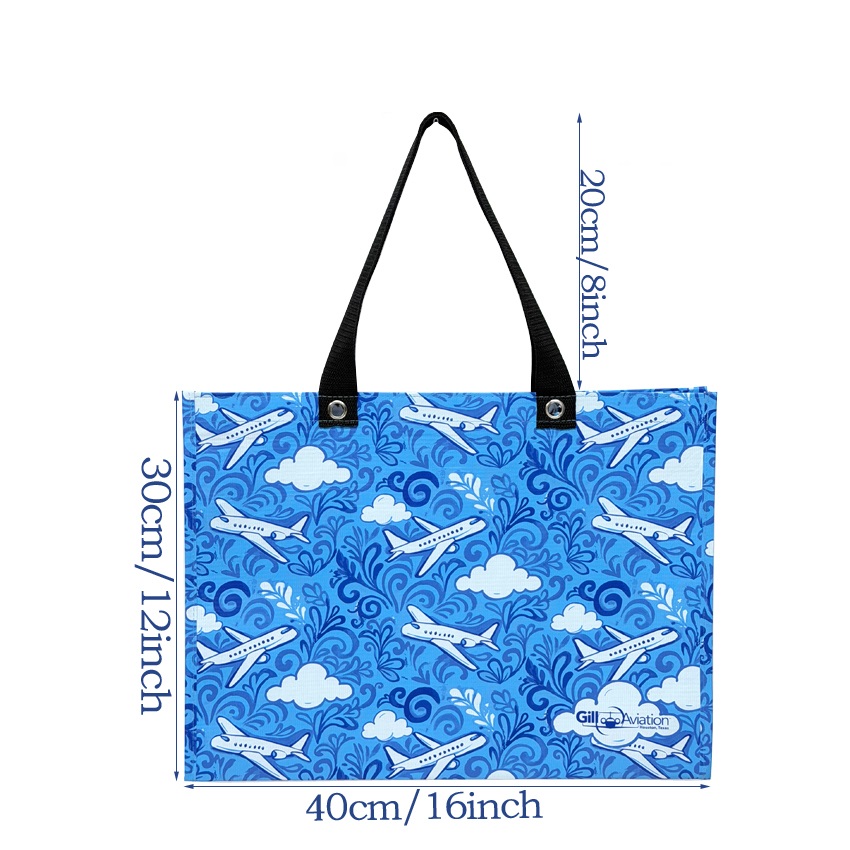
The recycling yards in eastern China receive bales of crushed bottles, films, and industrial scraps. Workers feed them into shredders that reduce everything to flakes the size of fingernails. These flakes then go through a series of float-sink tanks and friction washers where labels, caps, and adhesives peel away. What remains is a stream of nearly pure PET or polypropylene, dried to below 50 parts per million of moisture. That dryness is critical: any residual water turns to steam in the extruder and creates weak spots in the filament.
Inside the extrusion hall, the dried flakes drop into heated barrels that reach 280 degrees Celsius. Rotating screws push the melt through spinnerets with hundreds of microscopic holes. As the strands emerge, air knives cool them instantly, locking the polymer chains into a semi-crystalline structure. The result is a continuous filament that gets stretched up to four times its original length. This drawing step aligns the molecules, boosting tensile strength from around 2 grams per denier to over 4.5. The fiber is then crimped, cut, and baled, ready to be spun into yarn for outdoor gear, automotive interiors, and heavy-duty upholstery fabric.
Quality That Speaks: The Rigorous Testing Behind Every RPET Bag
The durability of an RPET bag starts at the fiber level. Every roll of recycled polyester fabric undergoes tensile strength testing, ensuring it can withstand forces well beyond a typical full load. Seams are double-stitched with high-tenacity thread and then pulled apart on a stress tester until failure — the breaking point must exceed twice the bag's rated capacity.
Zippers and hardware receive equally harsh treatment. Automated rigs open and close each zipper 5,000 times, flagging any misalignment or snag. Shoulder strap attachment points are flexed 10,000 times to simulate years of daily use. Colorfastness tests expose samples to UV light, salt spray, and artificial perspiration, ensuring prints stay sharp and dyes don't bleed onto clothing.
No batch ships without random sampling. Three bags from every production run are sent to an independent lab for full evaluation — seam strength, zipper durability, fabric abrasion, and eco-toxicity screening. A single failed criterion rejects the entire lot. Quality here isn't a checklist; it's a pile of rejected samples that never made it out the door.
Greener Threads: The Environmental Math of RPET Manufacturing
Turning discarded plastic bottles into fabric sounds like a straightforward win, but the real story lives in the numbers. For every kilogram of recycled polyester (RPET) produced, roughly 60 to 70 percent less energy is consumed compared to virgin polyester. That might seem abstract until you consider a single T-shirt made from RPET keeps about five to seven half-liter bottles out of a landfill or the ocean. The environmental math isn't just about fuel and emissions; it also tallies water saved during processing and the reduced demand for petroleum-based raw materials.
Yet the equation gets messier when you factor in collection, sorting, and transportation. A bottle tossed into a mixed recycling bin in one city may travel hundreds of miles before it's baled and shredded into flakes. Those miles add carbon back into the ledger, and if the recycling facility relies on coal-heavy electricity, some of the initial energy savings erode. On top of that, not all RPET is created equal—mechanical recycling degrades polymer chains slightly, which sometimes pushes manufacturers to blend in virgin PET to maintain strength. That blend ratio quietly shifts the environmental balance sheet.
What often goes unmentioned is the microplastic angle. Every wash of a polyester garment, whether recycled or not, releases tiny synthetic fibers into wastewater. RPET doesn't magically solve this, though some newer mechanical processes produce slightly longer staple fibers that shed less. So the true environmental math of RPET manufacturing isn't a single tidy number; it's a range that depends on local energy grids, bottle-to-flake yields, and how long the final garment stays in use. Choosing RPET over virgin polyester is generally a step in the right direction, but it's not a free pass—just a better shade of gray in a complicated equation.
The Human Side: Workers Powering China's Sustainable Bag Industry
Behind every recycled PET tote or biodegradable shopping bag, there's a pair of hands that knows the weight of a sewing machine needle and the smell of freshly cut canvas. In workshops across Guangdong and Zhejiang, the people stitching seams and checking zippers aren't just anonymous labor—they're the reason a bag can survive a decade of grocery runs. Many of them are women in their thirties and forties who left farming villages a decade ago, now training newcomers on how to align pattern edges without wasting a centimeter of fabric. Their pride is quiet: a perfectly straight stitch, a handle that doesn't fray, a batch that passes the water-resistance test on the first try.
But the shift toward greener materials has changed daily routines in ways no factory sign describes. Workers used to handling thick synthetic leather now learn to work with plant-based laminates that tear if pulled too hard, or algae-based foams that soften under heat. Lunch breaks often turn into informal problem-solving sessions—one cutter might show a colleague how to reduce leftover scraps from a lotus-fiber roll, while a young quality inspector explains why a certain dye bath leaves less residue in the wash water. These exchanges aren't driven by quotas or posters on the wall; they come from a shared sense that what leaves this building shouldn't just look good on a shelf, but do less harm when it's eventually thrown away.
What rarely makes it into a brand's supply chain report is the resilience required to stay in this work. Hours can be long, and the pay is modest compared to electronics assembly lines nearby. Yet many workers stay because they've seen their own children use the same canvas bags for schoolbooks, or because a supervisor once took the time to teach them how to repair a machine instead of just replacing it. The human side of sustainable bag production isn't a polished story of empowerment—it's a daily negotiation between speed and care, between earning a wage and believing that the thing you made won't end up in a landfill next year. And that negotiation, more than any certification, is what keeps the industry honest.
Beyond the Basics: Cutting-Edge Innovations in RPET Production
While conventional mechanical recycling still dominates RPET output, its limitations with colored, contaminated, or multi-layer feedstock have pushed researchers toward chemical depolymerization. Processes like glycolysis and methanolysis can now break PET down to its original monomers, purifying them for re-polymerization into virgin-grade resin. This unlocks food-contact applications that mechanical methods often struggle to meet, particularly for post-consumer bottles with heavy dye loads or mixed plastic streams.
On the front end, sorting and cleaning have quietly become innovation hotspots. Advanced near-infrared scanners paired with AI-driven vision systems can now identify and eject non-PET materials at speeds unthinkable a decade ago. Meanwhile, waterless or low-water cleaning technologies—some relying on enzymatic digestion of labels and adhesives—are slashing energy use and effluent volumes. These upstream gains directly improve downstream pellet quality without adding cost.
Perhaps the boldest shift is the push toward fully traceable, closed-loop systems. Digital product passports and mass-balance accounting allow brands to verify the exact percentage of recycled content in every batch of resin. Combined with emerging bio-based catalysts that accelerate depolymerization at lower temperatures, the industry is moving beyond simple flake washing into a true circular manufacturing paradigm.
FAQ
A large share comes from domestic bottle collection networks, though many factories also import washed flakes or pellets from East Asia and Europe when local supply runs tight. Some vertically integrated mills buy baled bottles directly from municipal recovery facilities and handle the whole cleaning and extrusion process in-house.
Reputable producers provide transaction certificates or third-party verification like GRS or SCS Recycled Content. Beyond paperwork, there are physical tells such as slight color variation between batches or occasional tiny specks in undyed fabric, which indicate genuine recycled feedstock rather than virgin pellets with a green label.
The spinning and weaving stages matter most. If the recycled yarn is not drawn evenly, the fabric can develop weak spots that tear under load. Factories that control tension and humidity in the weaving shed produce much more consistent material, especially for heavy-duty tote and backpack styles.
Dyeing accounts for a large share of water and energy use either way, but recycled polyester can be solution-dyed before extrusion to skip wet dyeing entirely. Some Chinese mills now use closed-loop dye baths and low-liquor machines, which cuts water consumption sharply compared with older open dyeing lines.
In well-run factories, clean offcuts are collected, shredded, and reprocessed into lower-grade fiber for things like insulation or filler. Defective printed bags are harder to recycle because of inks and coatings, so those may be downcycled or sent to waste-to-energy facilities. The best producers track this internal waste to keep overall landfill diversion high.
Often yes, because small components are not always available in recycled form with the same strength and finish. However, more manufacturers are switching to recycled zipper tape made from PET and sewing threads spun from post-consumer bottles. Buyers need to ask for a full material breakdown if they want every component to be recycled.
Sea freight per bag is relatively small, especially for lightweight foldable styles, but it still adds to the total. Local sourcing of feedstock and renewable energy in the factory can offset much of that transport impact. Some producers now offer carbon-neutral shipping options or consolidate shipments to reduce emissions per unit.
Conclusion
In the sprawling production hubs of China, the journey of an RPET bag begins not on a design table but at a collection point for discarded plastic bottles. These bottles are stripped of caps and labels, washed in high-pressure baths, and ground into clean flakes. Inside the factory, advanced extruders melt and push the flakes through spinnerets, turning what was once waste into fine, continuous filaments. These filaments are stretched, crimped, and cut into staple fibers or kept as filament yarn, then woven into a canvas-like fabric that rivals conventional polyester in toughness. What sets the process apart is the machinery’s ability to handle mixed post-consumer plastic—optical sorters separate clear from colored flakes, while vacuum degassing removes volatile impurities. After weaving, each batch faces a battery of tests: tensile strength is pulled to breaking point, colors are faded under UV lamps, and seams are stressed beyond what a shopping bag would ever endure. Only fabric that passes these checks moves on to cutting and stitching.
The environmental arithmetic is striking: producing one ton of RPET fabric typically reuses around 60,000 discarded bottles, cuts energy consumption by half, and reduces CO2 emissions by roughly 30 percent compared to virgin polyester. Water usage drops sharply too, since recycled flakes need far less washing than raw petroleum derivatives. Yet the story is not just about machines and metrics. On the factory floor, skilled workers—many from nearby towns—run the sorters, monitor extrusion temperatures, and hand-inspect finished bags for loose threads. Fair wages and growing safety standards are quietly reshaping the industry’s reputation. Innovation is also accelerating: some Chinese manufacturers now use enzymatic pre-treatment to break down glue residues, low-temperature extrusion to save power, and AI-driven optical sorting that learns to recognize new plastic types. These behind-the-scenes efforts make each RPET bag a small but credible step away from landfill and toward a more circular, human-centered production model.
Contact Us
Contact Person: Tony
Email: [email protected]
Tel/WhatsApp: +8615859766913
Website: https://www.cw-pak.com