

China Recloser Advances Drive Smarter Grid Protection Worldwide
2026-09-28
As grids worldwide strain under the weight of renewables and extreme weather, a quiet revolution is unfolding in China’s recloser technology. These once-overlooked protective devices are now the linchpin of self-healing networks, slashing outage times from hours to seconds. Deepwill sits at the heart of this shift, pairing decades of field data with real-time analytics to make reclosers smarter, faster, and more autonomous than ever. What does that mean for utilities from São Paulo to Seoul? A future where blackouts are rare, and grid resilience is no longer a promise but a default setting.
When Milliseconds Matter China’s Recloser Edge
On rural and semi-urban distribution networks, a fleeting tree branch or a passing bird can trigger a fault that lasts barely a few cycles. Most protection schemes wait, hoping the disturbance clears itself. A Chinese-designed recloser doesn’t wait. It reads the line’s condition, decides, and acts within a handful of milliseconds—fast enough to keep the lights steady while upstream breakers never even twitch.
The real edge isn’t just raw speed, but how that speed is applied. Coordinated logic inside the device distinguishes a transient fault from a persistent one before the first trip curve fully unfolds. That means one quick open-close cycle restores service in the time it takes a traditional relay to log the event. Fewer interruptions, less stress on transformers, and no need for a technician to drive out to the middle of nowhere.
This approach grew out of years spent solving the hardest grid-edge problems—long feeders, heavy vegetation, and unpredictable loads. Engineers in China refined the recloser’s vacuum interrupter and magnetic actuator until the whole sequence, from fault detection to first reclose, squeezed into a window smaller than a camera flash. The result is a device that turns milliseconds into a competitive advantage, one line segment at a time.
The Quiet Evolution of Grid Protection Hardware
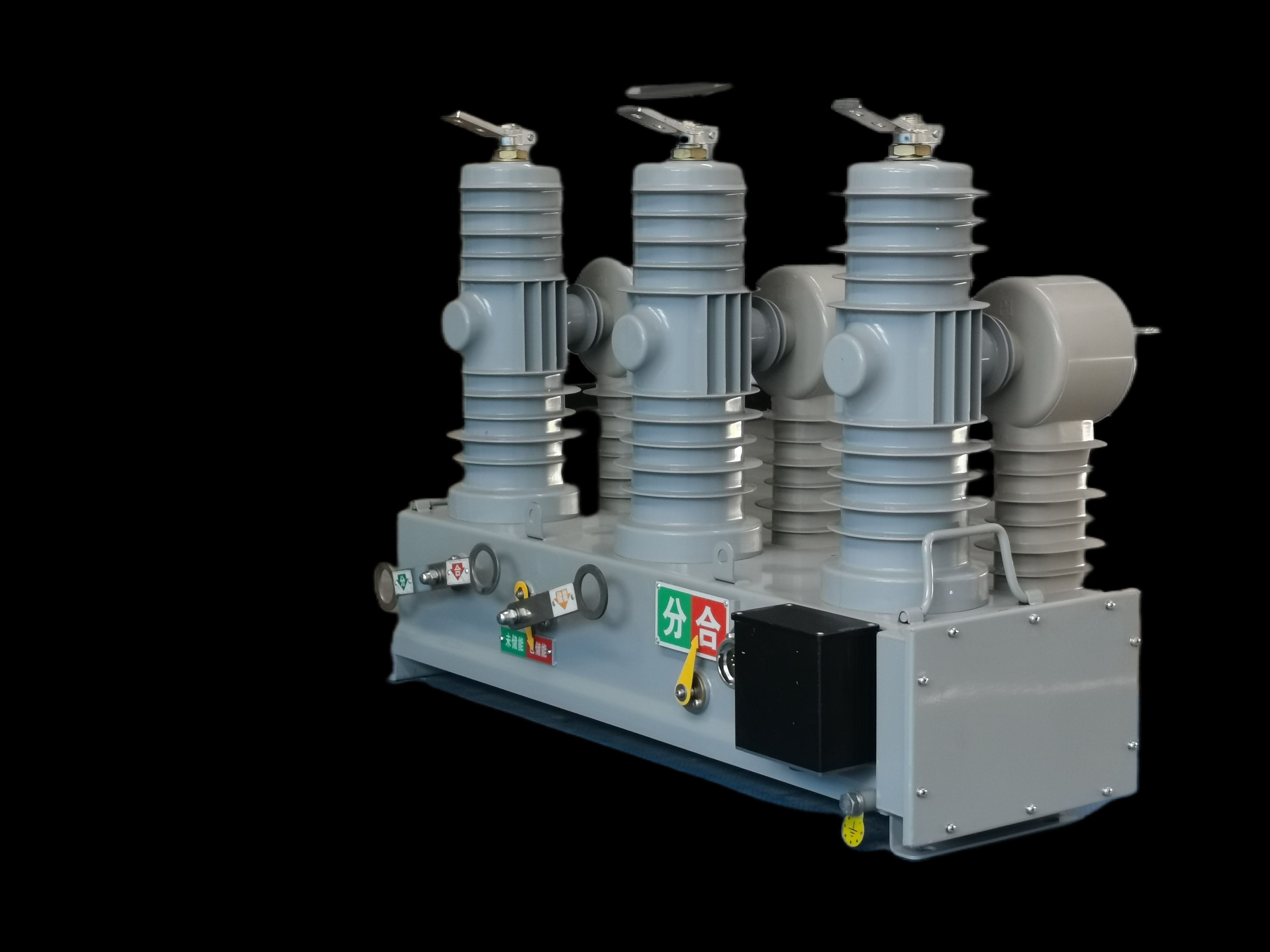
Grid protection hardware rarely makes headlines, yet its quiet evolution has fundamentally reshaped how utilities keep the lights on. Decades ago, electromechanical relays and bulky oil circuit breakers dominated substations, demanding constant manual calibration and offering only crude fault detection. Their replacements, first solid-state and then microprocessor-based devices, slipped into service with little fanfare—but each generation trimmed response times, cut maintenance hours, and added layers of self-diagnosis that older gear could never match.
The shift toward digital protection didn't happen overnight; it crept in through firmware updates and modular I/O cards. Modern relays now pack waveform capture, adaptive logic, and communication protocols once reserved for control rooms. Breakers, too, have slimmed down while gaining smarter trip units and faster arc-flash mitigation. Field crews sometimes joke that the hardest part of commissioning new hardware is finding where the old panel ended and the new one begins—a sign of how seamlessly these upgrades integrate into aging infrastructure.
What makes this evolution 'quiet' is that it unfolds behind locked substation fences, invisible to consumers. But for grid operators, the difference is stark: fewer nuisance trips, faster fault isolation, and protection schemes that reconfigure themselves after a disturbance. The next wave—solid-state current limiters and embedded sensors in busbars—promises even more resilience, though it will likely arrive with the same understated rollout that has defined this hardware's history. The grid's silent guardians just keep getting better at their job.
How Smarter Reclosers Are Rewriting Outage Playbooks
The old way of handling a fault on a distribution feeder meant a lot of guesswork. A recloser would trip, wait a few seconds, and try again, hoping the problem was just a squirrel or a tree branch that had already fallen away. If the fault persisted, the device locked out and a crew had to drive the line, sometimes for miles, to find the issue. Modern reclosers have changed this routine entirely. They no longer operate on a simple timer and current threshold. Instead, they collect real-time data on voltage, current waveform, and even temperature, then apply localized intelligence to decide whether a second or third reclose attempt makes sense. That decision used to be set once at installation and left alone. Now it adapts to the condition of the line at the moment of the fault, which is a fundamental shift in how utilities think about service restoration.
One of the biggest changes comes from the ability to distinguish between transient and permanent faults with far greater accuracy. A conventional recloser can’t tell the difference between a wet branch that will burn clear after one reclose and a broken conductor that will spark every time the breaker closes. Smarter reclosers sample the fault signature, compare it against known patterns stored locally, and in many cases avoid a reclose that could make the damage worse. This is not just a technical nuance. It changes operational playbooks because dispatchers now receive a much clearer picture before sending a truck. Instead of “recloser locked out, possible fault,” they see data suggesting a tree contact three spans from the device or an underground cable failure. Crews can head directly to the likely location with the right materials, which cuts outage duration and reduces the number of return visits.
The playbook is also being rewritten around coordination with other devices. Older reclosers worked in isolation, with fixed time-current curves that often clashed with fuses or downstream reclosers. Smarter ones communicate peer-to-peer, sharing fault events and adjusting their response in milliseconds. This means a fault that used to take out an entire feeder can now be isolated to a small lateral, with the upstream recloser staying closed. The result is fewer customers affected, shorter outages, and less stress on aging infrastructure. As these devices become more common, utility engineers are finding that the old rules—like “always attempt three recloses” or “set the curve to protect the fuse” —no longer hold. The new playbook is built on data, not habit, and it is reshaping everything from protection settings to how field crews are dispatched.
Beyond the Pole China’s Export-Ready Grid Intelligence
China's grid technology has long been framed by the image of massive domestic infrastructure, but a quieter shift is underway. The same control systems, sensors, and data platforms that stabilized a nationwide network are now being re-engineered for export. This is not a story of poles and wires alone—it is about software, forecasting, and the kind of real-time coordination that turns a sprawling grid into a resilient, self-correcting machine.
What makes the current wave of grid intelligence export-ready is its modularity. Chinese manufacturers have moved away from one-size-fits-all installations and toward containerized substations, plug-and-play energy management systems, and AI-driven fault detection that can be adapted to grids in Southeast Asia, the Middle East, or Latin America. The emphasis is less on hardware spectacle and more on interoperability—working with legacy infrastructure rather than demanding a clean-slate rebuild.
This approach has shifted the conversation from sheer capacity to operational nuance. Export customers are asking how a grid handles solar intermittency, electric vehicle load spikes, or extreme weather. China's answer is increasingly a bundle of digital twins, edge computing, and predictive maintenance tools that were honed at home and are now being packaged for grids at very different stages of maturity. The result is a quieter kind of influence: not just exporting components, but exporting the intelligence that makes them work together.
Making Distribution Networks Bounce Back Faster
Distribution networks rarely fail all at once. A single snapped pole, a flooded substation, or a tree limb across a feeder line can knock out service to thousands. The real test isn't avoiding that first hit—it's how quickly the grid can isolate the damage, reroute power, and get lights back on. Most utilities already have the physical redundancy. What's missing is the ability to see exactly where the break happened and make decisions before crews even reach the site.
That speed comes from better sensing and smarter switching. Devices that report fault current direction in real time, coupled with automated sectionalizers and reclosers, can shrink an outage from hours to minutes. Instead of sending a truck to patrol miles of line, control room operators can open and close switches remotely, feeding unaffected sections from alternate sources. The result isn't just faster restoration—it's fewer customers exposed to the outage in the first place.
But technology alone won't bounce the network back. Crews need a clear picture of what they're walking into: where the fault likely is, what equipment failed, and whether the area is safe. Pairing real-time fault data with mobile maps and simple work-order updates keeps everyone moving in the same direction. When a feeder can self-heal and the operations team trusts the data, recovery stops being a scramble and becomes a routine drill.
The Next Leap in Self-Healing Power Systems
True self-healing in power grids has long meant rule-based isolation and manual restoration, but the next leap moves beyond those static reflexes. Instead of waiting for a fault to trigger a pre-scripted response, modern systems are learning to read the grid’s own signals—voltage sags, harmonic shifts, thermal stress—and decide in milliseconds how to reroute energy around trouble. This shift turns the network from a passive receiver of damage into an active participant in its own repair, much like a living organism that redistributes load before a limb fails.
The backbone of this advance is a tight coupling between distributed edge intelligence and real-time grid topology mapping. Smart sensors no longer just report measurements; they negotiate with neighboring nodes to form temporary microgrids, isolate only the truly damaged segment, and keep critical services alive without central oversight. Machine learning models, trained on years of disturbance records, can now distinguish between a transient tree branch strike and a cable about to overheat, triggering different healing strategies. This means fewer unnecessary outages and faster recovery times that were impossible with fixed relay settings.
What makes this leap harder than it sounds is trust. Operators have to let algorithms make irreversible switching decisions under uncertainty, which demands rigorous validation against rare events and adversarial conditions. Yet early adopters in islanded and remote networks show that the payoff is not just fewer blackout minutes, but a grid that degrades gracefully under stress instead of collapsing in cascades. As these systems mature, the real measure of success shifts from avoiding failure to absorbing it without a flicker.
FAQ
They blend vacuum interruption with solid-state sensing, allowing utilities to clear temporary faults in milliseconds and restore supply automatically, which older electromechanical units struggle to do.
Many now ship with native IEC 61850 support and edge-based analytics, so a utility in Brazil or Kenya can integrate them into existing SCADA systems and get fault records without adding separate communication gateways.
The equipment often comes at a lower purchase price but still offers features like loop automation and remote firmware updates, making it feasible to modernize rural feeders without large capital budgets.
Yes, recent models use sealed pole units and wide-temperature electronics, tested for coastal salt spray, high humidity, and dust, which appeals to regions from the Middle East to island grids in the Pacific.
They isolate permanent faults to the smallest possible section and reroute power through adjacent feeders, so customers on healthy parts of the line keep their lights on while crews repair only the damaged span.
Beyond exporting hardware, several firms partner with local engineering companies to adapt protection settings and communication protocols, helping regional grids adopt self-healing strategies more quickly.
Absolutely, advanced models include directional protection and voltage-based tripping, which suit distributed solar and wind connections where fault currents can flow in either direction.
They should evaluate interoperability with existing relays, available firmware support in their time zone, and whether the recloser's automation logic matches their grid code for single-phase tripping and reclose intervals.
Conclusion
China's latest recloser technology is changing how utilities worldwide think about fault response. In the milliseconds after a branch strikes a line or a tree contacts a conductor, these devices now isolate the problem and restore healthy sections before customers even notice a flicker. That speed isn't accidental—it comes from years of quiet hardware refinement, replacing mechanical parts with solid-state sensing and adding embedded logic that learns from each interruption. The result is a playbook where outages shrink from block-wide blackouts to brief, localized events, and crews arrive with a clear map of what actually happened.
This shift matters far beyond domestic grids. The same compact, export-ready packages now carry grid intelligence into Southeast Asia, Africa, and Latin America, where aging infrastructure often struggles with frequent faults. Instead of building costly new substations, operators can deploy smarter reclosers that coordinate with each other and with upstream breakers, making distribution networks bounce back faster after storms or equipment failures. Looking ahead, the next leap is already visible: self-healing systems that not only restore power automatically but predict weak points before they fail. China's advances are quietly turning the traditional reconnect-and-hope model into a proactive, self-correcting grid.
Contact Us
Contact Person: Julion
Email: [email protected]
Tel/WhatsApp: 8617351370631
Website: https://www.deyunelectric.com