

China Pot Still: Unveiling the Art of Traditional Distillation
2026-05-12
Step into the hidden world of Chinese spirits, where centuries-old pot stills shape flavors that modern methods can't touch. This isn't just distillation—it's a slow dance of fire, copper, and intuition. At the heart of this craft lies the pot still itself, a vessel that carries the soul of each grain from mash to glass. As we peel back the layers of tradition, we also uncover how brands like DYE are quietly preserving these time-honored techniques for a new generation. Get ready to explore the alchemy that turns humble sorghum into liquid gold.
The Soul of Baijiu: How Clay Pots Shape China's Iconic Spirit
Walk into any traditional baijiu distillery and you’ll be greeted by rows of earthenware vessels, their surfaces cool and slightly porous to the touch. These aren’t just storage containers—they’re living participants in the spirit’s evolution. The unglazed clay breathes, allowing minute exchanges of air that gently oxidize the liquid over months and years. Minerals like iron and calcium leach into the baijiu, softening its fiery edges and coaxing out layers of earthiness that stainless steel simply cannot replicate.
The magic happens underground or in dim cellars where temperature swings do half the work. As seasons shift, the clay expands and contracts, pulling the spirit into its walls and pushing it back again—a slow, rhythmic dance that polishes raw alcohol into something round and deliberate. Each pot carries a memory of previous batches, a whisper of fermented sorghum and aged grain that seasons the next fill. It’s why two distilleries using the same recipe can end up with wildly different results: no two clay vessels age identically.
Modern shortcuts exist, but purists know that true depth only comes with time and terracotta. The pot’s influence isn’t a marketing tale; it’s chemistry, culture, and patience fused into every sip. When you taste a baijiu with a lingering, almost savory finish, you’re tasting the clay’s quiet signature—a reminder that sometimes the soul of a spirit is shaped as much by what holds it as by what goes into it.
From Grain to Glass: A Journey Through Pot Still Distillation
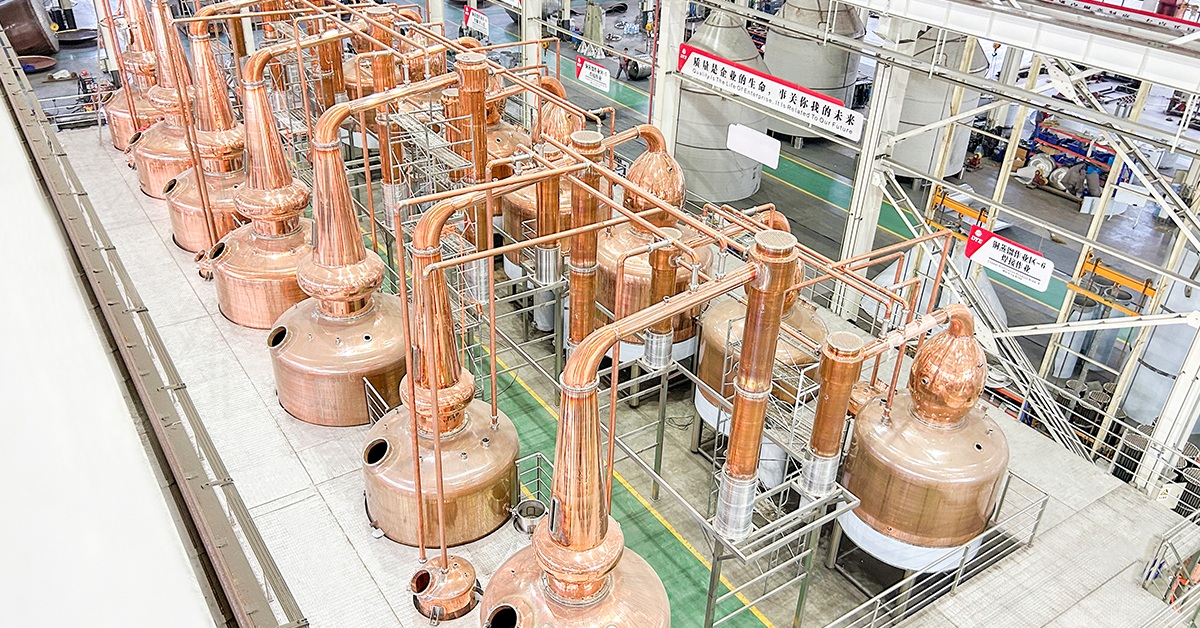
There’s a quiet magic in watching malted barley and crystal-clear water slowly transform inside a copper pot still. It begins with the grain selection — often local barley, steeped and spread across a malting floor where it germinates just enough to unlock the sugars. The process feels more like tending a garden than running a factory. Once milled and mashed into sweet wort, fermentation takes over in wooden washbacks, where yeast works its slow alchemy over days, not hours, building layers of fruity, earthy character that will define the spirit’s soul long before any flame is lit.
The pot still itself is an old-world craftsman’s tool, shaped like a bulbous copper onion and operated not by algorithm but by the distiller’s ear and nose. As the wash heats up, the first vapours rise, tracing the swan neck and condensing back into liquid with a distinct rhythm. Here, the art of the cut comes into play — heads, hearts, and tails separated with a precision that machines can’t replicate. The heart, that smooth, flavour-packed middle portion, is captured and carried forward, carrying whispers of the grain and the copper’s catalytic kiss. This isn’t about efficiency; it’s about character, about letting impurities turn into personality.
After distillation, the new spirit rests in oak casks, sometimes for years, soaking up the wood’s vanilla and spice while the angel’s share drifts into the rafters. When it finally reaches the glass, there’s a story in every sip — the damp barley fields, the patient ferment, the warmth of the stillhouse. It’s a journey that honours time and touch, reminding us that some things can’t be rushed, and maybe they shouldn’t be.
Earthen Alchemy: The Science Behind Traditional Chinese Stills
In the quiet corners of rural China, where mist clings to terraced hillsides, the art of distillation takes on a tactile, almost geological character. The traditional Chinese still, often a simple clay pot or copper vessel nested in stone, isn’t just a tool—it’s a dialogue between fire and earth. The porous nature of unglazed clay, for instance, subtly influences the vapor path, absorbing and releasing compounds in a manner no polished steel column can replicate. Craftsmen speak of ‘breathing pots’ that mature the spirit long before the first drop condenses, an interaction so gradual it becomes a form of cold alchemy, driven by capillary action and micro-oxygenation.
The cooling system, often a water-filled clay collar or a bamboo pipe sluiced with mountain runoff, is less about mechanical chill and more about resonance with the environment. Here, the terracotta’s thermal inertia creates a gentle, fluctuating temperature gradient—never quite stable, always adapting to ambient humidity. This dynamic fosters a separation of fractions that is surprisingly precise, yet utterly unlike the clinical precision of industrial columns. Lighter floral esters might linger in the vapor longer, teased out by the clay’s slight affinity for water, while heavier fusel oils become trapped in cooler, earthen bottlenecks. The result is a spirit that tastes not only of grain or fruit but of the very soil from which the still was born.
Archaeological digs reveal that these designs were never accidental. Neolithic potters understood that ferruginous clays, rich in iron oxides, catalyze subtle reactions during distillation, nudging the spirit toward complexity. Modern analysis shows these stills can produce a natural rectification—a sorting of molecules guided by mineral surfaces. It’s a holistic science where the vessel’s material, the shape of its lip, even the thickness of its base, conspire to filter and craft flavor. In an age of stainless steel indifference, these earthen stills remind us that chemistry is not just about formulas, but about the silent, patient wisdom of landscapes transformed into vessels.
Masters of the Flame: Generations of Distilling Wisdom
In the quiet hours before dawn, when the copper stills are cold and the air hangs heavy with the scent of fermented grain, the keepers of the flame begin their work. This isn't a job learned from textbooks; it's a rhythm passed down through calloused hands and watchful eyes, from grandmother to father, from uncle to daughter. Each generation adds its own chapter to an unwritten manual of heat and timing, understanding that distilling is less about precision instruments and more about intuition honed over decades.
The flame itself becomes a living thing—too fierce and the spirit turns harsh, too timid and the soul of the grain never fully awakens. Behind every bottle stands someone who knows the exact moment to cut the heads, the patience to wait for the heart, and the wisdom to let the tails fade. This mastery isn't taught in a single season; it seeps into the bones over years of watching bubbles break the surface and feeling the warmth rise through the soles of their boots.
Regional Flavors: Mapping China's Diverse Pot Still Traditions
The pot still, an ancient vessel of transformation, holds a revered place in China’s spirited landscape. Across the country, from the misty mountains of Sichuan to the arid northern plains, regional distillers have cultivated distinct techniques that mirror their natural environment. Local grains, water sources, and even the specific design of the still itself – often made from copper or clay – all conspire to create flavor profiles that are deeply tethered to terroir. This is not merely about alcohol; it is a liquid expression of place, where every sip tells a story of soil, climate, and centuries-old craft.
In the northern provinces, where hardy crops like sorghum thrive in cooler temperatures, a lighter, more delicate aroma often prevails. The traditional pot still here might be smaller, with a straightforward design that emphasizes clean, crisp notes. Distillers rely on solid-state fermentation, a painstaking process that layers grains in earthen pits, coaxing out subtle fragrances reminiscent of fresh-cut pear and steamed grains. The result is a spirit that feels crisp and unadorned, a reflection of the open landscapes and uncomplicated elegance of northern life.
Venture south, and the pot still traditions grow bold and complex. Sichuan and Guizhou, with their humid climates and abundant rainfall, nurture a profusion of microorganisms that deeply influence fermentation. Stills here are often larger, equipped with multiple retorts or unusual condenser setups that encourage a rich, sauce-like aroma – notes of soy, caramel, and overripe fruit. The distillation processes are layered, sometimes involving multiple rounds of steaming and prolonged aging, yielding spirits with a profound depth that lingers on the palate like a warm, earthy memory.
Reviving the Ancient Craft: Modern Innovators Embrace the Old Ways
In a world hurtling toward digital saturation, a quiet rebellion is taking shape as modern innovators turn to time-honored techniques. From hand-thrown pottery to loom weaving, practitioners are rediscovering the tactile satisfaction and mindful pace that only ancient crafts can provide. This resurgence isn't merely nostalgic—it's a deliberate act of preservation, reconnecting with processes that predate the assembly line and celebrating the human touch in an automated age.
Startups and independent artisans alike are weaving heritage methods into contemporary design, creating objects that bridge the gap between past and present. A ceramicist in Tokyo fires kilns using recipes passed down through centuries, while a furniture collective in Scandinavia carves wood without power tools, letting the grain guide each cut. These creators aren't replicating museum pieces; they're interpreting tradition through a modern lens, proving that sustainability and artistry can coexist in a throwaway society.
Perhaps most compelling is the community forming around these revived practices. Workshops and apprenticeships are filling up with people hungry for hands-on learning, fostering a shared appreciation that transcends generations. As screens mediate so much of daily life, the act of shaping raw materials with one's own hands offers a grounding counterbalance—a reminder that some skills, once thought lost, are finding new purpose in a restless world.
FAQ
A pot still is a simple, time-honored vessel used to heat fermented grain mash and capture the alcohol-rich vapors. In China, it often consists of a large pot (the boiler) topped with a cooling head and a condensing tube. As the mash simmers, alcohol evaporates first due to its lower boiling point, then the vapor passes through a cooling jacket or water trough, where it condenses back into liquid drop by drop. This batch process requires careful fire control and patience, with the distiller making real-time cuts to separate the best 'heart' from the harsh 'heads' and 'tails'.
Unlike continuous column stills that strip away flavor for pure alcohol, a pot still preserves and concentrates the rich, complex character that defines high-end baijiu. Because it’s a batch method, the distiller can retain compounds like esters, acids, and aldehydes that deliver fruity, floral, or roasted notes native to the grain and fermentation culture. Every run creates a slightly different spirit, allowing master blenders to layer years of production into a signature profile—something industrial methods simply can’t replicate.
The core principle is similar, but Chinese pot stills are usually squat and wide, often made of stainless steel or copper-lined iron, with a distinctive onion-shaped or pagoda-style head. Instead of a swan neck and lyne arm, many designs use a simple tube through a water-filled cooling bucket. More importantly, the still is rarely used alone—it’s integrated with a steamer basket to heat solid, semi-dry fermented grains, a technique unique to Chinese liquor production. In contrast, Western stills typically handle liquid wash, and the copper contact is much more extensive for sulfur removal.
Historically, copper was prized for its excellent heat conductivity and ability to bind unwanted sulfur compounds, but it was expensive. Many old distilleries used hammered iron pots with a copper or tin cooling coil. Today, you’ll see a mix: large stainless steel boilers for durability, with copper parts in the vapor path—like the condenser—to still polish the spirit. Some high-end operations have returned to all-copper stills, believing they impart a smoother texture and a slight catalytic magic no other metal can match.
First, grains like sorghum are steamed and mixed with a fermentation starter (qu) in a mud pit or jar. Once fermentation peaks, the damp, grain-heavy mash is loaded into the pot still’s steamer basket above a water base. Direct fire or steam heats the bottom, and as vapor rises through the grains, it strips out alcohol and aromatics. The vapors travel through a gooseneck into a condenser submerged in cool water. The distiller constantly monitors the output, tasting and smelling to decide when to collect. The heart cut is kept for aging, while heads and tails may be recycled into the next batch.
It’s the gatekeeper of texture and aroma. Because distillation happens slowly and at atmospheric pressure, delicate volatile compounds survive and concentrate without being smashed apart by high heat or pressure. The copper contact reduces harshness, while the narrow boiling range highlights esters with pineapple or pear notes, alongside savory, umami-rich elements from the fermentation. The result is a spirit with a broader, softer mouthfeel than column-distilled counterparts, with a finish that echoes the raw grains and the earth of the jiuqu starter.
Absolutely—perhaps the most iconic is the Luzhou Laojiao facility in Sichuan, where rows of stone pits and traditional pot stills have operated since the Ming Dynasty. Moutai, in Guizhou, uses a unique stacked-steaming pot still method tied to its kweichow flavor type. Another is Xinghuacun Fenjiu in Shanxi, where a lighter, cleaner baijiu style emerges from copper pots with meticulous control. These distilleries treat their pot stills as living heritage, with craftsmen who learned the rhythm of the fire and the cut from generations before them.
The earliest stills were likely simple ceramic or bronze steamers adapted from cooking and alchemy equipment. By the Tang and Song dynasties, dedicated copper pot stills appeared, sometimes with layered condensing chambers to increase purity. The Ming and Qing eras brought standardized iron pots with detachable cooling basins, often decorated with cast motifs to signify the distillery’s identity. Modern times have seen stainless steel become dominant for hygiene and efficiency, but the essence remains unchanged: a gentle, one-shot distillation that honors the grain’s soul, with subtle tweaks in the cooling system or pot shape to fine-tune the final character.
Conclusion
The art of China’s pot still distillation weaves together earth, fire, and tradition in a process that feels almost alchemical. At its core, clay pots serve as more than mere vessels—they shape the very soul of baijiu, lending a mineral richness that modern stainless steel cannot replicate. From selecting local grains to the patient fermentation and steaming inside these earthen stills, each step carries whispers of generations. The science behind it, though rooted in centuries-old practice, hinges on subtle interactions: the porous clay breathes, encouraging esterification that builds layers of aroma. Masters of the flame, often elders in their communities, guard this inherited wisdom, adjusting temperatures with an intuition no thermometer could match.
Travel across China, and the spirit tells a different story in every region. Luzhou’s mud pits, Guizhou’s rocky caves, and the light-aroma traditions of the north all emerge from distinct pot still methods tuned to local climates and grains. Yet this ancient craft faced near extinction until a wave of modern innovators began embracing the old ways. Small distilleries now revive heirloom yeast strains, restore forgotten still designs, and patiently age spirits in clay, rejecting shortcuts. This renaissance isn’t nostalgia—it’s a deliberate choice to preserve flavor in a world that too often settles for sameness.
Contact Us
Contact Person: Ada Xu
Email: [email protected]
Tel/WhatsApp: 0577-86806088
Website: https://www.dayuwz.com/