

China Drying Machine Innovations Transforming Industrial Processing
2026-07-04
Industrial drying is evolving fast, and China is at the center of this shift. New drying machine designs are tackling energy waste, uneven processing, and downtime that have long plagued manufacturers. At the heart of this progress is MINGDE, a name that keeps surfacing in advanced drying solutions for snacks, pharmaceuticals, and chemicals. These aren’t just marginal upgrades—they’re redefining what’s possible on the factory floor. Here’s a look at the breakthroughs that are quietly transforming industrial processing.
Breaking Production Bottlenecks with Next-Gen Drying
Conventional drying methods often create persistent slowdowns in production chains, with batch ovens or ambient air processes demanding hours of hold time and uncontrolled moisture removal that frequently damages heat-sensitive materials. For manufacturers scaling up output, these legacy systems strain energy budgets and floor space while delivering inconsistent results that trigger rework and quality rejections.
Emerging drying platforms combine infrared emitters, microwave-assisted energy transfer, and closed-loop humidity sensing to slash cycle times by over 60% without overheating product cores. By tuning wavelength absorption to match the moisture profile of each material, these systems pull water from the inside out instead of crusting surfaces, preserving structural integrity in everything from ceramic pastes to protein-rich foods. Adaptive algorithms monitor exhaust vapor in real time, dialing back power the instant target dryness is reached, which eliminates the over-processing that eats into margins.
Retrofitting existing lines with modular drying units has allowed operations to boost throughput without expanding factory footprints or rewriting entire process sequences. The shift from a week-long curing stage to same-day release not only relieves downstream staging piles but also uncovers hidden capacity in aging equipment, turning what was once a stubborn bottleneck into a strategic lever for meeting tighter delivery windows and volatile demand spikes.
Energy-Smart Dryers Cutting Costs and Carbon
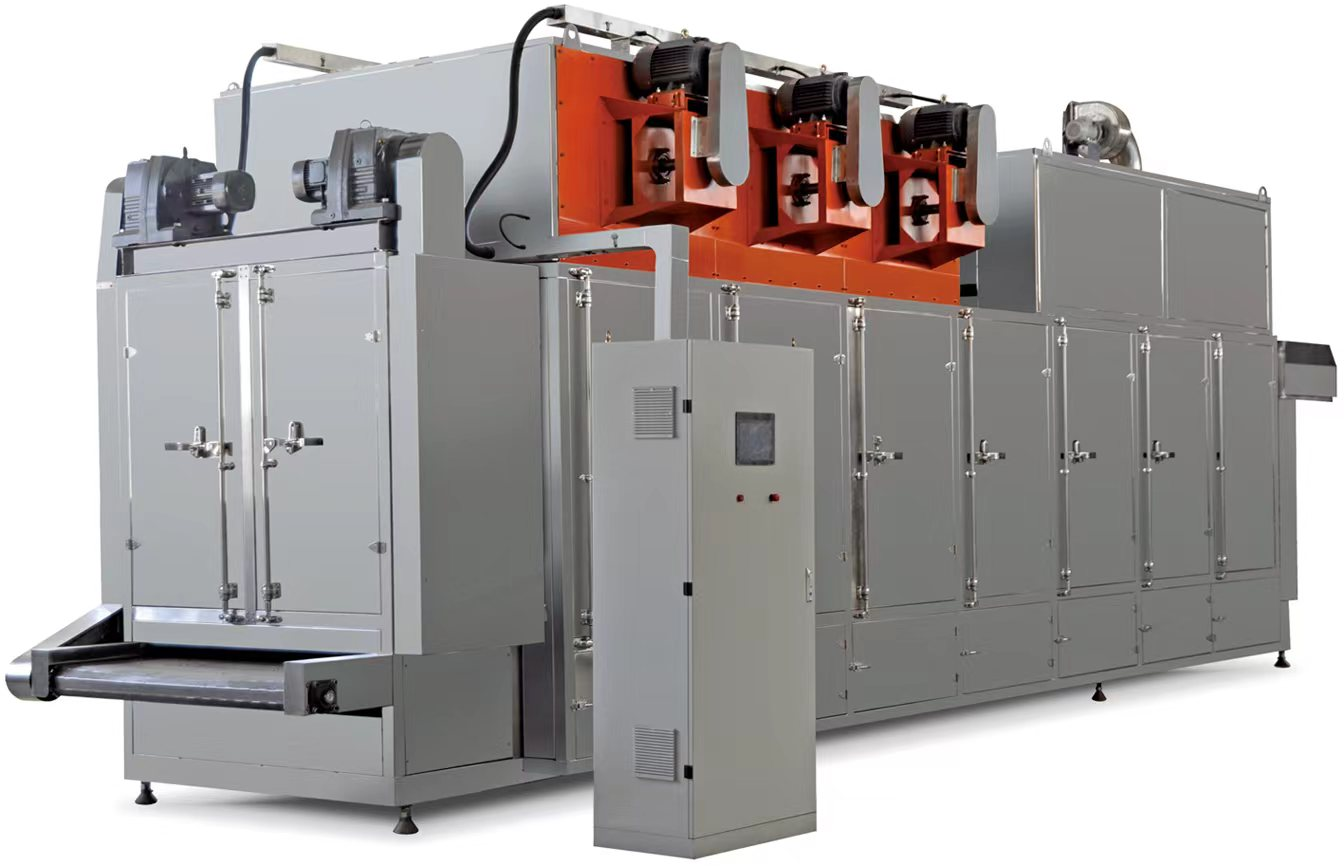
Drying a load of laundry can silently suck up more electricity than nearly any other appliance cycle in the home, but energy-smart dryers are rewriting that narrative. Instead of blindly blasting heat and tumbling clothes until a timer quits, these machines use moisture sensors and heat pump technology to dial in exactly the right amount of warmth and airflow. The result? A typical heat pump dryer uses less than half the energy of a conventional vented model, slashing annual utility bills by hundreds of dollars in busy households. It’s a quiet revolution in the laundry room that turns a mundane chore into a tangible act of savings.
What makes the carbon cut so dramatic is that these dryers don’t just sip electricity—they also ditch the fossil fuel hookups common in older gas models. A ventless heat pump dryer operates on a closed loop, pulling in ambient air, warming it with a compressor, and then recycling that heat instead of dumping it outdoors. This alone can shrink a home’s laundry-related CO₂ footprint by over a ton per year, depending on the local grid mix. For apartment dwellers and off-grid homes, the benefit doubles: no ductwork means no conditioned air leaks, so heating and cooling systems aren’t fighting a hole in the wall.
Beyond the numbers, the experience feels different—and that’s where the real adoption story lives. Clothes come out cooler and feel less abused because drying temperatures rarely exceed 120°F, preserving fabrics and elastics that would otherwise degrade under scorching 150°F convection heat. The cycle might take a few extra minutes, but the trade-off is a quieter run, a lint filter that stays cleaner, and the absence of that faint burnt-dust smell. With utility rebates and longer-lasting wardrobes, the value proposition writes itself, and early adopters often find themselves wondering why anyone still settles for the old way.
When Dryers Get Brainy: AI Meets Industrial Drying
It starts with a sensor tucked behind a panel, quietly logging temperature swings and moisture levels that even the most attentive operator would miss. That stream of data feeds into a system that learns the quirks of each batch—how a load of lightly damp textiles behaves versus a dense cake of sludge. Over weeks, the dryer begins to adjust its own fan speed and heat output not by a rigid timer but by feel, slashing energy use without ever under-drying a single fiber. The result feels less like programming and more like intuition, the kind a master tradesperson develops over a lifetime, only faster and never drowsy during a night shift.
Maintenance stops being a calendar ritual. Instead of swapping belts and bearings on a fixed schedule, the dryer taps out a warning when a slight vibration pattern changes or a motor current spikes in a telltale way. It’s that sudden dip in efficiency, invisible to the eye, that triggers a ticket. Mechanics show up not to a breakdown but to a gentle nudge, replacing a part before it ever thinks of failing. The floor manager starts sleeping better, knowing the line won’t seize up mid-order because a hidden coupling wore thin.
The real shift, though, is how these dryers start talking to the rest of the plant. A upstream centrifuge gets a note: “Spin a little harder next time; I can handle the residual moisture.” Downstream conveyors slow just enough to match a newly optimized dwell time. It’s a quiet choreography—no dashboards screaming for attention, just equipment deciding together how to run the day. The engineers who first installed the AI modules admit they didn’t expect the dryers to develop what looks a lot like taste, but now they can’t imagine going back to dumb heat and guesswork.
Custom Drying Solutions for Niche Manufacturing Needs
When off-the-shelf drying equipment falls short, manufacturers in niche markets often face a maze of unresolved production bottlenecks. From delicate pharmaceutical granulates that lose potency under excessive heat to aerospace composites requiring precise moisture removal without compromising structural integrity, standard solutions rarely align with such specific process parameters. That’s where purpose-built drying systems step in—designed from the ground up to handle unusual feedstocks, stringent environmental conditions, or space-constrained layouts that conventional machinery cannot accommodate.
Every variable matters in these specialized applications. Airflow patterns might need to be reversed to prevent product clumping; temperature profiles could be staggered to protect heat-sensitive batches; or the entire housing might call for exotic alloys to resist chemical corrosion. Instead of forcing a square peg into a round hole, custom drying solutions are engineered around the product’s behavior, right down to the moisture migration patterns observed in pilot tests. This level of tailoring not only improves yield and consistency but also reduces the energy drain caused by over-engineered generalist systems.
Beyond performance, the flexibility of bespoke drying equipment allows manufacturers to future-proof their operations. Modular designs can accommodate new product lines without gutting the entire setup, while integrated smart controls adapt to subtle shifts in ambient humidity or raw material quality. For small-batch producers in sectors like battery materials or specialty food ingredients, such adaptability transforms drying from a liability into a competitive advantage—quietly enabling innovation without the heavy footprint of large-scale, cookie-cutter machinery.
From Lab to Line: Material Science Powers Dryer Evolution
Every leap in dryer performance begins in the quiet hum of a materials lab. Modern lint screens, woven from finer, heat-resistant polymer meshes, trap more debris without choking airflow—a balancing act made possible by precise fiber engineering. Meanwhile, moisture sensors bristle with conductive ceramic coatings, swiftly reading dampness levels and shaving minutes off each cycle. The science rarely makes headlines, but it silently shapes how quickly your laundry emerges warm, soft, and dry.
Drum coatings tell a similar story of quiet revolution. Early dryers suffered from chipping enamel and rusty patches; today’s high-end models feature nano-structured stainless alloys or slick polymer blends that resist both abrasion and heat. These surfaces are slick enough to guide a silk blouse without snagging, yet durable enough to endure years of tumbling denim and zippers. It’s a triumph of tribology—the study of surfaces in motion—and it all helps fabrics last longer without chemical fabric softeners.
Perhaps the most radical shifts are hidden in the sealed compressor chambers of heat-pump dryers. Here, advanced refrigerants and hydrophilic heat exchangers squeeze every last joule from the ambient air. Durable elastomer seals prevent leaks, while moisture-extracting media outperform bulky condenser assemblies of the past. The result? A dryer that hums efficiently at low temperatures, protecting your clothes while sipping electricity—a direct pipeline from laboratory beaker to your laundry room, with fewer stops in between than you’d imagine.
The Silent Quality Revolution in Dried Product Consistency
There’s a quiet revolution happening right now in the dried foods industry, and it’s not about flashy new flavors or trendy packaging. Instead, it’s about something far more fundamental: the push for flawless consistency. When you open a bag of dried mango, every slice should have the same chewiness, the same burst of sweetness, and the same vibrant color. Achieving that level of uniformity isn’t a matter of luck—it’s the result of painstaking refinement in sourcing, processing, and quality control. This shift is changing the way producers think about their products, moving away from batch-to-batch variability and toward a new standard where every piece, regardless of when or where it was made, delivers an identical experience.
Behind the scenes, this revolution is fueled by advances in technology and a deeper understanding of the raw materials themselves. Traditional drying methods often left too much to chance—slight differences in humidity, fruit ripeness, or drying time could result in a product that was chewy one day and brittle the next. Now, processors are using precision-controlled chambers that monitor moisture levels in real time, adjusting airflow and temperature automatically to hit exact targets. Paired with rigorous supplier selection and sorting systems that discard any input that doesn’t meet strict criteria, the result is a level of consistency that would have seemed impossible just a decade ago.
For consumers, the benefits are immediate: no more guessing whether a snack will be satisfying or disappointing. For manufacturers, it means fewer complaints, less waste, and a brand reputation built on reliability. But perhaps most importantly, this silent quality revolution raises the bar for the entire category, pushing everyone to pay closer attention to the details that truly matter. In the end, it’s not just about dried fruit or jerky—it’s about a commitment to getting the simple things right every single time.
FAQ
Chinese manufacturers have pioneered several breakthroughs, including hybrid drying systems that combine heat pump technology with solar thermal collectors for reduced energy consumption. Advanced microwave-assisted dryers now offer precise moisture control, cutting processing times by up to 40% in food and pharmaceutical sectors. Additionally, the integration of IoT sensors and AI algorithms enables real-time adjustments to temperature and airflow, ensuring uniform drying while minimizing waste.
These innovations are reshaping sectors by boosting product quality and throughput. In agriculture, rapid dehydration preserves nutrients in fruits and vegetables better than conventional methods. The textile industry benefits from low-temperature drying that prevents fabric damage, while chemical manufacturers achieve safer solvent removal through closed-loop vacuum systems. Overall, production lines become more agile, adapting to varied materials without sacrificing efficiency.
China’s leadership stems from massive R&D investment and a robust manufacturing ecosystem that rapidly scales new ideas. Strong government support for green technology and automation has accelerated the development of energy-efficient dryers. Local companies also excel at customizing solutions for niche applications, from traditional medicine extracts to lithium battery materials, giving them a competitive edge in both domestic and export markets.
Certainly. Heat pump dryers that recover and reuse latent heat have slashed electricity use by 60% in some wood processing plants. Multi-stage fluidized bed dryers optimize heat transfer for granular products, reducing fuel consumption significantly. Solar-assisted tunnel dryers are widely adopted in rural areas for agricultural produce, combining low-cost thermal energy with automated conveyors. Many designs also incorporate waste heat recovery from industrial processes.
Smart dryers equipped with Industry 4.0 capabilities streamline operations through predictive maintenance and autonomous parameter optimization. For instance, in pharmaceutical granulation, machine vision systems monitor particle size and adjust drying intensity in real time, preventing over-drying. Cloud-based platforms allow remote monitoring of multiple units across factories, cutting downtime by alerting operators to anomalies before failures occur. This digital integration leads to higher yields and consistent output.
They significantly reduce environmental footprints by curbing energy use and enabling waste valorization. Many systems now use bio-based or renewable energy sources, and closed-loop designs recover solvents for reuse in chemical industries. Drying machinery with gas purification modules also captures volatile organic compounds, aligning with stricter emissions regulations. These practices help companies achieve circular economy goals while maintaining profitability.
Conclusion
China's drying machine sector is reshaping industrial processing through a wave of innovations that tackle longstanding bottlenecks. Next-generation dryers integrate advanced airflow dynamics and modular designs, dramatically boosting throughput while slashing cycle times. Energy-smart configurations are simultaneously cutting operational costs and carbon footprints, leveraging heat recovery systems and adaptive thermal controls that respond in real time to material moisture levels. The infusion of AI and machine learning is making these dryers brainy—self-optimizing parameters to maintain peak efficiency without human intervention. Meanwhile, a surge in custom-engineered solutions addresses niche manufacturing demands, from delicate pharmaceutical granules to heat-sensitive food ingredients, ensuring that each drying process is precisely tailored rather than forced into a one-size-fits-all mold.
Behind these breakthroughs, material science is playing a quiet but pivotal role, enabling smoother transitions from lab-scale innovations to full production lines. Novel coatings, advanced sensor integration, and hybrid heating methods have driven a silent revolution in product consistency—eliminating over-drying, preserving structural integrity, and guaranteeing batch-to-batch uniformity. This consistency directly elevates end-product quality in sectors like ceramics, chemicals, and nutraceuticals, where even minor moisture deviations can cause rejection. Collectively, these advancements position Chinese dryer technology not merely as an equipment upgrade but as a holistic processing transformation that redefines efficiency, sustainability, and precision across global manufacturing landscapes.
Contact Us
Contact Person: LILY SUN
Email: [email protected]
Tel/WhatsApp: 0086-13969103791
Website: https://www.snackfoodmachinery.com/