
China Dredger Manufacturer: Pioneering Advanced Dredging Technology for Global Projects
2026-05-24
When it comes to reshaping coastlines and reclaiming land from the sea, few names carry the weight of YaKai Dredger. As a leading China dredger manufacturer, YaKai has quietly revolutionized the industry with cutting-edge technology that’s powering some of the world’s most ambitious marine projects. But what really sets their equipment apart isn’t just raw performance—it’s the fusion of relentless R&D and on-the-ground adaptability that keeps global contractors coming back. In this post, we’ll dig into the innovations driving this quiet giant.
Engineering the Depths: How Chinese Dredgers Reshape Global Waterways
In the sprawling waterways that stitch continents together, a quiet revolution is underway—one powered by massive, precision-engineered vessels capable of reshaping coastlines and deepening shipping lanes with astonishing efficiency. At the heart of this transformation are Chinese dredgers, colossal machines that have redefined what's possible in marine engineering. From the swift expansion of ports in Africa to the ambitious land reclamation projects in Southeast Asia, these vessels are not just moving silt; they are redrawing the economic map, enabling new trade corridors and strategic footholds. With capabilities that rival—and often surpass—their European counterparts, Chinese dredgers are increasingly the first choice for nations seeking rapid, cost-effective maritime development.
Behind these towering ships lies decades of intensive research and a strategic push for self-reliance in core technologies. China's journey from operating second-hand dredgers to building the world's largest cutter-suction and trailing suction hopper dredgers mirrors its broader industrial ascent. Innovations in pump design, cutter power, and automation allow these vessels to work in challenging conditions—cutting through rock, handling abrasive sands, and operating at depths once deemed impractical. The iconic Tianjing, an immense cutter-suction dredger, exemplifies this leap: its sheer capability to excavate tens of thousands of cubic meters per day has become a benchmark in the industry. By mastering these engineering feats, Chinese shipyards have turned a once-niche sector into a globally competitive powerhouse.
Yet the impact extends beyond concrete and steel. The deployment of these dredgers carries deep geopolitical undertones, often intertwining developmental aid with strategic influence. As coastlines morph under the relentless churn of cutter heads, local economies are transformed, but so are the balances of power in contested waters. Environmental considerations also loom large, with projects frequently sparking debates over ecological disruption versus economic necessity. For the dredging crews and engineers on these missions, the work is a blend of high-stakes problem-solving and round-the-clock precision—a testament to human ingenuity operating at the edge of land and sea. In reshaping global waterways, Chinese dredgers are not merely altering physical landscapes; they are sculpting the connective tissues of a new maritime era.
Unmatched Precision: The Tech Behind Modern Dredging Fleets
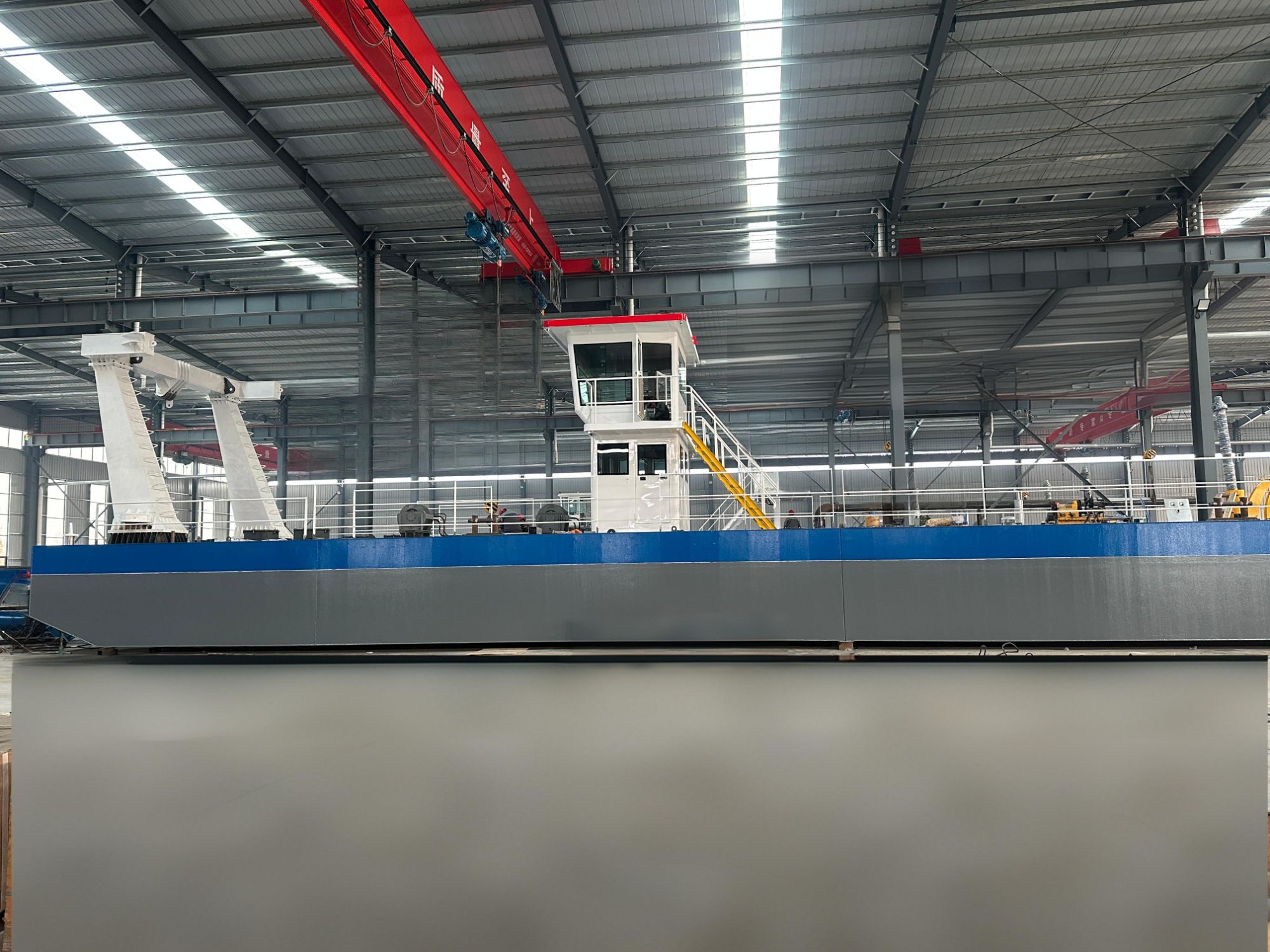
Cutting-edge positioning systems have completely reshaped how dredgers operate in tight channels and near sensitive infrastructure. Gone are the days of relying solely on tide gauges and manual measurements. Today's fleets lean on a blend of real-time kinematic GPS, laser scanners, and inertial navigation units, all fusing data to maintain accuracy within a few centimeters—even when waves are throwing the vessel around.
Beyond positioning, the real leap comes from sensor arrays mounted right on the dredge head. Suction pipes now carry optical sensors and acoustic profilers that map the seabed in sub-centimeter detail on the fly. This constant feedback loop lets operators adjust cutter speed, swing width, and suction force instantly, avoiding over-dredging and protecting buried cables or pipelines that might not show up on older charts.
Then there's the control room itself. Modern dredge masters aren't wrestling levers; they're interacting with 3D digital terrain models that update in real time. Machine learning silently crunches historical drag forces, sediment types, and tidal currents to suggest optimal trenching paths. It’s a subtle shift from brute force to surgical finesse, turning a once-blunt instrument into a tool that can sculpt underwater landscapes with remarkable repeatability.
From Shanghai to the Suez: Delivering Mega-Infrastructure Worldwide
The sight of colossal gantry cranes silhouetted against the Shanghai skyline is not merely a symbol of China's industrial might—it's the starting point of a logistical chain that stretches across continents. When we speak of delivering mega-infrastructure from Shanghai to the Suez, we're talking about the orchestration of thousands of components, from prefabricated bridge sections to fully assembled port terminals, shipped through the world's busiest maritime corridors. The reliability of these deliveries rests on precision planning that accounts for monsoon seasons, canal transit schedules, and the last-mile challenges of offloading in emerging markets.
Consider the recent expansion of a container terminal along the Suez Canal Economic Zone. The entire steel superstructure, manufactured in Shanghai's sprawling yards, was transported as modular units, slashing on-site construction time by months. This approach isn't just about moving goods—it's about exporting a methodology that blends advanced manufacturing with adaptive project management. In Egypt, local engineers and workers partner with Chinese teams to assemble these mega-structures, creating a lasting transfer of skills that extends well beyond the dockside.
Eco-Conscious Excavation: Balancing Progress with Planet
Traditional excavation methods often leave behind a trail of dust, debris, and disrupted ecosystems. The shift toward eco-conscious practices isn't just about ticking boxes; it's rethinking how we interact with the earth from the first shovel strike. Crews are now mapping root systems before digging, using biodegradable hydraulic fluids, and timing work around nesting seasons to avoid disturbing wildlife. These quiet adjustments accumulate, turning a once-brutal process into something more akin to careful surgery.
Technology has become an unlikely ally in this balancing act. GPS-guided machinery minimizes unnecessary soil displacement, while electric excavators are slowly replacing their diesel-guzzling predecessors on sensitive sites. Some projects even deploy on-site water treatment systems that recycle the slurry generated during drilling, preventing contaminated runoff from reaching local streams. It's a form of progress that doesn't require shouting—just smarter tools and a willingness to see the ground beneath us as more than a obstacle.
Community voices are reshaping how we measure success. Instead of speed and volume, many projects now track ecological recovery rates and long-term soil health. In one recent urban renewal effort, archeologists worked alongside botanists to preserve historically significant trees, rerouting pipelines to protect root systems that had survived centuries. When excavation becomes an act of coexistence rather than conquest, the dialogue between development and nature shifts from argument to collaboration.
Custom Vessels, Tailored for the Toughest Terrains
When navigating unpredictable waterways, off-the-shelf boats often fall short. That's why we engineer each vessel from the keel up, matching every hull curve and deck layout to the specific challenges of the environment it will face. From Arctic icebreakers with hardened steel bows to shallow-draft patrol boats that skim over mangrove roots, no two builds are ever the same. The starting point is always a blank page and a deep dive into the operational reality: water depth, debris load, wave patterns, and the daily punishment the craft must endure.
Materials and propulsion systems are selected not for gloss, but for grit. We source aluminum alloys that shrug off salt corrosion, fit propellers resistant to cavitation in silty rivers, and install engine intakes designed to filter out volcanic ash in remote lake systems. Redundancy is baked into every critical system—dual bilge pumps, backup navigation, and impact-resistant through-hulls—because when you're 200 miles up a jungle tributary, a minor failure can cascade into a major crisis. The bridge layout is equally purpose-driven: controls are oversized for gloved hands, sightlines are optimized for spotting submerged obstacles, and vibration dampening is tuned to reduce crew fatigue over 18-hour shifts.
Beyond the hardware, we embed the craft with a philosophy of self-reliance. Onboard toolkits are standardized to common, locally available parts, and maintenance hatches are placed where a single person can reach them without scaffolding or a crane. We’ve built vessels that can be beached on jagged volcanic rock without damage, that carry spare fuel in double-walled tanks shielded by the hull frame, and that can limp home on a single engine through current that would stall lesser craft. Each delivery comes with no glossy brochure—just a handover captain who has tested the boat in the very waters it will serve, and a promise that it will keep doing so longer than any standard model ever could.
Decades of Mastery: Why Global Partners Trust Chinese Shipyards
It takes more than modern infrastructure to build a ship that sails the world’s most demanding routes; it takes people who have spent decades refining their craft. Chinese shipyards have evolved through waves of industrial change, absorbing lessons from thousands of projects—from modest coastal vessels to ultra-large container ships and sophisticated LNG carriers. That hands-on experience isn’t something you can replicate with a quick investment. It lives in the instinct of a welding supervisor who sees a seam slightly off, or in a design team that knows exactly how to shave weight without sacrificing strength. Over the years, this accumulated know-how has become a quiet guarantee: when a global partner signs a contract, they’re not just buying steel and engines; they’re tapping into a lineage of practical skill that few other nations can match.
Trust isn’t built with brochures—it’s earned on the water, delivery after delivery. Shipowners today face fierce pressure on fuel efficiency, emissions compliance, and operational reliability. Chinese yards have responded not with marketing slogans, but with a methodical drive to close the gap between expectation and reality. The numbers speak clearly in repeat orders from major European and Asian operators who once looked elsewhere. They’ve discovered that the combination of cost discipline, flexible engineering support, and an almost stubborn commitment to meeting deadlines creates a partnership that feels less like a transaction and more like a long-term alliance. That’s why you’ll often hear a shipping executive say the smartest decision they made wasn’t buying a particular vessel—it was choosing a yard that would still be alongside them ten years later, ready for the next challenge.
FAQ
They combine decades of shipbuilding expertise with relentless innovation, delivering reliable, high-performance dredgers that tackle the world's toughest sediment removal challenges—often at a more competitive cost without compromising on durability.
Every vessel is customized to project specs, from cutter suction dredgers for hard rock to trailing suction hopper dredgers for port maintenance. We integrate advanced automation and monitoring systems, ensuring efficiency even in remote, demanding environments.
We supplied a heavy-duty cutter suction dredger for a land reclamation project in Southeast Asia. Despite abrasive soil and tight deadlines, it operated around the clock for months, moving millions of cubic meters with minimal downtime.
We pioneered intelligent dredging controls that adjust suction power in real time, hybrid power systems for fuel savings, and wear-resistant components that extend service life—all designed with input from operators in the field.
Absolutely. We have a network of service engineers stationed across key regions, and we offer remote diagnostics and spare parts delivery within a short time frame. Training for local crews is also a standard part of our project handover.
Our dredgers are equipped with silt curtains, overflow control, and automated tracking to minimize turbidity. We also engineer systems that can handle contaminated sediments safely, adhering to strict international environmental standards.
We build everything from small sand mining dredgers to massive self-propelled TSHDs and adaptable amphibious dredgers. Whether for deepening shipping channels, restoring beaches, or reclaiming land, we have a purpose-built solution.
Conclusion
China's dredger manufacturers have moved far beyond conventional engineering, combining decades of shipbuilding mastery with cutting-edge technology to execute the world's most demanding marine projects. From deepening the Suez Canal to constructing artificial islands off the coast of Shanghai, these vessels deliver unmatched precision in the most challenging conditions. Modern fleets are equipped with automated control systems and high-efficiency pumps that enable exact excavation even in hard, compacted soils. The ability to custom-design vessels for specific terrains—whether rocky riverbeds, soft silt deltas, or Arctic waters—has cemented long-term partnerships with international contractors. This adaptability, backed by rigorous quality standards, is why global project owners repeatedly choose Chinese shipyards over competitors.
As the industry faces growing ecological scrutiny, leading Chinese manufacturers have pioneered eco-conscious dredging techniques. Advanced sediment management and turbidity reduction systems minimize environmental disruption, ensuring that progress does not come at the cost of fragile ecosystems. The integration of real-time monitoring and precision excavation helps protect marine life while maintaining operational efficiency. Meanwhile, the engineering philosophy of 'engineering the depths' has been applied to landmark projects worldwide—from widening transoceanic shipping lanes to reclaiming land for mega-ports. Through continuous innovation and a deep understanding of global waterway challenges, these manufacturers have become silent enablers of international trade, redefining what's possible in underwater construction.
Contact Us
Contact Person: Nancy
Email: [email protected]
Tel/WhatsApp: (+86) 13869631558
Website: https://www.yakaidredger.com/