

China Cardio Equipment: Leading the Next Wave of Fitness Innovation
2026-08-08
As the global fitness landscape evolves, a quiet revolution is unfolding in China's cardio equipment industry—one that's redefining performance, design, and accessibility. Brands like Yingruis are at the forefront, blending cutting-edge technology with user-centric innovation to challenge established norms. But what exactly makes this new wave of Chinese cardio gear so compelling, and why are fitness enthusiasts worldwide starting to take notice? Dive in as we unpack the trends, tech, and trailblazers powering this transformation.
Redefining Gyms: How Chinese Brands Are Shaping Tomorrow’s Workouts
Walk into a gym in Shanghai or Shenzhen and you might forget you’re in a traditional fitness space. Instead of rows of cardio machines, you’ll find motion‑tracking screens, wearable‑synced strength stations, and entire walls that adjust lighting based on your workout intensity. Chinese brands are moving past the cookie‑cutter gym model, weaving AI‑powered coaching and gamified experiences directly into the facility itself. These aren’t just places to sweat; they’re responsive environments that learn your habits, tweak your plan on the fly, and make every rep feel like part of a larger, personalized journey.
What really sets these innovators apart is how they’re tearing down the membership wall. Forget rigid contracts and upfront annual fees — many Chinese fitness chains now let you pay per visit, book a single class, or even rent a smart locker that doubles as a virtual trainer for a few yuan. This flexibility taps into a culture that prizes convenience and spontaneity, pulling in everyone from night‑owl freelancers to grandparents looking for low‑impact tai chi that’s been digitally augmented. It’s a model that treats fitness as an on‑demand service rather than a commitment, and it’s quickly rewriting the rulebook for operators worldwide.
Community, too, is getting a tech‑friendly reboot. In Beijing, group cycling classes are less about following an instructor and more about riding together through a city‑scale virtual race, with real‑time leaderboards and post‑workout stats shared on social platforms. Brands are blending the physical and digital so seamlessly that members can continue their “gym” experience at home via the same app, using data collected during in‑studio workouts to inform their living‑room session. The result is a fitness ecosystem that doesn’t end at the door — it follows you, connects you, and quietly reshapes what a workout can be.
Beyond the Treadmill: Smart Features Elevating Cardio Machines
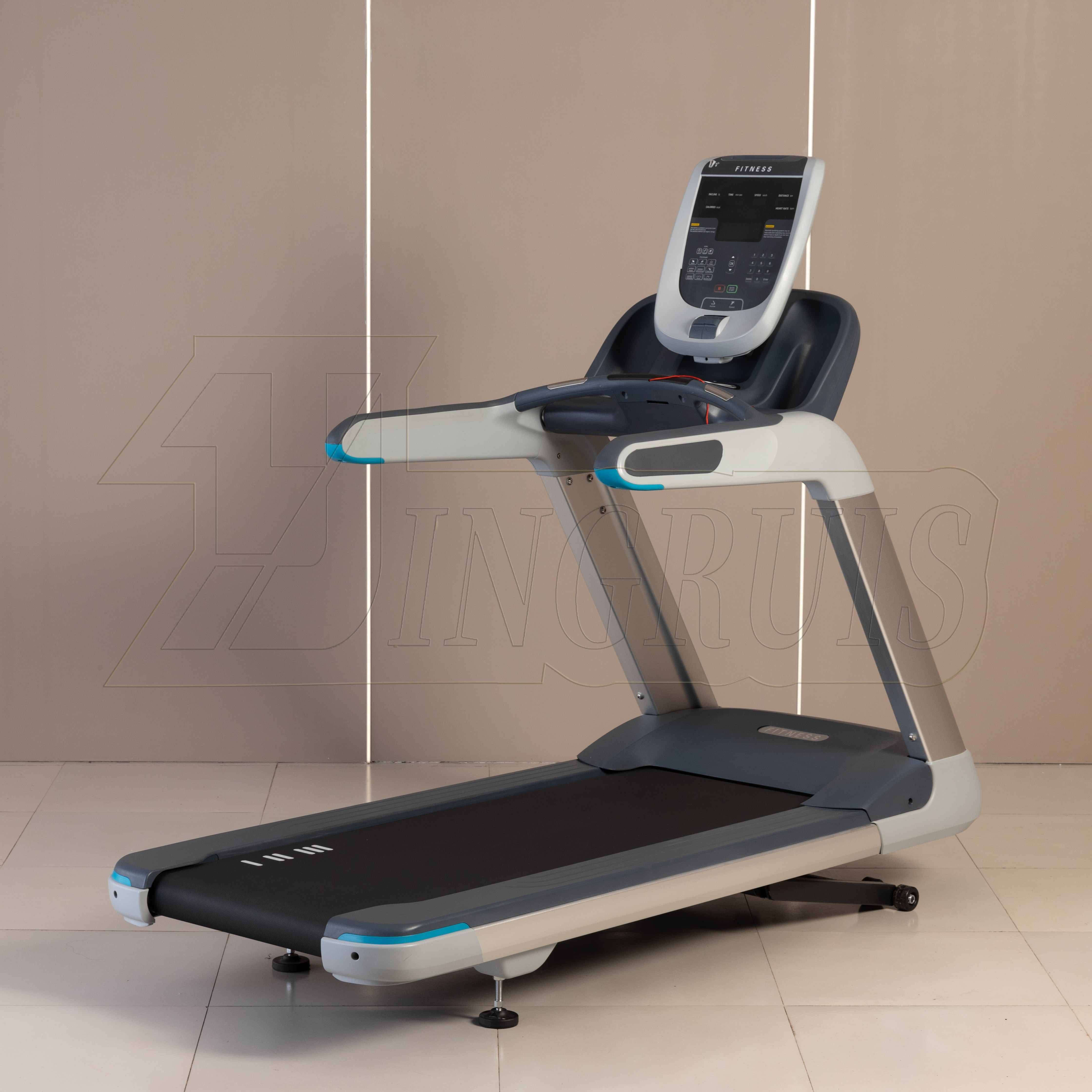
Gone are the days when a cardio session meant simply pounding away on a basic treadmill. Today’s machines have transformed into intelligent training partners. They learn your rhythms, adapt to your goals, and often feel one step ahead of your own motivation. Whether you’re streaming a live class or crunching data from your last run, these features blur the line between gym equipment and a personal coach.
Take the shift toward interactive screens and app connectivity. Instead of staring at a wall, you can race through virtual landscapes or join instructor-led sessions from home. The best part? The machine responds in real time, adjusting resistance or incline to match the on-screen terrain without you lifting a finger. It’s an immersive push that turns a monotonous routine into a dynamic experience.
Beyond entertainment, smart tracking gives you insights that were once reserved for professional athletes. From cadence analysis to heart rate zone optimization, each stride generates actionable feedback. Over weeks, patterns emerge—your peak performance hours, the exact incline that spikes your burn rate. This isn’t just exercise; it’s a continuous loop of improvement, packaged in a sleek, connected design that fits your lifestyle.
From Factory to Floor: The Manufacturing Edge Driving Quality
True quality doesn’t start on the showroom floor—it’s forged on the factory line. When manufacturing is treated as a craft rather than a checklist, every weld, stitch, and calibration becomes a deliberate act of precision. It’s the difference between a product that merely functions and one that earns loyalty through years of flawless performance.
Behind every durable product is a culture that refuses to compromise on the small things. From raw material sourcing to final assembly, the best manufacturers build quality gates at every station, not just at the end of the line. That means real-time feedback loops, skilled technicians who can spot a defect before it becomes a problem, and designs that are engineered to be built consistently, not just once.
When manufacturing excellence is the foundation, the result is self-evident: fewer returns, lower lifetime costs, and a reputation that speaks louder than any warranty. It’s the kind of edge that can’t be copied overnight—it’s earned shift by shift, part by part.
User-Centered Design: Where Ergonomics Meets Digital Immersion
User-centered design isn't just a methodology—it's a philosophy that places human needs, limitations, and behaviors at the core of product development. When we talk about the convergence of ergonomics and digital immersion, we're really discussing how to craft experiences that feel as natural as using a well-designed physical tool. The keyboard that fits your hands, the chair that supports your spine, the screen that doesn't strain your eyes—these physical considerations now have digital counterparts: intuitive navigation that respects cognitive load, haptic feedback that mimics real-world textures, and adaptive interfaces that learn from your habits. True immersion happens when the digital environment becomes an extension of your body, not a barrier to overcome.
Ergonomics in the digital realm goes beyond preventing repetitive strain injuries. It addresses the subtle friction that accumulates when a user must repeatedly click through nested menus, decipher ambiguous icons, or wait for sluggish animations. Seamless digital immersion demands that every interaction feel effortless, almost invisible. Consider how a well-designed game controller melts away in your hands after hours of play—the same principle applies to voice-activated assistants that understand natural language, augmented reality overlays that align perfectly with your field of view, and apps that predict your next move without feeling intrusive. This is where anthropometry meets algorithms: measuring not just popliteal height, but attention span; not just grip strength, but emotional response.
The real magic happens when these disciplines inform each other from the ground up. A website that adapts its layout for one-handed phone use, a VR experience that reduces motion sickness through frame rate optimization and spatial audio, a banking interface that simplifies complex transactions into conversational flows—these aren't afterthoughts. They're the result of designers and engineers collaborating to merge physical comfort with digital fluency. The goal isn't merely to avoid discomfort, but to create a state of flow where the user forgets they're interacting with a machine at all. In this hybrid space, ergonomic principles become the blueprint for experiences that feel as organic as a conversation, yet as precise as a finely-tuned instrument.
Green Sweat: Sustainable Materials and Energy-Efficient Innovation
Green Sweat rethinks activewear from the fiber up, swapping petroleum-based synthetics for fabrics that thrive on circular principles. Its primary material is a custom-engineered blend of TENCEL™ Lyocell and recycled polyester, chosen for its ability to wick moisture without relying on chemical finishes. The lyocell is sourced from responsibly managed eucalyptus plantations where water use is dramatically lower than conventional cotton, while the recycled polyester diverts post-consumer bottles from landfills. This combination yields a fabric that breathes exceptionally well and resists odor naturally, reducing the need for frequent washing—a quiet but meaningful way to extend garment life and cut household energy and water consumption.
Beyond materials, the production process itself is designed to leave a lighter footprint. The knitting facilities run on a mix of on-site solar and grid renewables, and the dyeing stage uses a closed-loop water system that recycles and reheats process water, slashing thermal energy demand by nearly 40 percent compared to standard methods. Even the garment construction follows a zero-waste pattern philosophy: laser cutting and strategic panel placement ensure that over 95 percent of the fabric roll becomes part of the final product, with remaining scraps compressed into pellets for industrial felt applications. These operational choices mean each garment carries a physical carbon tag—a scannable QR code linked to an immutable record of its manufacturing energy mix, so the wearer knows exactly what went into it, down to the kilowatt-hours.
Durability and end-of-life thinking are knitted into every piece. Instead of relying on elastane, which breaks down into microplastic fragments, Green Sweat uses a mechanically stretch yarn that maintains its recovery through dozens of washes without shedding synthetic particles. When a garment finally wears out, the brand’s take-back program uses a gentle chemical recycling process that separates the lyocell from the polyester, reclaiming both as virgin-quality feedstock for new threads. It’s a deliberate shift from the linear model, treating the clothing less as a disposable item and more as a material bank—an approach that quietly challenges the industry’s status quo while giving people a genuinely better way to move.
Global Pulse: China’s Fitness Tech Making Waves Worldwide
From AI-powered yoga mats that correct your posture in real time to virtual reality spin classes broadcast from Shanghai studios, China’s fitness technology is redefining workouts around the globe. These innovations blend hardware precision with gamification, turning sweat sessions into immersive experiences. Brands aren’t just exporting gadgets—they’re exporting a whole new fitness culture that’s attracting users from Berlin to São Paulo.
The secret sauce lies in affordability without sacrificing smarts. Unlike high-end Western equivalents, Chinese products pack competitive features into sleek, budget-friendly designs. Whether it’s a smart jump rope syncing with a mobile app for competitive challenges or a sleek home gym unit that folds into a coffee table, the focus remains on accessibility. This approach is rapidly capturing markets that previously couldn’t afford connected fitness gear.
Crucially, these tech-forward solutions are doubling down on community. Apps built around these devices foster global leaderboards and live-streamed workouts, creating a sense of belonging that transcends borders. It’s no longer just about tracking reps; it’s about being part of a worldwide movement, with Asian innovation at the core.
FAQ
Chinese manufacturers are reshaping cardio fitness by integrating smart tech, eco-friendly materials, and user-centric design. They focus on connectivity, syncing equipment with fitness apps and using data analytics for personalized workouts. Compact, multi-functional machines suit urban living, while immersive features boost engagement, positioning China as a leader in the next fitness wave.
It combines quality, affordability, and cutting-edge innovation. Advanced manufacturing ensures durability at competitive costs, and rapid adoption of IoT and AI creates equipment that anticipates user needs—offering a value and foresight that gives Chinese brands an edge worldwide.
Notable trends include AI coaches for real-time feedback, VR integration for immersive sessions, and cloud-based data sync. Smart consoles offer on-demand classes and social connectivity, turning solo workouts into shared experiences. Self-generating power and energy-efficient designs also highlight sustainability.
They design space-saving, foldable models like compact treadmills, wall-mountable ellipticals, and under-desk walking pads without sacrificing performance. Noise reduction ensures apartment-friendly use, while sleek aesthetics blend with modern interiors—making home fitness practical and stylish.
Sustainability is growing key, with recyclable materials and eco-production. Self-powered tech—like ellipticals that generate electricity—cuts grid reliance. Packaging shifts to biodegradable options, and some brands launch take-back programs, promoting a circular economy.
They sync with health apps to share heart rate, calories, and workout data for a holistic health view. Wearable pairing enables continuous monitoring, and AI suggests tailored plans. Open APIs link with third-party platforms, transforming equipment into a connected health management hub.
Expect hyper-personalization via AI and biometrics for real-time custom workouts. Immersive tech like haptic feedback and holographic coaches may go mainstream. Modular designs allow component upgrades, and deeper social features—in-machine challenges and virtual group classes—will turn cardio into a shared, motivating experience.
By setting new standards for smart, connected gear, Chinese makers push global rivals to elevate. Their emphasis on user-friendly, tech-integrated, affordable solutions democratizes fitness, making advanced features accessible. This fuels hybrid fitness models where home cardio supplements gyms, shaping a more flexible, inclusive culture.
Conclusion
China's cardio equipment sector is shaking up the fitness world, pushing beyond the mundane treadmill into a realm where smart features meet user-centered design. Today's machines boast AI-driven coaching, immersive virtual landscapes, and real-time biometric feedback, turning sweat sessions into personalized adventures. Ergonomics fuse with digital immersion—think auto-adjusting stride lengths, responsive cushioning, and screens that sync seamlessly with wearables. It's a revolution driven by meticulous manufacturing: vertically integrated supply chains and rigorous testing deliver commercial-grade durability at competitive prices, putting innovation within reach for gyms and home users alike.
But the transformation runs deeper. Brands are championing green sweat with recycled materials, energy-generating belts, and eco-friendly packaging, cutting carbon footprints without compromising performance. This fusion of sustainability and tech is catapulting Chinese brands onto the global stage, where they're redefining gym culture—from compact, multi-functional designs for boutique studios to heavy-duty machines that can handle non-stop use. It's a holistic shift: tomorrow's workouts are not just smarter and greener, but also more inclusive, as user-centric R&D ensures equipment adapts to all body types and fitness levels. China isn't just manufacturing gear; it's orchestrating a global fitness experience that harmonizes quality, innovation, and responsibility.
Contact Us
Contact Person: Owen Wu
Email: [email protected]
Tel/WhatsApp: 86-15376736259
Website: https://www.yingruisfit.com/