

China AR/VR Cable Innovations Powering Next-Generation Immersive Devices
2026-11-25
The most underrated component in an AR headset is often the cable trailing from it. As China’s manufacturers push toward higher resolutions, lower latency, and lighter wearables, the real bottleneck is no longer the display—it’s the link carrying signal, power, and data without breaking the illusion of immersion. A new wave of Chinese cable engineering is tackling that problem with hybrid shielding, tighter impedance control, and connector designs that survive constant motion. EBCYX is one of the names driving this shift, turning the humble cable into a strategic advantage for next-generation AR/VR devices.
Optical Fiber Sneaks Into Everyday Headset Tethers
The quiet move away from copper in headset cables is starting to show up in everyday gear. For years optical fiber was treated as something reserved for long-haul networks and data centers, but it is now appearing in tethers for high-end gaming and VR headsets. The immediate advantage is not just raw bandwidth. A fiber strand can carry audio, microphone, and data channels in a cable that is noticeably thinner and lighter than an equivalent copper bundle, which matters when the cord hangs off your head for hours.
There is also a practical reliability benefit. Optical fiber does not pick up electromagnetic interference the way copper does, so routing a headset cable past power bricks, routers, or crowded USB hubs is less likely to introduce clicks, hum, or dropouts into the signal. Manufacturers can also reduce shielding, which helps keep the tether flexible without sacrificing performance.
Adoption is still selective because optical terminations and transceivers add cost, and fiber is less tolerant of sharp bends and rough handling than copper. But as connectors become more standardized and prices ease, headset tethers are turning into an unlikely proving ground for optical interconnects that could eventually spread to other everyday accessories.
The Fight Against Signal Decay in High-Refresh Immersion
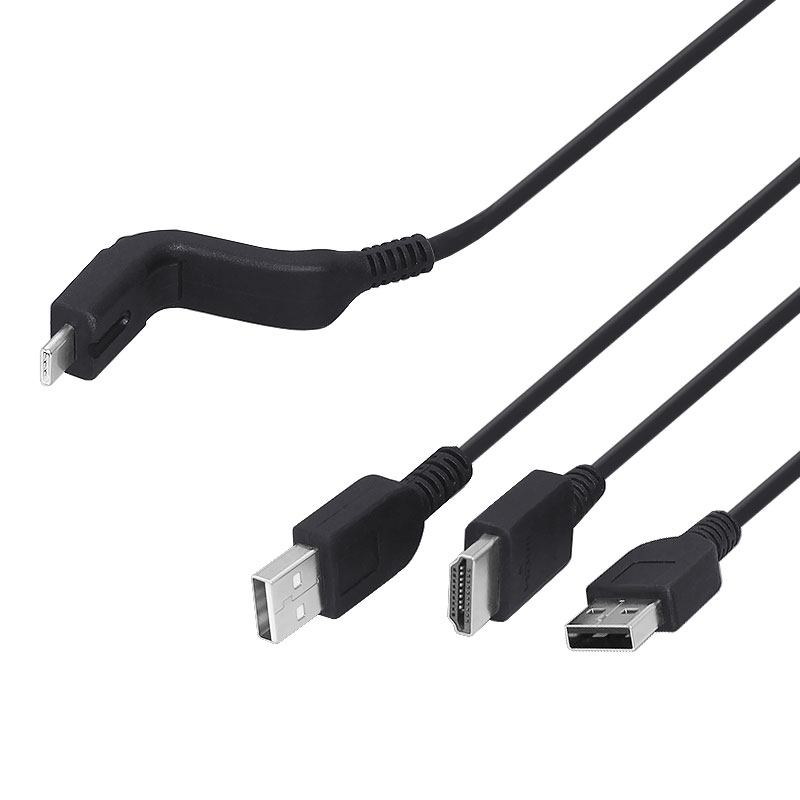
The battle against signal attenuation in high-refresh-rate immersive displays rarely gets the attention it deserves. Every millimeter of trace between the timing controller and the panel eats away at edge rates, turning crisp pixel transitions into mushy gray blobs. Instead of chasing exotic cables or cranking up drive current blindly, the real gains come from rethinking impedance continuity and placing equalization closer to the source driver, not at the far end of a flex cable.
As refresh rates climb past 120Hz and into 144Hz or beyond, the margin for signal integrity shrinks to almost nothing. Shortening the path or dropping voltage swing helps up to a point, but thermal drift and load variation quickly erase those gains. A more robust solution is adaptive pre-emphasis that samples the actual channel response during vertical blanking intervals, then reshapes the transmitter waveform on the fly—something fixed factory calibrations simply cannot do.
Fighting decay isn't only about analog tricks. Switching the TC-to-driver link from a fire-and-forget push protocol to a lightweight retransmission scheme cuts bit error rates dramatically without adding pins. When paired with predictive equalization and per-lane deskew, the result is an immersive panel that holds a clean, stable image even after hours of head-mounted use—no ghosting, no sparkle, just fluid motion.
Flexible Armor and the Physics of Repeated Bending
Flexible armor doesn't resist failure by being infinitely stiff. It survives because every bend, twist, and fold distributes stress across thousands of small, linked movements instead of concentrating it in one rigid plate. When a joint flexes, the individual scales or fibers slide past each other just enough to follow the contour, then return to their original alignment once the load is removed. This repetitive micro-adjustment is what engineers call low-cycle fatigue behavior, but unlike a solid sheet of metal, the armor can accommodate it without forming a single dominant crack.
The physics gets interesting when you look at what happens after thousands of identical bends. Most materials work-harden or develop internal fractures along the fold line. Flexible armor avoids this by shifting the neutral axis—the imaginary line inside a bent material where there's no tension or compression—continuously across its layered structure. Each layer takes a turn being on the outside of the bend, then the inside, so no single fiber or scale bears the maximum strain for long. Over time, the armor actually becomes more supple along commonly flexed paths, forming natural crease lines that reduce resistance without sacrificing protection.
What sets well-designed flexible armor apart is not that it never wears out, but that it fails gradually and visibly. A rigid plate gives you almost no warning before cracking. Flexible armor, by contrast, shows localized fraying, loosened links, or shifted scales long before the protective layer loses integrity. That built-in degradation signal matters in the field, where a soldier or a machine operator can inspect a bend zone, replace a worn section, and keep the rest of the system in service rather than scrapping the entire panel.
Smaller Connectors, Bigger Bandwidth Headroom
The relentless push toward denser hardware has made connector size a genuine design constraint rather than an afterthought. Smaller footprints free up board space for additional channels, power delivery, or thermal management, yet they often come with the fear of signal degradation. What gets overlooked is that modern miniaturized connectors are no longer the weak link they used to be. Better contact geometry, tighter manufacturing tolerances, and advanced materials allow these compact interfaces to carry high-speed differential pairs without the crosstalk and insertion loss that once forced engineers to stick with bulky legacy options.
This shift means bandwidth headroom is now being reclaimed in places where physical space used to dictate performance ceilings. A reduced connector body can shorten the electrical path, minimize stub lengths, and lower parasitic capacitance, all of which help preserve eye margins at 56G, 112G, and beyond. As a result, system architects can route more lanes through the same front panel, backplane, or midplane real estate while actually gaining signal integrity instead of sacrificing it. The old rule of thumb that a bigger connector equals a more robust channel simply no longer holds.
For board designers, the takeaway is practical: re-evaluate assumptions about interconnect size and performance. The latest small-form-factor connectors are engineered to support PCIe 5.0, 6.0, and upcoming interface speeds while giving you back millimeters of board edge or slot pitch that can be used for additional I/O, better airflow, or simplified routing. That extra bandwidth headroom is not just a datasheet number; it shows up as fewer retimers, cleaner layouts, and more freedom to scale a platform without a complete redesign.
Hybrid Cables That Merge Power and Pixels
A single cable that carries both electrical current and video signal changes how displays get installed. Instead of running separate lines for power and data, integrators can pull one hybrid assembly through conduits, around corners, and into tight frames. The result is a cleaner backside on digital signage, fewer points of failure, and a noticeably faster setup when multiple panels need to be linked. Pixel data travels alongside DC supply without the usual mess of adapters or junction boxes.
This kind of cabling tends to pair a shielded twisted pair or fiber core with copper conductors sized for the panel's draw. Because the two functions share a jacket, grounding and bend radius become more forgiving during pulls. In practice, a single hybrid run can feed a 4K screen while keeping the image stable, even when the same cable snakes past other equipment. The trick is balancing conductor gauge against signal integrity so neither side starves under load.
Maintenance also gets simpler. When a display goes dark or flickers, a technician checks one connector instead of tracing two separate paths. Hybrid designs push the connector pinout to carry both power and data without cross talk, which means fewer spare parts to stock. Over long runs, active signal boosting can sit inside the same sheath, turning what used to be a multi-box install into one uninterrupted line.
Shenzhen’s Test Lines Are Redrawing Cable Lifespans
Walk into any cable testing facility in Shenzhen and the first thing you notice is the quiet shift in what counts as a passing grade. Lifespan no longer means surviving a fixed number of bend cycles or a standardized heat soak. Engineers here are splicing together real-world wear patterns from metro lines, factory floors, and coastal humidity into test profiles that change with each new batch. A cable might be pulled through a machine that mimics the jerk of a subway door for 200,000 cycles, then immediately dunked into a salt fog chamber, then left overnight in a room that cycles between 85% humidity and near-freezing temperatures. The old pass/fail sheet is gone; now the data feeds a model that predicts when insulation will start to micro-crack in one particular corner of the city’s industrial district.
What sets these test lines apart is how they treat failure as a starting point rather than an endpoint. When a sample fails early, the technicians don’t just log it and move on. They cut the cable at the exact fracture point, photograph the cross-section under a microscope, and compare the grain structure against simulators that ran the same load profile minus one variable. Sometimes the culprit is a plasticizer that leaches out faster when the test room’s air pressure drops alongside a rainy season. Other times it’s a braid angle that looked fine in CAD but creates a stress riser only after ten thousand torsional twists. Those findings get fed back into the line within a day, so the next sample is already wearing a slightly different jacket formula or a revised stranding pattern.
The result is a lifespan figure that feels less like a marketing number and more like a weather forecast. A cable destined for a Shenzhen metro tunnel might carry a label saying “18 to 22 years under line-specific loading,” with a footnote about which station’s vibration signature was used in the simulated profile. Procurement teams from other coastal cities now ask for test reports that include their own port’s humidity swings and their own rail track’s harmonic frequencies. In this way, Shenzhen’s test lines are doing more than extending cable life; they are turning a generic spec sheet into a map of where, exactly, a cable is expected to age—and where it will die.
FAQ
The headset itself gets most of the attention, but the cable has to carry multiple high-resolution video streams, audio, data from tracking cameras, and enough power to keep everything running. As panels move toward 4K per eye and refresh rates climb, a mediocre cable quickly translates into dropped frames, visual artifacts, or a headset that gets too warm where the wire connects.
They tend to iterate extremely fast and can pair optical engine expertise with high-volume assembly lines. Instead of treating the cable as an afterthought, many suppliers around Shenzhen and Dongguan have started co-developing cables with headset makers, tuning bend radius, connector strain relief, and signal conditioning to match specific wearable form factors.
Active optical cables shift the main signal path to fiber, which means the cable stays thin and light even over longer lengths. That matters when a user is moving around a room. The trade-off has always been power and cost, but newer Chinese designs are getting better at embedding the electro-optical conversion without creating a bulky connector or burning through the headset battery.
USB-C has become the default physical interface, but the real work happens in how manufacturers negotiate power, DisplayPort alt mode, and high-speed data over the same connector. Some Chinese suppliers are now putting smarter E-marker chips and retimers inside the cable assembly so the headset and host device can agree on stable video and charging profiles without constantly re-handshaking.
Because the cable is often clipped to clothing or resting against the user's neck or shoulder, and it may be delivering significant wattage while also running high-bandwidth signals. Poor heat dissipation can make the cable uncomfortable and can shorten the life of the optical transceivers. Several Chinese vendors have responded with better thermal separation inside the connector and materials that spread heat instead of concentrating it near the skin.
Head-mounted cables get flexed constantly, pulled accidentally, and exposed to sweat or makeup. Manufacturers are moving beyond simple braided jackets to use silicone-like strain relief, reinforced solder joints, and connector shells that can survive repeated twisting. Some also test against the same motion patterns a user might make when turning their head quickly or stepping on a cable during a game.
They matter for both, but in different ways. PC-tethered headsets need long, high-bandwidth links with low latency. Standalone devices may use shorter internal or accessory cables, but still benefit from the same advances in power delivery, shielding, and miniaturization when the headset connects to a battery pack or a lightweight computing puck worn on the body.
Look beyond the marketing numbers. Check whether the cable is actually tested for the resolution and refresh rate you plan to use, how it handles power delivery under load, and whether the connector feels robust without being so stiff that it fights your movements. Real-world reviews that mention disconnects, heat, or flickering are often more useful than a long list of certification logos.
Conclusion
China’s AR/VR cable suppliers have quietly turned the humble tether into a performance bottleneck worth solving. Optical fiber is now common in everyday headset links, cutting weight while handling the payloads that high-refresh rendering creates. The real difficulty is keeping that signal intact across longer runs, especially when a user turns quickly or yanks the line. Engineers are fighting decay with active retiming, tighter impedance matching, and shielding that adapts to cable flex rather than stiffening it. Repeated bending used to crack jackets and snap conductors near the connector boot, so new flexible armor layers and revised strand pitches now spread mechanical stress more evenly across the cable body.
The connector side is changing just as fast: smaller housings now carry more bandwidth, giving slim headsets extra headroom without bulky ports. Hybrid designs have become the default way to merge power and pixels, with copper handling stable current while fiber moves video and data. Shenzhen’s test facilities are another part of the shift. Instead of simple insertion counts, they run accelerated flex, torsion, and thermal cycles that imitate months of daily abuse in a few days. Those results are redrawing lifespan expectations and pushing tethers from a frequent replacement item into a dependable part of the immersive stack. The result is a tether that disappears from the failure report and simply works under harder daily conditions.
Contact Us
Contact Person: David Yang
Email: [email protected]
Tel/WhatsApp: 8615814734054
Website: https://www.ebcyx.com/