

Chemical Safety & Environmental Protection Expo: Key Insights and Innovations for a Safer Future
2026-09-01
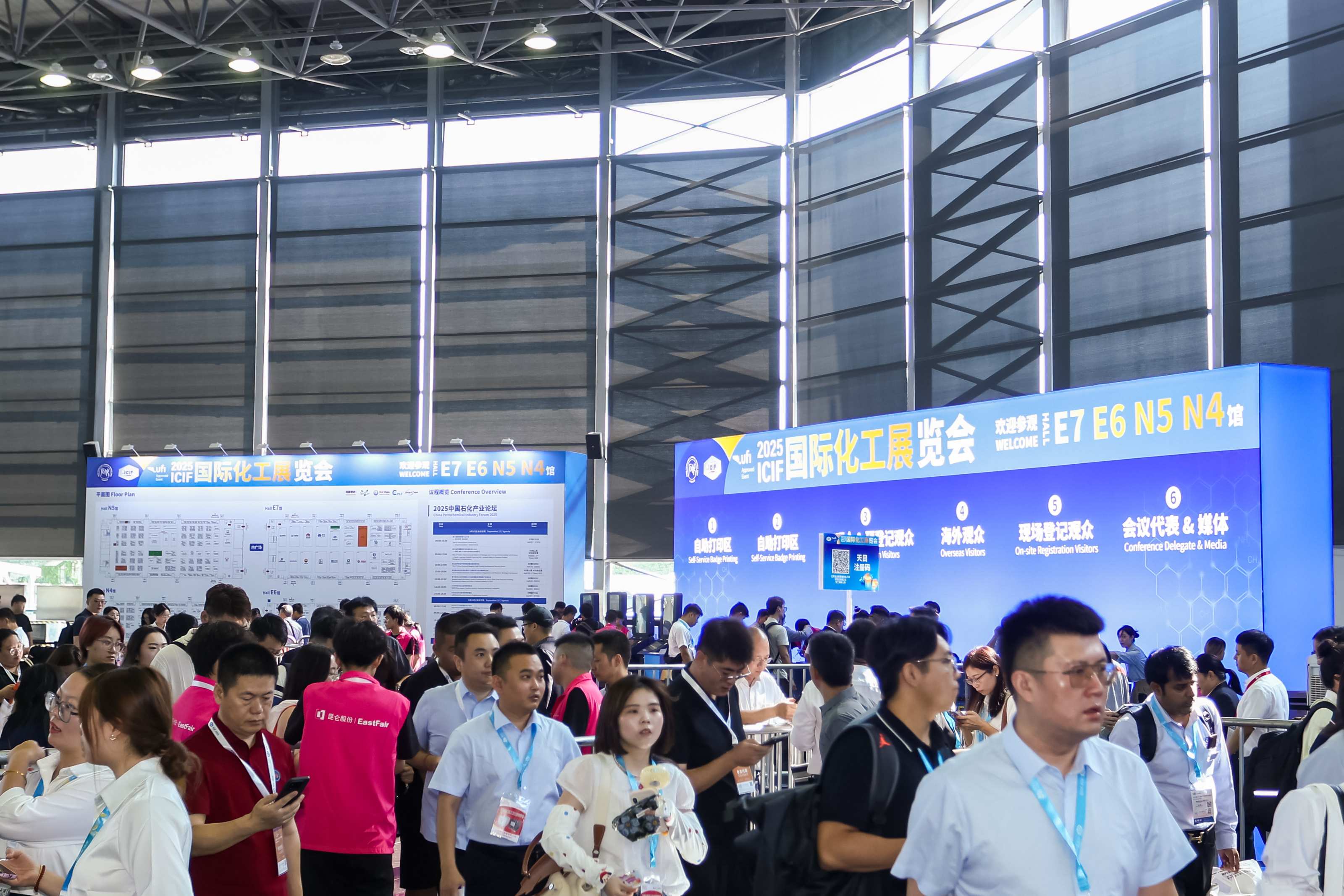
Every year, the chemical industry grapples with the delicate balance between progress and precaution. At ICIF, that tension takes center stage — not as a debate, but as a showcase of real solutions. From breakthroughs in green chemistry to smarter containment systems, this year’s Chemical Safety & Environmental Protection Expo offered more than just compliance checklists. It revealed a future where safety isn’t a burden, but a design principle. In this post, we’ll unpack the most striking innovations and the quiet shifts in thinking that could redefine how we handle risk, waste, and responsibility.
Rethinking Chemical Storage Beyond Compliance Checklists
Compliance checklists offer a comforting sense of order, but they can also mask the messy realities of chemical storage. A container that meets fire-code separation distances might still be placed under a dripping pipe, or a flammable cabinet might be so overloaded that its self-closing door no longer latches. These are the failures that no annual audit catches because the checklist asks only whether the cabinet exists, not whether it is used correctly.
Rethinking storage means looking past the regulatory minimums and asking what actually happens in the room day to day. For example, two acids stored apart on paper may share a spill containment tray that is too small to hold both if they break together. Or a ventilated enclosure may be blocked by boxes left by a shipping department. The physical environment changes constantly, and a static compliance sheet rarely keeps up with those shifts.
A better approach starts with treating storage as an operational system rather than a one-time project. That involves walking the space regularly with the people who use it, reviewing not just labels but also container condition, secondary containment capacity, and the logic of what sits next to what. It also means building a habit of questioning easy answers: if a shelf is rated for a certain weight, is the actual load distributed safely? If a corrosive is stored low, is there a risk of a leak reaching a floor drain? These are the kinds of questions that turn a checklist from a false comfort into a starting point for real risk reduction.
Live Sensor Networks That Catch Leaks Before They Spread
Most leaks don’t start as gushers. They begin as a slight drop in pressure, a faint hiss, or a moisture reading that climbs a fraction of a percent overnight. Live sensor networks spread across pipes, joints, and storage tanks catch those tiny shifts long before they become visible. The sensors talk to each other through low-power wireless links, comparing baselines and flagging anything that falls outside the expected range.
When one node detects a change, it doesn’t wait for a central system to poll it. It sends an alert up the chain, often with the exact location and estimated severity. Maintenance crews receive a map, not just an alarm. That means a leaking valve can be fixed while it’s still a slow drip, avoiding water damage, product loss, or environmental fines. The network keeps watching, learning normal patterns for each section and adjusting thresholds as seasons and usage shift.
Greener Solvents That Survive High-Temperature Workflows
Replacing legacy solvents like NMP and DMF in high-temperature reactions used to mean sacrificing thermal headroom. But a handful of bio-derived and biodegradable candidates now hold up past 200°C without breaking down or side-reacting. Gamma-valerolactone (GVL) and 2-methyltetrahydrofuran (2-MeTHF) are two examples that tolerate prolonged reflux while still dissolving common substrates and catalysts. Their higher flash points and lower vapor pressures also reduce exposure risks during scale-up.
What makes these solvents survive is not just boiling point but the absence of weak C-H bonds that oxidize easily and the presence of ring structures or ester groups that resist thermal degradation. Cyrene (dihydrolevoglucosenone) has drawn attention for exactly this reason. It remains stable under aggressive conditions that would char many so-called green alternatives, and it can be recovered by distillation after the reaction. That recovery step matters because true sustainability depends on reuse, not just a bio-sourced label.
Converting Hazardous Waste into Reusable Feedstocks
The sheer volume of hazardous waste generated by industrial processes has long forced a binary choice: bury it or burn it. Both paths carry steep environmental costs, from leachate contaminating groundwater to airborne heavy metals. Yet a quiet shift is underway as chemists and engineers reframe these discarded streams not as liabilities but as untapped ore bodies. Spent solvents, metal-laden sludges, and acidic byproducts often retain high concentrations of valuable elements—recovering them closes a loop that disposal never could.
Practical routes now operating at commercial scale include vacuum distillation for solvent recovery, selective precipitation for heavy metals, and pyrolysis of organic waste into syngas or liquid fuels. A copper smelter in northern Germany, for instance, feeds printed circuit board scrap directly into its anode furnaces, extracting not just copper but also gold, silver, and palladium—metals that would otherwise require fresh mining. Similarly, a specialty chemical plant in Ohio uses membrane electrolysis to split spent hydrochloric acid back into chlorine and hydrogen, reducing virgin feedstock purchases by nearly forty percent.
The economics are shifting in favor of recovery, but not uniformly. High-purity output demands rigorous sorting and pretreatment, and small-batch waste streams often lack the volume to justify dedicated infrastructure. What tips the balance is a combination of rising landfill taxes, extended producer responsibility laws, and long-term supply contracts that treat recovered materials as primary-grade inputs. The result is a growing roster of facilities that no longer think of hazardous waste as an endpoint—only as a staging ground for the next production cycle.
What Recent Spill Responses Reveal About Equipment Gaps
Across several recent coastal and inland releases, one recurring pattern has been the gap between rated skimmer performance and actual recovery once oil emulsifies or debris clogs intakes. Many response plans still assume calm-water, fresh-oil conditions, but real incidents often involve weathered product, cold temperatures, and mixed trash.
Booming strategy has shown similar strain. In faster currents or ice-affected waters, standard containment boom fails or submerges, leaving responders with no practical way to divert oil away from sensitive shorelines. Night operations are frequently suspended due to lack of infrared or thermal imaging on contracted aircraft, causing lost containment windows.
Storage and transfer bottlenecks also emerge once mechanical recovery begins, as temporary tanks fill faster than the available barge or truck fleet can offload them. This forces skimmers to idle or return to shore, reducing overall encounter rate. Dispersant stocks are sometimes adequate, but spray systems on older vessels can't calibrate dosage accurately in rough seas, leading to under-application or wasted product.
Creating Incident Reporting Systems Workers Actually Trust
Most reporting systems fail because workers see them as a one-way chute into a black hole. If you want people to actually use the tool, make the process feel less like filling out a form for HR and more like telling a coworker what happened. Use plain language, let people submit from their phone during a break, and don't require a ten-field incident taxonomy before the story is even told. The easier it is to get the first few sentences out, the more likely a real issue will surface instead of being buried under frustration with the interface.
Trust gets built when nothing bad happens after a report is filed. That means no sudden surprise meetings, no "who told you that?" conversations, and no quiet retaliation disguised as a schedule change. If your system allows anonymous reporting, actually protect that anonymity. If it doesn't, be clear about who can see what before someone types a word. A non-punitive policy only works when workers have seen it survive contact with a serious incident — otherwise it's just a poster on the wall.
Closing the loop matters more than most safety managers think. After someone reports a near miss or a hazard, tell them what you found and what you changed, even if the answer is "we looked and couldn't find it." A short reply within a few days keeps the system alive. Workers stop reporting when they suspect their input goes into a database that nobody reads. Show them the report led to a guard being installed or a procedure being rewritten, and the next report will come much faster.
FAQ
The event leaned heavily into circular economy principles and real-time hazard monitoring. Attendees repeatedly saw exhibits focused on reducing solvent waste, recovering usable byproducts, and shifting toward bio-based feedstocks. There was also a noticeable push for integrating process safety metrics directly into plant-wide dashboards rather than treating them as separate compliance checklists.
Several booths drew steady crowds around passive wireless sensors that detect fugitive emissions without needing frequent battery replacements. Another crowd favorite was a fire-suppression foam derived from modified plant proteins that outperforms traditional fluorinated foams in small-scale testing while avoiding persistent environmental contamination.
It brings together regulatory affairs specialists and technology providers in the same space, so companies can see how upcoming reporting requirements translate into concrete hardware and software choices. Many sessions focused on the practical side of extended producer responsibility and how to prepare audit-ready emission inventories without duplicating data entry across departments.
Process safety engineers, environmental compliance managers, and plant operations leads get the most direct value. However, procurement teams also found useful comparisons between traditional containment systems and newer modular designs that simplify retrofitting existing facilities. R&D staff benefit from seeing which lab-scale breakthroughs are actually reaching pilot-plant stage.
Yes, one specialty chemical manufacturer detailed how they cut benzene exposure during tank cleaning by switching to a closed-loop vapor recovery unit originally designed for offshore platforms. Another case involved a mid-sized paint producer that reduced hazardous waste generation by 36% through a solvent distillation partnership with a neighboring facility.
There was a clear move away from standalone safety apps toward integrated systems that combine maintenance logs, operator training records, and sensor data into one interface. One exhibit demonstrated augmented reality overlays that let field technicians see valve positions and isolation status before opening any line, which cuts down on human error during lockout procedures.
The expo scheduled dedicated matchmaking blocks where smaller firms could book short meetings with established equipment vendors and regional environmental consultants. There were also roundtable discussions limited to companies with under 200 employees, allowing candid exchanges about the cost barriers of adopting advanced leak detection or wastewater treatment upgrades.
A dedicated 'from lab to loading dock' showcase paired university research teams with plant managers looking for pilot testing partners. Instead of generic poster sessions, each research group had to present a scale-up feasibility chart showing estimated capital cost, footprint, and operator training needs. That practical framing helped several projects move from concept to signed trial agreements during the expo itself.
Conclusion
At this year's Chemical Safety & Environmental Protection Expo, the most striking shift wasn't a single product but a change in mindset: compliance checklists are no longer treated as the finish line. Exhibitors showcased storage systems that account for real-world variables like temperature swings, container degradation, and human error, rather than simply meeting regulatory minimums. The same proactive logic appeared in live sensor networks capable of detecting micro-leaks in piping and tank farms long before they become visible spills. These sensors pair with automated shutoffs and alerts, turning passive monitoring into an active defense layer. Meanwhile, greener solvent formulations drew attention for surviving high-temperature processes that previously demanded harsher, more hazardous chemicals, proving that sustainability and performance don't have to be mutually exclusive.
A second theme revolved around closing the loop on waste and closing gaps in emergency response. Several vendors presented modular systems that convert hazardous byproducts into reusable feedstocks on-site, reducing both disposal costs and transport risks. On the safety management side, post-spill analyses revealed that many failures trace back not to missing gear but to mismatched equipment—pumps, booms, and personal protective equipment that fail under the actual chemical or weather conditions encountered. Finally, the expo emphasized that technology alone won't build a safer culture. Incident reporting platforms are being redesigned with worker anonymity, simple mobile interfaces, and feedback loops that show reports are acted upon. Trust, not just tools, is becoming the foundation of chemical safety.
Contact Us
Contact Person: Shaozhen Zhou
Email: [email protected]
Tel/WhatsApp: 0086-18612117599
Website: https://en.icif.cn/