

Calcium Chloride 77% Powder Factory: Production Process and Quality Control
2026-10-20
Calcium chloride 77% powder may look the same from any supplier, but the production process and quality control behind it make all the difference in real-world performance. At Shouguang Golden Chemical, each batch moves through a tightly controlled manufacturing flow—from raw material verification to final moisture testing—so you get a free-flowing, consistent product instead of surprises. Here’s a closer look at how it’s made and why those QC steps matter.
Raw Limestone Intake and Quality Screening
Trucks arriving from the quarry deliver raw limestone in varying sizes and moisture levels. The intake team logs each load, records the source location, and conducts a quick visual check for obvious contaminants like clay pockets or organic material. A belt scale captures the weight while an automatic sampler collects a representative portion from the discharge stream.
The sampled material moves to the quality screening station where a vibrating screen separates particles above 80 mm for crushing and below 20 mm for direct mill feed. Mid-range fractions are held in a separate bin pending further analysis. Simultaneously, a rapid X-ray fluorescence unit measures calcium carbonate content, silica, and magnesium levels, flagging any load that falls outside the target range for cement or lime production.
Out-of-spec deliveries are diverted to a quarantine pad, where they can either be blended with higher-grade material or returned to the supplier. The screening data feeds into a daily intake report, allowing the plant to adjust crusher settings and raw mix proportions before the limestone reaches the preheater tower.
Inside the Reaction Vessel Balancing Acid and Base
The moment an acid and a base are combined inside a reaction vessel, the solution begins a quiet but rapid renegotiation of its ionic character. Hydronium ions donated by the acid collide with hydroxide ions released by the base, and each collision removes a pair from the active population. As water molecules form, the vessel's interior experiences a subtle shift in conductivity and temperature, with the extent of the change depending on the strength and concentration of the starting reagents.
Near the equivalence point, the pH curve steepens dramatically; a single drop of titrant can swing the reading by several units. The vessel's walls may feel warm or cool to the touch because neutralization is rarely thermoneutral. Strong acid–strong base reactions, for example, release roughly 57 kJ per mole of water produced, a value that remains surprisingly consistent across different strong pairs. This heat, if not controlled, can cause local boiling or splattering in small-scale work.
The choice of indicator or pH probe placement becomes critical at this stage. Stirring must be vigorous enough to prevent pockets of unreacted acid or base from hiding near the glass surface, yet gentle enough to avoid introducing air bubbles that distort electrode readings. A well-balanced neutralization leaves behind a salt solution whose final pH depends on the parent acid and base; weak partners produce a buffer-like environment that resists further pH changes even after the stoichiometric point has passed.
Concentration and Crystallization for the 77% Target
Hitting a 77% concentration target demands more than just removing water—it calls for precise control over nucleation and crystal growth. Operators often find that subtle shifts in cooling rate or agitation pattern can push the system away from the desired saturation point, leaving either a pasty slurry or oversized crystals that trap impurities. The real work happens at the interface between solubility curves and equipment geometry, where small adjustments in residence time or seed loading make an outsized difference in final crystal size distribution.
During crystallization for this target, evaporation and cooling are usually paired to keep supersaturation within a narrow band. Too aggressive a vacuum pull can cause surface boiling that disrupts crystal habit, while a gentle ramp risks falling behind the heat transfer capacity of the vessel. Many experienced process engineers lean on inline microscopy or focused beam reflectance measurement to spot the first signs of unwanted fines, then adjust anti-solvent addition or jacket temperature before the batch drifts off specification.
One practical approach is to define a crystallization trajectory based on the metastable zone width rather than a fixed time–temperature profile. By tracking the actual solute concentration against the 77% target, it becomes possible to steer the batch through primary nucleation and into controlled growth without over-relying on seed crystal count. The outcome is not just hitting the number on paper, but producing a slurry with consistent viscosity, filterability, and downstream handling behavior.
Drying and Milling to Preserve Flowability
Drying and milling are critical steps in handling materials that tend to clump or lose their free-flowing nature. Moisture trapped between particles creates liquid bridges that hold grains together, so a controlled drying stage removes this surface water without over-drying the core. The goal is to reach a moisture level where particles slide past each other easily, but not so low that static charge builds up and makes dust stick to equipment.
Once dried, milling breaks down agglomerates and smooths particle surfaces. A well-tuned mill will reduce oversized lumps while avoiding the creation of excessive fines, since fine particles can fill the gaps between larger ones and actually reduce flow. The milling screen size, rotor speed, and feed rate each influence the final particle size distribution, and small adjustments here often make the difference between a powder that pours like sand and one that bridges in a hopper.
In practice, combining a gentle drying cycle with a low-shear milling pass preserves the natural flowability of a material. Operators often rotate batches through a dryer-mill sequence rather than trying to do everything at once, because aggressive drying can case-harden particles and make them harder to mill later. Checking flowability after each stage—by simply timing how long a fixed volume takes to empty from a funnel—gives a practical read on whether the drying and milling settings are working together.
In-Process Sampling pH Density and Visual Checks
Routine grab samples are pulled from the mixing vessel at scheduled intervals, usually after each major addition or every 30 minutes during extended holds. The pH probe is checked against a two-point buffer calibration at the start of the shift, and readings are logged only when the temperature compensation has stabilised. If the value drifts outside the target band by more than 0.2 units, the batch is held and a retest is performed before any adjustment is made.
Density is measured with a digital densitometer, and the sample is always degassed first because entrapped air can skew the result enough to trigger a false out-of-spec. Visual checks focus on clarity, colour uniformity, and the presence of any floating particles or phase separation. These observations are recorded against the batch record without relying on subjective terms like normal or acceptable. Instead, the operator notes what is actually seen, such as slight haze, no visible fibres, no oil droplets at the meniscus.
When a reading falls outside the expected range, the shift lead repeats the test on a fresh sample before deciding whether to quarantine the lot. Photographs of the sample vial are taken under fixed lighting and attached to the electronic batch record so that later review does not depend on memory. Trending these in-process results has proven more useful than a single pass/fail limit because it highlights gradual drift in raw material lots or subtle fouling of the pH electrode before it reaches the point of batch rejection.
Final Product Verification Before Packaging and Shipment
Every unit gets pulled from the line for a last round of checks that goes beyond the routine QC steps. We measure critical dimensions against the approved drawing, run the product through its full functional cycle, and inspect surfaces under bright light for scratches, burrs, or finish inconsistencies. Anything that doesn't meet the reference sample is set aside immediately.
After the physical inspection, we match the unit against its packing list and confirm that all accessories, manuals, and labels are present and correctly placed. Serial numbers and batch codes are scanned to make sure they match the shipping documents. This step catches mismatches before the box is sealed, so the customer receives exactly what was ordered.
Only when the inspection record is signed off by the responsible technician does the unit move to the packaging area. The sign-off includes the date, time, and inspector's initials, creating a traceable link between the final product and the shipment batch. If a unit fails any part of this verification, it goes back to rework instead of being packed.
FAQ
Most factories start with limestone or food-grade calcium carbonate and react it with hydrochloric acid. The resulting calcium chloride solution is then filtered, purified, and concentrated. Some plants also use byproduct brines from soda ash production, but those usually require extra purification steps to remove magnesium and sulfate ions.
After the reaction, the dilute solution passes through multi-effect evaporators that strip away water until the concentration reaches roughly 70-75%. The concentrated liquid is then sprayed into a drying tower where hot air removes the remaining moisture. Operators continuously monitor the feed rate and outlet temperature, making small adjustments to keep the final powder within the 76-78% assay window.
Every batch goes through a full assay using EDTA titration to confirm the calcium chloride content. Moisture is measured with a halogen moisture analyzer, and particle size distribution is checked by sieve analysis. The lab also runs a pH test on a 1% solution and screens for heavy metals via atomic absorption. If any parameter falls outside the internal limit, the batch is quarantined and reworked.
Calcium chloride is highly hygroscopic, so even a small moisture increase can trigger clumping and reduce the effective strength. Keeping moisture below 0.5% helps the powder stay free-flowing during storage and blending. A low moisture level also prevents the product from degrading packaging materials and reduces dust formation during handling.
The powder is cooled to below 40°C before bagging, and a small amount of anti-caking agent such as calcium stearate may be added. Bags are lined with moisture-barrier film and sealed immediately. Warehouses use dehumidifiers to keep relative humidity under 50%, and pallets are wrapped in stretch film to limit air contact during transit.
After the initial reaction, the solution is treated with calcium hydroxide to precipitate magnesium and iron, which are then removed by filtration. Activated carbon polishing removes organic residues. For food-grade material, the final brine passes through a chelating resin column to strip trace metals. Each production lot is tested against strict limits for chloride, sulfate, and insoluble matter.
Workers wear acid-resistant gloves, face shields, and protective aprons when handling hydrochloric acid. The reaction vessels are enclosed with scrubbers to capture acid mist. Calcium chloride dust is controlled by local exhaust ventilation at transfer points. Emergency showers and eyewash stations are located within 10 meters of every processing area, and regular drills are conducted for chemical spills.
Conclusion
Raw limestone arrives by truck and is sampled before unloading. Each load is checked for calcium carbonate content, silica, and heavy metals; anything above the cutoff is rejected on the spot. Accepted stone moves to a jaw crusher and then to the reaction vessel, where it meets a controlled feed of hydrochloric acid. Operators watch the pH curve on a live display, trimming the acid or base flow in small steps rather than letting the neutralization run away. Temperature stays between 70 and 80 degrees Celsius, and the vessel's agitation keeps solids from settling. Once the reaction stabilizes, the resulting calcium chloride solution is pumped through a series of vacuum evaporators. Here the water is pulled off until the concentration approaches the 77 percent target. Seeding with fine crystals helps control the crystallization step, and the slurry is cooled in stages so the crystals grow to a uniform size. Mother liquor is recycled back into the evaporator feed to cut waste and lift overall yield.
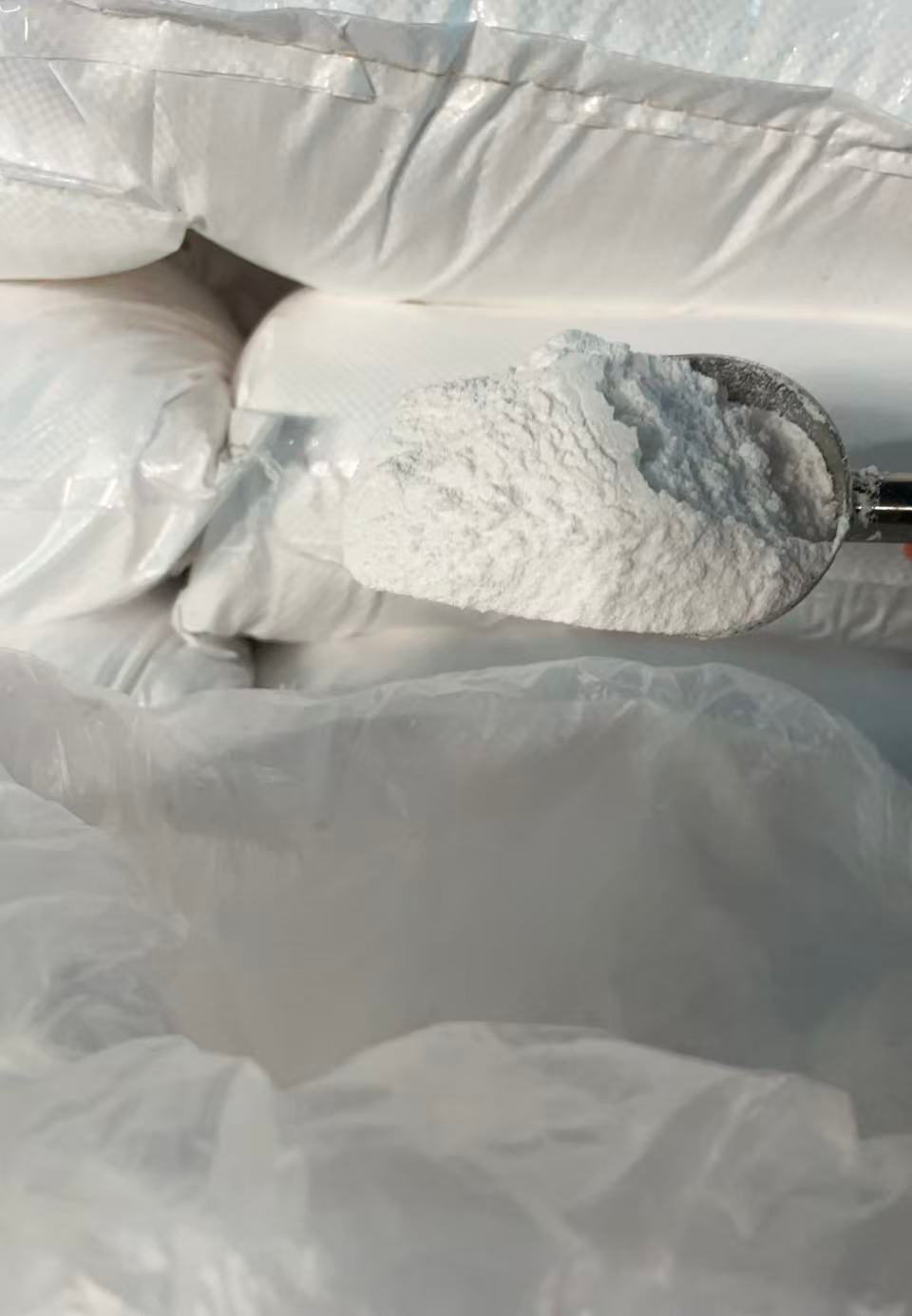
The wet crystal mass goes next to a fluid bed dryer. Air temperature is kept low enough to avoid melting or caking, and the moisture content drops below one percent. A mill with an air classifier then breaks any oversized particles and returns fines to the dryer, which preserves flowability and keeps dust from becoming a problem during packaging. On the floor, operators pull samples every two hours. They measure pH with a benchtop meter, check density against a reference table, and inspect the powder's color and texture under a strong light. Any drift outside the control band triggers a line adjustment before the batch moves forward. Before bags are filled, the final lot goes through a full verification panel: assay for calcium chloride content, moisture, insoluble matter, and particle size distribution. A retain sample is sealed and stored with the batch number. Only after the lab signs off does the powder enter moisture-barrier bags, get palletized, and ship to customers.
Contact Us
Contact Person: Tom Cui
Email: [email protected]
Tel/WhatsApp: +8618663670626
Website: https://www.jinjigoldenchem.com