

Bulk Power Tool Switch Exporter Guide for Reliable Sourcing
2026-10-31
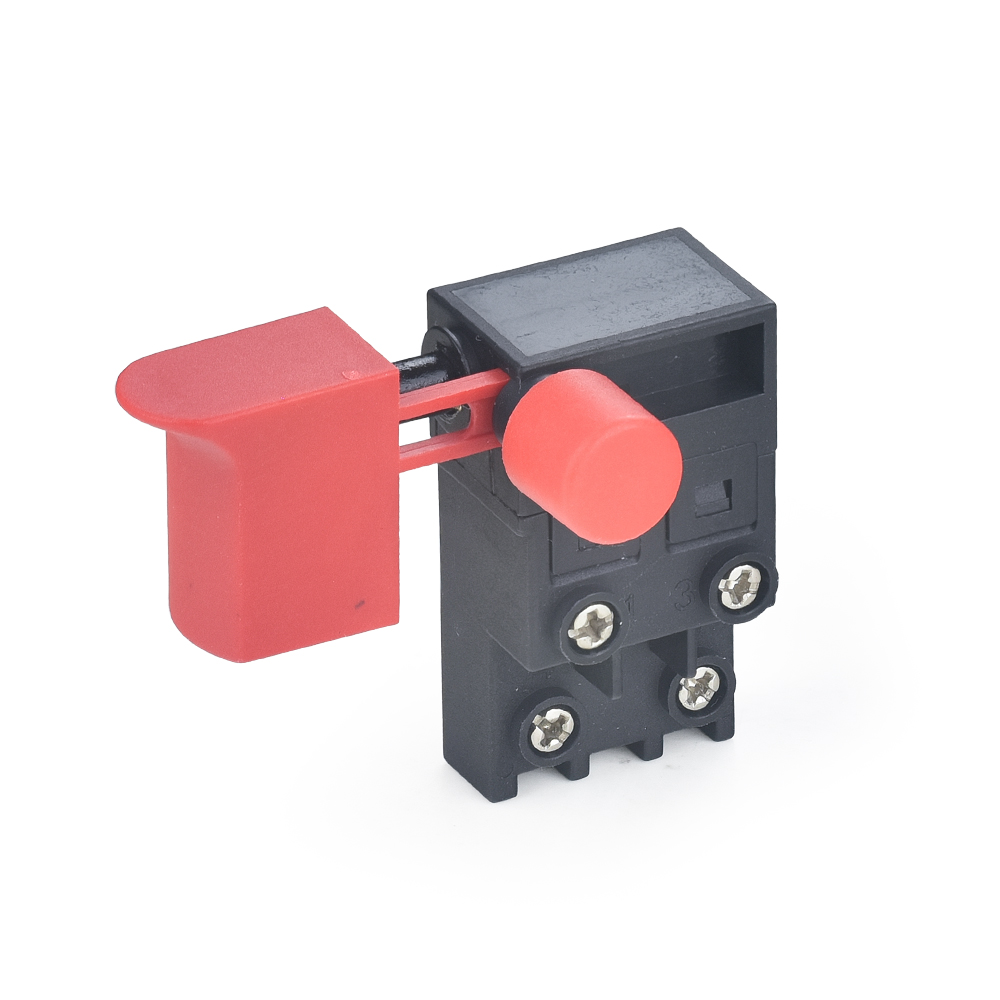
Many buyers treat bulk power tool switches as a commodity—until field returns start climbing and every failed trigger traces back to a contact material decision nobody thought to question. Reliable sourcing is less about finding the lowest unit price and more about knowing which tolerances, cycle ratings, and compliance documents separate durable switches from time bombs. That is where KEJIAN ELECTRONICS has focused its engineering, and this guide walks you through the exact checks that separate a stable supply chain from a recurring headache.
Matching Bulk Power Tool Switch Ratings to Real-World Loads Before Ordering
Ordering a large batch of switches without verifying their electrical ratings against the actual tools they will control is a fast way to burn through both inventory and reputation. A switch stamped for 10 amps at 125 volts might look fine on paper, but a saw that surges to 14 amps during startup will fry those contacts within weeks. Always pull the locked-rotor and inrush current figures from the motor nameplate, not just the running watts, and add a safety margin of at least 20 percent above that peak. Many buyers skip this step because it feels like engineering overhead, yet it costs far less than a recall or a customer return.
Real-world loads are rarely as clean as laboratory specs suggest. Dust, humidity, and repeated cycling under heavy load degrade switch performance faster than bench tests predict. If your tools are used on construction sites or in high-vibration environments, look for switches with double-throw contacts and higher AC ratings than the bare minimum. Also check the inrush capacity separately from the continuous rating. A switch rated for 15 amps resistive may only handle 8 amps inductive, which is a silent killer for motor-driven equipment.
Before committing to a bulk order, test a small sample set against the exact tools and worst-case conditions you expect in the field. Run a repetitive start-stop cycle for at least a hundred operations while monitoring contact temperature and voltage drop. This practical check reveals mismatches that datasheets hide, such as contact bounce or weak spring tension under thermal stress. Only after that validation should you place the full purchase order, and never assume that a higher-priced switch is automatically better—match the load curve, not the marketing sheet.
Factory Audits That Reveal What Sample Batches Hide
A sample batch can be groomed within an inch of its life, but the line that actually fills your order tells a different story. Walking a factory floor mid-production reveals things that no pre-shipment sample ever will: cheaper raw material stacked behind the certified lot, machine settings pushed past the range that produced your approved swatch, and inspection logs filled in only minutes before the gate opens.
Real audits also expose subcontracting that sample batches conveniently hide. When orders spike, a factory may quietly shift production to a lower-cost workshop while keeping the original sample line untouched. On the ground, you notice mismatched tooling, unfamiliar operator badges, or a sudden drop in stitch density and weld strength that never showed up in the hand-picked pieces sent to your office.
The most revealing moments aren't found in paperwork. They're in the sudden silence when you ask to see a specific workstation, the tarp hastily thrown over a corner, or the supervisor who insists on walking you along a fixed path. Those cues point to the compromises that sample batches are designed to hide, and they often matter more than any certificate on the wall.
Pricing Structures for Bulk Switch Orders That Don't Crumble at 10,000 Units
When a buyer says ten thousand units, the first instinct is to slice the per-unit price until the margin looks like a rounding error. That approach works fine at five hundred or even two thousand, but at scale it quietly erodes the foundation. A bulk order of ten thousand switches isn't just a bigger carton; it's a different negotiating animal. Instead of a single discount line, smart vendors build pricing around tiered breakpoints tied to actual production runs, not just volume promises. For example, a quote might hold steady from 5,000 to 9,999 units, then drop only when the order crosses into a full container load or a dedicated line setup. This keeps the numbers honest and prevents the dreaded “crater at ten thousand” where the price collapses but the cost of rework, repacking, and logistics quietly eats the profit.
Another layer that gets overlooked is the non-unit cost structure. At 10,000 switches, packaging shifts from retail blister packs to bulk trays or reels, and that changes labor, materials, and even warehouse footprint. A pricing structure that doesn't account for this shift will look great on the spreadsheet and bleed cash on the dock. Smart quotes separate the switch price from the handling price, or they bake in a packaging allowance that adjusts with the order format. For instance, a buyer ordering 10,000 loose switches in static-shield bags should not pay the same per-unit rate as someone getting 10,000 switches in custom-labeled boxes. By making the structure modular—base switch cost, packaging tier, and freight assumption—the quote stays stable when the buyer changes one variable at the last minute.
Finally, durability in bulk pricing comes from setting a floor that protects against scope creep. A common failure is quoting 10,000 units with a 60-day lead time, then getting hit with a request for 10,000 units split across five drop shipments, each with different labeling. If the original structure didn't include an administrative or split-shipment fee, the margin vanishes. A resilient pricing model includes a small but visible line for order management, or it specifies that the quoted rate applies to a single release. When buyers push back, you can waive the fee as a concession rather than silently absorbing the cost. That way the headline number stays competitive, and the structure doesn't collapse when the order gets complicated at the ten-thousand-unit mark.
Certification Traps Exporters Keep Falling Into
Exporters often assume that a product certified in one market automatically meets the requirements of another, but this is rarely the case. Certification bodies operate under different national or regional standards, and even identical-sounding marks can carry distinct technical obligations. Without verifying reciprocity agreements or the specific scope of an existing certificate, businesses risk shipping goods that customs will reject or quarantine on arrival.
Another frequent mistake is treating certification as a one-time event instead of an ongoing compliance commitment. Standards evolve, and so do labeling rules, restricted substance lists, and documentation formats. Exporters who fail to track renewal deadlines or regulatory updates can find their previously valid certificates suspended, leading to costly delays and contract penalties.
Finally, many exporters overlook the importance of working with accredited local partners in the destination market. A certificate issued in the home country may not be recognized if the issuing body lacks the required accreditation or if the product has been modified after testing. Engaging a qualified importer or a compliance specialist early in the process helps avoid the trap of investing in certifications that hold no weight where it matters most.
Packaging Switches So They Survive the Ocean, Not Just the Warehouse
Most warehouse packaging assumes a controlled world—dry air, stable temperatures, and gentle handling. Salt spray and condensation change that equation entirely. A switch that sits untouched on a shelf for months can fail within days at sea if moisture creeps into the terminal block or wicks along the cable jacket. The fix often starts with vapor-phase corrosion inhibitors sealed inside the bag, not just desiccant packets tossed in as an afterthought.
Vibration is the other silent killer. Cardboard dividers that work fine for truck freight turn into abrasive surfaces when a container rocks for three weeks. Switch bodies rub against each other, wearing through labels and protective coatings. Closed-cell foam cradles, cut to the actual switch profile rather than a generic grid, stop that micro-motion before it starts. It costs more per unit, but it is cheaper than a rejected shipment at the destination port.
Then there is the stacking problem. Ocean containers get loaded high, and the bottom cartons can take steady compression for weeks. If the switch actuator protrudes even slightly beyond the carton face, that pressure transfers directly into the mechanism. A simple internal brace or a recessed actuator position in the packaging design keeps the load on the carton walls, not on the switch itself.
Building a Supplier Scorecard That Keeps Switch Quality From Drifting
Supplier scorecards often fail because they track too many things that don't matter or too few that do. For switch components, the drift usually starts small—slightly looser detents, a few more microns of contact wear, a change in actuation force that no one notices until field returns spike. A useful scorecard starts with the three to five characteristics that actually predict long-term performance in your application, not a generic list from a quality manual. If you build power tools, the breakaway torque of a toggle matters more than its surface finish. If you build medical devices, contact resistance stability under repeated sterilization may be the only number worth watching. The scorecard should force your supplier to measure those things the same way you do, on the same fixtures, at the same intervals.
The second part is making the scorecard sensitive to trends, not just thresholds. A supplier can stay within spec while slowly drifting from nominal, and that drift is exactly what turns a good switch into a warranty problem eighteen months later. Instead of scoring pass/fail against limits, track the gap between the supplier's process average and your target value. Use a rolling Cpk or a simple run chart that flags any six consecutive points on one side of the mean. This catches the operator who tweaks a mold temperature to speed up cycle time, or the plating line that quietly thins its gold flash by half a micron. Neither violates the print, but both change how the switch feels and how long it lasts.
Finally, tie the scorecard to something the supplier actually cares about. If a low score only generates a corrective action request that nobody reads, the drift will continue. Share the scorecard monthly with the supplier's plant manager and your own engineering team. When a metric slips, walk the line together and look at the setup sheets, not just the final inspection data. Make it clear that top scores earn more volume or longer contracts, and bottom scores mean a formal improvement plan with a hard deadline. Scorecards work when they change behavior on the factory floor, not when they sit in a supplier portal.
FAQ
Look beyond the website and ask for recent third-party factory audit reports along with a verified customer list. Focus on whether they have stable cooperation with European, American, or Japanese clients and confirm if they are an actual manufacturer rather than a trading company.
UL, VDE, ENEC, and CQC are the baseline, but the real issue is whether the certification covers the exact model and current rating you need. Many exporters hold certificates for only one series, so request a copy matching your specific product and cross-check it on the issuing body's official database.
Do not rely on samples alone. Ask for a sealed approval sample before mass production and specify key parameters in the contract: contact material, silver layer thickness, actuation force, mechanical life, and electrical life. Arrange third-party inspections at 30% and 80% completion rather than only at final shipment.
Standard switches usually start at 1,000 to 3,000 pieces, but custom terminal changes, contact modifications, or housing color changes can raise both tooling costs and MOQ significantly. Some factories claim 500 pieces, but that often means assembled from stock parts with worse lead time and consistency. Test the standard version first.
A common structure for new buyers is 30% deposit and 70% before shipment. For a first order, consider using a letter of credit or reducing the deposit to 20% with payment tied to a third-party inspection report. Be cautious of factories demanding 100% T/T in advance, as that often signals cash flow problems.
Standard items usually take 20 to 35 days for production, but custom designs or new molds can take 45 to 60 days. Add sea freight time on top. Make sure the exporter states clearly in the contract when lead time begins after mold confirmation to avoid disputes.
Several red flags include a quote far below competitors, refusal to provide a specific factory address, a certificate holder name that differs from the contract entity, frequent changes of sales contact, and noticeable differences between sample and bulk product feel. If two or more of these appear, consider switching suppliers.
Write into the contract a maximum defect rate and compensation method, such as replacement or refund for defects above 2%. Require the supplier to keep production samples of the same batch for at least one year for potential third-party testing. A reliable factory will provide a failure analysis report instead of shifting blame.
Conclusion
Real sourcing starts before the first quote request: a power tool switch rated for 15A at 120V may look fine on paper but melt under a stall current spike from a circular saw. Exporters need load-bank testing with actual tool profiles, not just printed specs. After samples pass, the harder work is verifying the factory you'll actually buy from. A clean audit of the sample line means little when mass production runs on a separate, older floor. Unannounced audits at night shift or during a rush order reveal what batch sampling hides. Then money talks. Bulk pricing that looks attractive at 5,000 units often breaks at 10,000 because of tiered tooling fees, hidden mold amortization, or copper price surcharges. Insist on formulas tied to LME copper and component indexes, with penalties for requalification delays.
Certification is the quiet killer. A UL file number can belong to a different factory or expire after a design tweak. Confirm every marking, plastic grade, and contact alloy matches the certified sample before boxes leave. Packaging gets less attention but destroys more switches than bad solder. Salt fog, condensation, and forklift drops demand VCI bags, desiccant, and double-wall cartons with burst strength tested for 12-meter container stacking. Finally, build a supplier scorecard that checks contact resistance drift, plating thickness, and actuator force every quarter—not just incoming inspection. If a factory changes sub-suppliers for springs or phosphor bronze without telling you, your scorecard should catch that drift before your customers do.
Contact Us
Contact Person: Anna lin
Email: [email protected]
Tel/WhatsApp: +86 13567768885
Website: https://www.kjele.com/