

Best Switchgear Solutions for Reliable Power Distribution
2026-08-28
Keeping power flowing reliably is not about buying the most expensive switchgear—it’s about matching the right solution to your actual load, environment, and safety needs. At Deepwill, we’ve seen too many facilities settle for generic hardware that fails under pressure. This post breaks down what truly makes switchgear dependable, from arc-resistant designs to smart monitoring, so you can build a distribution system that earns your trust every single day.
Why Legacy Switchgear Can't Keep Pace with Modern Load Demands
Legacy switchgear was designed around predictable, mostly linear loads—motors, lighting, resistive heating. Modern facilities now pulse with harmonics from variable frequency drives, data centers full of switch-mode power supplies, and EV chargers that slam current on and off. That harmonic distortion turns into extra heat in busbars, breakers, and cable terminations that were never rated for continuous operation at those frequencies. The result isn't a dramatic explosion; it's cumulative thermal fatigue that quietly degrades insulation and accelerates contact wear long before any scheduled maintenance.
Short-circuit ratings are another quiet mismatch. Older gear often carries an interrupting rating that matched the grid fault levels of its day. But as more distributed generation, battery storage, and even large UPS systems feed into the same switchboard, available fault current climbs. A legacy breaker may still trip, but it might not clear the fault safely because the arc quenching mechanism wasn't designed for the faster current rise or higher let-through energy. That's a risk hidden in plain sight—until a fault actually happens.
And then there's the simple absence of communication. Modern load management systems expect real-time status, metering, and remote operation. Legacy switchgear typically has none of that. Operators are left guessing whether a breaker is loaded to 80% or 110% of its thermal capacity, and they can't shed non-critical loads automatically when demand spikes. Retrofitting sensors and relays onto decades-old mechanical designs often costs more than a phased replacement, which is why many facilities limp along with blind spots that modern loads exploit.
Condition-Based Monitoring: The End of Routine Inspections?
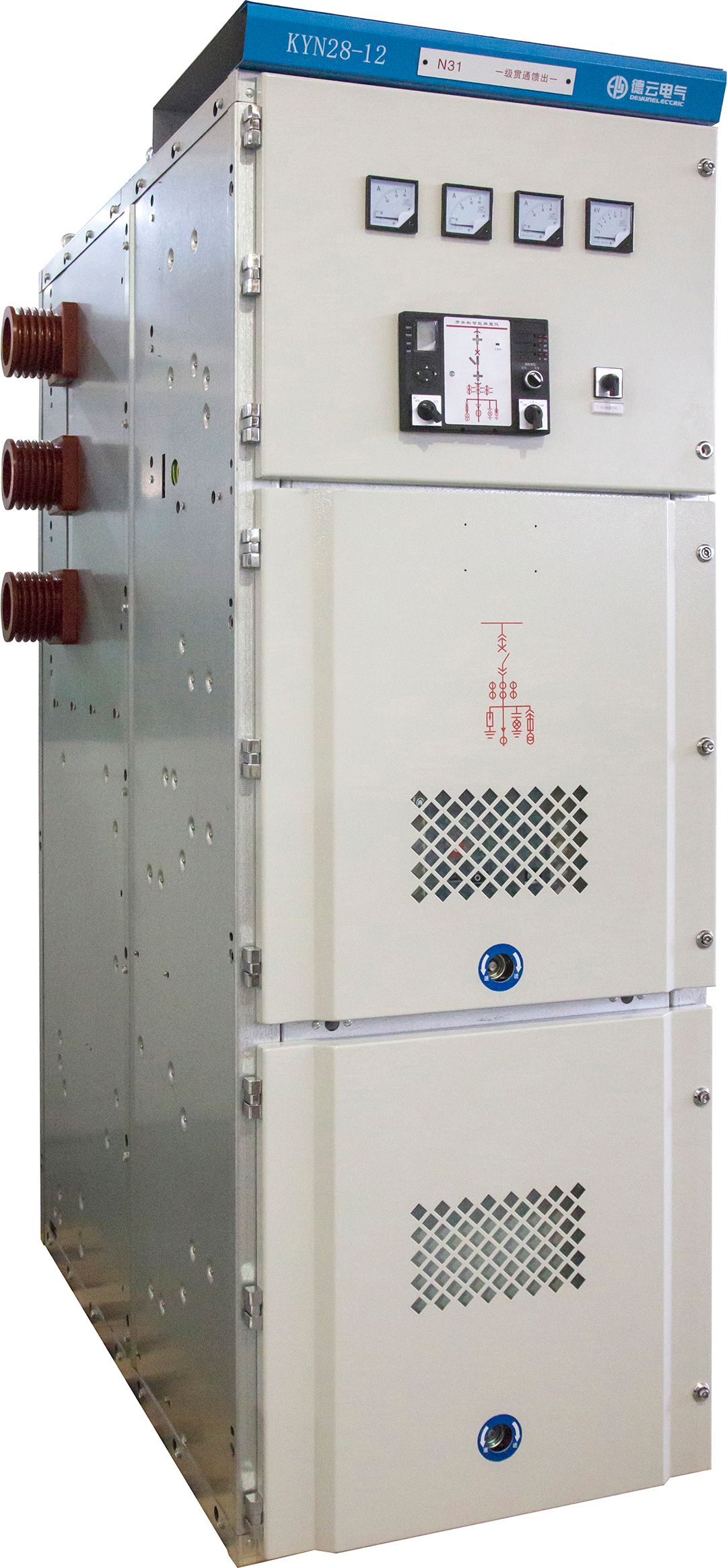
For decades, plant managers treated the calendar as their primary maintenance trigger. Pumps got rebuilt every six months, bearings replaced after so many running hours, wiring checked on a fixed rotation. It was simple, but it ignored a basic fact: equipment ages according to how hard it works, not how long it has existed. Two identical motors can live very different lives depending on load, temperature, vibration, and a dozen other variables. Condition-based monitoring flips the old logic by asking a different question—not "how old is this part?" but "what is this part telling us right now?"
The shift matters because routine inspections often create their own problems. Opening enclosures, disturbing seals, and handling components can introduce faults that were never there. Vibration sensors, thermal cameras, oil analysis, and current signature monitoring now deliver a continuous stream of evidence without anyone touching the machine. When a bearing starts to degrade, the change shows up in the frequency spectrum long before it becomes audible or visible. That allows replacement during a planned window rather than after a failure. In many cases, the routine tear-down inspection becomes unnecessary—replaced by targeted intervention based on actual condition, not elapsed time.
Designing Switchgear for Harsh Climates Without Extra Cost
Most switchgear manufacturers treat corrosion resistance as a premium feature, but practical design choices can achieve the same result without inflating the price tag. The secret lies in material selection and ventilation strategy rather than expensive coatings. For coastal or high-humidity environments, opting for powder-coated galvanized steel enclosures instead of standard painted carbon steel often costs only marginally more, yet doubles the service life. Pairing this with gasketed door seals and pressure-equalizing vents keeps salt spray and condensation out while avoiding the need for costly climate-control systems.
Thermal management is another area where over-engineering drives up costs. Instead of specifying oversized air conditioners or heaters, designers can leverage natural convection and strategic component placement. Elevating busbars and placing heat-generating breakers at the top of the enclosure allows hot air to escape through filtered roof vents, while bottom-mounted cable entry points draw in cooler air. This passive approach works well in arid desert climates with extreme temperature swings, reducing both initial investment and long-term energy consumption.
Field-proven examples show that simple modifications, such as using stainless steel hinges and latches, applying conformal coating to control boards, and routing wiring away from enclosure walls, can dramatically extend equipment life in corrosive or dusty settings. These techniques require no exotic materials and can be implemented during standard assembly, making harsh-climate resilience accessible even for budget-constrained projects.
Arc-Resistant Designs: Rethinking Safety in Power Distribution
For decades, safety around switchgear and motor control centers leaned heavily on personal protective equipment and strict procedural discipline. Arc flashes, though, release energy faster than any human can react. The shift toward arc-resistant designs acknowledges that reality: instead of asking workers to survive an event, the equipment itself must contain, redirect, and shorten it. This isn't a marginal upgrade; it changes where the primary line of defense sits.
A properly engineered arc-resistant cabinet does more than just have a thicker door. Internal compartmentalization limits arc propagation between bus sections, cable areas, and breaker cells. Pressure relief vents channel hot gases and plasma up and away from the normal operating aisle, while reinforced panels stay closed under fault pressure. Fast-acting relays and current-limiting devices can cut the arc duration to a few cycles, which dramatically reduces the incident energy. The difference between a standard enclosure and an arc-resistant one is most visible in the first 100 milliseconds—that's where the damage, and the injuries, happen.
Yet these designs are not a set-and-forget solution. Door gaskets, vent flaps, and pressure relief paths need inspection after any fault or even after routine maintenance. If a panel is left open or a vent is blocked, the containment promise breaks. Training still matters, because arc-resistant gear protects workers from equipment failure, not from complacency. Used correctly, it reframes the risk equation: you're not relying on a suit and a prayer, but on hardware that was built to fail in a controlled direction.
A Practical Roadmap for Integrating Distributed Energy Resources
Starting with an honest audit of the existing grid edge often reveals more about DER readiness than any vendor whitepaper. Map out where voltage fluctuations already occur, which feeders are nearing capacity, and which legacy SCADA protocols still hold the system together. This baseline isn't just a data exercise—it forces utilities to confront the gap between their current network model and the real-time behavior of inverters, batteries, and smart loads. Without this grounding, any integration plan becomes a collection of disconnected pilots rather than a coherent roadmap.
The next layer should focus on sequencing, not simultaneous deployment. Utilities that succeed typically start with a narrow, high-value cluster—say, a single substation with predictable solar export patterns—and use it to test both technical and contractual assumptions. This means creating a cross-functional team that includes protection engineers, regulatory affairs staff, and customer service leads from day one, not as an afterthought. Their job is to turn each phase into a decision gate: if the agreed telemetry standard doesn't work in the field, the roadmap pauses and adjusts instead of pushing forward on schedule.
Finally, treat interoperability as a design constraint rather than a negotiation point. A practical roadmap must specify a minimal data exchange profile—such as IEEE 2030.5 or OpenADR—and require every new device or platform to demonstrate compliance in a live environment before scaling. This includes defining who owns the data, how it is timestamped, and what happens when a vendor updates firmware. Rolling deployments that expose integration failures early are far cheaper than trying to retrofit standards after thousands of DERs are already connected.
The 20-Year Cost of Ownership You're Probably Ignoring
Most people fixate on the sticker price and call it a day. But spread any major purchase over two decades and the real expense often hides in the least glamorous places: replacement filters, annual servicing, software subscriptions, and the slow creep of energy inefficiency. A water heater that saves $300 upfront can easily burn through an extra $2,500 in electricity and repair calls by year twelve.
Then there's the cost of your own time. Waiting for a technician, dealing with downtime, hunting down parts that have been discontinued—these hours add up quietly. Factor in inflation on those recurring costs and you're looking at a number that rarely matches the glossy spec sheet. The 20-year view rewards boring reliability over flashy features every single time.
If you're not running the math on what it takes to keep something running past the warranty window, you're not really budgeting. You're just guessing.
FAQ
Thermal performance and mechanical endurance are the biggest factors. Look for designs with verified temperature rise limits, robust busbar connections, and components that have been tested beyond nominal ratings. If the gear can handle repeated short-circuit events without degradation, it usually survives real-world stress.
Space and environment usually drive that choice. Air-insulated gear is simpler to maintain and often cheaper upfront, but it takes up more room. Gas-insulated gear fits into tight spaces and resists harsh conditions better, though you need to plan for gas handling and monitoring. Match the design to the site constraints rather than following a generic preference.
Regular infrared thermography catches loose connections before they cause hot spots. Keeping enclosures clean and dry prevents tracking and corrosion. Exercising circuit breakers periodically keeps mechanical parts from sticking. And recording trip operations helps you spot unusual activity early instead of waiting for a failure.
It helps, but only if it is properly coordinated and monitored. Intelligent relays with zone-selective interlocking can isolate faults faster, limiting disruption to a small section. Remote monitoring lets you spot insulation breakdown or contact wear before it forces a shutdown. So yes, the right switchgear setup directly supports uptime goals.
Arc flash events can injure personnel and destroy equipment in seconds. Designs with arc-resistant enclosures, pressure relief ducts, and fast-acting arc detection systems reduce the energy released during a fault. That makes the gear safer to operate and less likely to turn a minor incident into a major outage.
It turns switchgear from a passive component into an early warning system. Temperature sensors on busbars and cable connections, partial discharge monitors, and breaker timing analysis all feed data to a central dashboard. Maintenance teams can act on trends instead of reacting to failures, which avoids many emergency repairs.
Yes, especially designs with higher switching frequency ratings and built-in grid synchronization features. Renewable sources often cause rapid load fluctuations, so switchgear must handle frequent operations without excessive wear. Compact gas-insulated units also work well in collection substations where space is limited.
Ask for references from sites with similar load profiles, not just a spec sheet. Request details on spare parts availability and local service response times. Also check if the supplier offers training for your maintenance crew. A vendor that supports the equipment after installation matters as much as the hardware itself.
Conclusion
The mismatch between legacy switchgear and today's load profiles is getting harder to ignore. Industrial plants and utilities built their systems around predictable, steady-state loads, but modern grids now swing with rooftop solar, battery storage, and EV charging spikes. That old gear was never meant to handle rapid thermal cycling or the harmonic content that comes with power electronics. Condition-based monitoring offers a way out of the old routine-inspection trap: embedded sensors track contact wear, busbar temperature, and partial discharge continuously, so crews can skip the guesswork and fix problems before they become outages. Harsh climates don't have to mean expensive custom enclosures either. Choosing the right coating systems, sealed bus connections, and passive ventilation routes often does more for longevity than adding heavy-duty cabinets. And arc-resistant designs have shifted the conversation from trying to prevent every possible fault to containing the energy when one does occur, which changes clearance requirements and room layouts in surprising ways.
Integrating distributed energy resources is rarely as simple as bolting on a few new breakers. Bidirectional fault currents and changing protection coordination demand a real roadmap: start with a short-circuit and load-flow study, then pick switchgear with adaptive relays and communication-ready trip units that can handle dynamic grid conditions. The financial picture matters just as much. A 20-year cost-of-ownership view shows that cheaper gear often costs far more once you add maintenance labor, unplanned downtime, and the inability to retrofit for new loads. The best switchgear solutions aren't about a single feature—they combine condition-based monitoring, climate-appropriate construction, arc-resistant safety, DER-ready protection, and a clear-eyed understanding of total lifecycle cost. That's what reliable power distribution actually looks like now.
Contact Us
Contact Person: Julion
Email: [email protected]
Tel/WhatsApp: 8617351370631
Website: https://www.deyunelectric.com