

Best Stem Caster Wheels Wholesale for Smooth, Dependable Movement
2026-08-20
Ever watched a heavy cart shudder to a stop because a cheap caster wheel seized up? That’s the moment you realize stem caster wheels aren’t just a footnote—they’re the difference between fluid workflow and constant frustration. If you're sourcing wholesale wheels that need to glide under load, day after day, the search for the best stem caster wheels can feel endless. That’s where CMCL changes the equation. With a focus on smooth, dependable movement, their stem caster lineup is built to keep your equipment rolling without the usual compromises. But what actually separates a top-tier stem caster from the rest? Let’s break it down.
What Stem Caster Wheel Diameter Actually Delivers Smooth Movement on Uneven Floors
Many people assume a softer wheel material solves uneven floors, but diameter often matters more. A 2-inch caster will drop into every crack, while a 4-inch wheel bridges gaps and rolls over door thresholds without hesitating. The stem mount doesn't change this physics; it just determines how the wheel attaches.
For floors with expansion joints, grout lines, or worn concrete, anything under 3 inches tends to chatter and stall. Moving up to a 4- or 5-inch wheel reduces the impact angle enough that the caster climbs instead of jamming. That means lighter push effort and fewer sudden stops.
If you're rolling carts across uneven surfaces daily, choose a diameter at least twice the height of the largest obstacle. For most indoor thresholds and cracked floors, a 4-inch stem caster is the practical sweet spot. Larger diameters do add height, but the trade-off is worth it when movement stays smooth.
Comparing Bearing Types: How to Get Dependable Rolling Without Constant Maintenance
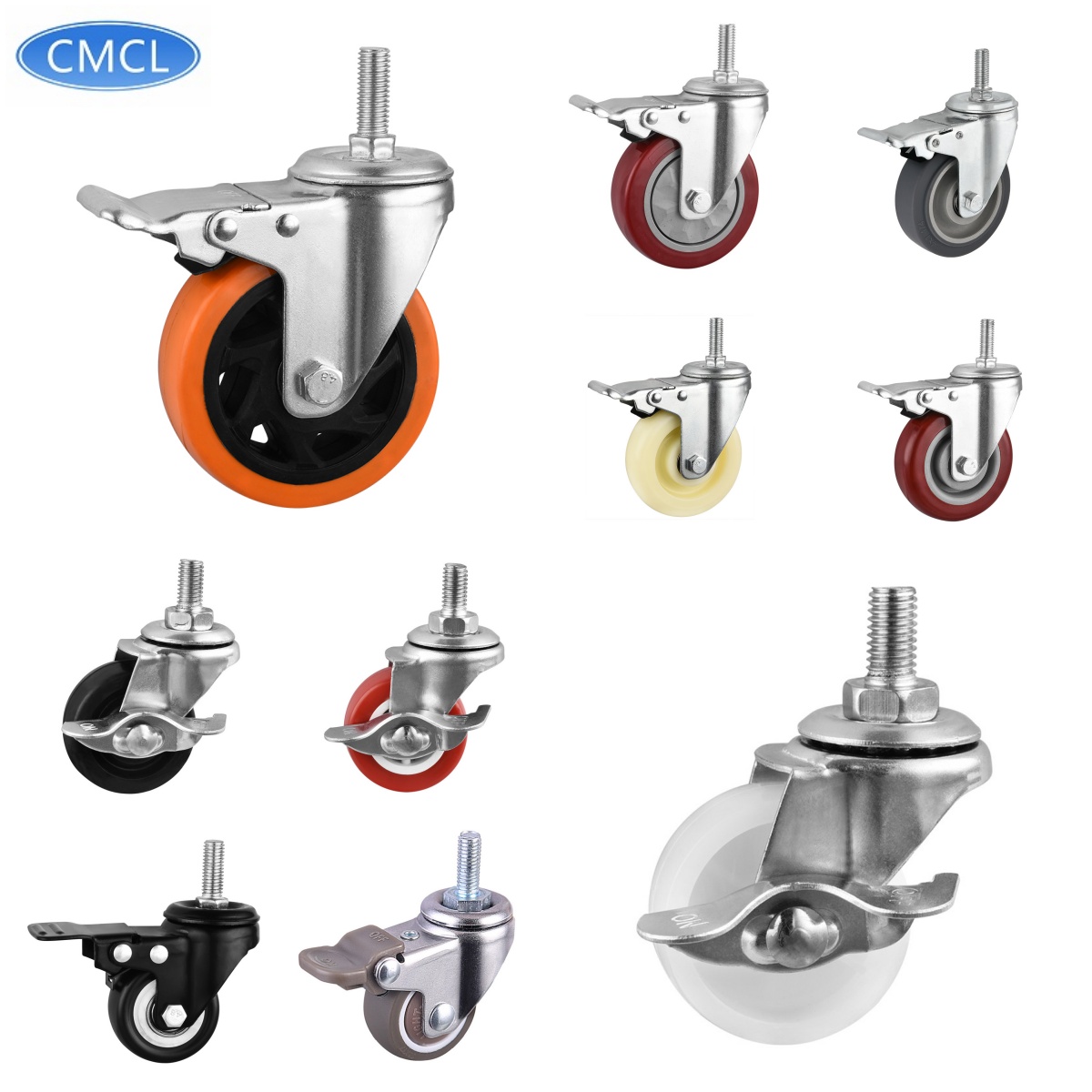
Most people assume that all bearings eventually need grease, adjustments, or replacement. Yet a few designs flip that expectation. Sealed deep-groove ball bearings, for instance, pack lubricant inside a shielded cavity and rarely ask for attention. Compare that to open bearings or tapered roller bearings, which demand regular relubrication and careful preload checks. If your goal is rolling that just works, start by narrowing your list to designs with built-in protection.
Plain bearings—often called bushings—offer another route. A polymer or bronze sleeve can run dry or with a one-time lubricant film, and there are no balls or rollers to brinell under shock. The trade-off? They usually tolerate lower speeds and higher friction than rolling-element types. For slow, high-load pivots or dirty environments, though, a well-chosen bushing can outlast a neglected ball bearing by years.
What separates dependable rolling from constant upkeep is rarely the bearing category alone—it's how the housing, seals, and mounting are handled. A cheap sealed bearing installed with a hammer will still fail early. But a mid-range bearing pressed in with proper tooling, aligned to avoid edge loading, and protected by a labyrinth or contact seal often runs a decade without a second thought. Compare your actual load, speed, and contamination risk before picking a type; that honest assessment does more for maintenance-free operation than any brand name.
Stem Material and Mounting Threads: The Overlooked Details That Prevent Wobble
A wobbly caster usually isn't the wheel's fault. More often, the stem connecting it to the frame is either too soft, slightly undersized, or paired with threads that don't bite cleanly into the socket. Zinc-plated steel holds up fine for light loads, but repeated swiveling and side forces can cause cheaper alloys to deform just enough that the fit loosens over time. Stainless or hardened steel stems resist that gradual ovaling, keeping the connection tight long after the first few weeks of use.
Thread pitch and depth matter just as much as the metal. Coarse threads seat quickly but can feel sloppy if the socket tolerances are wide; fine threads spread the load across more contact points and are less likely to back out under vibration. The real trick is matching the stem's thread to the insert or bushing already in the furniture leg. A stem that threads in fully, with no exposed shank between the wheel and the mounting surface, is what actually kills the side-to-side rock that shows up later as a wobble.
Polyurethane, Rubber, or Nylon Tread: Matching Floor Protection to Load Capacity
The choice between polyurethane, rubber, and nylon tread often comes down to how weight is distributed across the contact patch. Polyurethane has become the default for many mixed-use facilities because it pairs a high durometer (typically 85–95 Shore A) with enough elasticity to prevent floor damage. It handles heavy static loads without taking a permanent set, and its low rolling resistance means fewer effort spikes when moving loaded carts. However, polyurethane's real advantage shows under point loads; where rubber would compress and create a wider, less stable footprint, polyurethane holds its shape and keeps the load centered.
Rubber tread still earns a place when shock absorption matters more than maximum load rating. Softer rubber compounds can bridge small floor irregularities and reduce vibration through the load, which protects fragile cargo. But rubber is less forgiving under sustained weight: it creeps, flattens, and eventually transfers pressure erratically. Once that happens, the same casters that were supposed to protect a floor can begin burnishing or abrading it in narrow bands.
Nylon sits at the opposite end of the spectrum. It resists deformation under extreme loads and offers very low friction on smooth concrete, which can be a blessing for moving massive equipment. The trade-off is that nylon provides almost no cushioning, so any grit or debris trapped under the wheel becomes a high-pressure abrasive point. For very high load capacities with small wheel contact areas, nylon is often the only practical material, but it demands a cleaner floor and a harder substrate than either polyurethane or rubber.
Wholesale Buying Tips: Getting Consistent Stem Caster Quality Across Large Orders
When you're placing a large order for stem casters, the first thing to lock down isn't the price per unit—it's the spec sheet. Ask the manufacturer for a detailed tolerance breakdown, not just a glossy product photo. Look for measurements on stem diameter, thread pitch, and swivel play. A caster that feels smooth on a sample can wobble badly when produced in runs of five or ten thousand if tolerances drift even half a millimeter.
Request a pre-production sample from the exact batch of raw materials they'll use for your full order. Then, before signing off, have them run a small pilot lot of 50 to 100 pieces and pull ten at random for inspection. Check the hardness of the wheel material, the finish on the stem, and how the caster behaves under a load that matches your real-world use. If the pilot passes, keep that sealed test report on file—it gives you a baseline to compare against the final shipment.
Finally, don't rely on a single quality check at the end. Work out a schedule for inline inspection, especially if your order is split across multiple weeks of production. A supplier who agrees to send you photos and measurement logs from the line every few days is far more likely to deliver consistent quality than one who only shows you the finished pallets. And always keep a retained sample from each production date; it makes disputes over later batches much easier to resolve.
Swivel Radius and Clearance: Designing for Easy Maneuvering in Tight Workspaces
When a machine needs to pivot in a cramped aisle or swing its attachment close to a wall, the swivel radius becomes the single most limiting factor. Designers often fixate on overall length or width but overlook how much room the rear counterweight actually traces during a turn. A tighter radius doesn't just come from shortening the tail—it also depends on steering geometry, articulation angle, and even tire scrub. On compact excavators and skid steers, shaping the counterweight with a rounded or tapered rear profile can shave off several inches of swing clearance without sacrificing stability.
Clearance issues multiply once you add attachments. A bucket, auger, or grapple extends the effective swing envelope well beyond the bare chassis. What fits on paper may collide with a column or pallet rack in the field. Practical design measures include offset boom pivots, zero-tail-swing configurations, and smart placement of hydraulic lines so they don't snag during tight rotations. Operators also benefit from visual aids—a simple painted arc on the cab floor or a rear camera overlay can turn an anxiety-inducing turn into a routine maneuver.
Testing in a mocked-up narrow aisle reveals problems that CAD models miss. Rub marks on prototype bumpers, scuffed tire sidewalls, or strained hoses are telltale signs that the swivel radius needs another look. Sometimes the fix is as mundane as repositioning a toolbox or rerouting an exhaust stack. The goal isn't just to squeeze through—it's to let the operator work confidently without constant worry about what's behind or beside the machine.
FAQ
The stem design locks into place cleanly, so you get a stable connection that doesn't wobble, and the wheel material handles rough spots without chattering.
Measure the inner diameter of the mounting hole and the length of the stem you need. Most wholesale listings include a stem spec chart, so match those numbers before ordering.
Many stem caster wheels in the wholesale range are built with reinforced cores and polyurethane or rubber treads, so they can carry substantial weight while still rolling smoothly.
Hard floors are no problem. On low-pile carpet, choose a slightly larger wheel diameter; it reduces push effort and keeps the caster from digging in.
Wholesale pricing drops the per-unit cost significantly, and you get consistent quality across a whole batch, which matters when you're outfitting multiple carts or workstations.
Typically just a rubber mallet or a wrench, depending on whether the stem is a friction fit or threaded. No complicated setup needed.
Clean the wheel treads and swivel bearings periodically, and check for hair or debris wrapped around the axle. A little silicone spray on moving parts helps too.
Yes, look for non-marking polyurethane or soft rubber wheels. They're common in wholesale catalogs and specifically designed for finished floors.
Conclusion
Getting truly smooth, dependable movement from stem casters starts with matching the wheel diameter to the floor conditions you actually work on. On uneven surfaces, smaller wheels tend to catch on every crack and ridge, while a larger diameter rolls over those imperfections with noticeably less jarring and effort. Pair that with the right bearing type and you eliminate most of the routine maintenance headaches: sealed precision bearings keep rolling quiet and consistent far longer than plain bushings, especially under continuous loads. At the mounting point, stem material and thread tolerances are easy to overlook but they are what stop a caster from developing an annoying wobble after a few weeks. A well-machined stem with the correct thread pitch seats firmly in the frame or socket, so the wheel stays aligned instead of gradually loosening.
Tread choice ties everything together because floor protection and load capacity have to be balanced. Polyurethane offers a good middle ground for many warehouses, rolling smoothly without marking floors, while hard rubber handles rougher debris and nylon suits very heavy static loads but is harder on delicate surfaces. In tight workspaces, swivel radius and clearance determine whether a cart can turn around in an aisle or constantly bumps into shelving; a compact swivel head with proper offset makes maneuvering feel almost effortless. When buying wholesale, consistency across large orders is what separates a reliable supplier from a gamble. Ask for batch samples, confirm tolerances on stems and bearings, and check that the tread compound matches the spec sheet rather than just the photo. Those small verification steps prevent the costly problem of receiving hundreds of casters that look similar but perform very differently under real use.
Contact Us
Contact Person: Ruby
Email: [email protected]
Tel/WhatsApp: +86 13360379367
Website: https://www.cmcl-casters.com