

Best Outdoor Floor Tiles for Patios, Pool Decks, and High-Traffic Areas That Are Durable and Slip-Resistant
2026-09-05
Choosing the right outdoor floor tiles can feel overwhelming, especially when you need surfaces that stand up to patio lounging, wet pool decks, and constant foot traffic without becoming slippery or worn. Most options promise durability, but few actually deliver the grip and resilience required for real-world use. That’s where Beata Ceramics comes in. In this guide, we’ll cut through the noise and highlight the best tile choices that combine rugged performance with slip resistance—so you can enjoy your outdoor spaces safely, season after season.
Why Pool Deck Tiles Need More Than Just a Rough Surface
A textured top layer might stop bare feet from sliding on dry tile, but pool decks face far more demanding conditions. Water, sunscreen, and algae turn even aggressively brushed surfaces into slick zones within minutes. The real issue isn't just friction, it's how the tile holds up under constant wet-dry cycles, chemical exposure, and UV beating. Tiles that rely solely on roughness often develop hairline cracks around the texture peaks, where trapped moisture expands under heat. That deterioration creates both a slipping hazard and an eyesore long before the tile's rated lifespan ends.
Beyond safety, comfort underfoot matters more than most installers admit. A rough surface can feel abrasive on bare skin, especially for kids or older swimmers, leading to micro-cuts and hot-spot burns on sun-soaked decks. Top-performing pool deck tiles combine moderate grip with heat-reflective pigments and a slightly open pore structure that lets water drain away instead of pooling. They also resist mineral scaling from evaporated pool water, which gradually smooths over rough textures and nullifies their grip. Without these secondary properties, a "non-slip" tile becomes just another maintenance headache.
Porcelain Versus Concrete and What Actually Lasts Outdoors
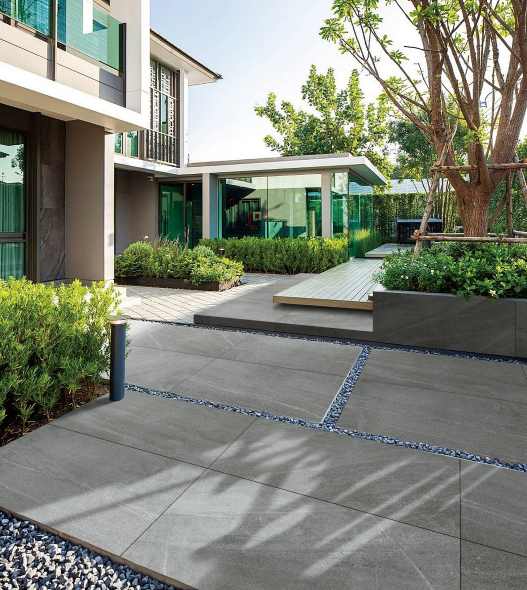
When a patio or walkway faces years of sun, rain, and freeze-thaw cycles, the choice between porcelain and concrete is rarely a tie. Concrete carries a rugged charm, but it drinks in moisture, cracking as winter water expands inside its pores. Even with sealing, those hairlines widen season after season, becoming highways for weeds and stains. Porcelain, by contrast, is fired at temperatures that leave it nearly glass-like in density. Rain beads on the surface instead of soaking through, so frost heave doesn't get the same foothold. You can leave porcelain out all year without a single winter prep step, while concrete demands resealing and still loses the battle against time.
But porcelain's real advantage shows up in the details most people overlook: efflorescence, color fade, and surface wear. Concrete's mineral salts wick upward in damp weather, leaving chalky white blooms that no amount of scrubbing permanently removes. Dyes and integral pigments fade unevenly under UV, so a charcoal slab becomes patchy gray within five years. Porcelain tiles are colored through the full body or protected by a vitrified glaze, meaning a deep blue or faux-wood tone stays put for decades. And when it comes to abrasion, concrete's softer surface scratches under chair legs and gritty boots, while porcelain's hardness shrugs off the same abuse without showing marks.
Of course, there's a trade-off. Concrete can be poured in massive slabs with no grout lines, giving a monolithic look that porcelain's modular tiles can't fully replicate. But those same grout joints, if filled with a flexible urethane rather than cement-based grout, handle temperature swings without cracking—and they allow for slight ground movement that would snap a rigid concrete pour. For a homeowner weighing the two: concrete wins on initial material cost and seamless appearance, but porcelain wins on the metric that matters outdoors—what still looks intact and requires almost nothing from you after ten winters.
The Patio Tile Mistake Most Homeowners Make in Rainy Climates
Choosing patio tiles based on how they look in a showroom often leads to regret in wetter regions. The biggest slip-up is picking a smooth, glazed surface that turns into a skating rink every time the clouds roll in. What feels sleek underfoot on a dry afternoon becomes dangerously slick after a light drizzle, and that polished finish you loved starts to show every muddy footprint and splash mark from the garden.
Texture matters more than most people realize. A tile with a bit of grip, like a honed natural stone or a matte porcelain with a slight ripple, can change how you actually use the space. You stop doing that cautious shuffle with groceries in your arms and start walking normally. In rainy climates, the small imperfections in the surface give water somewhere to go and give shoes something to bite into.
Drainage is the other half of the story that gets ignored until the first big storm. If the patio sits perfectly flat, water pools and finds the tiniest gaps in the grout, slowly working its way under the tiles. Over a season or two, that leads to hollow spots, loose edges, and a constant damp smell near the back door. A slight slope away from the house, paired with a tile that allows water to run off quickly, keeps the whole area drier and far more pleasant to use.
High-Traffic Areas Demand More Than Just Thick Tiles
Foot traffic in lobbies, corridors, and retail floors quickly exposes the limits of surface hardness alone. A thick tile can still fail if its glaze wears thin, its coefficient of friction drops when wet, or the substrate beneath it flexes. Look beyond the advertised thickness and check the PEI abrasion rating, wet dynamic coefficient of friction, and whether the tile body is through-body porcelain rather than a colored glaze over a weaker bisque.
Grout joints and substrate preparation often matter more than the tile's own bulk. High-traffic spaces need narrow, epoxy-based grout lines that resist chipping and staining, plus a flat, deflection-free subfloor. Even a 20 mm paver will crack if set over a hollow spot or a subfloor that moves more than L/360 under load. Specify a mortar bed or uncoupling membrane when the traffic pattern includes rolling carts, pallet jacks, or frequent heavy impact.
Maintenance realities should drive the specification. Textured surfaces may hide dirt but can trap grime in high-use zones, forcing aggressive cleaning that dulls the finish. A lightly textured or matte-finish porcelain with a high recycled content maintains slip resistance without becoming a cleaning burden. In many commercial renovations, the smart upgrade isn't a thicker tile—it's a denser, rectified tile with a commercial-grade glaze and an installation system designed for continuous point loads.
Slip-Resistant Doesn't Have to Mean Sacrificing Style
Most people picture clunky rubber soles and dull, industrial designs when they think of slip-resistant footwear. That outdated image couldn't be further from what thoughtful design can achieve today. The right pair blends high-traction outsoles with clean lines, premium materials, and colors that actually work with your wardrobe, not against it. Whether you're walking through a busy restaurant kitchen or navigating a rainy city sidewalk, you no longer need to choose between staying upright and looking put-together.
What makes this possible is a shift in how traction is engineered. Instead of adding bulky tread patterns that scream "work boot," designers now sculpt subtle lug geometries and use rubber compounds that grip without looking aggressive. A sleek leather sneaker can hide a sole that meets strict slip-resistance standards. A refined Chelsea boot can carry a sole that holds firm on wet tile. The visual language stays sharp, while the function quietly does its job.
This approach also extends to versatility. A pair that keeps you safe in a fast-paced cafe should still look right with chinos at a weekend brunch. It should move from polished concrete to cobblestone without announcing itself as safety gear. That's the real benchmark: footwear that performs under pressure but blends seamlessly into your personal style, proving that practical doesn't have to mean plain.
A Quick Maintenance Routine That Keeps Outdoor Tiles Looking New
Most outdoor tile surfaces will collect a thin layer of grime long before you notice any real staining. The trick is to sweep or rinse them before that layer hardens. A weekly pass with a soft-bristle broom removes grit that would otherwise act like sandpaper underfoot, slowly dulling the finish. If you live near trees or heavy pollen, step it up to twice a week and follow with a light hose-down using a fan nozzle. Avoid letting leaves or wet debris sit for days—once they break down, they leave behind tannins that are far harder to lift than fresh dirt.
For a deeper clean that doesn't require harsh chemicals, mix a bucket of warm water with a few drops of mild dish soap and a splash of white vinegar. Scrub with a stiff nylon brush in small circles, working one tile at a time so the suds don't dry on the surface. Rinse thoroughly, then go over the area with a clean mop and plain water. If you spot mineral deposits or efflorescence, swap the vinegar for a diluted citric acid solution, but test it on an inconspicuous corner first. Never use wire brushes or acid-based cleaners on natural stone—they can etch the surface permanently.
Finally, check the grout lines and any sealant every few months. Cracked or crumbling grout lets water seep underneath, which leads to loosened tiles and mold growth. Reapply a penetrating sealer only when the surface is completely dry and the temperature stays between 50 and 80 degrees Fahrenheit. A good sealant won't make tiles slippery, but it will buy you extra time between scrubbings. Keep a small spray bottle of diluted soap handy for spot-cleaning spills, and you'll find that this little routine keeps the whole patio looking crisp without turning maintenance into a weekend project.
FAQ
Look for tiles with a high dynamic coefficient of friction (DCOF) rating—around 0.42 or higher for wet areas. Texture matters more than material; a matte or embossed surface gives feet something to grip, while glossy finishes turn into ice rinks when wet. Porcelain with a grip finish or unglazed quarry tile often works well. Also consider tile size: smaller tiles mean more grout lines, which break up the surface and add traction.
Porcelain tiles with a low water absorption rate (under 0.5%) handle freeze-thaw cycles best because water can't soak in and expand. Natural stone like slate or granite can also work if sealed properly, but some limestones are too porous. Look for tiles rated for exterior use and check the manufacturer's freeze-thaw rating if you live somewhere with hard winters.
Check the PEI wear rating—PEI III is fine for residential foot traffic, but PEI IV or V is better for high-traffic or commercial-style use. Also examine the tile's breaking strength and whether it's rectified or has minor size variations; rectified edges allow tighter joints that resist chipping. For patios that host parties, pick a tile with a textured surface that won't show scratches easily.
Full-body porcelain is a strong choice because the color runs through the entire tile, so chips and scratches are less visible. Quarry tile is extremely tough but limited in color. Concrete-look porcelain gives you the durability of concrete without the staining. Avoid glazed ceramic outdoors—it's too fragile in temperature swings.
Not necessarily. Many modern anti-slip tiles use fine grit or a subtle raised pattern that feels comfortable underfoot. You can get a satin or lappato finish that's smooth enough for bare feet but still meets the slip resistance needed around water. If you want a softer feel, choose tiles with a fine texture instead of aggressive grooves.
Large-format tiles can work on a slope as long as the slope is consistent and the installer uses a leveling system to prevent lippage. However, bigger tiles leave fewer grout lines, which reduces natural traction. A slight pitch of 1–2% for drainage is fine, but anything steeper may require smaller tiles or a textured profile to keep footing secure.
Prioritize tiles with a low water absorption rate and a non-porous surface, like glazed porcelain or dense slate. Check that the grout is epoxy-based or sealed well; cement grout can erode with frequent hosing. Also make sure the tile edges are not sharp and that the surface won't get soap-slick if you clean with mild detergent.
Yes, for pool decks and harsh climates, porcelain is typically worth the extra cost. It resists moisture, fading, and scratches better than quarry or ceramic, and it doesn't need yearly sealing. Quarry tile is durable but soaks up water and can feel hot. Ceramic is the budget pick but often cracks at the first hard freeze. Over 10 years, porcelain's lower maintenance balances the upfront price.
Conclusion
Outdoor flooring takes a beating from sun, rain, and constant foot traffic, so picking the right tiles for patios, pool decks, and busy paths means looking beyond basic grip. Pool areas especially need more than a rough surface; water drainage, resistance to chlorine, and a texture that won't become slick when wet all matter. Porcelain tiles outlast concrete in most outdoor settings because they absorb almost no moisture, resist fading, and handle freeze-thaw cycles without cracking. Yet many homeowners in rainy climates make the mistake of choosing tiles with high water absorption or overly smooth finishes, which leads to moss, algae, and dangerous slips.
For high-traffic zones, thickness alone isn't enough—density and surface hardness prevent chipping and wear patterns over years of use. The good news is that slip-resistant options no longer mean dull, utilitarian looks. Modern outdoor tiles come in wood-look planks, stone textures, and bold geometric patterns that keep safety and style in balance. A simple maintenance routine—sweeping debris, occasional pressure washing, and resealing grout lines every couple of years—keeps these tiles looking nearly new without heavy effort. Choosing the right material and finish upfront saves time, money, and frustration down the road.
Contact Us
Contact Person: Emma
Email: [email protected]
Tel/WhatsApp: 8618064423698
Website: https://www.beataceramics.com/