

Best Compact Substation Solutions for Modern Power Distribution
2026-08-16
Modern power distribution demands equipment that balances footprint, reliability, and adaptability. At Chang Song, we see compact substations not as smaller versions of traditional designs, but as a smarter way to deliver energy where space is tight and expectations are high. From dense urban grids to remote industrial sites, the right compact solution can cut installation time, reduce maintenance, and keep power flowing without compromise. This post explores what makes today’s compact substations stand out—and how to choose one that fits your network’s unique rhythm.
Redefining Power Density: The Rise of Skid-Mounted Compact Substations
Skid-mounted compact substations are quietly rewriting the rules of electrical infrastructure, packing the same switching, protection, and transformation capabilities of a traditional substation into a footprint that can be hauled on a flatbed truck. The push toward higher power density isn't just about shrinking dimensions; it's about delivering more megawatts per square meter without compromising on thermal performance or operational safety. Engineers are achieving this through layered busbar arrangements, cast-resin transformers, and gas-insulated switchgear that eliminate the bulky air gaps and clearance distances typical of conventional layouts.
What makes this shift significant is how it changes project timelines and site logistics. Instead of months of civil works and onsite assembly, a factory-tested skid can be lowered onto a prepared pad, connected, and energized within days. This modular approach also opens doors for installations in space-constrained urban pockets, mining sites, and renewable energy hubs where every square meter carries a premium. The result is a substation that behaves less like a permanent building and more like a piece of precision equipment—movable, repeatable, and scalable.
The real story, however, lies in the balance between compactness and resilience. Thermal modeling, forced-air cooling, and advanced monitoring systems allow these skids to operate at higher load factors without derating, even in harsh climates. That combination of density and dependability is pushing utilities and industrial operators to reconsider what a substation should look like—and where it can realistically be placed.
Smart Grid Integration: How Compact Substations Enable Real-Time Load Management
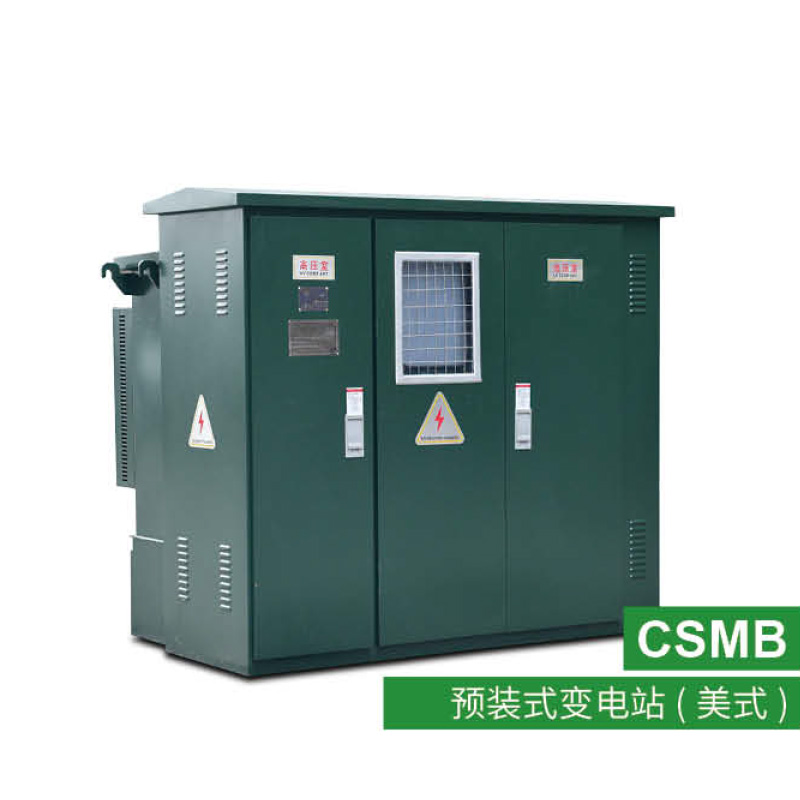
Compact substations have quietly become the nerve centers of modern distribution networks. Unlike their sprawling predecessors, these units pack transformers, switchgear, and monitoring systems into a footprint no larger than a parking spot. This physical compression isn't just about saving space—it fundamentally changes how utilities interact with load data. By placing intelligence closer to the point of consumption, operators gain a continuous stream of voltage, current, and frequency readings without the latency that once plagued remote telemetry.
Real-time load management hinges on the ability to act within seconds, not minutes. Compact substations make this possible through integrated protection relays and communication modules that speak the same language as grid automation platforms. When a feeder approaches its thermal limit, the substation doesn't wait for a central command; it can shed non-critical loads or tap into distributed storage on its own. This distributed decision-making reduces the burden on control rooms and keeps fluctuations from cascading into wider disturbances.
The real advantage emerges during demand peaks and renewable intermittency. A compact substation can orchestrate local resources—rooftop solar, EV chargers, small-scale batteries—like a conductor managing an ensemble. Instead of treating load as a passive number, the substation shapes it, shifting flexible consumption to off-peak windows or absorbing excess generation before it strains the feeder. This granular control turns the old one-way power flow into a dynamic, negotiated balance, all happening inside a cabinet that most people walk past without a second glance.
Eco-Friendly Insulation Alternatives: Moving Beyond SF6 in Compact Designs
SF6 has long been the default insulating medium for compact high-voltage equipment, yet its global warming potential sits nearly 23,500 times higher than CO2 over a century. The search for eco-friendly substitutes has moved beyond laboratory trials and into real switchgear designs, pushed by stricter regulations and a genuine sense of responsibility. The hard part is that SF6 also offers unmatched dielectric strength and arc-quenching in a very small volume, so any alternative has to work harder to fit the same envelope.
Vacuum interrupters combined with clean air or technical air are proving practical for medium-voltage gear, while high-voltage designs are experimenting with fluoronitrile-based mixtures and other low-impact synthetic gases. These alternatives force designers to rethink internal geometry, operating pressures, and material compatibility. The result may be a slightly larger tank or a different internal layout, but manufacturers are steadily closing the size gap with SF6-based equipment.
Solid insulation and advanced coatings are also helping to reduce the amount of gaseous medium required, which directly supports compact footprints. Some newer designs pair vacuum switching with solid-insulated busbars, removing gas entirely from certain compartments. Moving beyond SF6 isn't just about hitting environmental targets; it's also about future-proofing assets as carbon pricing and leak reporting tighten. Each completed installation shows that high performance and environmental care can fit into the same compact package.
Modular Architecture: Scaling Distribution Networks Without Footprint Expansion
Traditional distribution hubs often hit a wall when demand spikes: the only path to higher throughput is pouring concrete. Modular architecture flips that logic. Instead of expanding the physical envelope, operators can slot in pre-engineered processing cells—sortation loops, buffer storage, or cross-dock bridges—that plug directly into the existing spine. The result is a network that grows in capability while the building stays exactly where it was surveyed.
This approach works because the spine is designed around standard interfaces rather than bespoke machinery. Conveyor junctions, power rails, and data backbones sit on a uniform grid, so a new module can be commissioned in days instead of quarters. In one case, a regional carrier added fifteen percent parcel capacity by inserting two compact singulator modules into an unused corner of a cross-dock, avoiding a three-year site search for additional land. The neighbors never noticed, because the roofline didn’t change.
Modularity also reduces the risk of stranded assets. When demand patterns shift, a module can be detached, refurbished, and redeployed to another node in the network. That portability turns fixed infrastructure into a floating resource pool, letting distribution leaders balance load across facilities without locking capital into single-use square footage. The real scaling lever isn’t more space—it’s smarter space that learns to rearrange itself.
From Installation to Operation: Streamlining Commissioning with Plug-and-Play Compact Units
Traditional commissioning often drags on because every connection, parameter, and interlock has to be verified on site. Plug-and-play compact units flip that sequence: the wiring, configuration, and factory acceptance testing are completed before the crate is even opened. What arrives is a self-contained module with clearly marked interfaces, so the field team can mount it, connect power and communication lines, and bring it online in a fraction of the usual time. This removes the most common failure points and lets engineers focus on how the unit interacts with the rest of the line, not on chasing loose terminals or mismatched settings.
The benefit continues well past first startup. Because these units embed diagnostics and standardized communication protocols, routine checks and fault tracing no longer require a vendor specialist to travel to the plant. Operators can read status directly from the control system, and swapping a module becomes a planned maintenance task rather than an emergency rewiring project. For brownfield upgrades or space-constrained installations, that kind of predictability changes the go-live date from a rough estimate to a firm commitment.
What makes the approach feel less like engineering and more like assembly is the consistent mechanical and electrical footprint across the unit family. A replacement or expansion module drops into the same rail, uses the same connector pinout, and auto-identifies itself to the network. Teams can stage the rollout, energize core functions first, and add auxiliary modules without re-validating the entire system. The result is a commissioning curve that stays flat, controlled, and remarkably free of surprises.
FAQ
A compact substation integrates the transformer, switchgear, and protection equipment into a single enclosed unit that occupies far less space than a conventional outdoor yard. These units are typically used in urban areas, industrial parks, and renewable energy tie-ins where land is limited and reliability cannot be compromised.
By housing all critical components in a factory-tested, weather-resistant enclosure, compact substations reduce the number of exposed live parts and cable joints. This enclosed design lowers the risk of faults from animals, debris, or moisture, and makes it easier to coordinate protection settings across a shorter bus run.
Focus on the real load profile rather than just nameplate capacity. Check the short-circuit rating of the switchgear, the transformer's impedance and cooling class, and whether the enclosure ventilation matches the site's ambient temperature and humidity. Also confirm that internal arc containment has been tested under actual operating conditions, not just simulated ones.
Yes, but the enclosure material and sealing details matter more than the overall footprint. For coastal or high-humidity sites, look for stainless steel or specially coated cabinets, gasketed doors, and anti-condensation heaters. In dusty environments, filtered ventilation with positive pressure can prevent fine particles from damaging insulation over time.
Many designs allow for a larger transformer to be installed later, provided the enclosure was originally sized with spare space and the low-voltage busbars have enough margin. It is cheaper to specify a slightly larger box and cable entry area at the start than to replace the whole unit when load increases by fifteen percent.
The maintenance schedule should include thermal imaging of busbar connections, checking the door seals and lock mechanisms, verifying that cooling fans or filters are clean, and testing the protection relays and earth-fault indicators. Since access is tighter than in a walk-in substation, plan for torque checks and insulation resistance tests during shutdowns rather than trying to do everything live.
Absolutely. Most modern units can be fitted with temperature sensors, partial discharge monitors, and current transformers that link to a substation gateway. This allows operators to see load balance, internal temperature, and breaker status remotely, which is especially valuable for unmanned sites or distributed generation feeders.
Underestimating cable bending radii and leaving too little room for termination is the most common error. Others include ignoring the heat generated by adjacent equipment, placing the substation where vehicle access for replacement is blocked, and not coordinating the transformer's inrush current with upstream protection. Each of these can cause nuisance tripping or shorten equipment life.
Conclusion
The landscape of power distribution is shifting rapidly as utilities and industrial operators look for ways to pack more capability into smaller footprints. Skid-mounted compact substations have become a go-to answer, combining transformers, switchgear, and protection systems onto a single transportable frame. This approach eliminates the need for extensive on-site construction and delivers a fully assembled unit that can be dropped into place with minimal civil work. At the same time, modular architecture allows these stations to grow in step with demand. Instead of locking a site into a fixed capacity from day one, operators can add bays or ratings as loads evolve, keeping capital expenditure aligned with actual consumption patterns.
Equally important is the move away from SF6 insulation. Compact designs now increasingly rely on vacuum interrupters and solid or alternative gas insulation, which reduces environmental risk without sacrificing dielectric performance. These advances dovetail with smart grid readiness. Built-in sensors and communication interfaces let compact substations report load conditions, switch status, and fault indicators in real time, enabling utilities to shift load, isolate faults, and restore service faster. Commissioning is also being transformed by plug-and-play philosophy. Prewired, pretested units shorten the window between delivery and energization, cutting outage durations and field engineering hours. Taken together, these solutions are redefining what a modern distribution asset should look like—smaller, cleaner, smarter, and far quicker to deploy.
Contact Us
Contact Person: Tonglun Chen
Email: [email protected]
Tel/WhatsApp: 8618906642555
Website: https://www.cncsele.com