

Best Aluminum Intake Manifold: Boost Your Engine’s Performance
2026-07-03
Upgrading your intake manifold can unlock serious power, and few materials deliver like aluminum. If you're chasing better throttle response and consistent gains, the right manifold makes all the difference. Among the top contenders, DDR has been turning heads with designs that balance flow and durability. Ready to see what a premium aluminum intake can do for your build? Let's dive in.
How a Simple Manifold Swap Can Transform Throttle Response
It’s surprising how much a simple manifold change can wake up an engine. The stock unit on many cars is built with cost, emissions compliance, and broad drivability in mind—not raw response. Swapping to a performance-oriented manifold with shorter, more direct runners reduces the distance air has to travel, and often has a larger plenum or smoother internal surfaces. These changes cut down on pumping losses and allow the cylinders to fill more efficiently, translating your right-foot inputs into forward motion with almost zero delay. The result feels less like a modification and more like you’ve simply removed a layer of cotton wool from between the pedal and the engine.
The real magic happens at partial throttle, where you spend most of your street driving. An aftermarket manifold can reshape the torque curve so that even a light prod gives you useful, immediate shove without having to wait for revs to build. This isn’t just about peak numbers on a dyno graph; it’s about how the car feels leaving a stoplight or squirming out of a tight corner. You’ll notice that you can meter out the power with more precision, as the engine reacts consistently to small pedal adjustments rather than going soft-lazy-whoa. In many cases, the swap also cuts weight off the nose of the car, making the front end feel a tick more eager to change direction.
What often gets overlooked is how a manifold swap rewrites your interaction with the car. After the install, you may find yourself driving with a lighter foot, not because you’re saving fuel, but because you need less throttle angle to get the same response. It’s a subtle but addictive kind of improvement—the kind that makes you take the long way home just to enjoy the new-found liveliness. From a workshop perspective, this remains one of the most approachable upgrades; the hardware bolts on in a few hours, the computer usually adapts without massive changes, and the difference shows up from idle all the way to the redline. It’s mechanical empathy turned into a part, and it might just be the best perk-up your daily driver never knew it needed.
The Overlooked Link Between Intake Temperature and Torque
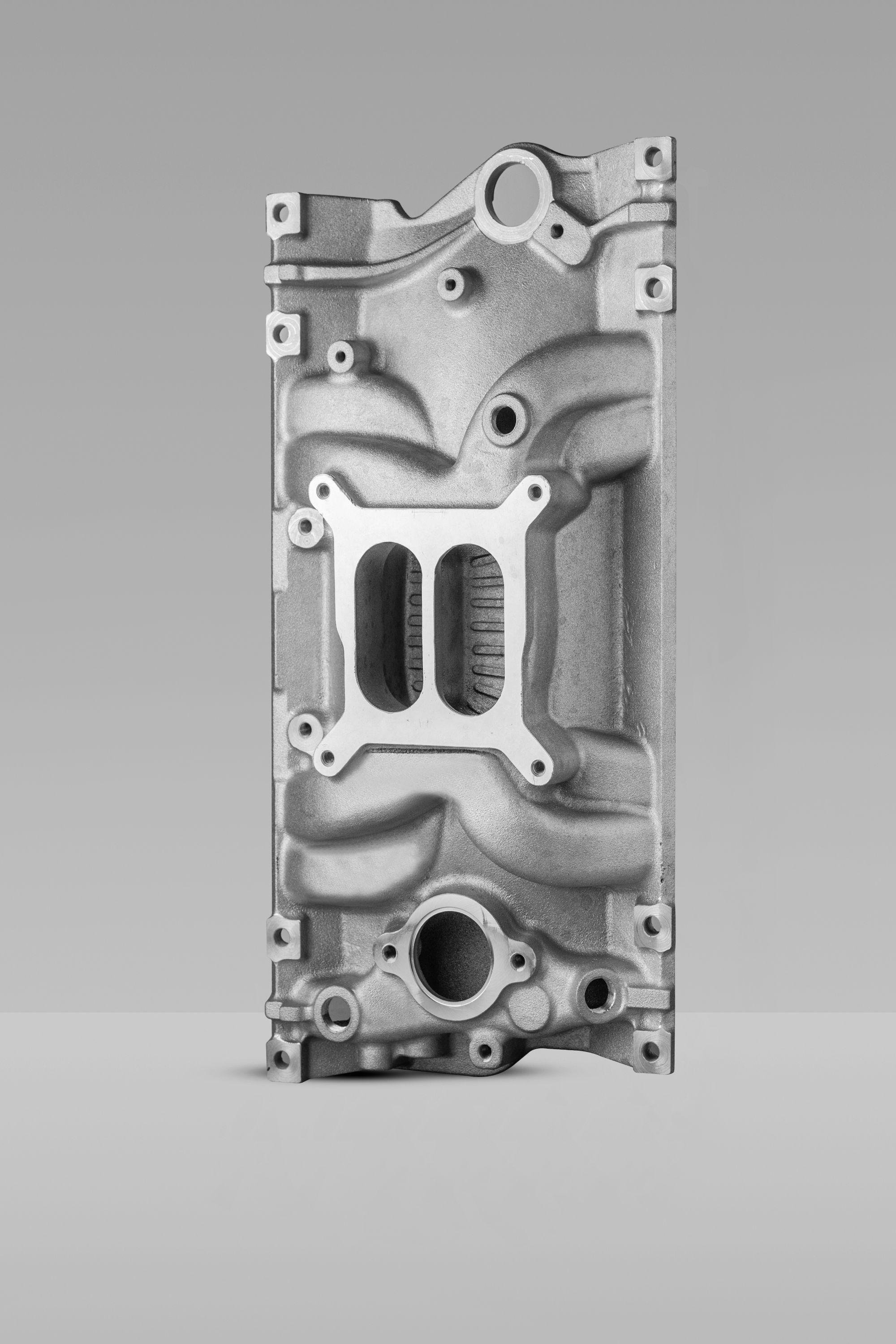
Many enthusiasts fixate on forced induction and fuel maps, yet the temperature of the air entering the combustion chamber quietly reshapes an engine's torque curve in ways that a dyno sheet alone might not reveal. Cooler intake air carries more oxygen molecules per unit volume, enabling a denser charge that, when paired with proper fueling, can yield a noticeable bump in cylinder pressure and twisting force. But the relationship is not strictly linear—once the air gets too hot, the ECU often retards ignition timing to stave off detonation, and that protective measure can sap torque even if boost pressure stays constant.
The effect is especially pronounced in turbocharged setups, where the compressor itself adds heat that intercoolers can only partially shed. On a scorching day, the intake manifold might see temperatures climb by tens of degrees, subtly softening low-end grunt and making the engine feel less eager off the line. Conversely, a dialed-in cold-air intake that truly isolates the filter from heat soak can sharpen throttle response in stop-and-go traffic, where underhood temperatures tend to spike and traditional intakes start inhaling power-robbing hot air.
Tuning strategies that ignore intake temperature dynamics often leave torque on the table. Even a naturally aspirated build can benefit from thermal barriers on the intake manifold or ducting that feeds the filter with ambient air—small tweaks that keep the charge cooler across a wider rpm band and help maintain timing advance where it counts. Recognizing this link transforms intake design from an afterthought into a tool for delivering repeatable, on-road grunt rather than a peak number that fades after the first heat-soaked pull.
Casting Methods That Separate Quality Manifolds from the Rest
In the niche of high-performance manifold production, the divide between an ordinary cast part and one that endures extreme pressures and temperatures often comes down to the nuances of the casting process itself. Advanced vacuum casting, for instance, eliminates the risk of oxygen embrittlement and internal porosity that plague components made in open-air foundries. By drawing the molten alloy into the mold under controlled depressurization, this method ensures a denser, more uniform grain structure. The result is a manifold that not only resists cracking under thermal cycling but also retains dimensional stability years down the line—something that truly sets premium fabricators apart from mass-market suppliers who prioritize volume over metallurgical integrity.
Beyond vacuum technology, the choice of mold medium plays a surprisingly pivotal role in dictating the final character of a manifold. Precision silica-based investment casting, often reserved for aerospace and high-end automotive applications, allows for intricate internal passages and razor-sharp parting lines that sand casting simply cannot replicate. A manifold born from this method exhibits a near-net shape finish, drastically reducing the need for secondary machining and, crucially, leaving the as-cast surface with a refined skin that naturally channels flow without turbulent pockets. It’s these subtle, almost imperceptible differences in wall smoothness and junction radii that distinguish a manifold that performs flawlessly from one that merely functions.
Another less heralded but equally decisive technique involves semi-solid metal processing, where the alloy is stirred into a thixotropic slurry before injection. This approach sidesteps the dendritic formation typical of conventional liquid casting, yielding a microstructure that is both exceptionally fatigue-resistant and lightweight. Manifolds crafted this way display a rare combination of stiffness and ductility, enabling them to withstand repeated pressure spikes without developing microscopic fissures. When you couple this with a rigorous post-cast heat treatment regimen tailored specifically to the alloy’s phase diagram, you get a component that not only outclasses its peers in service life but also offers a tangible weight advantage—a detail that goes unnoticed until you’ve held both a premium and a mediocre manifold in your hands.
Port Matching Secrets: Unlocking Hidden Horsepower
Getting the most out of an engine often comes down to the overlooked details, and port matching is a prime example. When the intake manifold, cylinder head ports, and gaskets aren't perfectly aligned, even a millimeter of mismatch creates a ledge that disrupts airflow. This turbulence chokes the very breath of your engine, leaving power on the table that no cam or carburetor can recover. The secret is methodical reshaping—carefully grinding away the excess material to create a seamless transition. It’s tedious work, but the reward is a laminar flow that fills cylinders with a denser charge, translating directly to a torquier, more responsive beast at any rpm.
Beyond the obvious alignment fix, the real art lies in radius work and velocity stack profiling just inside the port entry. Sharp edges anywhere in the tract cause flow separation, effectively shrinking the cross-sectional area under dynamic conditions. By rolling the port opening with a gentle bellmouth shape, you trick the air into moving faster and more orderly into the valve pocket. This isn't about hogging out ports to a dangerous level—it's surgical sculpting that raises the discharge coefficient without sacrificing mid-range signal. Many builders guard their exact template shapes like a trade secret, but the principle remains the same: guide the air, don't just force it. The result is an uncorked top end and a part-throttle crispness that feels like a different engine altogether.
When to Upgrade: Signs Your Stock Manifold Is Holding You Back
You might not hear it shouting, but a restrictive factory manifold quietly strangles your engine’s potential every time you push the pedal. That subtle hesitation when you demand quick acceleration, the way the power seems to plateau embarrassingly early in the rev range—these aren’t just quirks of an older car. They’re your stock manifold refusing to let gases flow freely, choking both horsepower and torque behind a wall of inefficient, cost-cutting design.
Then come the more audible confessions. A soft tick that grows into an aggressive tap under load often signals a crack spreading along the manifold’s welds or castings. Excessive heat shimmer from under the hood, fuel trims that drift further from stoic, or a persistent raw exhaust smell after cold starts—these mechanical whispers warn that backpressure has become a genuine obstacle. Waiting until the check engine light forces your hand only invites burnt valves or melted catalytic converters, turning what should have been a straightforward upgrade into an expensive repair.
Balancing Plenum Volume and Runner Length for Your RPM Range
Finding the right balance between plenum volume and runner length is critical to shaping the power delivery of your engine across a specific RPM range. The plenum acts as a reservoir of air, dampening pressure pulses and ensuring each cylinder receives a consistent charge. A larger plenum tends to support high-RPM breathing by reducing restriction, but going too big can soften throttle response and low-end torque. On the other hand, runner length directly influences the tuning frequency of the intake system; longer runners favor low to mid-range torque by harnessing pressure wave harmonics, while shorter runners typically shift the powerband upward.
When these two elements work in harmony, the intake system can amplify cylinder filling at the targeted engine speeds. For a street engine that spends most of its time between 2,000 and 6,000 RPM, a moderately sized plenum paired with runners around 12 to 15 inches often provides a broad, usable torque curve. Dedicated race setups aiming for peak power above 7,000 RPM, however, benefit from a more generous plenum volume and lengths under 10 inches. It’s not simply about choosing one over the other; the entire intake tract must be viewed as a tuned system where the plenum volume complements the runner cross-section and length to avoid standing waves that can choke flow at certain RPM.
Fine-tuning this balance often involves real-world testing or simulation, as factors like camshaft profile, displacement, and even exhaust scavenging play a role. A common approach is to start with a plenum volume roughly equal to engine displacement for performance street applications, then experiment with runner lengths using interchangeable intake stacks or adjustable manifolds. Pay attention to how the engine pulls through the mid-range and whether it signs off too early or feels flat on tip-in. Subtle adjustments can transform a sluggish powerband into one that feels lively and responsive right where you need it, without sacrificing drivability elsewhere.
FAQ
Aluminum handles heat and pressure far more gracefully than plastic. Stock manifolds often use nylon composites that can warp or crack over time, especially under sustained load. Metal also allows for porting and polishing to dial in airflow, something you can't do with plastic. Plus, the rigid structure reduces internal flex, keeping runner volumes stable at high RPM.
It's mostly about airflow tuning. A well-designed aluminum manifold has smoother runners, larger plenum volume, or a different runner length that shifts the powerband upward. By reducing restrictions and evenly distributing air to each cylinder, the engine breathes deeper. More air means more fuel can be burned, so torque and horsepower climb, often by 10-20 hp on a mild setup.
Heat soak can become an issue if the manifold isn't coated or shielded. Aluminum absorbs engine bay heat, potentially raising intake air temps. That can offset some gains unless you address it. Also, weight increases slightly compared to composite, though it's rarely enough to matter. Fitment sometimes requires minor trimming of brackets or relocating sensors.
Naturally aspirated engines with high‑flow heads and aftermarket cams see the biggest changes. Forced induction cars gain too, especially if the stock manifold becomes a bottleneck. Older V8s and inline‑sixes with long, restrictive factory runners wake up dramatically. Modern turbo four‑cylinders often find 15‑25 whp from a manifold alone, assuming supporting mods are in place.
Runner design matters more than material thickness. Look for a gradual taper rather than a sudden step at the port entrance. Check that the throttle body flange matches your existing or planned throttle body size. Casting quality is critical — visible porosity or rough interior surfaces indicate poor manufacturing. Finally, verify sensor bungs and vacuum ports align with your engine’s layout.
If you're comfortable with basic hand tools and can follow a torque sequence, it's a Saturday project. The tricky parts are accessing buried bolts on some engines and ensuring a leak‑free seal with the gaskets. You'll need a torque wrench and fresh coolant if the manifold carries coolant passages. A pro will typically take 2‑4 hours, and the labor cost is worth it if you're unsure about vacuum line routing.
Conclusion
Swapping in a quality aluminum intake manifold is one of the most underrated ways to wake up your engine. The transformation in throttle response alone can feel like a different car—stomp the pedal and the engine snaps to attention with a crispness the stock plastic unit never delivered. Beyond the seat-of-the-pants feel, there's a real science to it: aluminum sheds heat faster, keeping intake air denser and cooler, which directly fattens the torque curve. But not all aluminum manifolds are created equal. The casting method matters—gravity-cast or, better yet, CNC-machined from billet—determines internal surface finish and runner consistency. A smooth, precise interior minimizes turbulence and promotes even cylinder filling, something you simply won't get from a rough sand-cast piece.
The real power, however, comes from proper port matching and runner tuning. Even a high-end manifold leaves horsepower on the table if the ports don't seamlessly align with the cylinder head—spend the time to grind and blend, and those hidden ponies will finally hit the pavement. Runner length and plenum volume are equally critical: a large plenum favors high-RPM screamers, while longer runners fatten the mid-range. Match these to your driving style and cam profile, and the engine feels alive across the band. If your stock manifold shows cracks, heat soak hesitation, or simply feels asthmatic past 5,000 rpm, it's the bottleneck you never knew you had. A well-chosen aluminum upgrade doesn't just replace a part—it redefines how the engine breathes and responds.
Contact Us
Contact Person: Shelly
Email: [email protected]
Tel/WhatsApp: 8613967667688
Website: https://www.yongyu.com/