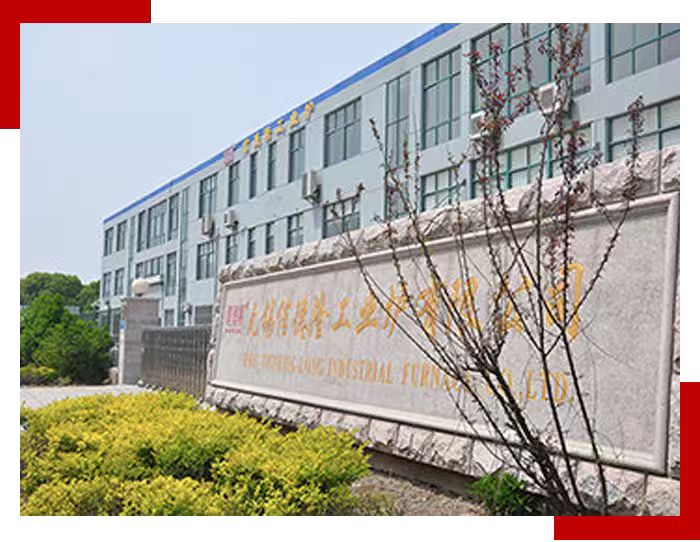

Bell Furnace Manufacturer Excellence: Advancing Industrial Heat Treatment Solutions
2026-08-11
In the realm of industrial heat treatment, bell furnaces stand as pivotal workhorses, yet true excellence demands more than just reliable equipment—it requires innovative engineering that redefines performance standards. Enter THINKING-LONG, a name synonymous with pushing the boundaries of what's possible in thermal processing. As we explore the cutting-edge advancements shaping this field, you'll discover how precision, efficiency, and durability converge to solve the most complex manufacturing challenges. Prepare to rethink everything you know about bell furnace technology—because the future of heat treatment starts here.
Innovative Bell Furnace Designs for Enhanced Thermal Uniformity
Achieving uniform temperature distribution in bell furnaces has long challenged thermal processing engineers. Traditional designs often suffer from natural convection currents that create cooler zones near the base and hotter areas toward the top, leading to inconsistent material properties. This non-uniformity becomes particularly problematic when treating high-value components where even minor temperature deviations can compromise metallurgical outcomes.
Recent design advances tackle this issue through a combination of computational fluid dynamics modeling and novel airflow architectures. By incorporating angled guide vanes within the furnace chamber, circulating gases are redirected to eliminate dead zones. Some configurations employ a rotating retort mechanism that gently spins the charge during heating, ensuring each part experiences statistically equivalent thermal exposure. Independent heating zones with dynamic power balancing further refine temperature control, using embedded thermocouples to provide real-time feedback for element output adjustment.
The results are measurably tighter thermal spreads—often within ±3°C across the entire load—even at elevated temperatures exceeding 1200°C. This level of uniformity not only reduces scrap rates and rework but also enables process windows previously unattainable, such as precise grain structure control in aerospace alloys. Manufacturers adopting these designs report significant improvements in cycle-to-cycle repeatability, making them a pragmatic choice for demanding heat treatment operations.
Tailored Heat Treatment Solutions for Diverse Industrial Applications
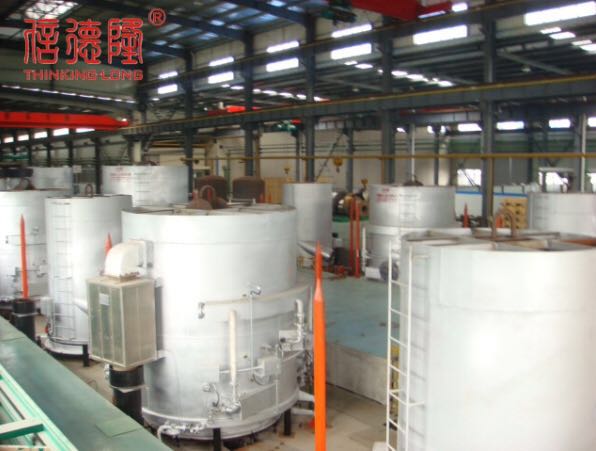
Every industry operates under its own set of demands—whether it’s the extreme temperatures of aerospace components, the wear resistance needed in automotive gears, or the fine tolerances required for medical devices. Off-the-shelf heat treatment cycles rarely address these unique challenges effectively. That’s why our approach starts with a deep dive into your material specifications, load geometries, and performance targets. By mapping out the precise thermal profile and cooling rates, we craft a process that enhances hardness, toughness, or fatigue life exactly where you need it.
Flexibility is built into our facilities, allowing us to handle a wide range of batch sizes and alloy types without sacrificing consistency. From vacuum furnaces that protect sensitive surfaces to atmosphere-controlled systems that prevent decarburization, we match the equipment to the job. Real-time monitoring and adaptive controls ensure repeatable results run after run, even when processing intricate parts with varying cross-sections. Our team’s practical experience across sectors means we can anticipate potential distortion or grain growth issues before they arise, adjusting parameters that generic recipes often overlook.
Beyond the initial cycle design, we view each project as an ongoing collaboration. Trial runs, microstructural analysis, and mechanical testing feed into an iterative refinement loop, guaranteeing the final properties align with your function and longevity requirements. Case depth patterns, quench severity, tempering curves—these aren’t just textbook terms to us; they’re dials we turn to deliver a competitive edge. Whether you’re prototyping a new alloy or scaling up production, you get a partner who speaks the language of your industry and backs it with a solution that’s truly your own.
Energy-Efficient Bell Furnace Technologies Reducing Carbon Footprint
Bell furnace systems have long been a workhorse in thermal processing, but recent innovations are shifting the focus toward energy efficiency and lower emissions. Manufacturers are now rethinking every aspect of these furnaces—from insulation materials to burner design—to slash fuel consumption without sacrificing throughput or product quality. The result is a new generation of equipment that not only cuts operating costs but also helps industrial users meet tightening environmental regulations.
One of the most impactful advances is the use of high-grade ceramic fiber linings and microporous insulation, which dramatically reduce heat loss compared to traditional brick linings. Combined with regenerative or recuperative burner systems that preheat combustion air, these furnaces can achieve fuel savings of 20-30% or more. Smart controls further optimize the heating cycle by adjusting gas flow and air-fuel ratios in real time, eliminating wasteful overheating and shortening cycle times.
The carbon reduction potential of these technologies goes beyond just lower fuel use. By enabling faster, more uniform heating, they cut the overall energy per ton of processed material, directly shrinking the carbon footprint of heat treating operations. For industries under pressure to decarbonize—from automotive to aerospace—switching to high-efficiency bell furnaces offers a practical, near-term path to greener production without waiting for breakthrough fuels or carbon capture.
Superior Material Processing Through Advanced Automation and Control
Bringing automation into material processing doesn’t just speed things up—it reshapes the entire quality landscape. When machines handle cutting, shaping, or finishing with micron-level repeatability, the variability that plagues manual operations disappears. Temperature, pressure, and feed rates remain locked within tight windows even during long production runs, resulting in parts that meet spec from the first unit to the last. This consistency isn’t about removing the human element but about assigning precision tasks to systems that never tire, drift, or lose focus.
Beyond basic repeatability, advanced control systems introduce real‑time adaptability. Sensors embedded in the processing line constantly feed data into algorithms that adjust parameters on the fly—compensating for tool wear, material inconsistencies, or environmental shifts before they cause defects. This closed‑loop approach turns material processing from a predetermined recipe into a living process that self‑corrects. The outcome is higher yields, less scrap, and the ability to work with challenging alloys or composites that demand split‑second decision‑making. In short, the marriage of automation and adaptive control turns raw materials into finished goods with an efficiency and precision that static methods never could.
Comprehensive Support from Installation to Optimization
Getting started with a new system can feel overwhelming, but our approach ensures you never have to face it alone. We walk you through every step of the setup process, tailoring the initial configuration to match your specific workflow right from day one. No generic manuals or confusing interfaces—just clear, hands-on guidance that turns complex installations into a smooth, stress-free experience.
As you settle in, we shift our focus to fine-tuning. It’s not enough to simply have everything up and running; real value comes from continuous refinement. We monitor performance patterns, listen to your feedback, and proactively adjust settings to cut out friction before it becomes a problem. Whether it’s speeding up repetitive tasks or integrating tools you already rely on, optimization becomes a natural part of your routine rather than a scheduled chore.
When hurdles pop up—because they always do—we’re ready to jump in without the runaround. Our team combines deep technical know-how with a genuine curiosity about how you work, so solutions aren’t just quick fixes but lasting improvements. From the first installation to the hundredth tweak, you get a partner that treats your success as the only metric that matters.
Real-World Success: Transforming Heat Treatment Across Industries
The shift toward precision-controlled heat treatment has quietly reshaped entire production lines. In automotive manufacturing, for instance, the move from batch vacuum carburizing to low-pressure systems drastically cut cycle times while delivering deeper, more uniform case hardening. Gears and shafts that once came out with microcracking now exhibit tighter grain structures, directly improving fatigue life. Engineers on the factory floor noticed the difference almost immediately: fewer rejects after quenching, less rework, and a consistent hardness profile across high-volume runs. These aren’t incremental tweaks but fundamental changes that ripple into vehicle reliability and warranty costs.
Outside the automotive sector, the food processing industry faced a different challenge—stainless steel cutter blades dulling prematurely due to retained austenite. A shift to cryogenic treatment after standard hardening transformed the martensitic microstructure, boosting wear resistance without sacrificing toughness. One mid-sized slicing equipment supplier saw blade lifespan climb by over 40% in field tests, drastically lowering downtime for replacements. The real story here isn’t just about the science; it’s about a plant manager who no longer fields frantic calls from customers during peak production seasons.
Aerospace applications push the boundaries even further. When a landing gear manufacturer switched from traditional salt bath nitriding to plasma nitriding for high-stress components, the improvement in surface fatigue strength was immediately measurable. But the practical win was something less obvious: the ability to treat complex geometries without the cleanup headaches of molten salts. Technicians appreciated the cleaner process, and the environmental compliance team noted a significant drop in hazardous waste. Such real-world successes remind us that heat treatment innovation often lives not in theoretical white papers but in the daily rhythms of the shop floor, where tolerances tighten and margins matter.
FAQ
Our bell furnaces are designed with a focus on uniform heat distribution and energy efficiency. We use advanced insulation materials and precise temperature control systems, which result in consistent product quality and reduced operational costs. Plus, our modular designs allow for easy customization to meet specific heat treatment requirements.
We subject every furnace to rigorous testing before delivery, including thermal stress analysis and cycle testing. We also use high-grade alloys and refractories that withstand repeated heating and cooling cycles without degradation. Additionally, our furnaces come with predictive maintenance features that alert operators to potential issues before they cause downtime.
Absolutely. Our furnaces are built to accommodate large loads, with capacities ranging from a few tons to over 50 tons. The temperature uniformity across the entire batch is maintained through our patented airflow system, ensuring that every piece receives the same treatment, even in high-volume production.
We provide comprehensive support, including installation supervision, operator training, and 24/7 technical assistance. Our service teams are deployed globally and can respond quickly to any issues. We also offer long-term maintenance contracts and remote monitoring services to keep your operations running smoothly.
Yes, they are. Our bell furnaces can achieve temperatures up to 1800°C, making them ideal for processes like sintering, annealing, and normalizing. We can also integrate controlled atmospheres, such as hydrogen or nitrogen, to prevent oxidation and achieve desired material properties.
Sustainability is a key part of our design philosophy. Our furnaces feature low NOx burners and advanced heat recovery systems that significantly reduce fuel consumption and emissions. We also use eco-friendly insulation materials that improve thermal efficiency. These features help our clients meet strict environmental regulations without sacrificing performance.
Our systems are widely used in the automotive, aerospace, steel, and powder metallurgy industries. They're particularly effective for processing coils, wire rods, and intricate components where precise heat treatment is critical. We've also seen growing adoption in the production of advanced ceramics and composites.
Our R&D team works closely with key clients to understand emerging challenges. We then prototype new solutions and test them in real-world conditions. This collaborative approach has led to innovations like our adaptive control algorithms that automatically adjust cycle parameters based on live load temperature data, reducing energy use while improving throughput.
Conclusion
Bell furnace manufacturers are redefining industrial heat treatment through a blend of inventive engineering and bespoke system design. Their latest bell-type furnaces integrate advanced flow dynamics and zoned heating elements to achieve exceptional thermal uniformity, which proves essential for critical materials like specialty alloys and advanced composites. Rather than offering generic equipment, these experts work closely with clients to tailor every detail—from chamber dimensions to atmosphere control—ensuring the solution precisely matches the application, whether it’s bright annealing of stainless steel or low-stress tempering of large components. Alongside customization, a strong emphasis on energy efficiency has led to the adoption of high-performance insulation, regenerative burners, and waste heat recovery systems, all of which trim operational costs and visibly shrink the carbon footprint of heat treatment lines.
Beyond the hardware, what sets leading manufacturers apart is their full-scope commitment to performance and support. State-of-the-art automation platforms with real-time process monitoring and adaptive control algorithms boost repeatability and throughput while minimizing manual intervention. The partnership begins long before commissioning, with factory acceptance testing, installation supervision, and thorough operator training. It extends into long-term optimization, where remote diagnostics and on-site audits continuously refine cycle parameters to extract even greater efficiency and quality. This comprehensive approach has yielded measurable gains in diverse sectors—automotive, aerospace, energy—where documented case studies show shorter cycle times, reduced rework, and lower total cost of ownership. Ultimately, the combination of purposeful innovation, operational intelligence, and steadfast aftercare defines true manufacturer excellence and propels industrial heat treatment forward.
Contact Us
Contact Person: Qian Xijun
Email: [email protected]
Tel/WhatsApp: 8613961736750
Website: https://www.thinkinglong.com/