

Automatic Steel Rule Die Bender Machine Solutions for Modern Die Making
2026-09-05
Every modern die maker knows the frustration: a complex steel rule profile that should take minutes ends up eating hours, thanks to imprecise bending and constant manual corrections. Automatic steel rule die bender machines are changing that story, replacing guesswork with repeatable, high-speed accuracy. But not all solutions deliver the same level of control or uptime. That’s where ADEWO steps in, offering systems built for the real demands of today’s die making shops. In this post, we’ll explore how intelligent automation is reshaping the bending process—and why the right machine can make the difference between missed deadlines and a flawless cut.
The Quiet Power of Servo-Driven Bending
There’s a particular stillness on the floor when a servo-driven press brake cycles. Instead of the familiar hydraulic groaning that swells and fades with every stroke, you hear a brief, focused hum—barely louder than a well-tuned ventilation fan—followed by the soft thud of the ram returning home. The quiet isn’t just cosmetic. It reflects a fundamental shift in how force is generated: electric motors apply torque only when the beam actually needs to move, so there’s no constantly spinning pump, no bypass valve hissing, no reservoir of oil radiating heat and noise into the shop.
Beneath that restraint lies exceptional control. Servo drives measure and adjust position, speed, and pressure hundreds of times per second, which means the beam can accelerate into the bend, slow to a near-standstill at the material, then push through with exactly the force the job requires. Unlike hydraulic systems that rely on accumulators and proportional valves, the servo loop corrects for thermal drift and tool deflection in real time. The result is a repeatability that often lands within a few microns—without the audible drama that used to accompany high precision.
The practical effects ripple outward. Operators can hold a conversation next to the machine without raising their voices. Maintenance teams stop chasing oil leaks and noisy cylinder seals. And because energy consumption drops dramatically when the beam isn’t moving—sometimes by half or more compared to a similar-tonnage hydraulic model—the silence becomes a kind of proof that nothing is being wasted. In an industry where louder was long mistaken for stronger, servo-driven bending makes a case for quiet as a real competitive edge.
Making Every Bend Count in Die Production
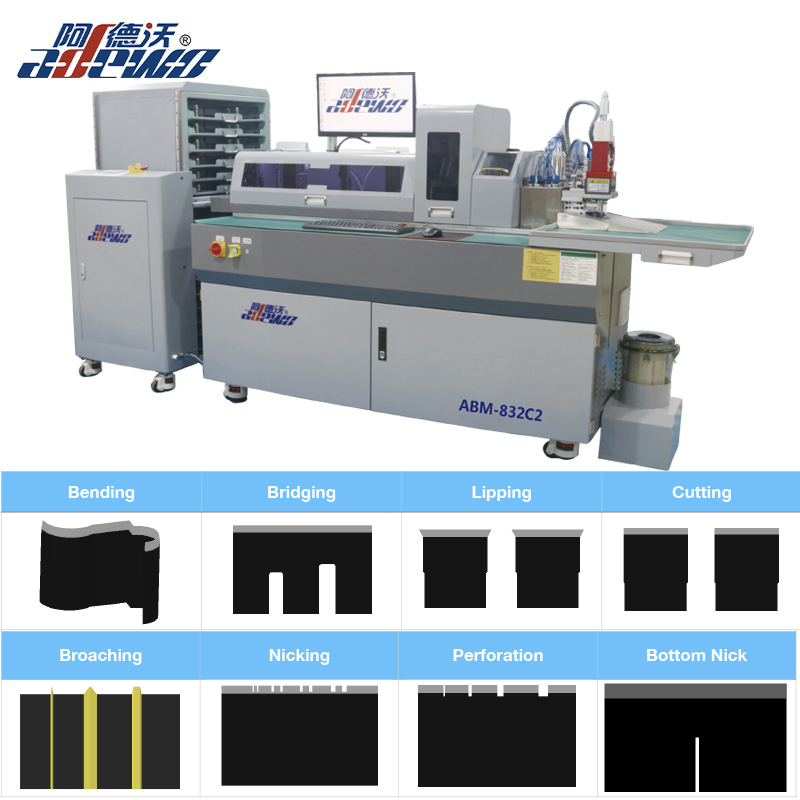
In die production, bending operations often get treated as routine steps, but the difference between a stubborn scrap rate and a reliable run comes down to how deliberately each bend is executed. Small shifts in punch penetration, die clearance, or even the way sheet metal is seated against the back gauge can stack into dimensional drift that only shows up during assembly. Rather than chasing symptoms after the fact, tooling teams that measure bend angles directly at the press catch deviations before they become costly rework loops.
Material springback rarely behaves the same way across coil lots or even across the width of a single sheet. Guessing at overbend allowances leaves you fighting a moving target. Instead, pairing in-die sensors with a short feedback loop lets the press adjust ram depth on the fly, compensating for variations in hardness and grain direction without operator intervention. This turns what used to be a trial-and-error setup into a self-correcting process that holds angles to within a fraction of a degree.
The real payoff shows up when you stop treating each bend as an isolated event and start tracking patterns across the entire production run. Logging force curves, return stroke positions, and angle data per hit reveals tool wear trends early, flags inconsistent blank lubrication, and helps schedule die maintenance before a critical feature drifts out of tolerance. Over time, these records become a practical knowledge base, letting new operators skip the usual months of intuition-building and start making smart adjustments from day one.
Precision Angles Without the Trial Cuts
Getting a tight miter or a clean bevel usually starts with a scrap piece and a few guessing passes. But there is a faster way to land on the exact angle without burning through offcuts. The trick is to measure the actual corner instead of trusting the nominal angle stamped on the tool or the plan.
Most walls, frames, and casings are rarely a perfect 90 degrees. A digital angle finder or a simple bevel gauge placed directly into the corner gives you the true included angle. From there, split the difference for a miter, or work from the complementary angle for a bevel. Write that number down, set the saw once, and make the cut. No test piece required.
For angled work that has to fit an existing slope or rake, use a sliding bevel to capture the line, then transfer that line to a protractor. The key is to reference the back of the saw blade and the table, not just the scale on the front, because saw detents can drift. A quick dry fit of the two cut faces against the actual corner confirms the math before any glue or fasteners go in.
Automating the Art of Steel Rule Forming
Steel rule forming used to live entirely in the hands of the person doing the bending. A slight change in grip pressure or the angle of a hammer tap could mean the difference between a clean fit and a scrapped rule. Automating that process is not about removing skill; it is about capturing it. Feed a machine enough examples of successful bends and it learns to reproduce the same springback compensation, the same over-bend allowance, and the same corner geometry without drifting after hour three of a shift.
The practical payoff shows up fastest in short runs and rush jobs. Instead of blocking out a full day for manual setup and trial bends, a shop can import a CAD profile, let the forming cell work through the sequence, and have a usable die rule in a fraction of the time. Operators still step in for odd profiles or difficult materials, but the routine work moves faster and with fewer rejects.
There is still an art to it, just a different one. The person running the automated former needs to know when the program's assumptions break down—when a batch of steel is slightly harder, when a bend radius is too tight for the tooling, when to override the default feed rate. That judgment keeps the craft alive, even as the physical bending moves into the machine.
Ready for the Next Job: Quick Changeover Strategies
Switching from one job to the next often eats more time than the work itself. The trick is to treat the transition as a process with its own steps, not a chaotic scramble. Start by separating tasks you can do while the current job is still running from those that must wait until it stops. Pre-stage tools, clear the area, and have the next setup kit within arm's reach. Small moves like labeling bins or shadow boards cut down hunting time and keep everyone focused.
Another practical strategy is to film or map a changeover once and look for repeated motions. People tend to walk the same path three times because a wrench is stored on the wrong side. Move the tool, not the person. Also, assign a clear role for each team member during the switch. When one person handles power connections and another handles material loading, the job doesn't stall on a single decision. Ten minutes saved on each changeover adds up to extra capacity without adding staff.
Finally, run a quick debrief after the first piece of the new job is good. What took longer than expected? What info was missing? Write the answer on a card taped to the machine, not in a binder on a shelf. Changeover speed is less about rushing and more about removing delay between tasks. Once the routine feels boring, you know it is working.
Building Dies That Last, Bend After Bend
Every press stroke puts money on the line, so cheap dies are a losing bet. We start with tool steels that hold their shape under repeated flexing, then heat-treat them just deep enough to resist surface cracks without turning the core brittle. That balance is what lets a die shrug off thousands of bends instead of chipping after the first few hundred.
Corners and bend radii get extra attention because that's where stress concentrates. We polish those zones to remove micro-grooves that can start fatigue, and we add a slight crown on long bending edges to compensate for deflection under load. The result is a die that keeps its profile longer, so your parts come out consistent from the first hit to the last.
Maintenance stops costing you overtime when the die itself doesn't demand constant touch-ups. A well-built bending die wears slowly and predictably, giving you time to schedule regrinds instead of reacting to sudden failures. That's the real meaning of lasting bend after bend: less downtime, fewer scrapped blanks, and no surprises in the middle of a production run.
FAQ
It removes the bottleneck of manual bending. Instead of an operator shaping each rule by hand, the machine reads the design file and produces consistent bends quickly. That means fewer rejects, less hand finishing, and the ability to take on jobs with tight tolerances that would be tough to do manually.
Focus on bend resolution and repeatability. A good machine will let you set angles down to a fraction of a degree and hold that across hundreds of bends. Also check whether it supports multi-radius bending and can handle the thinnest rule you commonly use without deforming it.
Yes, most automatic benders are built with adjustable tooling or quick-change heads. You can switch from 0.71mm to 1.05mm rule or from 23.8mm to 50mm height in a matter of minutes. The key is to confirm the clamping force and bend depth can be tuned per material, otherwise you risk cracking or over-bending.
Very little on the operator side. Many systems import DXF or similar vector files directly from your CAD package, and the operator mainly sets material parameters and checks the first piece. The learning curve is more about understanding how the steel reacts to different bend sequences than about coding.
It does improve accuracy, but only if the machine is maintained and the rule stock is consistent. Automated bending eliminates most of the human variation in angle and position. You still need to calibrate periodically and keep an eye on wear parts, but the difference on complex multi-bend rules is noticeable—often within ±0.1mm of programmed dimensions.
Daily cleaning of the bending head, lubrication of linear guides, and checking the clamping dies for wear. Once a month, run a calibration bend and compare it to a known standard. Watch for build-up of zinc or paper residue from coated rule, as that can affect grip. Most unplanned downtime comes from neglected small adjustments rather than major failures.
Smaller shops can justify it if they take on complex or short-run work where manual bending creates too much scrap or takes too long. The cost per bend drops quickly once you factor in rework and labor. If your shop is doing basic straight-cut dies all day, a manual setup may still be fine, but for packaging, gaskets, or intricate displays, automation pays back faster than many expect.
Conclusion
In modern die making, an automatic steel rule die bender machine reshapes how shops approach forming. The quiet power of servo-driven bending removes guesswork from the floor: the ram follows programmed angles with repeatability that makes trial cuts obsolete. Operators no longer compensate by feel or file down rough edges after the fact. Instead, every bend lands where the CAD file says it should, and precision angles appear without cutting a single scrap test piece. That consistency translates directly into dies that fit first time, with fewer rework loops and less wasted steel rule.
Quick changeover strategies let a shop move from one profile to the next without losing rhythm—tooling swaps and parameter recalls happen in minutes, not hours. That agility pairs with durability: frames and guides are built to absorb repeated bending forces, so dies hold their shape bend after bend. The routine becomes less artisanal guesswork and more a controlled, repeatable process, yet it still rewards an experienced eye for material behavior. Automating the art of steel rule forming means the machine handles the physical strain and consistency, while skilled operators focus on setup nuances and final quality checks. For modern die makers, the machine is not a replacement for craftsmanship; it's a faster, more consistent set of hands that keeps high-mix work moving without sacrificing tooling life or cut accuracy.
Contact Us
Contact Person: KAELYN LEE
Email: [email protected]
Tel/WhatsApp: +86 15012673758
Website: https://www.china-adewo.com