

Aluminum Grating Supplier Guide: What to Look for Before You Buy
2026-11-16
Choosing the right aluminum grating supplier can make or break your project’s safety, durability, and budget. Before you commit, you need to know exactly what separates a reliable partner from a costly mistake. In this guide, we’ll walk you through the key factors to evaluate—from material quality and load ratings to surface finishes and lead times. Whether you’re upgrading industrial flooring or sourcing for a large-scale construction job, a trusted name like Sino Grating can offer the consistency and expertise you need. Read on to discover the questions you should ask before placing your order.
That Shiny Surface Won't Tell You the Alloy Grade
A polished piece of metal can look exactly like another, yet one might be 304 stainless and the other a cheap zinc alloy. The mirror finish hides every clue that would normally separate grades—grain structure, trace elements, hardness. You can squint at it under a shop light or run your thumb over the edge, but nothing about that surface gives you the actual composition.
Many people assume a bright, clean surface means high quality. Scrap yards and fabrication shops know better: the real answer comes from a spark test, a hardness reading, or an XRF gun. Even common alloys like 6061 and 7075 aluminum look identical after polishing, yet one bends easily and the other cracks under stress. Rely on the shine and you will eventually guess wrong.
If the alloy grade matters for your project, treat the surface as decoration, not data. Ask for mill certificates or test a sample before cutting. That shiny exterior is just the last step in finishing—it was never meant to reveal chemistry.
Load Tables Are Useless Without Your Actual Span
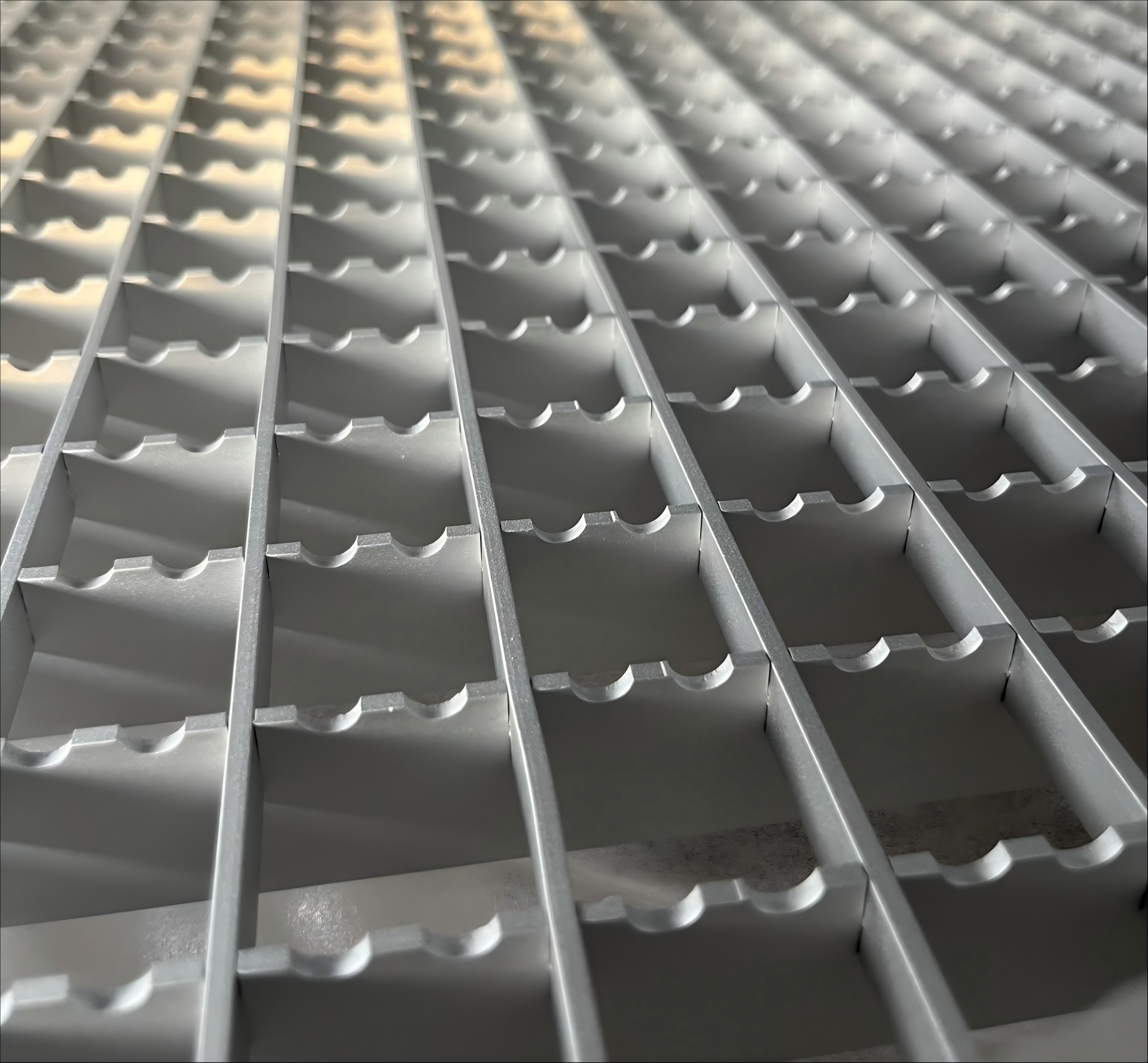
Load tables can look authoritative with their neat columns and bold numbers, but they only become meaningful when you pair them with a real-world span measurement. The ratings in those tables are calculated for specific distances between supports, and that distance changes everything. A joist or beam that appears more than strong enough for a short span can flex, sag, or fail outright once the span stretches even a couple of feet longer. If you haven't measured the actual bearing-to-bearing distance, the table is just a page of hypotheticals.
It's tempting to scan down to the heaviest load listed and assume it applies to your project, but that's how underbuilt floors and bouncy decks happen. The load capacity for one span won't hold for another—tables usually break values out by span columns precisely because the relationship isn't linear. Doubling the span doesn't just halve the capacity; it can reduce it far more due to the way bending stress increases with distance. So before trusting any number, verify whether your measured clear span matches the column you're reading.
Take the measurement from the unsupported face of one bearing to the other, and pay attention to whether the table is based on clear span or centre-to-centre spacing. Even a few extra inches can shift you into a different capacity bracket. The table isn't useless on its own, but without the actual span plugged in, it's an answer to a question you haven't fully asked yet.
Cheap Clips Are the Fastest Way to a Warranty Void
That bargain bin of plastic phone mounts or knock-off charging cables might look tempting, but the moment you snap one of those flimsy clips onto your device, you’re gambling with more than a scratched finish. Manufacturers specifically call out third-party accessories in their warranty terms, and a broken port or cracked frame caused by a poorly fitted clamp is usually all the excuse they need to deny repair coverage.
It’s not just about the immediate damage either. A loose clip that lets your device rattle against a vent mount or dashboard can create micro-fractures over weeks of driving. By the time the screen starts acting up or the battery swells, the warranty claim gets bounced because the damage was “caused by unauthorized mounting hardware.” You saved ten bucks up front, but now you’re staring at a full replacement cost.
The real irony is that the cheapest clips often fail in the most predictable ways—the spring loses tension, the adhesive melts in summer heat, or the plastic arms snap during a pothole. Each failure is another chance for your device to take a dive, and each dive chips away at any protection you thought you had. Quality mounts don’t just hold better; they keep your warranty intact by simply not being the reason something breaks.
Galvanizing Thickness Is Where Corrosion Starts
A thicker zinc layer seems like a straightforward shield, but corrosion rarely starts uniformly across a galvanized surface. The real story is in how thickness varies from edge to flat face, and how those differences create tiny electrochemical cells long before the coating is visibly compromised.
At corners and sharp radii, zinc tends to pull back during dipping, leaving thinner zones that corrode faster than the surrounding area. This local thinning isn't a defect you can see with the naked eye, but it shifts the corrosion pattern from a slow, even sacrifice to a concentrated attack on the very spots most exposed to moisture and oxygen.
Measuring galvanizing thickness isn't just about hitting a specification number. It's about understanding where the coating is thinnest and whether that point can still provide decades of cathodic protection. When inspection focuses only on average thickness, it misses the exact location where rust will eventually find its first foothold.
Ask How They Weld, Not Just If They Weld
Too many buyers stop at the surface question: can you weld this? But welding is a craft with dozens of variables, and the way a shop welds tells you more about their skill than the fact that they can strike an arc. Ask about their default processes—do they lean on MIG for speed, or do they have TIG specialists for thin-gauge and stainless work? Do they run pulse settings to control heat input on aluminum, or do they just crank up the amps and hope for the best? These details separate a production line from a team that actually understands metallurgy.
You should also dig into their approach to edge preparation, filler metal selection, and post-weld cleanup. A shop that preps joints with care and matches filler chemistry to the parent material won't leave you with porosity or cracking down the road. Ask them how they handle distortion on long seams or what they do when a weld fails visual inspection. If they can walk you through their troubleshooting process without hesitation, you're likely dealing with fabricators who take pride in the work—not just checking a box that says 'welded'.
Finally, don't ignore their welding certifications and the people behind the hood. A shop might have a certified welder on paper, but ask who actually runs your parts. Are they tested on the specific positions and alloys your project needs? Do they do in-house bend tests or keep sample welds on file? The answer to how they weld will reveal whether you're getting a structural weld done right or a pretty bead that hides a weak root.
Your Local Inspector May Reject That 'Universal' Design
The phrase “universal design” sounds reassuring—one product that meets every code, fits every opening, and sails through inspection. In practice, building officials see a steady stream of products labeled universal that fall short in specific applications. A curb ramp slope that works in a dry, mild climate may be too slippery for a frost-prone walkway. A lever handle that functions beautifully in an office corridor can fail the reach-range requirements of a renovated historic building. Inspectors aren’t being difficult; they’re applying local amendments, climate data, and occupancy loads that no single “universal” spec can anticipate.
The disconnect often comes down to how the term is used in marketing versus how it’s read in a code review. A manufacturer might claim a restroom fixture works for all users, but the local plumbing code may require different clearances based on wall construction or pipe chase dimensions. A sign package that passes ADA contrast ratios in one state may not meet the stricter character-height rules adopted by a county. When the inspector flags the item, the project stalls—not because the design is bad, but because “universal” was treated as a guarantee instead of a starting point for review.
The practical fix is to treat universal design as a draft, not a verdict. Before specifying a product, pull the local amendments and ask the inspector’s office for a pre-submittal meeting. Show the cut sheets, but also walk through the actual site conditions: door swing conflicts, finish floor transitions, wall-mounted grab bar blocking. Often a small adjustment—a different strike plate, a slightly wider stall, a contrasting nosing—turns a rejected “universal” item into an approved local solution. The label may say universal, but the inspection is always particular.
FAQ
Look for a supplier that asks about your load requirements, span distances, and environment before quoting. A trustworthy partner will discuss alloy choice, bearing bar spacing, and whether your application needs a particular finish. If they only talk price and never mention technical fit, keep looking.
Request deflection and stress calculations for your specific span and load conditions. Ask whether the bars are designed to meet a certain safety factor and if testing data is available. Reputable suppliers can usually provide load tables or engineering support instead of guessing.
Most quality grating uses 6000-series alloys like 6061 or 6063 for a good balance of strength and corrosion resistance. 6061 is common for heavy loads, while 6063 is often chosen for architectural work or extruded profiles. Avoid suppliers who cannot name the alloy or temper they are quoting.
Ask how they handle environments with salt, chemicals, or frequent moisture. The answer should address whether bare aluminum is suitable or if you need anodizing, powder coating, or another surface treatment. A solid supplier will also mention galvanic corrosion risks if the grating touches steel supports.
Make sure every quote lists the same alloy, bar thickness, spacing, panel dimensions, and finish. A low price often comes from thinner bars, wider spacing, or no protective coating. Ask for a line-item breakdown so you can see exactly what you are paying for instead of comparing apples to oranges.
Standard panels may ship within a few days to two weeks, while custom fabrication or special finishes often take three to six weeks. Be wary of promises that sound too fast for custom work, and ask whether the timeline includes quality checks, cutting tolerance, and packing before dispatch.
Look for signs like uneven welds, inconsistent spacing, sharp burrs left on edges, or missing traceability paperwork. Ask about their inspection process and whether they provide material certifications. A supplier that cannot explain its quality control steps is likely to hide defects until after delivery.
A good supplier will help with installation guidance, load verification, or replacement advice if your conditions change. They should respond clearly to technical questions even after the invoice is paid. If you get the sense that support ends at the loading dock, factor that risk into your decision.
Conclusion
That polished, mirror-bright surface on an aluminum grating panel doesn't tell you which alloy is underneath. Suppliers can anodize, powder-coat, or polish almost anything; what matters is whether the base metal is 6061-T6, 6063-T5, or something softer that will bend under the first heavy cart. Ask for mill certificates or at least a written alloy designation before you commit. And don't accept a generic load table. A grating rated for 500 pounds per square foot on a two-foot span behaves completely differently when your actual supporting structure spans four feet. If the supplier can't recalculate deflection and stress using your real opening dimensions, walk away. Fasteners matter just as much as the panels. Those thin, bright clips that come free with a low quote often lack the clamping area or material grade to handle thermal expansion and foot traffic, and many manufacturers will void the warranty if you use unapproved hardware.
Corrosion resistance is another place where a good-looking finish hides weak spots. For aluminum grating, pay attention to the thickness and type of surface treatment or anodizing layer, especially in coastal or chemical environments. A few microns less can mean pitting within two years. Welding method is equally revealing. Ask whether the shop uses TIG, MIG, or automated pressure welding, and ask about post-weld heat treatment or straightening. A supplier that only says "we weld it" is probably not controlling distortion or strength loss at the joints. Finally, remember that a "universal" design is not universal to your local building department. Grating that passed inspection in another state can fail in yours over open-area requirements, slip resistance, or load path details. Before you buy, get drawings stamped or at least reviewed for your jurisdiction.
Contact Us
Contact Person: Nicholas Zhu
Email: [email protected]
Tel/WhatsApp: 18921275456
Website: https://www.sino-grate.com