

Activated Carbon Company: Turning Raw Carbon into Everyday Purification
2026-10-05
Most people never think about the black granules inside their water filter or the dark layer in their face mask—but that unassuming material is quietly doing some of the heaviest lifting in modern life. At Tundrr, we turn raw carbon into precision-engineered purification solutions, from odor-scrubbing air systems to contaminant-trapping water filters. In this post, we'll go beyond the buzzwords and show you how activated carbon actually works, why not all carbon is created equal, and what it takes to transform a lump of charcoal into a daily defender of clean air and water. Whether you're a curious homeowner or an industry insider, you're about to see a familiar material in a whole new light.
From Coconut Shells to Carbon That Cleans
Coconut shells are often dismissed as plantation waste, but under the right conditions they become something far more useful. The shells are slowly carbonized in a low-oxygen kiln, then exposed to steam at high temperatures. This dual step doesn’t just char the material; it etches a dense network of micropores through every granule. The result is a carbon structure whose internal surface area can exceed a thousand square meters per gram, giving contaminants plenty of places to bind.
In water treatment, that porosity translates directly into cleaner taste and safer output. Coconut-based activated carbon excels at trapping chlorine, volatile organic compounds, and the earthy or musty chemicals that make tap water unappealing. Its naturally high hardness means fewer fines and less dust compared to softer coal or wood carbons, so filters don’t clog as quickly. That durability also extends the life of pitcher filters, under-sink units, and larger municipal polishing systems.
Air purification puts the same microporous structure to work on gases rather than liquids. The carbon captures formaldehyde, benzene, and other volatile pollutants that cling to indoor air, while trace mineral content in the shell helps neutralize acidic vapors. From a discarded husk on a tropical farm to a precision filter in a kitchen or factory, the path is less about novelty and more about turning a plentiful byproduct into a quietly effective cleanup material.
Inside the Kiln: Where Raw Carbon Gains Its Grip
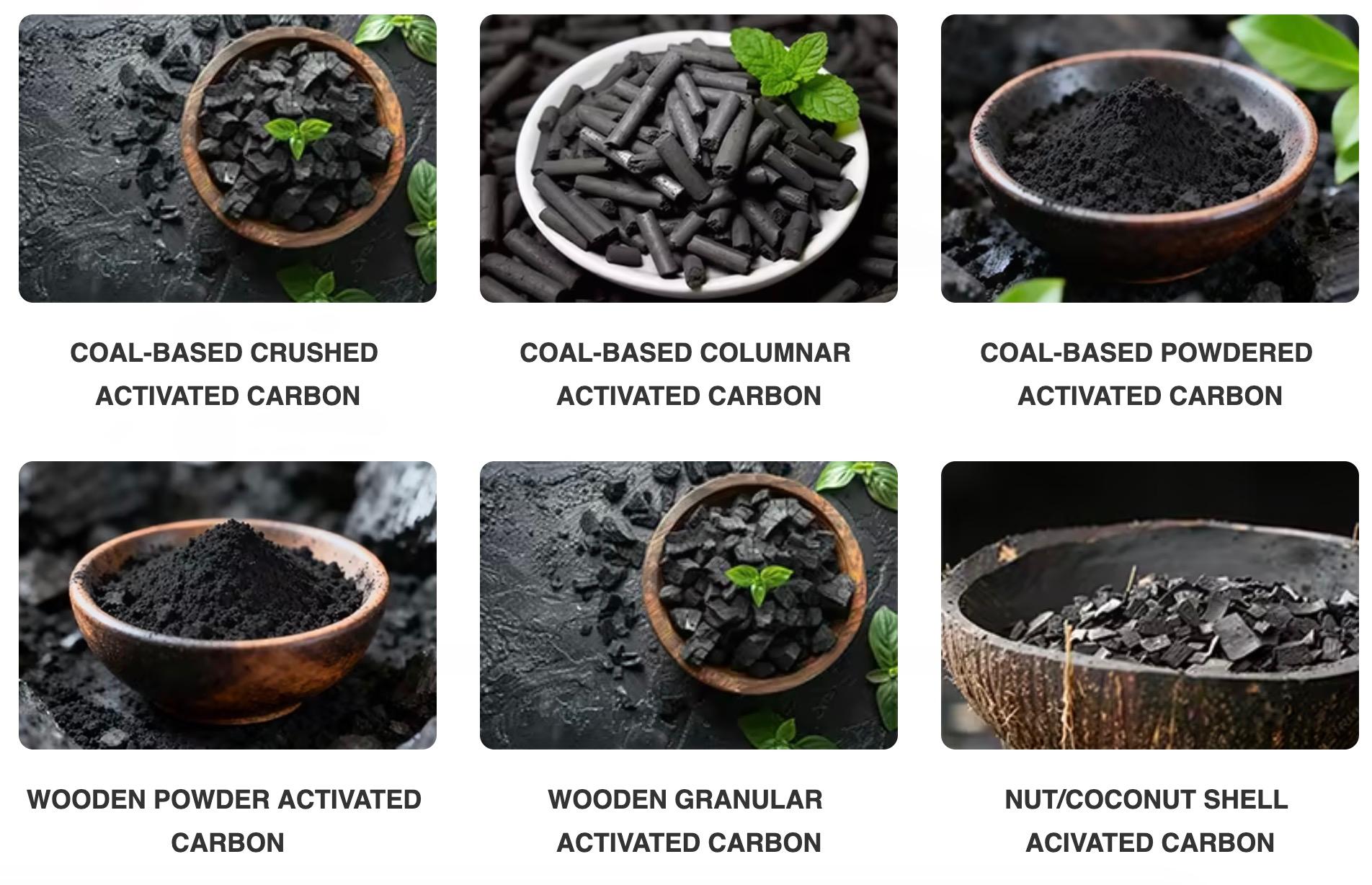
The kiln breathes in uneven pulses, its walls radiating a heat that shifts from dull orange to a sharp, almost white glare. Raw carbon — whether packed as fine powder, extruded rods, or pressed blocks — sits in this charged atmosphere, not passively absorbing temperature but actively reorganizing at the atomic level. Impurities burn away in thin, sulfurous wisps while the remaining carbon lattice tightens, shedding the loose, porous character of its unprocessed state. This is where the material stops being mere feedstock and starts developing the mechanical grip that later applications will demand.
Temperature alone doesn't do the work. The real control happens in the gas flow and the slow, deliberate ramp rates that prevent thermal shock from cracking the forming structure. Technicians watch for the telltale color shifts — a deep cherry red at 800°C, a pale lemon at 1200°C, and beyond that the hazy blue-white of graphitization. Each stage leaves its fingerprint: micropores closing, crystal boundaries aligning, and the bulk density climbing in small, measurable increments. A rushed firing undoes months of upstream preparation, so the kiln crew reads the process less like a recipe and more like a negotiation with the material.
By the time the burners cut off and the chamber cools to a silent, black stillness, the carbon has acquired a new identity. Its surface no longer smears at a touch; its edges resist deformation under load. The grip isn't a coating or an additive — it's a structural change born entirely from the heat, atmosphere, and time inside that refractory-lined space. What leaves the kiln is still carbon, but it now behaves like a material with a memory of the fire.
Micropores: The Hidden Key to Everyday Purification
Most people never think about the tiny pores inside a charcoal water filter or the lining of an air purifier, yet that's where the real work happens. Micropores—openings less than two nanometers wide—create an enormous internal surface area in materials like activated carbon and zeolite. A single gram of activated carbon can hide more than 1,000 square meters of these pores, forming a labyrinth that traps dissolved chemicals, odors, and volatile compounds through adsorption. Unlike a simple strainer, which only catches particles larger than its holes, micropores pull contaminants in at the molecular level, holding them tight against the pore walls.
This quiet mechanism shows up in more places than you'd expect. Refrigerator baking soda boxes, aquarium filters, gas masks, and even the moisture-wicking liner in a running shoe rely on micropores to grab unwanted molecules. What makes them especially useful is their selectivity: by adjusting pore size and surface chemistry, manufacturers can target specific pollutants—chlorine in tap water, formaldehyde in indoor air, or sulfur compounds in natural gas. The result is purification that doesn't need electricity or moving parts, just a well-designed network of invisible channels.
Yet micropores remain underappreciated because their work is silent and slow, often taking hours or days to reach full capacity. Researchers are now exploring synthetic metal-organic frameworks with precisely tuned micropores that could capture carbon dioxide directly from the air or pull trace pharmaceuticals from wastewater. These advances might one day make everyday purification cheaper and more sustainable, but the basic principle hasn't changed: the smaller the pore, the bigger the hidden impact.
Clean Water Doesn't Happen by Accident
Turn on the tap in most developed cities and crystal-clear water flows out, seemingly effortless. But that glass of water has been on a long, carefully managed journey. It didn't just appear — it was pumped from a reservoir or aquifer, pushed through filtration systems, treated with precise chemical doses, and tested dozens of times before reaching your kitchen. The moment you take that first sip, you're tasting decades of engineering, regulation, and round-the-clock monitoring.
Behind every drop is a hidden army of operators, lab technicians, and maintenance crews. They adjust pH levels, backwash sand filters, replace aging pipes, and respond to contamination alerts at 3 a.m. A single broken valve or missed chlorine check can turn a safe supply into a public health emergency. That's why water utilities run redundant systems and why drinking water standards exist — not because clean water is natural, but because it is relentlessly manufactured.
So next time you fill a glass, remember that clean water is a product of human intention. It requires investment, infrastructure, and constant vigilance. Whether it's protecting source watersheds from runoff, upgrading treatment plants, or simply paying your water bill, every action keeps the system working. Clean water doesn't happen by accident — it's earned, every single day.
The Air You Breathe Deserves More Than a Cover-Up
Most sprays promise freshness by burying one scent under another. They make a room smell clean for about twenty minutes, then the original problem creeps back in—often louder, now mixed with a cloying floral fog. Real air quality doesn't come from a can. It comes from removing the particles, gases, and microbes that throw your indoor space off balance.
That's where a properly designed air purifier changes the game. Instead of layering a synthetic fragrance over stale air, it pulls the room's atmosphere through dense filtration, catching what you can't see and what you'd rather not inhale. The result isn't a temporary mask; it's a quieter, lighter, genuinely breathable space.
Your nose might not always know the difference at first. But your lungs, your sleep, and your concentration will. When the air itself is handled well, there's nothing to cover up—and that's the whole point.
Spent Carbon Isn't Waste—It's a Resource
Every year, industries discard mountains of spent carbon—from water filters, air purification systems, and chemical processes—assuming its useful life is over. But that assumption is costing us more than landfill space. Under the right lens, spent carbon isn't the end of a cycle; it's the beginning of another. The same porous structure that once trapped impurities can be reactivated, repurposed, or transformed into a raw material for new applications, turning an expensive disposal problem into a quiet revenue stream.
Think of spent carbon as a battery that still holds a charge. Thermal regeneration can restore much of its original adsorption capacity, often at a fraction of the cost of virgin material. For carbon too degraded for reactivation, there are other paths: it can be processed into soil amendments that improve water retention, blended into construction materials, or even used as a precursor for advanced carbons in supercapacitors. None of these require exotic technology—just a shift in perspective from “waste management” to “resource recovery.”
The companies that win in the next decade won't be the ones that simply reduce their carbon footprint. They'll be the ones that see every byproduct as an input waiting for a clever hand. Spent carbon is one of the most overlooked opportunities in industrial ecology—abundant, uniform, and structurally valuable. Treating it as a resource isn't idealism; it's basic economics with a longer memory.
FAQ
We take raw carbonaceous materials like coconut shells or coal, process them through high-temperature activation, and turn them into porous carbon used in water filters, air purifiers, and even medical treatments. It's less about manufacturing and more about engineering surface area at a microscopic level.
Imagine millions of tiny pores across each granule—together they create an enormous surface area that traps contaminants through adsorption. Chemicals, odors, and certain gases stick to the carbon's surface while clean air or water passes through. It's physical entrapment, not a chemical reaction.
You'll find our carbon in refrigerator odor removers, faucet-mounted water filters, respirator masks, aquarium filters, and even in hospitals for toxin removal. If it clears the air or cleans the water, there's a good chance activated carbon is doing the heavy lifting.
Coconut shells yield a particularly hard, dense carbon with a high micropore volume, which means it adsorbs small molecules more efficiently. It's also a renewable byproduct of the coconut industry, so it keeps agricultural waste out of landfills while delivering reliable performance.
Yes, many of our industrial clients send spent carbon back to us. We run it through thermal reactivation—essentially burning off the trapped contaminants under controlled conditions—so the carbon's pore structure is restored. That cycle can repeat several times before the carbon degrades too much.
Not at all. The raw material, activation method, pore size distribution, and post-treatment coatings all change what a particular carbon can adsorb. A carbon made for gas-phase odor control won't necessarily work for removing heavy metals from water. We match the carbon to the contaminant profile.
We run standardized tests like iodine number, molasses number, and BET surface area analysis on every batch. But beyond lab numbers, we work with clients to run pilot tests using their actual water or air streams. Real-world performance matters more than a datasheet.
Conclusion
Most people never see the part that matters. The real work starts with coconut shells, not some lab-synthesized powder. At Activated Carbon Company, raw carbon doesn't arrive ready to filter; it has to be forced into shape. Shells get charred, then treated in kilns where heat and steam open up a maze of micropores. That's the whole trick. A single gram ends up with more internal surface area than a tennis court, and those invisible chambers are what grab chlorine, pesticides, and the off-tastes that make tap water feel like a gamble. Clean water doesn't happen by accident—it happens because the carbon was pushed hard enough to develop that grip.
The same material that scrubs water also handles air, but not by masking smells. Cheap air fresheners cover odor; activated carbon traps the volatile organics and lets clean air through. And when the pores finally fill, the story doesn't end at a landfill. Spent carbon gets hauled back, run through reactivation kilns, and put back to work. That loop matters—otherwise every filter would be another piece of waste. From a pile of shells to a reusable purifier, the company's entire model is built on the fact that raw carbon is only as good as what you do to it.
Contact Us
Contact Person: Ellen Zhang
Email: [email protected]
Tel/WhatsApp: +86(21) 2287 6756
Website: https://www.tundrr.com/en/